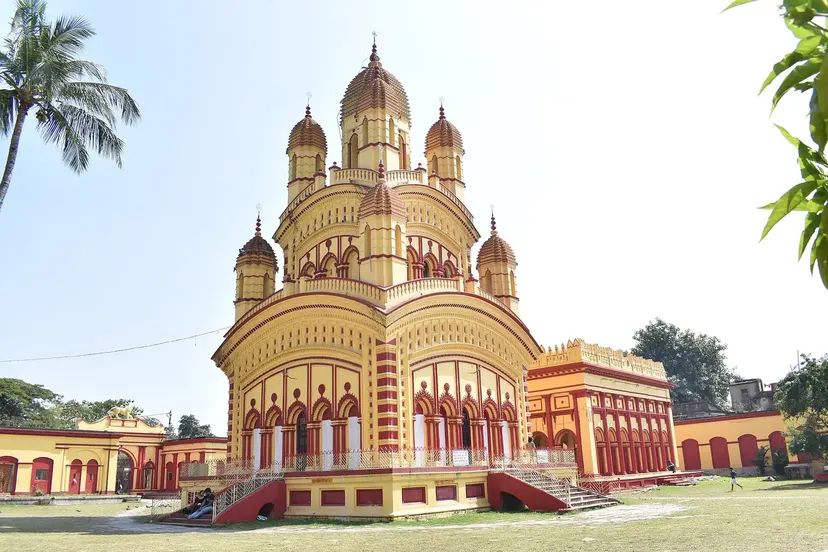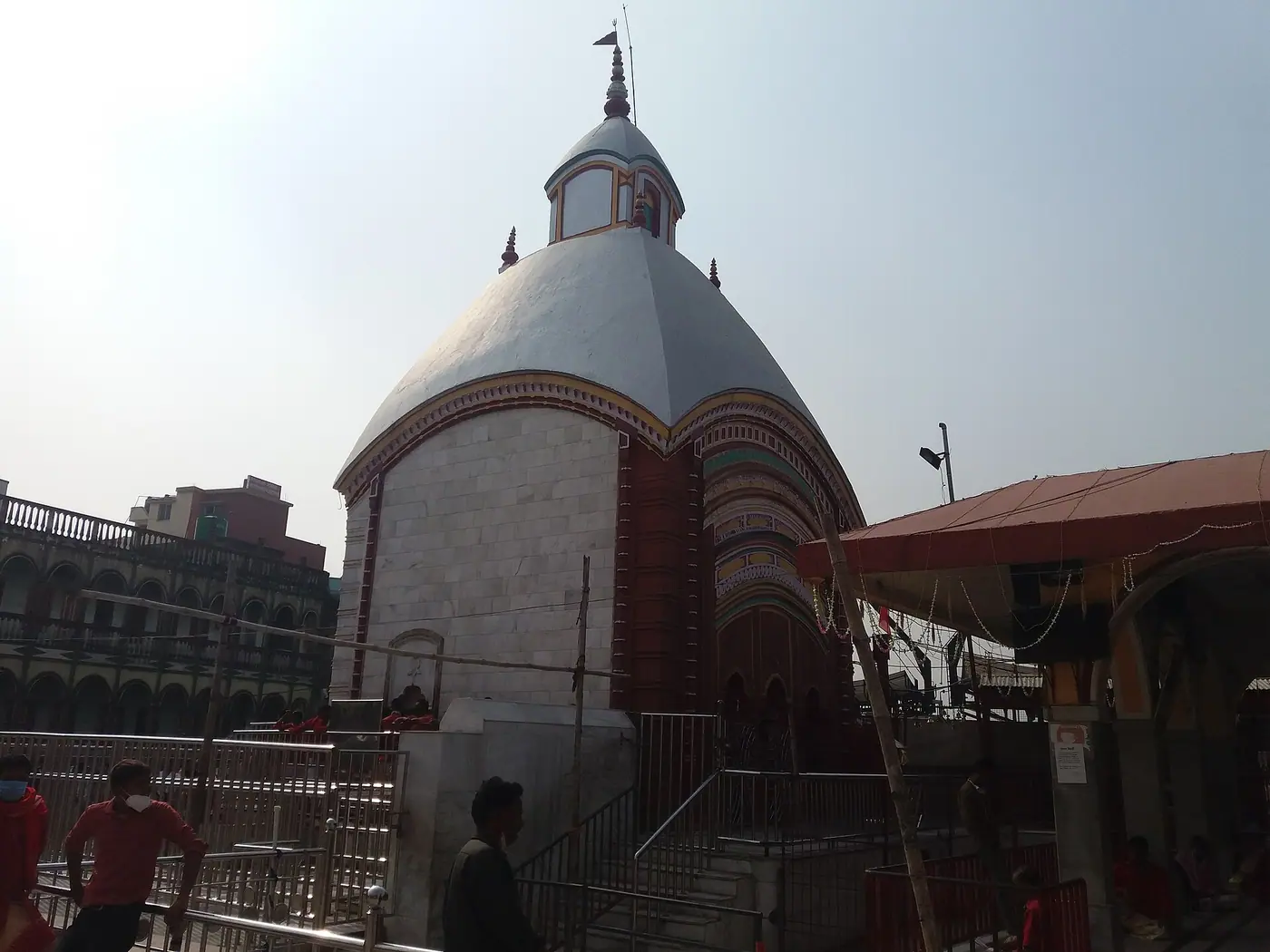
Tarapith Temple
Devi (Maa Tara) temple · Tarapith (near Rampurhat), Birbhum, West Bengal, India
Photo: Tarunsamanta · CC BY-SA 4.0 · via Wikimedia Commons
Tarapith Temple is the shrine of the goddess Tara (Maa Tara) at Tarapith, a temple town near Rampurhat in Birbhum district, West Bengal. Tara is the second of the ten Mahavidyas of the Shakta tradition, and Tarapith is one of the best-known centres of her worship and of Tantric practice in eastern India. The temple stands near the Dwarka (Dwaraka) River beside a cremation ground that devotees regard as part of the sacred site.
Pilgrims come for darshan of Maa Tara, to visit the places associated with the nineteenth-century saint Bamakhepa, and in large numbers for Kaushiki Amavasya, the temple's biggest annual gathering.
Faith & Tradition
Religious Significance of Tarapith Temple
In Shakta tradition Tarapith is linked to the story of Sati, whose body was scattered across the subcontinent; the sites where parts are said to have fallen are honoured as Shakti Peethas. According to local tradition it was Sati's eye (tara in Bengali can mean the pupil of the eye) or third eye that fell here. Tarapith is widely called a Shakti Peetha in Bengal, but the various Shakti Peetha lists differ from text to text and it does not appear in every list. It is also, and perhaps more commonly, called a Siddha Peetha: a place where devotees believe spiritual attainment comes readily.
Another tradition, recorded by the CPR Environmental Education Centre's eco-heritage survey, says Tara nursed Shiva here to ease the burning of the poison he swallowed at the churning of the ocean. The scholar David Kinsley notes that Tarapith's worship stresses Tara's motherly side alongside her fierce form. The cremation ground is central to the site's identity, and Tantric practitioners have long carried out their sadhana there.
Heritage
History of Tarapith Temple
Tarapith's best-known historical figure is Bamakhepa (Bamacharan Chattopadhyay, 1837–1911), a Tantric saint who lived near the temple and meditated in the cremation ground. He was a contemporary of Sri Ramakrishna. Devotees believe he received a vision of Tara on the cremation ground, and his ashram and shrine near the temple are now part of the pilgrimage.
The age of the shrine is not firmly documented. The Birbhum district administration's tourism pages describe the temple and the nearby Bamdev Sangha Ashram, but give no founding date. Popular accounts say the present building was rebuilt in the early nineteenth century by a local landholder; we could not confirm this from an authoritative source, so it is treated here as unverified.
The shrine is run by a committee of its sebayets (temple priests and servitors). In December 2023 the Sebayet Committee banned mobile phones, photography and flower offerings inside the sanctum, as reported by The Statesman.
Architecture and sacred features
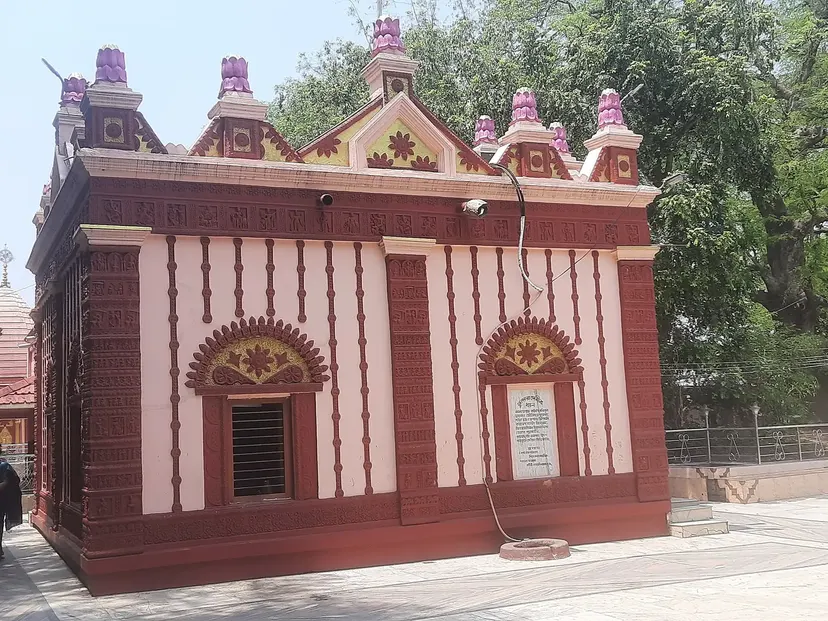
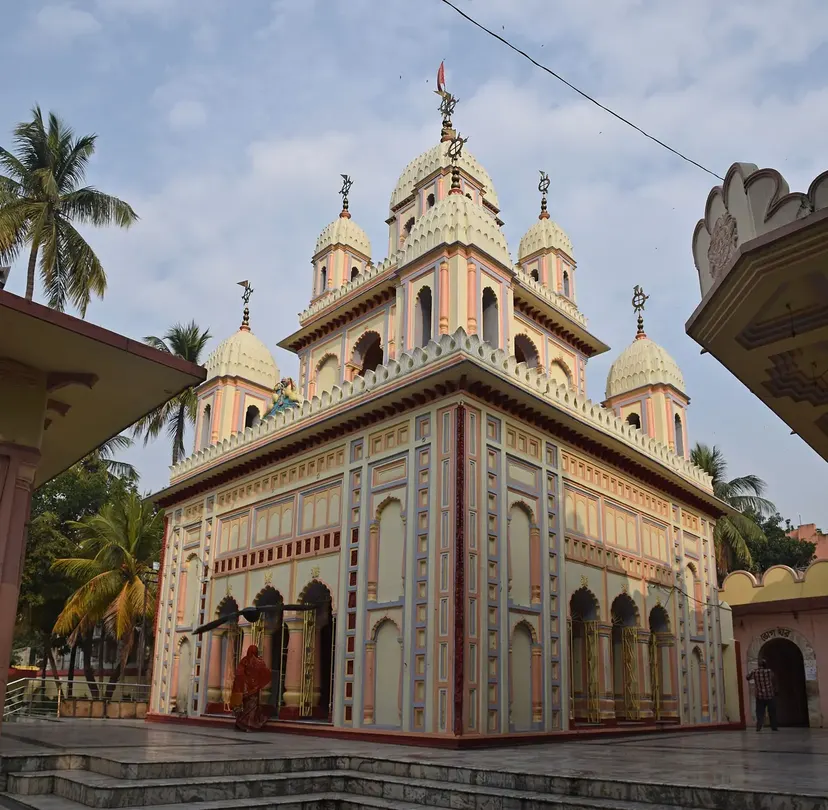
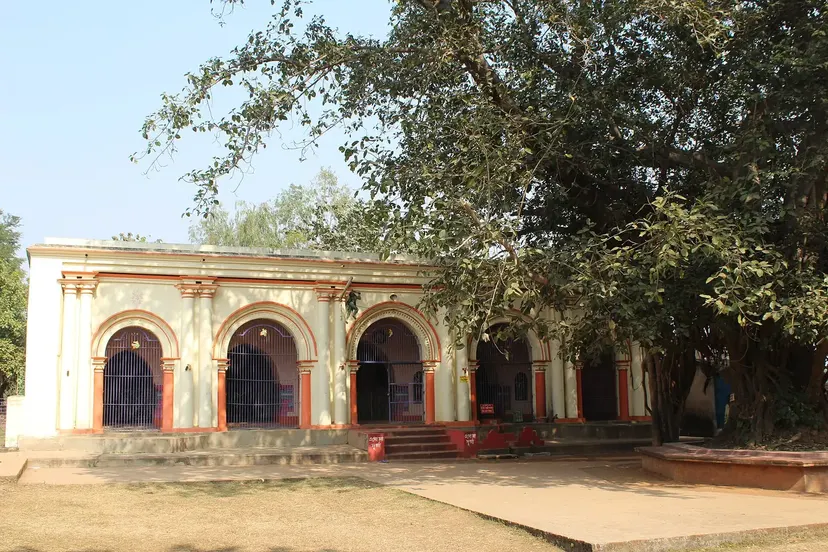
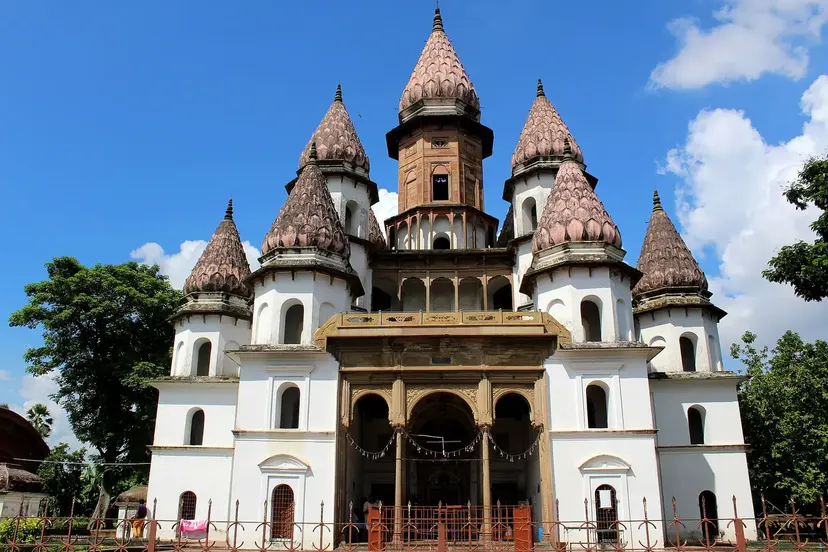
The CPREEC eco-heritage survey describes a red-brick temple with thick walls and covered, arched passages rising to a spire, in the regional style of Bengal. The sanctum is said to hold two forms of the goddess: an older stone image showing Tara nursing Shiva, kept covered, and a visible metal image of Tara with four arms, a garland of skulls and an extended tongue, decorated with a silver crown and garlands.
Plan Your Visit
Darshan and Visitor Information
As reported by The Statesman in December 2023, the temple's Sebayet Committee banned mobile phones and photography inside the sanctum and asked devotees to make their offerings at a designated place outside it. Crowds are very large around Kaushiki Amavasya and other new-moon days. These rules can change; confirm current arrangements with the Tarapith temple Sebayet Committee or the Birbhum district administration before travelling.
Timings and arrangements change with seasons and festivals. Confirm current details with Tarapith temple Sebayet Committee before travelling. Last reviewed 5 October 2026.
Sacred Calendar
Festivals at Tarapith Temple
Kaushiki Amavasya
The new moon of Bhadrapada is the temple's largest gathering, with special worship of Tara and many sadhus at the cremation ground; devotees connect the night with Bamakhepa's spiritual attainment. In 2026 it fell on 10 September.
Every Amavasya (new moon)
New-moon nights carry special weight in Tara worship, and the temple and cremation ground see larger crowds on them.
Location
How to Reach Tarapith Temple
According to the Birbhum district administration, the nearest railway station is Rampurhat, which has good connections to Howrah and Sealdah in Kolkata, and taxis run from the station to Tarapith. The nearest airport is Kazi Nazrul Islam Airport at Durgapur, about 100 km away, with taxis and buses onward.
Government and private buses link Tarapith with the Esplanade/Dharmatala bus stand in Kolkata and with nearby towns. The district administration places Tarapith about 80 km from Bolpur (Santiniketan).
Location: Tarapith (near Rampurhat), Birbhum, West Bengal, India
Nearest airport: Kazi Nazrul Islam Airport, Durgapur (about 100 km, per Birbhum district administration)
Nearest railway station: Rampurhat
More in Hindu temples in West Bengal · Devi (Maa Tara) temples
Questions
Tarapith Temple: Frequently Asked Questions
Which goddess is worshipped at Tarapith?
The goddess Tara, the second of the ten Mahavidyas, worshipped locally as Maa Tara. The temple is one of the best-known centres of her worship in India.
Is Tarapith a Shakti Peetha?
It is widely called one in Bengal, where tradition holds that Sati's eye fell here. Shakti Peetha lists differ between texts, however, and Tarapith does not appear in all of them; it is also often called a Siddha Peetha.
Who was Bamakhepa?
Bamakhepa (1837–1911) was a Tantric saint, known as the 'mad saint', who worshipped Tara at Tarapith and meditated in its cremation ground. His ashram and shrine near the temple are visited by pilgrims.
What is Kaushiki Amavasya at Tarapith?
It is the new moon of Bhadrapada and the temple's biggest annual occasion, when large numbers of devotees and Tantric practitioners gather for worship of Tara.
Can I take photographs inside the Tarapith temple?
According to The Statesman, the Sebayet Committee banned mobile phones and photography inside the sanctum from December 2023. Check the current rules on arrival.
What is the nearest railway station to Tarapith?
Rampurhat, according to the Birbhum district administration. Taxis run from the station to the temple.
Why is there a cremation ground next to the temple?
In Tantric belief Tara is closely associated with the cremation ground, and the ground beside the temple is treated as part of the sacred site, where sadhus have long done their spiritual practice.
Sources and attribution
- © OpenStreetMap contributors — location data © OpenStreetMap contributors (ODbL)
- Wikidata Q131549574 — structured data (CC0)
- Wikipedia — Tarapith Temple — text facts from Wikipedia, licensed CC BY-SA 4.0
- District Administration, Birbhum, Government of West Bengal — Tarapith (Rampurhat) – tourist place
- District Administration, Birbhum, Government of West Bengal — Tarapith
- C.P.R. Environmental Education Centre (Eco-Heritage of India) — Tarapith
- The Statesman — Tarapith temple bans cell phones inside
- Free Press Journal — Pithori Amavasya and Kaushiki Amavasya 2026: Date, Puja Vidhi and Significance
- University of California Press — Tantric Visions of the Divine Feminine: The Ten Mahavidyas (David R. Kinsley, 1997)
- Wikipedia — Tarapith temple (pointer only)
Further reading: Tarapith Temple on Wikipedia (CC BY-SA 4.0).
Spotted an error? Write to info@hindutone.com — see our editorial policy.