Hanseshwari Temple
Devi (Hanseshwari, a form of Kali) temple · Bansberia, Hooghly, West Bengal, India
Photo: Mayukhc12 · CC BY-SA 4.0 · via Wikimedia Commons
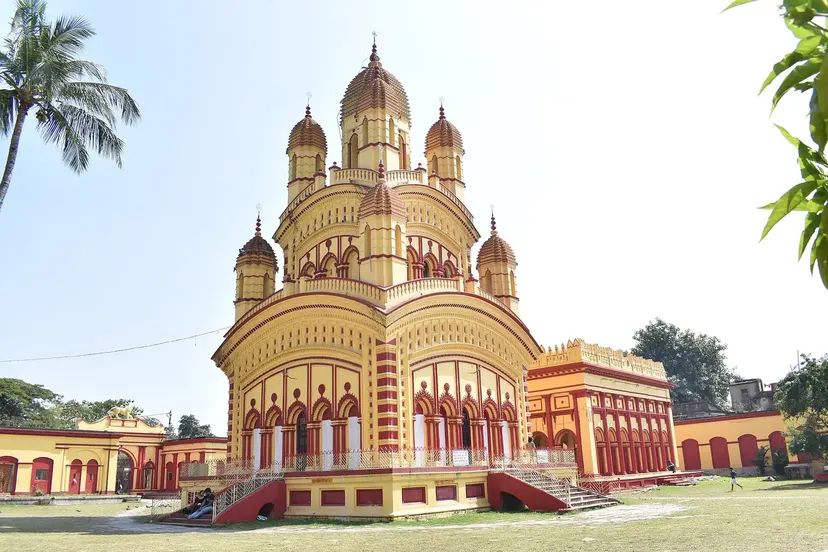
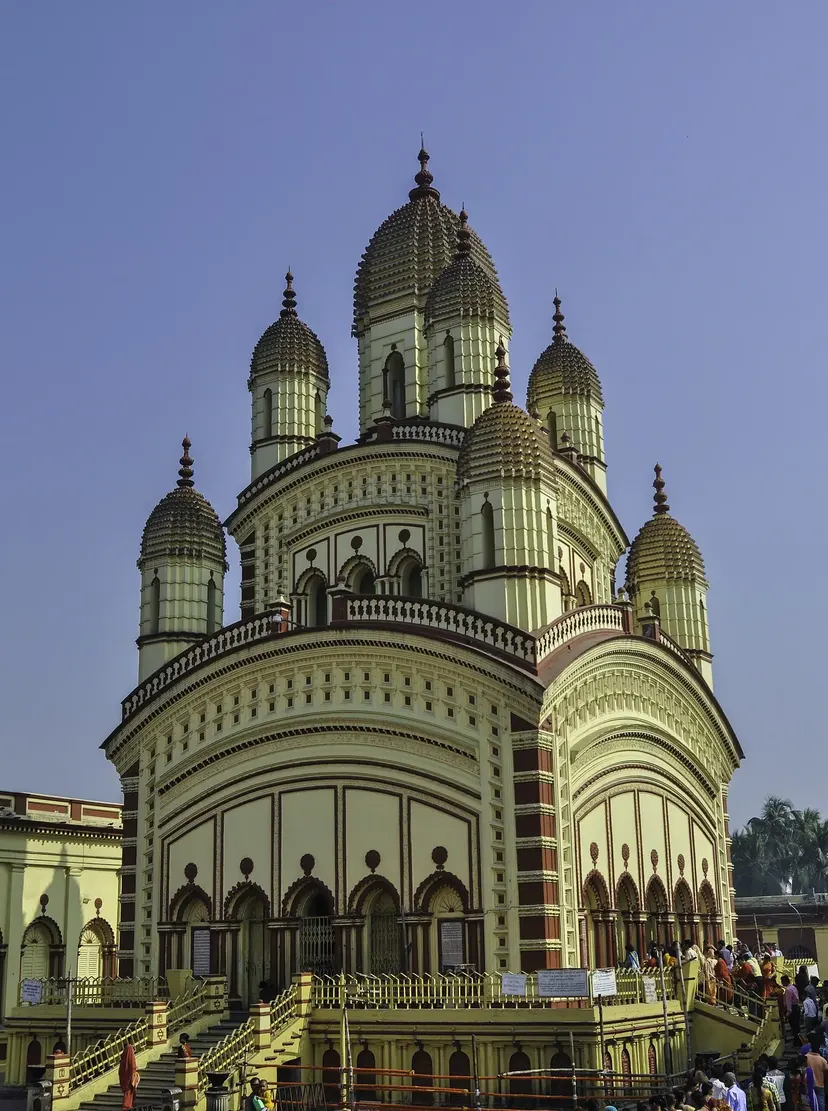
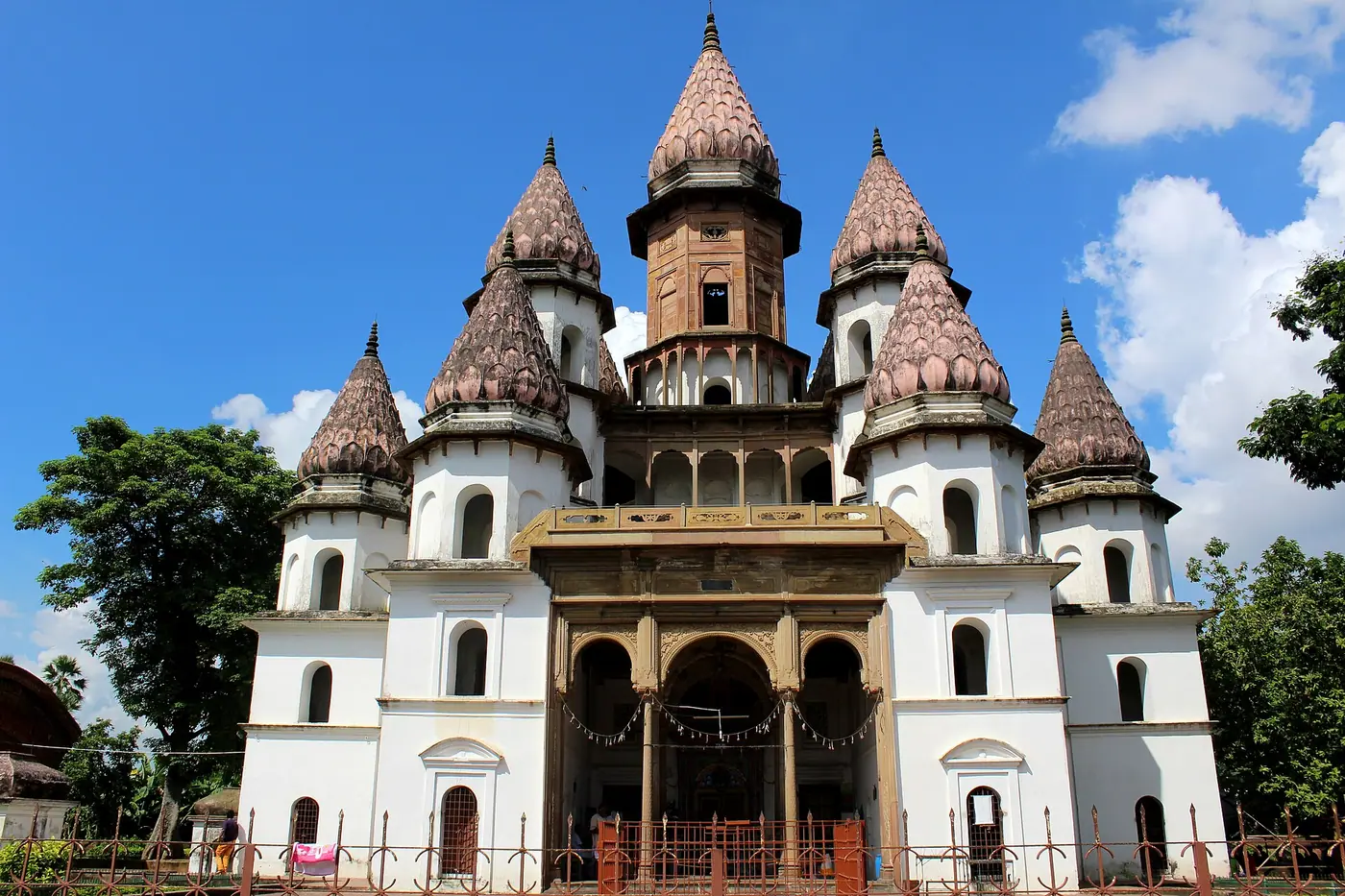
The Hanseshwari Temple (also spelled Hangseswari) at Bansberia in Hooghly district, West Bengal, is a temple of the goddess Hanseshwari, a form of Kali. It was completed in 1814 and is known for its unusual design: a five-storey building crowned by thirteen spires (ratnas), each shaped like a lotus bud.
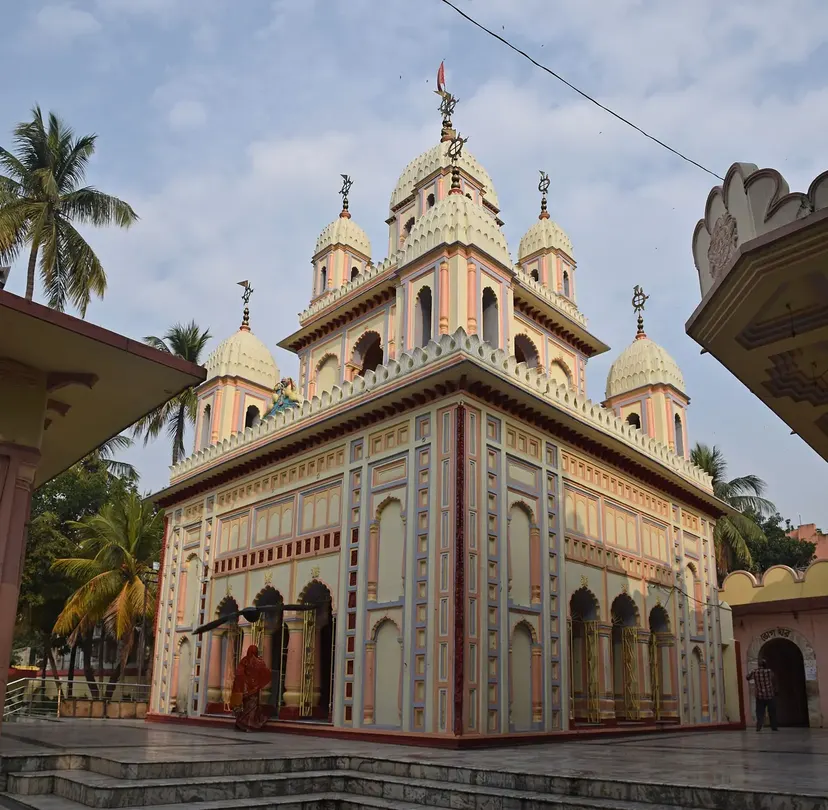
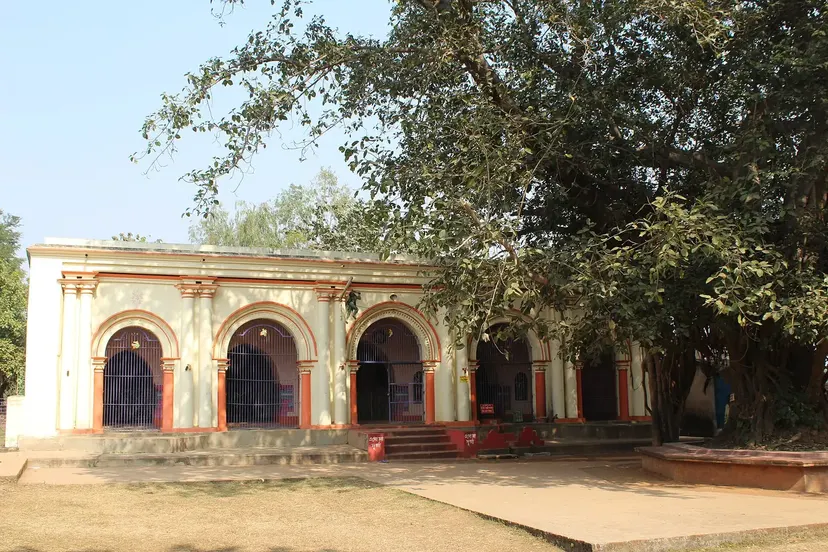
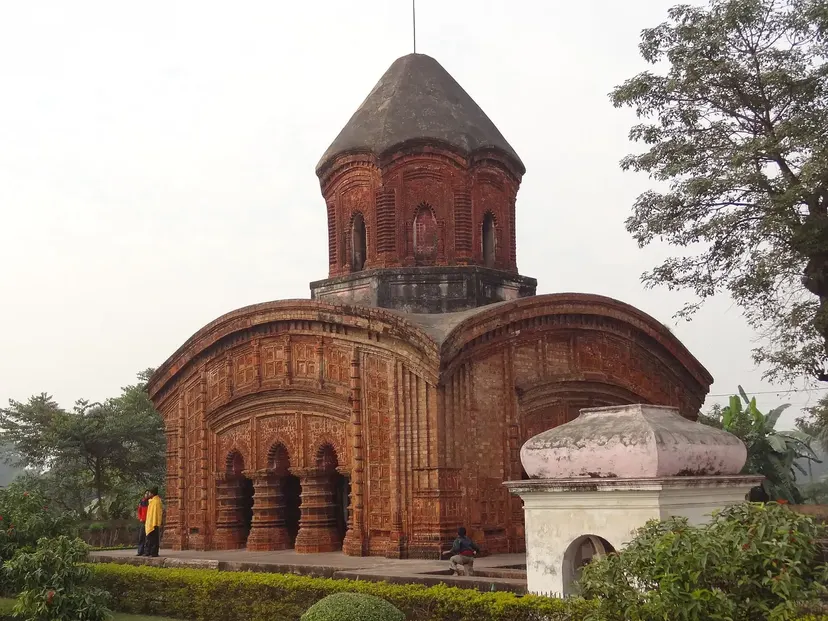
The Hooghly district administration counts it among the district's most important temples. It is protected by the Archaeological Survey of India, and stands close to the older terracotta Ananta Basudeba temple.
Faith & Tradition
Religious Significance of Hanseshwari Temple
The temple's plan is linked to Tantric and yogic ideas about the human body. The Hooghly district administration describes the structure as a representation of the Tantric 'satchakrabhed' (piercing of the six chakras), and published accounts say its inner layout follows the subtle channels of the body, such as Ida, Pingala and Sushumna.
The name is explained through the same ideas. According to tradition, 'Hong' (spoken on the out-breath) stands for Shiva and 'Sa' (the in-breath) for Shakti, so the goddess who joins them is Hanseshwari. Devotees regard the shrine as a place where Shiva and Shakti are worshipped together.
Heritage
History of Hanseshwari Temple
Bansberia was the seat of a zamindar family. A 2012 article in Chitrolekha, a magazine on art and design, records that Zamindar Rameshwar Ray settled at Bansberia in 1673. One of his descendants, Raja Nrisinghadeb Roy, began the Hanseshwari Temple.
According to the account published in Chitrolekha, which presents parts of it as legend, Nrisinghadeb studied Tantric and yogic teachings on the kundalini and the six chakras while living in Varanasi in the 1790s, and decided to build a temple based on them. Stone was brought from Chunar near Varanasi, along with artisans. The raja died in 1802 before the work was finished, and his widow, Rani Shankari, completed the temple in 1814.
The ASI's list of centrally protected monuments in West Bengal includes the 'Haneswari and Vasudev temples' at Bansberia, Hooghly, covering both this temple and the neighbouring Ananta Basudeba temple.
Architecture and sacred features
The temple rises in five storeys and is topped by thirteen spires, each built as a blooming lotus bud. This makes it very different from the curved-roof and terracotta temples more common in the area.
Inside, according to the Chitrolekha account, the image of the goddess is carved from neem wood and painted blue. She is four-armed and stands on a lotus that rises from the navel of a reclining white Shiva. A white marble Shiva linga is kept in the chamber beneath the central spire.
Plan Your Visit
Darshan and Visitor Information
This is a protected monument as well as a place of worship, so respect both the shrine and the historic structure. Confirm current timings and any visitor rules with the temple authorities or the Hooghly district administration before travelling.
Timings and arrangements change with seasons and festivals. Confirm current details with the temple administration before travelling. Last reviewed 5 October 2026.
Location
How to Reach Hanseshwari Temple
The nearest airport is Netaji Subhas Chandra Bose International Airport, Kolkata. The Hooghly district administration names Bansberia station, on the Bandel–Katwa line, as the nearest railway station; Tribeni station is also close by.
From Bansberia station the temple is about five minutes by rickshaw, and from Bandel Junction about 20 minutes by auto-rickshaw or local transport, according to the district administration.
Location: Bansberia, Hooghly, West Bengal, India 712502
Nearest airport: Netaji Subhas Chandra Bose International Airport, Kolkata
Nearest railway station: Bansberia (Bandel–Katwa line); Bandel Junction nearby
More in Hindu temples in West Bengal · Devi (Hanseshwari, a form of Kali) temples
Questions
Hanseshwari Temple: Frequently Asked Questions
Who is the deity of the Hanseshwari Temple?
The presiding deity is the goddess Hanseshwari, regarded as a form of Kali. Her four-armed image is carved from neem wood and painted blue.
Who built the Hanseshwari Temple and when?
Raja Nrisinghadeb Roy of the Bansberia zamindar family began it. After his death in 1802, his widow Rani Shankari completed it in 1814.
Why does the temple have thirteen spires?
The temple was designed around Tantric and yogic ideas of the human body. Its thirteen spires are each shaped like a lotus bud, a design unlike most temples in the region.
Is the Hanseshwari Temple protected by the ASI?
Yes. The ASI's list of protected monuments in West Bengal includes the Hanseshwari and Vasudev (Ananta Basudeba) temples at Bansberia.
What does the name Hanseshwari mean?
According to tradition, the name joins 'Hong', linked with Shiva and the out-breath, and 'Sa', linked with Shakti and the in-breath.
How do I reach the Hanseshwari Temple?
Take a local train to Bansberia station on the Bandel–Katwa line; the temple is about five minutes away by rickshaw. From Bandel Junction it is about 20 minutes by auto-rickshaw.
Sources and attribution
- © OpenStreetMap contributors — location data © OpenStreetMap contributors (ODbL)
- Wikidata Q5648088 — structured data (CC0)
- Wikipedia — Hangseshwari Temple — text facts from Wikipedia, licensed CC BY-SA 4.0
- Hooghly District Administration, Government of West Bengal — Hangseswari temple
- Archaeological Survey of India — Alphabetical list of centrally protected monuments – West Bengal (entry: Haneswari and Vasudev temples, Bansberia)
- Chitrolekha — Story of the Hanseswari Temple, Banshberia (Chitrolekha International Magazine on Art and Design, Vol. 2, No. 1, 2012)
Further reading: Hanseshwari Temple on Wikipedia (CC BY-SA 4.0).
Spotted an error? Write to info@hindutone.com — see our editorial policy.