Dakshineswar Kali Temple
Devi (Kali as Bhavatarini) temple · Dakshineswar, Kolkata, North 24 Parganas, West Bengal, India
Photo: Bibek Raj Pandeya · CC BY-SA 4.0 · via Wikimedia Commons
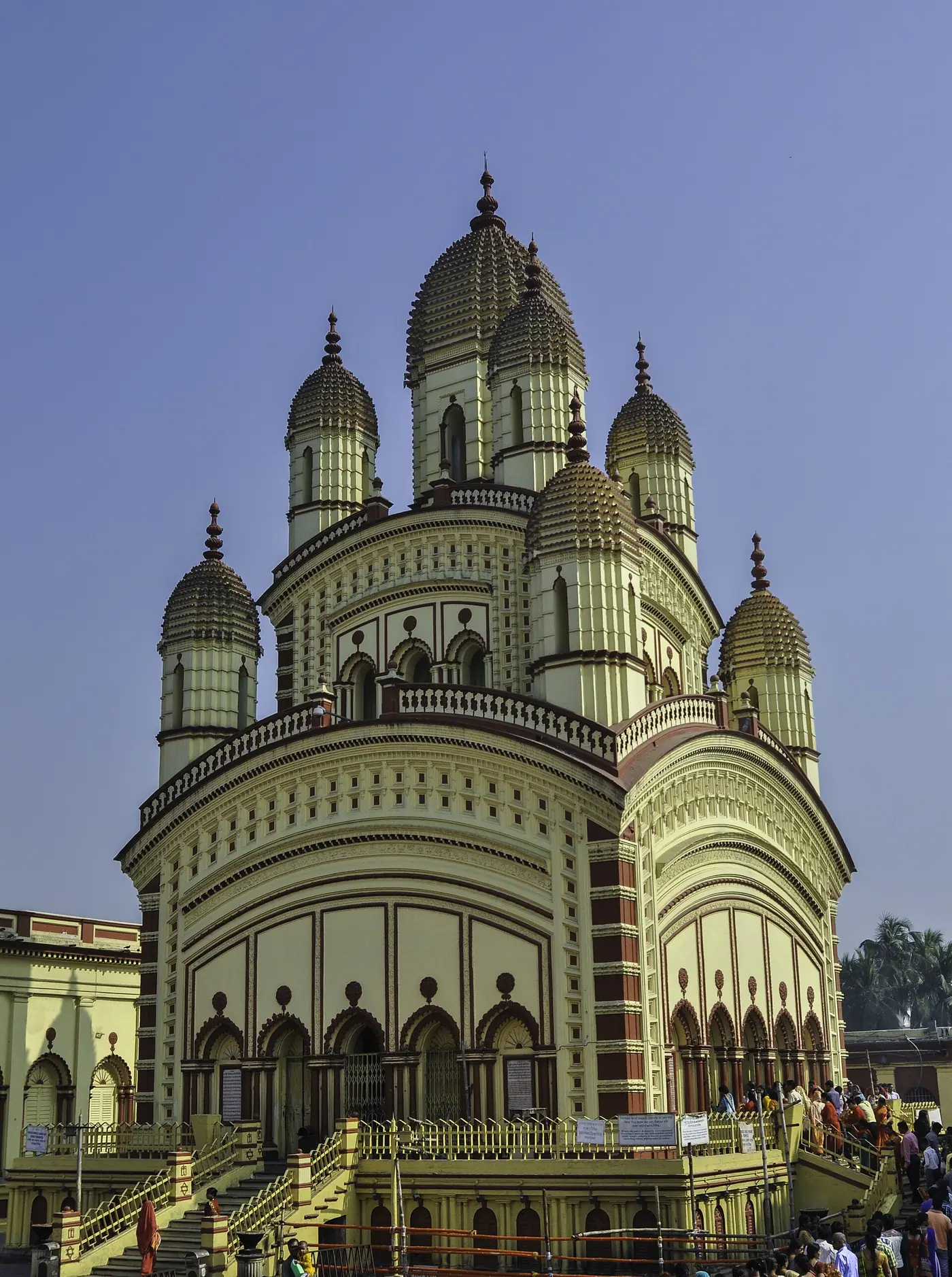
Dakshineswar Kali Temple is a shrine of the goddess Kali, worshipped here as Bhavatarini, on the eastern bank of the Hooghly (Bhagirathi) at Dakshineswar, on the northern edge of Kolkata in North 24 Parganas district, West Bengal. It was founded by Rani Rashmoni and consecrated on 31 May 1855.
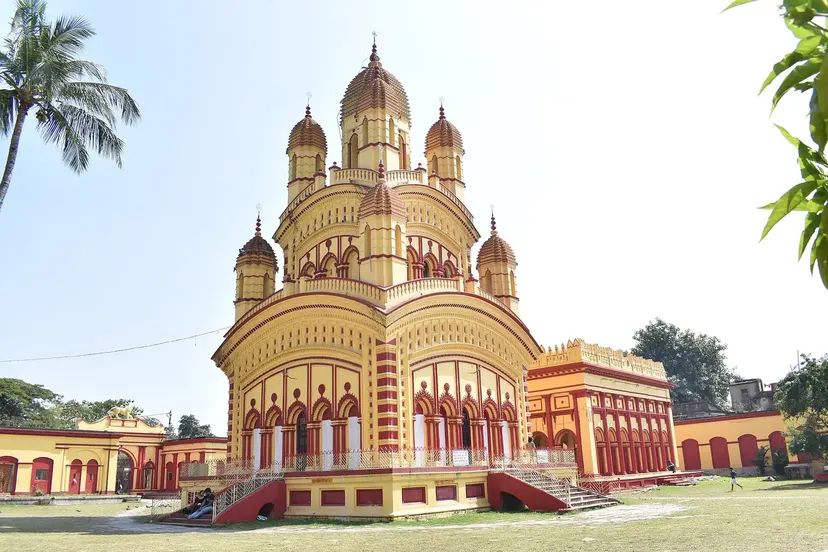
The temple is widely known for its association with Sri Ramakrishna, who served as a priest here and lived in the temple garden for about three decades. Its main shrine is a nine-spired navaratna temple, set in a riverside complex that also holds twelve Shiva temples and a Radha-Krishna temple.
Faith & Tradition
Religious Significance of Dakshineswar Kali Temple
The temple trust describes the complex as a place where the three main streams of Hindu worship meet: the Kali temple for Shakta devotion, the Radha-Krishna (Vishnu) temple for Vaishnava devotion, and the row of twelve Shiva temples. Devotees regard Bhavatarini as the Mother who carries her devotees across the ocean of worldly existence.
For many visitors the site is inseparable from Sri Ramakrishna (1836–1886). According to the temple trust, it was before this image that he experienced the living presence of the Divine Mother, and his room in the north-western corner of the complex is still kept as a place of worship. Sarada Devi lived in a small room below the Nahabat (music tower) when she stayed at Dakshineswar.
Heritage
History of Dakshineswar Kali Temple
According to Rani Rashmoni's deed of dedication, as summarised by the temple trust, she bought 54.4 bighas of land from James Hasty on 6 September 1847 to fulfil a wish of her late husband, Babu Rajchandra Das, and resolved to build a navaratna temple, twelve Shiva temples, a Vishnu temple and a natmandir on it.
The images were installed on 31 May 1855 (18 Jaistha 1262 in the Bengali calendar), the day of Snana Yatra. The trust records that the rituals were led by Ramkumar Chattopadhyay, whose younger brother, the young Ramakrishna, was present. The archived West Bengal Tourism page notes that the ceremony went ahead despite objections raised at the time because of the Rani's caste.
The image of Bhavatarini was carved by the sculptor Nabin Bhaskar (1835–1908), according to the temple trust. Ramakrishna later became a priest of the temple; the trust says he spent about thirty years at Dakshineswar before leaving for treatment in north Calcutta.
Architecture and sacred features
West Bengal Tourism describes the main temple as a three-storeyed, south-facing building in the Bengal navaratna (nine-spire) style, raised on a high platform reached by a flight of steps, about 46 feet (14 m) square and more than 100 feet (30 m) high. In the sanctum, the black stone image of Kali stands on the chest of a reclining Shiva, and the two images rest on a silver thousand-petalled lotus.
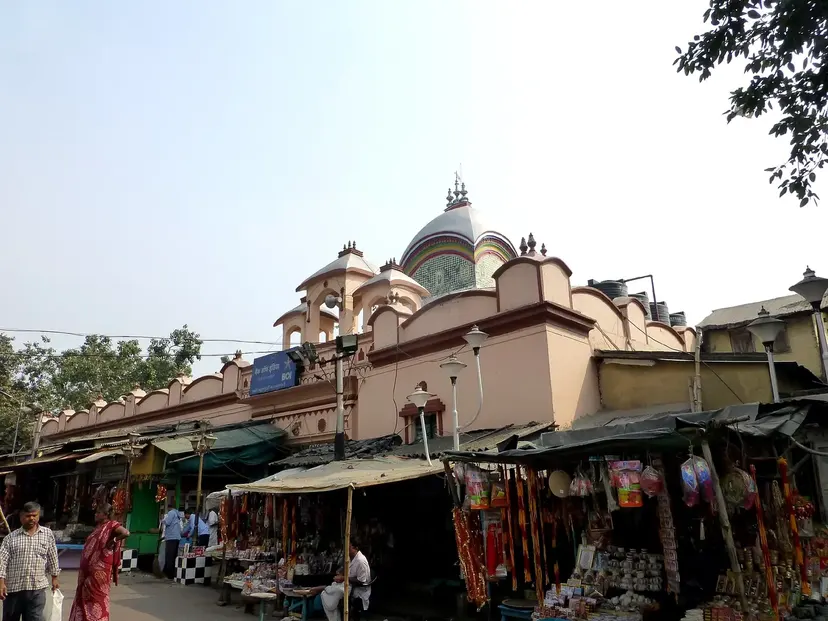
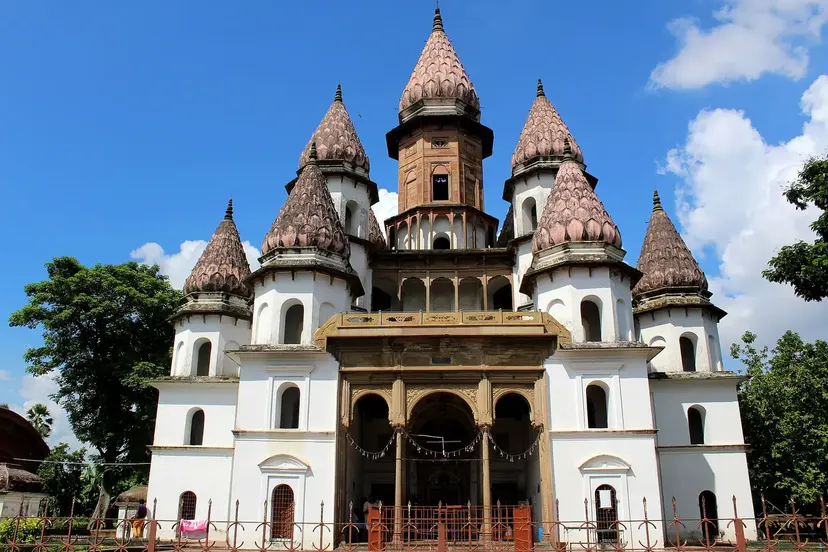
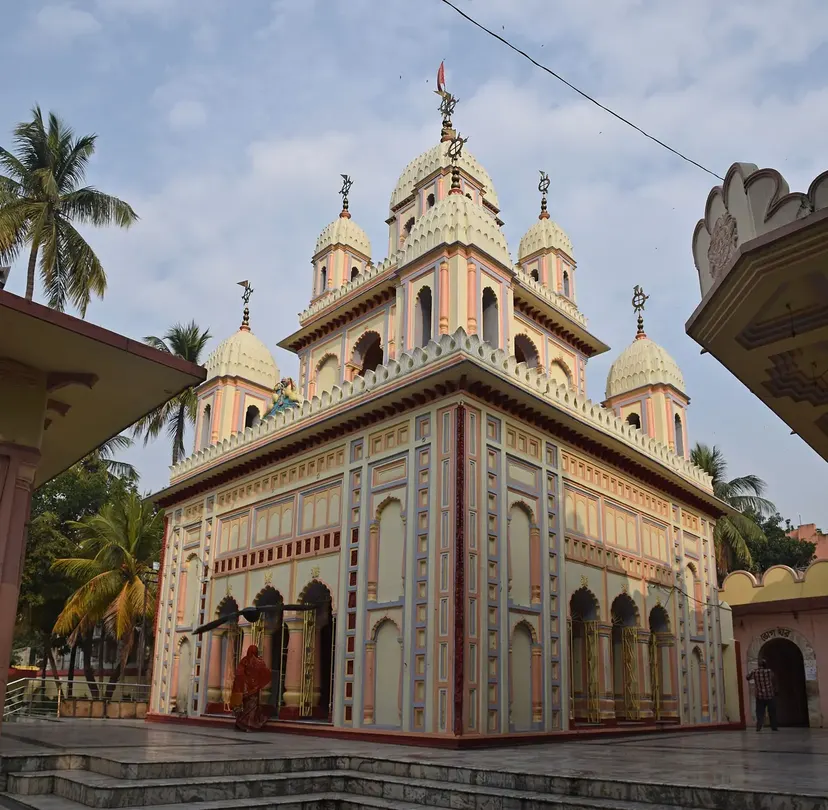
Along the riverfront, on either side of the bathing ghat, stand twelve identical east-facing Shiva temples in the aat-chala style. The Radhakanta (Radha-Krishna) temple lies to the north-east of the main shrine, and in front of the Kali temple is a natmandir, an open pillared hall about 50 by 75 feet with 16 pillars.
Plan Your Visit
Darshan and Visitor Information
The temple trust (checked October 2026) says darshan is free, bags and footwear must be deposited at counters before entry, leather items and large bags are not allowed near the sanctum, and photography is not permitted inside the main sanctum. Visitors are asked to dress modestly and follow the queue.
Darshan hours and puja times are published by the trust and can change on festival days; confirm current arrangements with the Dakshineswar Kali Temple trust before travelling.
Timings and arrangements change with seasons and festivals. Confirm current details with Dakshineswar Kali Temple Board of Trustees (official website) before travelling. Last reviewed 5 October 2026.
Sacred Calendar
Festivals at Dakshineswar Kali Temple
Dipanwita Kali Puja (Shyama Puja)
The temple trust describes this night of worship as the largest occasion at Dakshineswar, with the complex lit by thousands of lamps.
Phalaharini Kali Puja
The trust links this festival to the Shodashi puja that Sri Ramakrishna performed at Dakshineswar, and special worship is held in his room on the day.
Ratanti Kali Puja
Listed by the trust as one of the temple's three main Kali pujas.
Snana Yatra
The temple's images were installed on Snana Yatra day in 1855, so the day also marks the temple's founding.
Kalpataru Day
The trust records special worship in Sri Ramakrishna's room on Kalpataru Day.
Location
How to Reach Dakshineswar Kali Temple
The temple trust lists Dakshineswar railway station (on the Sealdah–Dankuni line) and Dakshineswar Metro station (terminus of the Blue Line) as the easiest approaches, both linked to the temple by a covered Skywalk. Buses and taxis run from Kolkata and Howrah.
The trust also notes ferry services across the Hooghly between the temple ghat and Belur Math.
Location: Dakshineswar, Kolkata, North 24 Parganas, West Bengal, India 700076
Nearest railway station: Dakshineswar railway station; Dakshineswar Metro (Blue Line)
More in Hindu temples in West Bengal · Devi (Kali as Bhavatarini) temples · Temples in Barrackpore II community development Block · Temples in North 24 Parganas District
Questions
Dakshineswar Kali Temple: Frequently Asked Questions
Who built Dakshineswar Kali Temple?
Rani Rashmoni founded it. She bought the land in 1847, and the temple was consecrated on 31 May 1855.
Which deity is worshipped at Dakshineswar?
The presiding deity is Kali in the form of Bhavatarini, a black stone image standing on a reclining Shiva. The complex also has twelve Shiva temples and a Radha-Krishna temple.
What is the connection between Sri Ramakrishna and Dakshineswar?
Sri Ramakrishna was a priest at the temple and lived in the temple garden for about three decades. His room in the north-western corner of the complex is preserved and worshipped in.
What style of architecture is the main temple?
It is a Bengal navaratna (nine-spire) temple of three storeys, about 46 feet square and over 100 feet high, according to West Bengal Tourism.
Is there an entry fee for darshan?
According to the temple trust, darshan is free; optional paid seva arrangements exist. Confirm current rules with the trust.
How do I get to Dakshineswar Kali Temple by train or metro?
Dakshineswar railway station on the Sealdah–Dankuni line and Dakshineswar Metro station, the Blue Line terminus, are both connected to the temple by a Skywalk.
Can I take photographs inside the temple?
The trust says photography is allowed in the outer complex and riverfront but not inside the main sanctum.
Sources and attribution
- © OpenStreetMap contributors — location data © OpenStreetMap contributors (ODbL)
- Wikidata Q1157765 — structured data (CC0)
- Wikipedia — Dakshineswar Kali Temple — text facts from Wikipedia, licensed CC BY-SA 4.0
- Dakshineswar Kali Temple Board of Trustees — Dakshineswar Kali Temple – official website (history, deed of dedication, festivals, visitor information)
- West Bengal Tourism, Government of West Bengal — Dakshineswar – Heritage (archived)
- North 24 Parganas District Administration — Tourism – Dakshineswar Kali Temple
Further reading: Dakshineswar Kali Temple on Wikipedia (CC BY-SA 4.0).
Spotted an error? Write to info@hindutone.com — see our editorial policy.