Karni Mata Temple, Deshnoke
करनी माता
Devi (Karni Mata) temple · Deshnoke, Bikaner, Rajasthan, India
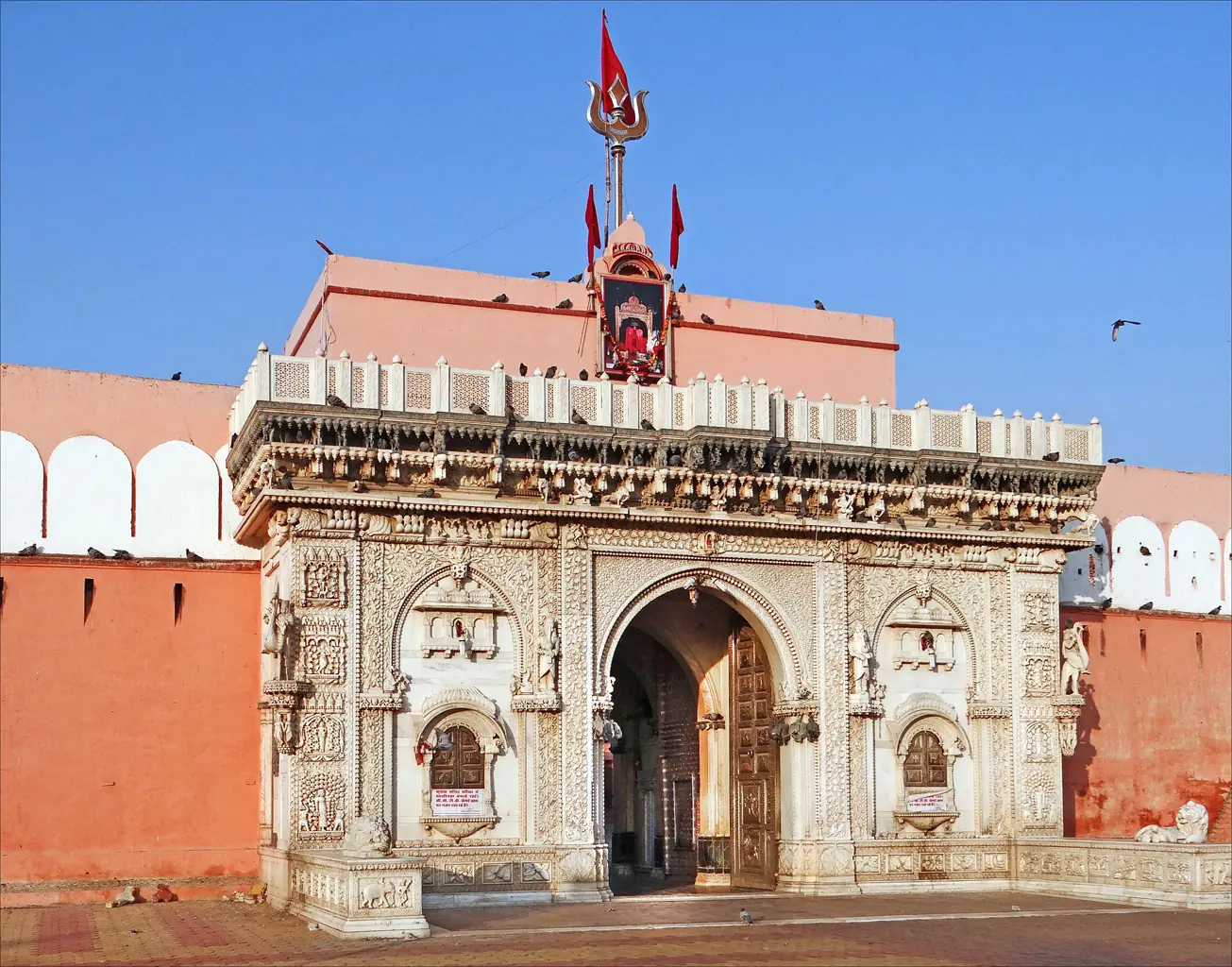
Photo: Jean-Pierre Dalbéra from Paris, France · CC BY 2.0 · via Wikimedia Commons
The Karni Mata Temple at Deshnoke, about 30 km from Bikaner in Rajasthan, is dedicated to Karni Mata, a revered woman sage of the Charan community whom local devotees regard as an incarnation of the goddess Durga. Of the many shrines to her, this one is the best known.
The temple is famous far beyond Rajasthan for its kabbas, the thousands of rats that live in the precincts and are treated as sacred. Rajasthan Tourism describes the shrine as one of the most visited attractions of the Bikaner area, and its two Navratri fairs draw large crowds of pilgrims every year.
Faith & Tradition
Religious Significance of Karni Mata Temple, Deshnoke
According to Rajasthan Tourism, Karni Mata was an ascetic of the Charan caste who lived in the fourteenth century and was believed by her followers to be a form of Durga. Tradition also credits her with laying the foundation stones of the forts at Bikaner and Jodhpur's Mehrangarh at the request of their rulers.
The temple's best-known legend concerns Laxman, Karni Mata's stepson, who drowned in the Kapil Sarovar at Kolayat. According to tradition, Karni Mata pleaded with Yama, the god of death, who finally agreed that Laxman and the other male children of her family would be reborn as rats. Devotees therefore regard the kabbas as members of Karni Mata's lineage rather than as vermin.
Food that the kabbas have nibbled is treated as blessed, and pilgrims bring milk and sweets for them. The few white rats are held to be especially sacred, as devotees believe they are Karni Mata and her sons; seeing one is considered auspicious. Harming a rat, even by accident, is regarded as a grave fault, and temple custom expects the person responsible to offer a rat made of gold in its place.
Heritage
History of Karni Mata Temple, Deshnoke
Rajasthan Tourism and the Ministry of Tourism's Incredible India site both state that the temple in its present form was completed in the early twentieth century by Maharaja Ganga Singh of Bikaner. Rajasthan Tourism adds that further embellishment, including the marble carvings and the silver gates, was carried out in 1999 by Kundan Lal Verma, a Hyderabad-based jeweller and devotee.
The dates of Karni Mata's own life are given differently in published accounts. Rajasthan Tourism places her in the fourteenth century, while also linking her to the founding of Bikaner, which the same site dates to 1488; Incredible India describes the shrine as about 500 years old. These figures should be read as tradition rather than precise historical record.
Ethnographic research published in 2022 by Kyle J. Trembley in the journal Environment and Planning E describes the temple as administered and staffed largely by members of the Charan community, who consider the roughly twenty thousand kabbas to be reincarnated Charans and care for them as kin.
Architecture and sacred features
The temple is built of stone and marble. Its marble facade is entered through solid silver doors whose panels depict legends of the goddess. Both Rajasthan Tourism and Incredible India describe the style as showing Mughal influence blended with local craftsmanship.
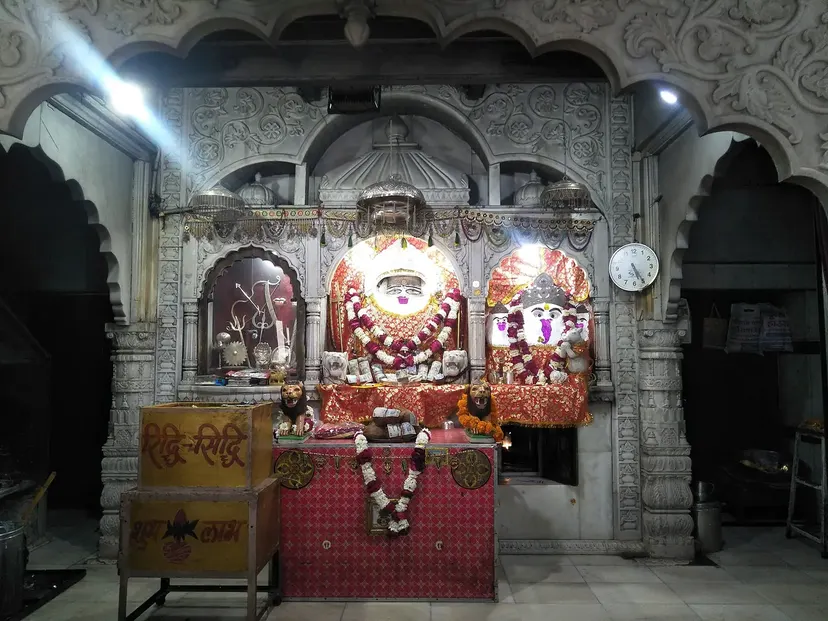
In the sanctum, according to Rajasthan Tourism, the image of Karni Mata is about 75 cm tall, holds a trident and is adorned with a crown and garlands, with images of her sisters on either side.
Plan Your Visit
Darshan and Visitor Information
Rajasthan Tourism lists the temple as open daily from early morning (about 4 a.m.) until late evening, with no entry fee (checked October 2026); confirm before travelling. Visitors walk barefoot inside the precincts, where the kabbas move freely, so it is best to move slowly and take care not to step on them. Confirm current arrangements with the temple administration or Rajasthan Tourism before visiting.
Timings and arrangements change with seasons and festivals. Confirm current details with the temple administration before travelling. Last reviewed 5 October 2026.
Sacred Calendar
Festivals at Karni Mata Temple, Deshnoke
Chaitra Navratri fair (Karni Mata Mela)
The first of the temple's two annual fairs runs from Chaitra Shukla Pratipada to Dashami, according to Rajasthan Tourism, and draws thousands of pilgrims.
Ashwin (Sharad) Navratri fair
The second annual fair is held during the Ashwin Navratri, again with thousands of devotees visiting Deshnoke.
Location
How to Reach Karni Mata Temple, Deshnoke
Deshnoke lies about 30 km from Bikaner, according to Rajasthan Tourism. Incredible India names Bikaner Railway Station (BKN) as the nearest railhead and lists Bikaner airport along with Jaipur and Delhi as the airports for the area. From Bikaner the temple is reached by road.
Location: Deshnoke, Bikaner, Rajasthan, India
Nearest airport: Bikaner (BKB); Jaipur (JAI) for wider connections
Nearest railway station: Bikaner (BKN)
More in Hindu temples in Rajasthan · Devi (Karni Mata) temples · Temples in Bikaner Tehsil · Temples in Bikaner District
Questions
Karni Mata Temple, Deshnoke: Frequently Asked Questions
Why are there rats in the Karni Mata Temple?
According to the temple's legend, Yama agreed that Karni Mata's stepson Laxman and the other male children of her family would be reborn as rats. Devotees therefore regard the kabbas as Karni Mata's kin and treat them as sacred.
What is special about the white rats at Deshnoke?
Devotees believe the few white rats are manifestations of Karni Mata and her sons. Seeing one is considered especially auspicious.
Who built the Karni Mata Temple in its present form?
Rajasthan Tourism and Incredible India credit Maharaja Ganga Singh of Bikaner with completing the present temple in the early twentieth century. The marble carvings and silver gates were added later, in 1999 according to Rajasthan Tourism.
How far is the Karni Mata Temple from Bikaner?
Rajasthan Tourism gives the distance from Bikaner to Deshnoke as about 30 km. The nearest railhead listed by Incredible India is Bikaner.
When are the Karni Mata fairs held?
Two fairs are held every year, during Chaitra Navratri (March–April) and Ashwin Navratri (September–October).
What happens if a rat is accidentally killed at the temple?
Temple custom, as described by Rajasthan Tourism, treats this as a serious fault and expects the person to offer a rat made of gold as penance.
Sources and attribution
- © OpenStreetMap contributors — location data © OpenStreetMap contributors (ODbL)
- Wikidata Q15233884 — structured data (CC0)
- Wikipedia — Karni Mata Temple — text facts from Wikipedia, licensed CC BY-SA 4.0
- Rajasthan Tourism, Government of Rajasthan — Karni Mata Temple, Bikaner
- Rajasthan Tourism, Government of Rajasthan — Bikaner destination page (Deshnok Karni Mata Temple)
- Incredible India, Ministry of Tourism, Government of India — Karni Mata Mandir
- Environment and Planning E: Nature and Space (SAGE), Kyle J. Trembley, 2022 — Jatikaran: Caste, rats, and the control of space at the Karni Mata Mandir
Further reading: Karni Mata Temple, Deshnoke on Wikipedia (CC BY-SA 4.0).
Spotted an error? Write to info@hindutone.com — see our editorial policy.