
Meenakshi (Devi) temple · Madurai, Tamil Nadu, India
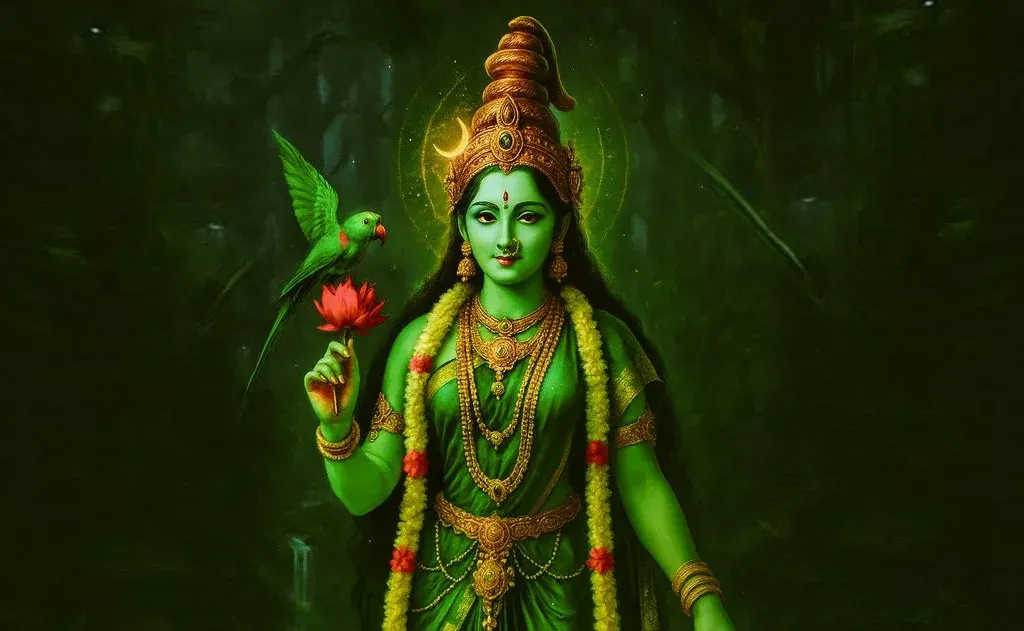
The Arulmigu Meenakshi Sundareswarar Temple stands at the centre of Madurai in Tamil Nadu. It is a twin temple: one shrine is dedicated to Goddess Meenakshi, a form of Parvati, and the other to her consort Sundareswarar, a form of Shiva. The old city of Madurai grew up around it. The Madurai district administration calls the temple the pivot around which the city evolved, and says the complex covers about 65,000 square metres.
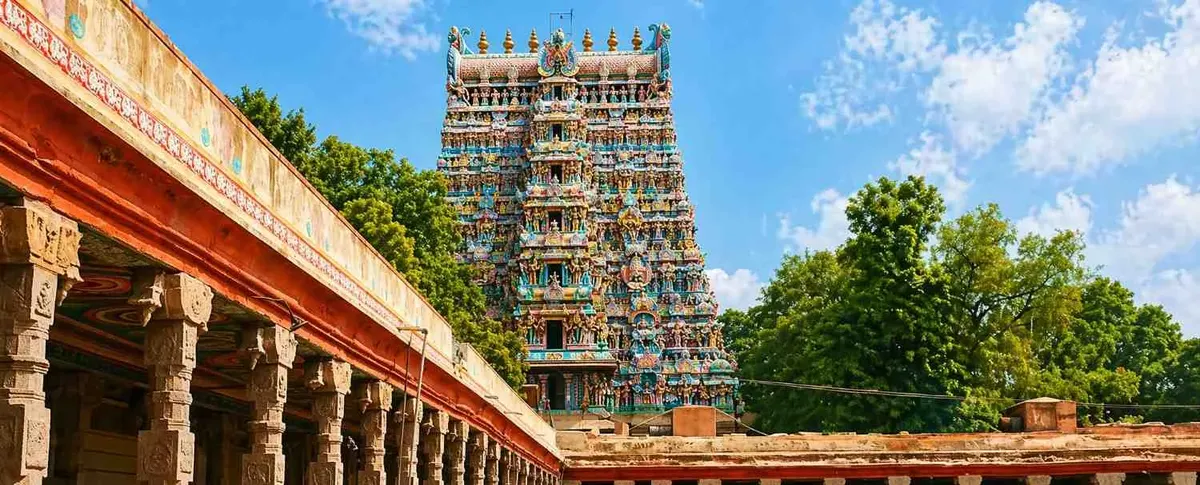
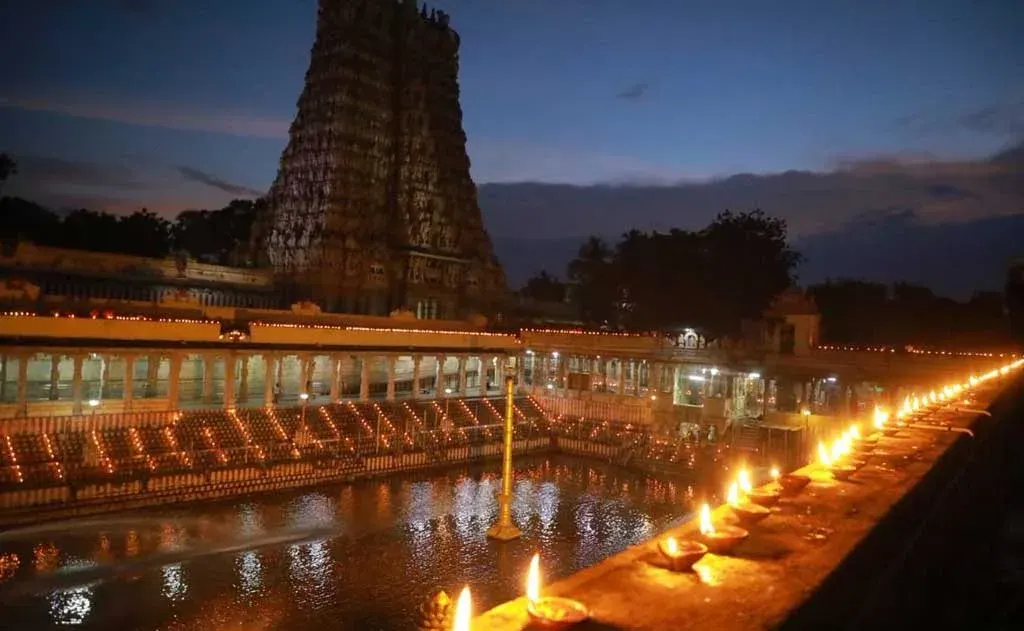
The temple is run by the Tamil Nadu Hindu Religious and Charitable Endowments (HR&CE) Department. It is known for its towering gopurams, the Hall of a Thousand Pillars and the Golden Lotus Tank (Potramarai Kulam). Every April–May it holds the Chithirai festival, which celebrates the coronation of Meenakshi and her wedding to Sundareswarar.
Faith & Tradition
According to the temple's sthala purana, as given by the HR&CE Department, the Pandya king Malayadhwaja and his queen Kanchanamalai prayed for a child. Parvati was born to them as Thadathagai, also called Meenakshi, 'the one with fish-like eyes'. She ruled the Pandya country and married Shiva, who reigned in Madurai as Sundara Pandyan. Tradition holds that the couple later crowned Ugra Kumara Pandyan, regarded as a form of Murugan, and took their place in the temple as Meenakshi and Sundareswarar.
Madurai is also the setting of the Thiruvilaiyadal Puranam of Paranjothi Munivar, which tells of sixty-four divine plays (thiruvilaiyadal) of Shiva in the city. Several of these are acted out during the temple's festivals. The HR&CE Department also records the tradition that the Shaiva saint Thirugnanasambandar cured the Pandya king Koon Pandiyan of his illness here. Madurai's identity as the city of the Tamil Sangam is closely bound up with the temple.
Heritage
Madurai was the capital of the Pandya kings. Encyclopaedia Britannica dates the Pandya capital there from the 4th to the 11th century CE. Britannica also records that the city was totally destroyed in 1310. The temple, Teppakulam tank and a 1,000-pillared hall were then rebuilt in the Vijayanagar–Nayaka period, during the 16th and 17th centuries. The Madurai district administration says the temple was greatly enlarged under Thirumalai Nayak (1623–55).
The HR&CE Department dates several of the gopurams individually. It places the western tower in the period from 1315 to 1347. The southern tower was built in 1559 under Visvanatha Nayak. The seven-tiered tower of the Amman (Meenakshi) shrine was built in 1569 by the son of Ariyanatha Mudaliar, and a five-tiered tower on the western Adi street was built in 1570. Construction of the northern tower began under Krishnappa Nayak I. These dates show that the complex grew over several centuries and under many patrons.
The temple holds periodic consecration ceremonies (kumbabishekam). The HR&CE Department records ceremonies in 1974, 1995 and on 8 April 2009. The most recent was held on 17 September 2026, after repair work, and The Hindu reported it as the first in 17 years.
The temple follows the Dravidian style. The sanctums of Meenakshi and Sundareswarar are enclosed by concentric corridors (prakarams) and entered through monumental gopurams covered in painted stucco figures. The Madurai district administration highlights the Ayiram Kaal Mandapam (Hall of a Thousand Pillars), whose carved pillars appear to line up from any angle, and the musical stone pillars of the outer corridors, which are said to give different notes when tapped.
The Potramarai Kulam (Golden Lotus Tank) is the temple's sacred tank. Sources give different counts of the gopurams. The district administration mentions five massive gateways around the twin shrines, while press coverage of the 2026 consecration refers to rituals on 12 gopurams.
Plan Your Visit
The temple is open in a morning session and an evening session, with a midday closure, as listed by the Tamil Nadu HR&CE Department (checked October 2026). Hours can change on festival days and after the September 2026 consecration, so confirm current arrangements with the HR&CE Department or the temple office before travelling.
Footwear must be left outside before entering, as at other Tamil Nadu temples, and modest clothing is expected. The Chithirai festival and the major festival days draw very large crowds. Confirm current dress and entry arrangements with the HR&CE Department or the temple office.
Timings and arrangements change with seasons and festivals. Confirm current details with Tamil Nadu Hindu Religious and Charitable Endowments (HR&CE) Department (official website) before travelling. Last reviewed 5 October 2026.
Sacred Calendar
Over about twelve days the festival moves through Meenakshi's coronation (Pattabhishekam), her conquest of the directions (Digvijayam), her celestial wedding to Sundareswarar and the temple car procession. It then joins the journey of Kallazhagar from Alagar Koil and his entry into the Vaigai river.
Episodes from the sixty-four Thiruvilaiyadal of Shiva are enacted in procession. One is the story of Shiva carrying earth for a share of puttu from the old woman Vanthi, which is staged at the Puttu Thoppu mandapam near the Vaigai.
The temple sets up a large golu display of dolls in the corridor near the Goddess's sanctum, which draws thousands of visitors in the evenings.
The temple's consecration ceremony renews the sanctity of its towers and shrines. It was most recently held in September 2026, 17 years after the previous one in April 2009.
Location
The HR&CE Department puts Madurai railway station (Madurai Junction) about 1.6 km from the temple and Madurai Airport about 10.7 km away. The Madurai district administration places the airport at Avaniyapuram, about 12 km from the city. It has domestic flights and some international services, including to Colombo, Dubai and Singapore. Madurai Junction is the headquarters of the Southern Railway's Madurai division and has direct trains to Chennai, New Delhi, Mumbai and Kolkata.
City buses run to the temple area. The HR&CE Department lists routes C3 and C4, which link Periyar bus stand and Mattuthavani. The temple sits inside the ring of Chithirai and Masi streets in the old city.
Location: Madurai, Tamil Nadu, India
Nearest airport: Madurai Airport, Avaniyapuram (about 10.7 km, per HR&CE)
Nearest railway station: Madurai Junction (about 1.6 km, per HR&CE)
More in Hindu temples in Tamil Nadu · Meenakshi (Devi) temples · Temples in Madurai-South Taluk · Temples in Madurai District
Photographs
Questions
The temple is a twin shrine to Goddess Meenakshi, a form of Parvati, and to Sundareswarar, a form of Shiva. According to the temple's legend, Meenakshi was born to a Pandya king and married Shiva in Madurai.
Its origins are ancient and partly legendary. Britannica records that the temple was rebuilt in the 16th and 17th centuries after Madurai was destroyed in 1310, and HR&CE dates individual gopurams to between the 14th and 16th centuries.
It is the high point of the Chithirai festival, held in the Tamil month of Chithirai (April–May). Exact dates change every year and are announced by the HR&CE Department.
The most recent consecration was held on 17 September 2026. The previous one was on 8 April 2009, according to the HR&CE Department.
The HR&CE Department puts Madurai railway station about 1.6 km away and Madurai Airport about 10.7 km away.
It is the Ayiram Kaal Mandapam, a large pillared hall in the temple known for its carved pillars. Britannica notes that a 1,000-pillared hall was among the structures rebuilt in the 16th–17th centuries.
It is administered by the Tamil Nadu Hindu Religious and Charitable Endowments Department, which runs the official website maduraimeenakshi.hrce.tn.gov.in.
Spotted an error? Write to info@hindutone.com — see our editorial policy.
Pilgrim Circuit
