Sri Mariamman Temple
Mariamman (Devi) temple · Singapore, Chinatown, Central Region, Central
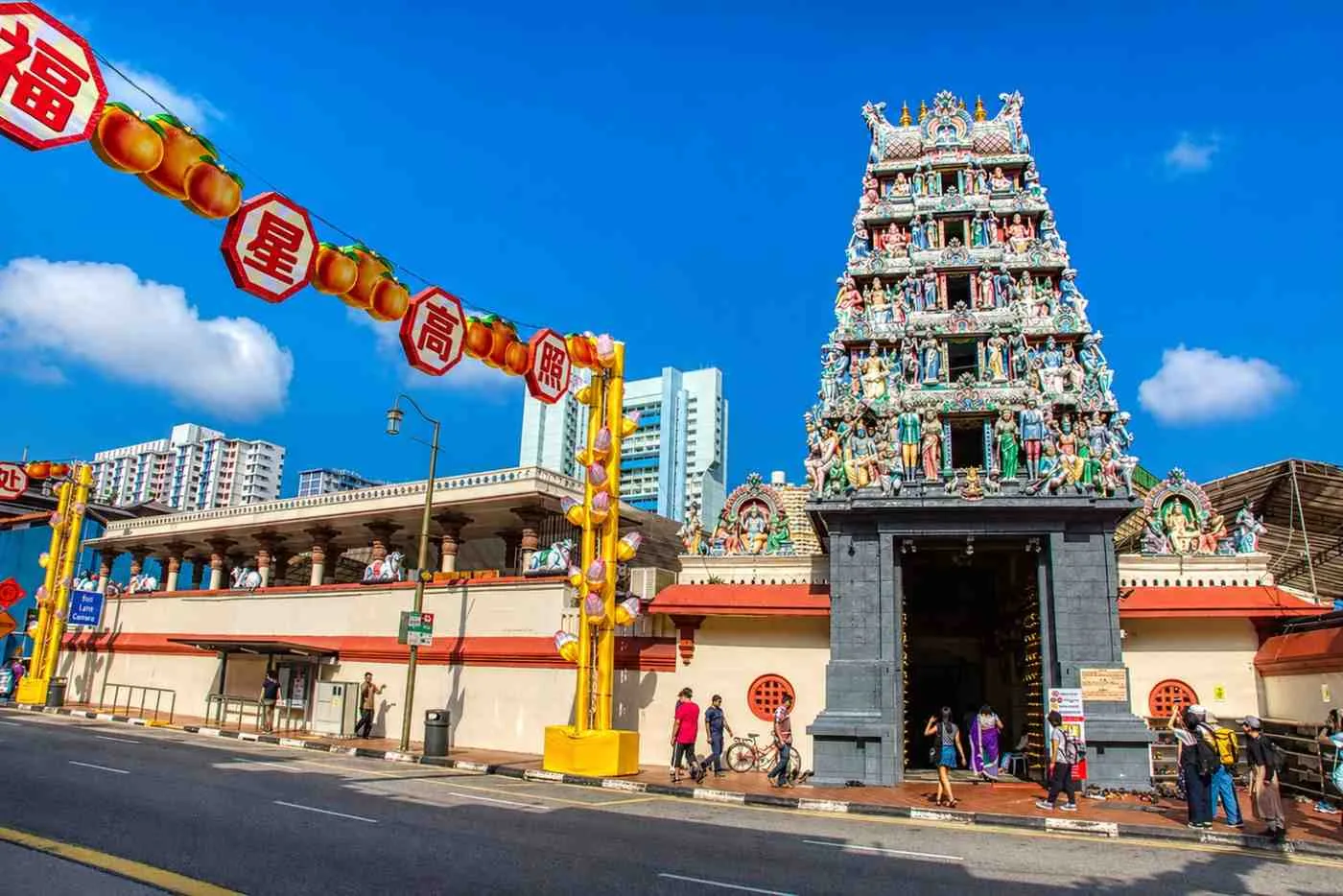
Sri Mariamman Temple at 244 South Bridge Road, in Singapore's Chinatown, is the oldest Hindu temple in Singapore. It is dedicated to Goddess Mariamman, a South Indian mother goddess worshipped for her power to cure epidemic illnesses and associated with life-giving rain. The temple was founded by the Indian pioneer Naraina Pillai, and a wood-and-attap shrine stood on the site by 1827. It is now a National Monument managed by the Hindu Endowments Board (HEB).
The temple is known for its brightly sculpted gopuram over the entrance and for Theemithi, the annual firewalking festival in honour of Draupadi. It has been a landmark for generations of Tamil Hindus in Singapore.
Faith & Tradition
Religious Significance of Sri Mariamman Temple
According to the National Heritage Board, Sri Mariamman Temple was more than a place of worship in colonial Singapore. It sheltered newly arrived Indian immigrants until they found work and lodging, and it served as a meeting place for the community. The HEB notes that the temple once acted as the registry of marriages for Hindus, at a time when only it was authorised to solemnise Hindu weddings. Traditional Hindu weddings are still held there.
The temple gave its names to the neighbouring streets. Pagoda Street refers to the gopuram, which reminded Chinese residents of a pagoda, and Temple Street runs along its other side. The National Heritage Board says that together with the nearby Jamae Mosque, the temple marks the large Tamil community that once lived in the area.
Heritage
History of Sri Mariamman Temple
Naraina Pillai was a government clerk from Penang who came to Singapore with Sir Stamford Raffles on Raffles's second visit in 1819. The British East India Company first allotted land on Telok Ayer Street for a Hindu temple. The community rejected it because it had no convenient supply of fresh water for rituals. Pillai was then allowed a plot near the Freshwater Stream (today's Stamford Canal), but that site was later reserved for other plans. In 1823 the present South Bridge Road site was set aside in Singapore's first town plan.
By 1827 a wood-and-attap temple stood on the site, and Pillai installed a small image of the goddess known as 'Sinna Amman'. According to both the HEB and the National Heritage Board, this same image remains in the main sanctum today. The oldest parts of the present brick building date from about 1843. The temple compound was later enlarged when the landowner Seshasalam Pillai donated part of his land, a gift recorded on a granite slab in the temple.
In 1915, after a fire in 1910 destroyed the old attap-covered walkway, the firm Swan & Maclaren designed a new sheltered walkway between the entrance tower and the main hall. The National Heritage Board says the original three-tiered gopuram was replaced in 1925 by the present five-tiered tower. The HEB dates its rebuilding to the 1930s and its elaborate sculptural restoration to the 1960s. Figures of Indian sepoys that once stood at the base of the gopuram were removed in 1971.
The HEB records the temple's first kumbabishegam (consecration) in June 1936. Others followed in 1949, 1971, 1984 and 1996, and the National Heritage Board notes a reconsecration in 2010. After its 12-year cycle of restoration, the temple held its most recent Maha Kumbabishegam on 12 February 2023, according to the HEB.
Architecture and sacred features
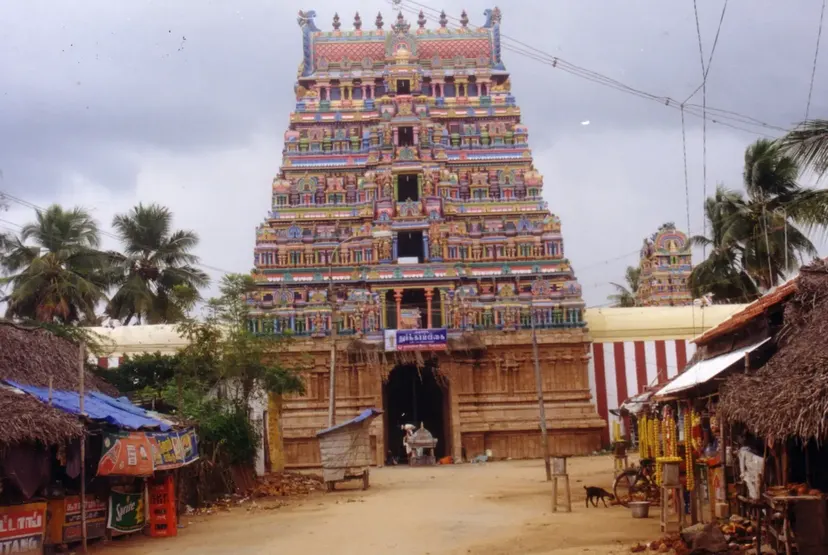
The temple is built in the South Indian (Dravidian) style. Its most striking feature is the five-tiered gopuram covered with painted sculptures of Hindu deities. Inside, a long pillared mandapam (main hall) has elaborate ceiling paintings, including mandala designs. Shrines within the compound are capped with domed vimanams, and sculptures of cows line the boundary walls.
The main sanctum holds the image of Sri Mariamman. The National Heritage Board says it is flanked by secondary shrines to Draupadi and to Rama. Ganesha is also worshipped here, as is Aravan, shown as a severed head, a figure from the Mahabharata.
Plan Your Visit
Darshan and Visitor Information
The Hindu Endowments Board asks visitors to cover their shoulders and wear trousers or skirts that reach at least the knee, and to avoid tight, short or revealing clothing. Shawls and wraps are available for those not dressed appropriately. Footwear must be removed outside. Visitors should not enter the shrines or sanctums, should not sit with their feet pointing towards the deities or the priests, and should keep their voices low. Smoking and alcohol are prohibited on the temple grounds.
The temple is open in a morning session and an evening session each day, as listed by the Hindu Endowments Board (checked October 2026). Festival days, especially Theemithi, have special arrangements. Confirm current arrangements with the Hindu Endowments Board / Sri Mariamman Temple office before visiting.
Timings and arrangements change with seasons and festivals. Confirm current details with Hindu Endowments Board (HEB), Singapore (official website) before travelling. Last reviewed 5 October 2026.
Sacred Calendar
Festivals at Sri Mariamman Temple
Theemithi (Firewalking)
Held in honour of Draupadi, it recalls the Mahabharata episode in which she walked on fire to prove her purity. Devotees process about four kilometres from Sri Srinivasa Perumal Temple on Serangoon Road, and male devotees walk barefoot across a bed of burning coals before stepping into a pit of milk.
Navarathri
The HEB lists Navarathri among the temple's main festivals after Theemithi, with nine nights devoted to the Goddess.
1008 Sangabishegam
The HEB names the 1008 Sangabishegam, a conch abhishekam of the deity, as one of the temple's important observances alongside Theemithi and Navarathri.
Location
How to Reach Sri Mariamman Temple
The temple is at 244 South Bridge Road, Singapore 058793, in the Chinatown district. Singapore Changi Airport is the city's international airport. Chinatown is well served by Singapore's MRT rail network and public buses, and the temple is a short walk from the Pagoda Street and South Bridge Road area.
Check the Land Transport Authority's or the operators' journey planners for the current nearest station and bus routes before travelling.
Location: Singapore, Chinatown, Central Region, Central
Nearest airport: Singapore Changi Airport
Nearest railway station: Chinatown area, served by the MRT network (check LTA journey planner)
Questions
Sri Mariamman Temple: Frequently Asked Questions
Is Sri Mariamman the oldest Hindu temple in Singapore?
Yes. Both the Hindu Endowments Board and the National Heritage Board describe it as Singapore's oldest Hindu temple, with a wood-and-attap shrine on the site by 1827.
Who founded Sri Mariamman Temple?
It was founded by Naraina Pillai, a clerk from Penang who came to Singapore with Sir Stamford Raffles in 1819. The South Bridge Road site was granted to him in 1823.
When is Theemithi held at Sri Mariamman Temple?
Theemithi takes place every year in October or November. Exact dates and devotee registration are announced by the Hindu Endowments Board.
Is the original deity still in the temple?
According to the HEB and the National Heritage Board, the small image of the goddess installed by Naraina Pillai in 1827, known as Sinna Amman, is still in the main sanctum.
How many tiers does the gopuram have?
The present gopuram has five tiers. The National Heritage Board says it replaced an earlier three-tiered tower in 1925, while the HEB dates the rebuilding to the 1930s.
What should I wear to visit Sri Mariamman Temple?
The HEB asks visitors to cover their shoulders and knees and to remove footwear outside. Wraps are available at the temple.
Who manages Sri Mariamman Temple?
The temple is managed by the Hindu Endowments Board, which also manages Sri Srinivasa Perumal Temple, Sri Sivan Temple and Sri Vairavimada Kaliamman Temple.
Sources and attribution
- Sri Mariamman Temple / Hindu Endowments Board — Sri Mariamman Temple – History
- Sri Mariamman Temple / Hindu Endowments Board — Sri Mariamman Temple – Temple Etiquette
- Sri Mariamman Temple / Hindu Endowments Board — Sri Mariamman Temple – official website (address, operating hours)
- Hindu Endowments Board, Singapore — Sri Mariamman Temple Maha Kumbabishegam 2023
- National Heritage Board, Singapore (Roots.gov.sg) — Sri Mariamman Temple (National Monuments)
Spotted an error? Write to info@hindutone.com — see our editorial policy.