

How the UK Celebrated Ganesh Chaturthi & Visarjan 2026: A City-Wise Guide
How Britain celebrated Ganesh Chaturthi 2026 (Sep 14) & Visarjan (Sep 25) — city-wise: London, Leicester, Birmingham, Manchester & more; eco-friendly, legal immersion.
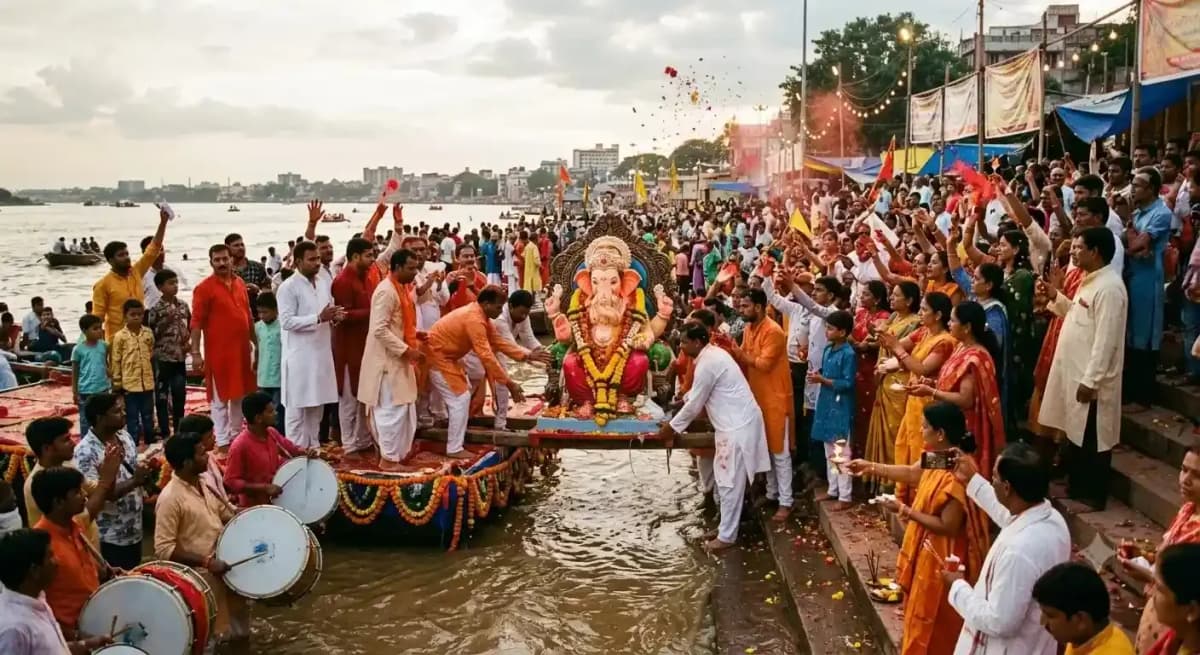
How Britain celebrated Ganesh Chaturthi 2026 (Sep 14) & Visarjan (Sep 25) — city-wise: London, Leicester, Birmingham, Manchester & more; eco-friendly, legal immersion.
Ganesh Chaturthi is celebrated with deep devotion by Britain's Hindu community of around a million people. In 2026 it began Monday, 14 September, concluding with Visarjan on Anant Chaturdashi, Friday, 25 September. UK celebrations blend tradition with British practicalities — eco-friendly clay idols, temple programmes, community processions and strictly legal immersion that respects Environment Agency rules.
Overall highlights
- Home & temple focus: families install small biodegradable clay murtis; temples and mandals host multi-day programmes with abhishekam, aarti, modak, bhajans and cultural shows.
- Eco-friendly & legal visarjan: direct immersion in the Thames or rivers is generally restricted. Communities use approved coastal/river sites (with permits), temple tanks, or home methods (bucket, paddling pool, bathtub). Safely-dissolving clay idols are the standard.
- Community spirit: Maharashtra Mandals, Gujarati, Tamil and other groups organise dhol-tasha, processions and weekend-shifted utsavs (often 19–20 September).
- Key hubs: London, Leicester, Birmingham and Manchester.
City-wise
London & Greater London
The densest concentration of temples and events. BAPS Shri Swaminarayan Mandir (Neasden) — one of Europe's largest traditional Hindu temples — hosts substantial Ganesh observances; Shree Ghanapathy Temple, Wimbledon (dedicated to Ganesha) runs special Vinayaka Chaturthi programmes and processions. Wembley, Harrow, Southall, East Ham and Willesden are vibrant; organised immersions sometimes take place at approved Thames sites such as Putney and Richmond.
Leicester
One of Britain's most vibrant Ganesh hubs. Temples along the Belgrave Road "Golden Mile" (Shree Sanatan Mandir, Shree Jalaram and others) lead grand celebrations with dhol-tasha pathaks and Marathi aarti. Processions assemble at Belgrave Circle, move along Belgrave Road and Melton Road, and conclude at Abbey Park (often the weekend after Chaturthi).
Birmingham & West Midlands
Shri Venkateswara (Balaji) Temple, Tividale — one of Europe's largest — hosts Ganesh programmes and an immersion festival; Shree Geeta Bhawan, Handsworth draws vibrant gatherings with large decorated idols and maha prasad. Temples organise formal visarjan collection since canal/river immersion is not permitted.
Manchester & Northern England
Growing celebrations across Manchester, Salford, Bolton and Liverpool — pujas, cultural programmes and eco-friendly immersion arrangements at local mandirs.
Other notable areas
- Slough: organised immersions at the Jubilee River (one of the first officially sanctioned sites).
- Scotland: Sundara Ganapathy Temple, Glasgow and community centres.
- Cardiff, Coventry, Bradford: active local mandirs mark the festival nationwide.
How Visarjan works in the UK
Most families perform a simple, fully legal home visarjan — final uttar puja, then immersion of a clay idol in a tub, paddling pool or garden pond, with the dissolved clay later used for plants. Organised community immersions take place only at Environment Agency- and council-approved sites (Putney, Richmond, Jubilee River) with clay-only rules; temples often collect idols for safe disposal or tank immersion.
Practical tips
- Buy eco-friendly clay idols early from Indian stores in Wembley, Southall, Leicester's Belgrave Road or Birmingham's Soho Road — they sell out fast.
- Check temple websites for 2026 schedules and registration.
- The midday (Madhyahna) puja window on 14 September is roughly late morning to early afternoon BST.
- Prefer temple-organised or home methods; never improvise river immersions.
Ganpati Bappa Morya! Pudhchya Varshi Lavkar Ya!
You might also like
How the USA Celebrated Ganesh Chaturthi & Visarjan 2026: A City-Wise Guide
Ganesh Chaturthi in India: Celebrations Across the Country (2026 Guide)

Navratri 2026: 9 Days, Colors, Goddess Names, Puja & Significance