BAPS Shri Swaminarayan Mandir
બાપ્સ શ્રી સ્વામિનારાયણ મંદિર નિસડેન
Bhagwan Swaminarayan temple · London (Neasden), London Borough of Brent, England, United Kingdom
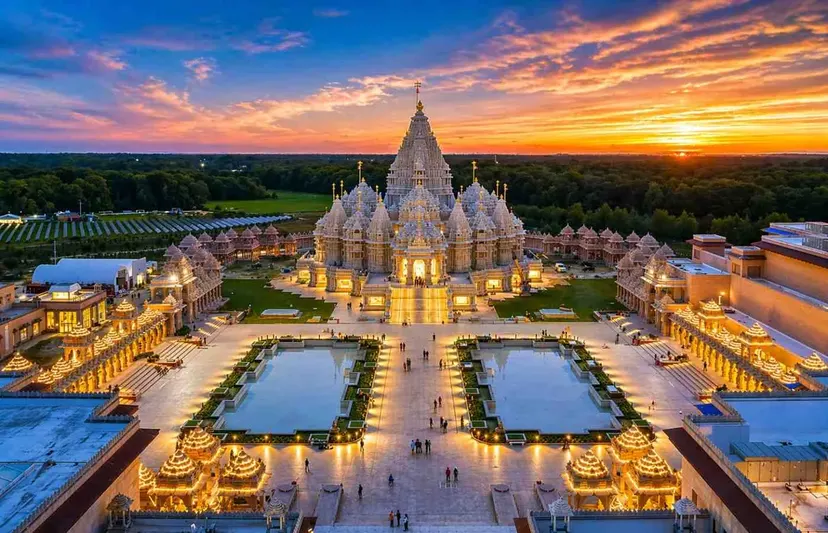
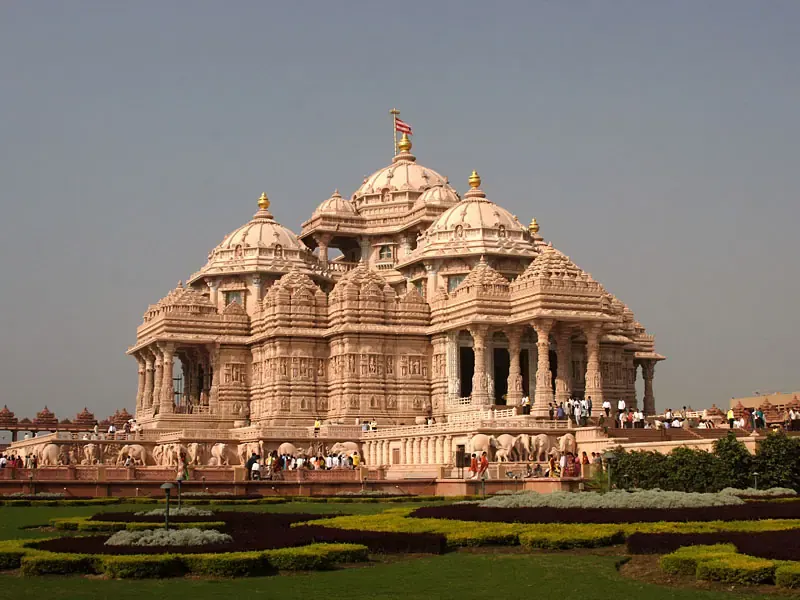
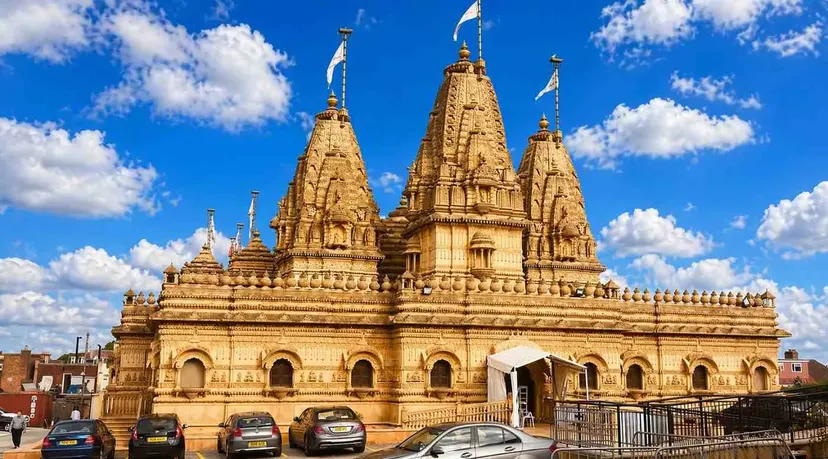
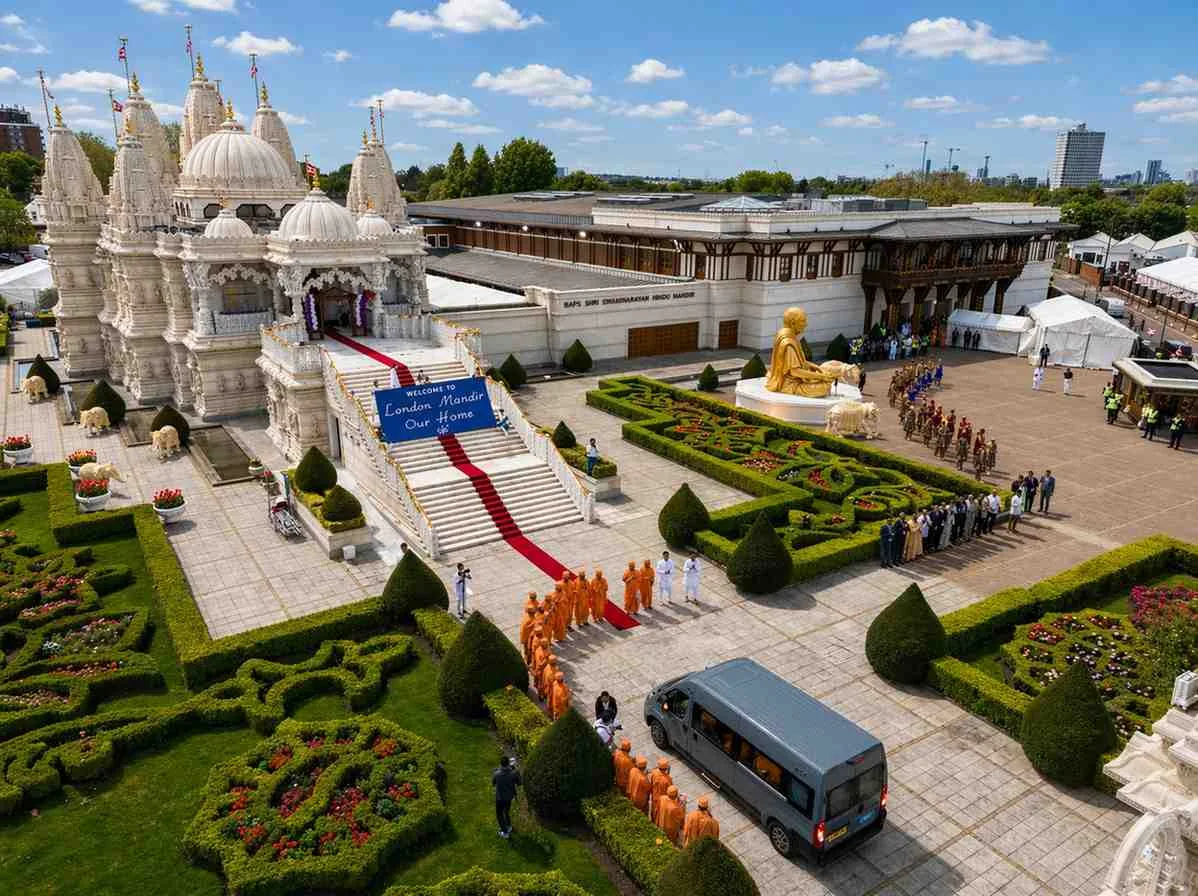
BAPS Shri Swaminarayan Mandir, widely known as the Neasden Temple, is a Hindu mandir in Neasden, north-west London, dedicated to Bhagwan Swaminarayan. It is run by the Bochasanwasi Akshar Purushottam Swaminarayan Sanstha (BAPS) and was inaugurated by Pramukh Swami Maharaj on 20 August 1995. BAPS describes it as Europe's first traditional Hindu stone temple: a carved structure of limestone and marble, built to the principles of the traditional architectural texts and assembled without structural steel.
For British Hindus, and for followers of the Swaminarayan tradition in particular, the mandir is both an active place of daily worship and one of the best-known Hindu landmarks in the country. Admission is free, and the complex also includes the Haveli cultural centre and a permanent exhibition on Hinduism.
Faith & Tradition
Religious Significance of BAPS Shri Swaminarayan Mandir
At the time it was completed, the Neasden mandir was the largest Hindu temple built outside India, and it held that position for many years, according to the Twentieth Century Society. Its importance for British Hindus lies partly in the fact that it was a purpose-built, traditionally carved mandir at a time when most UK temples occupied converted halls, churches or houses.
Within the BAPS tradition, the central shrine embodies the Akshar-Purushottam teaching: Bhagwan Swaminarayan is worshipped together with Gunatitanand Swami, whom devotees regard as Aksharbrahman, his ideal devotee. Devotees believe the consecrated murtis are living presences, and they are offered daily worship, food and arti.
The building has also drawn wider public recognition. It won the inaugural National Pride of Place award in 2007, and King Charles III, who first visited in 1996, returned with Queen Camilla in October 2025 for the temple's 30th anniversary.
Heritage
History of BAPS Shri Swaminarayan Mandir
According to BAPS UK, followers of the Swaminarayan tradition began meeting in London in the early 1950s, and the organisation was formally registered in 1959. In 1970 the community acquired a small former church on Elmore Street in Islington, which was inaugurated by Yogiji Maharaj as the first BAPS mandir in the UK.
As the congregation grew, a larger mandir and assembly hall were set up on a 2.25-acre former factory site in Neasden; Pramukh Swami Maharaj inaugurated it in 1982. BAPS records that the foundation stone for a new, traditional stone mandir was laid in July 1991, and construction on site began in November 1992.
The stone was quarried in Bulgaria and Italy, with Indian marble also used, and shipped to India. There, more than 1,500 craftsmen carved it into some 26,000 pieces, which were numbered and sent to London to be fitted together like a three-dimensional puzzle. Press and heritage accounts put the total at more than 5,000 tonnes of stone, and BAPS says over 3,000 volunteers worked on the project. The structure was finished in roughly two and a half years.
Pramukh Swami Maharaj performed the murti pratishtha (consecration) on 20 August 1995. The temple marked its 25th anniversary in 2020 and its 30th in 2025, the latter with a visit from King Charles III and Queen Camilla.
Architecture and sacred features
The mandir was designed by the architect Chandrakant Sompura following Vastu Shastra, the traditional Indian discipline of sacred architecture. It has seven pinnacles (shikhars), six domes and 193 carved pillars. Bulgarian limestone is used for the exterior and Italian Carrara and Indian Ambaji marble for the interior. Because the tradition avoids ferrous metal in the shrine, the stonework is self-supporting rather than built around a steel frame.
Next to the mandir is the Haveli, a cultural centre faced with carved Burmese teak and English oak in the style of traditional Gujarati havelis. The Twentieth Century Society notes that it was the first haveli built in more than a century and that it inspired similar buildings elsewhere.
Plan Your Visit
Darshan and Visitor Information
Admission is free. As listed by BAPS Shri Swaminarayan Mandir London (checked October 2026), tops must cover the shoulders, chest, navel and upper arms, and leg-wear must reach at least below the knee. Shoes are removed in the Haveli, where racks are provided. Personal mobile-phone photos and videos are allowed only from ground level outside the Mandir and Haveli; photography and filming inside are not permitted. Food, drink and smoking are not allowed on the premises, large bags go in the baggage cabin, and children under 16 must be accompanied by an adult.
Opening hours vary between sections of the temple's own website, so confirm current arrangements with BAPS Shri Swaminarayan Mandir London before travelling. Free public tours are offered.
Timings and arrangements change with seasons and festivals. Confirm current details with BAPS Swaminarayan Sanstha UK (official website) before travelling. Last reviewed 5 October 2026.
Sacred Calendar
Festivals at BAPS Shri Swaminarayan Mandir
Diwali and Annakut
Annakut, the offering of a large array of vegetarian dishes to the deities for the Hindu New Year, is the mandir's biggest annual gathering; BAPS UK cites around 20,000 attendees at Neasden.
Patotsav (mandir anniversary)
The anniversary of the 20 August 1995 consecration is marked each year with special worship and assemblies.
Swaminarayan Jayanti and Ram Navami
Bhagwan Swaminarayan's birth falls on the same lunar day as Ram Navami, so both are celebrated together at the mandir.
Janmashtami
Krishna's birth is celebrated at the shrine of Radha-Krishna, part of the mandir's wider family of murtis.
Location
How to Reach BAPS Shri Swaminarayan Mandir
The mandir is on Pramukh Swami Road, Neasden, London NW10 8HW. The temple's travel guide names Neasden station (Jubilee line) as the nearest walking option, at about 20 minutes on foot. Stonebridge Park and Harlesden (Bakerloo line and London Overground) are also within walking distance, and from Wembley Park (Metropolitan and Jubilee lines) visitors can take bus 206 to Brentfield Road. Bus routes 206 and 224 stop on Brentfield Road.
For international travellers, London Heathrow is the main airport for west and north-west London; check Transport for London for current routes. The mandir lists free car parking for visitors and limited coach parking.
Location: London (Neasden), London Borough of Brent, England, United Kingdom NW10 8LD
Nearest airport: London Heathrow Airport
Nearest railway station: Neasden (Jubilee line), about 20 minutes' walk; Stonebridge Park and Harlesden also nearby
More in Hindu temples in England · Bhagwan Swaminarayan temples
Questions
BAPS Shri Swaminarayan Mandir: Frequently Asked Questions
Why is the Neasden Temple significant?
BAPS describes it as Europe's first traditional Hindu stone temple. When it opened in 1995 it was also the largest Hindu temple built outside India, a distinction it held for many years.
Who is worshipped in the central shrine?
The central shrine holds Bhagwan Swaminarayan with Gunatitanand Swami and Gopalanand Swami. Other shrines house Radha-Krishna, Ghanshyam Maharaj, Shiva-Parvati, Ram-Sita, Hanuman and Ganesh.
Is there an entry fee?
No. Admission to the mandir is free, according to the official website.
Can I take photographs inside?
No. The mandir allows personal mobile-phone photos only from ground level outside the Mandir and Haveli; photography and filming are not permitted inside.
What is the dress code?
Tops must cover the shoulders, chest, navel and upper arms, and leg-wear must come below the knee. Shoes are removed indoors.
Which station is closest?
Neasden on the Jubilee line, about a 20-minute walk according to the temple. Buses 206 and 224 stop on nearby Brentfield Road.
Was steel used in its construction?
According to BAPS, the mandir was built to traditional architectural texts without structural steel. The carved stone is self-supporting.
Sources and attribution
- BAPS Swaminarayan Sanstha UK — BAPS Shri Swaminarayan Mandir, London (official site)
- BAPS Swaminarayan Sanstha UK — BAPS in the UK: history and milestones
- BAPS Swaminarayan Sanstha UK — Visitor guidelines
- BAPS Swaminarayan Sanstha UK — Getting here
- BAPS (swaminarayan.org) — BAPS Swaminarayan Mandir, London (global network)
- The Twentieth Century Society — BAPS Shri Swaminarayan Mandir, Neasden (Coming of Age)
- Dezeen — Neasden Temple is built from over 5,000 tonnes of hand-carved stone
- The Royal Household — The King and Queen celebrate 30 years of Neasden Temple, London
Spotted an error? Write to info@hindutone.com — see our editorial policy.