History of BAPS Shri Swaminarayan Mandir
A First traditional Hindu stone temple in Europe whose origins stretch across centuries of Sanatana Dharma.
From a converted warehouse to a Bulgarian-marble mandir
The story of Neasden Temple begins in 1970, when a small Gujarati BAPS satsang group in Golders Green performed its first joint pooja. Led by Vinubhai Bhadresha and inspired by Yogiji Maharaj’s vision for a mandir in London, the community rented a succession of halls through the 1970s before buying a disused milk warehouse at Brentfield Road in 1980. Pramukh Swami Maharaj consecrated this interim mandir in 1982, naming it simply Shri Swaminarayan Mandir.
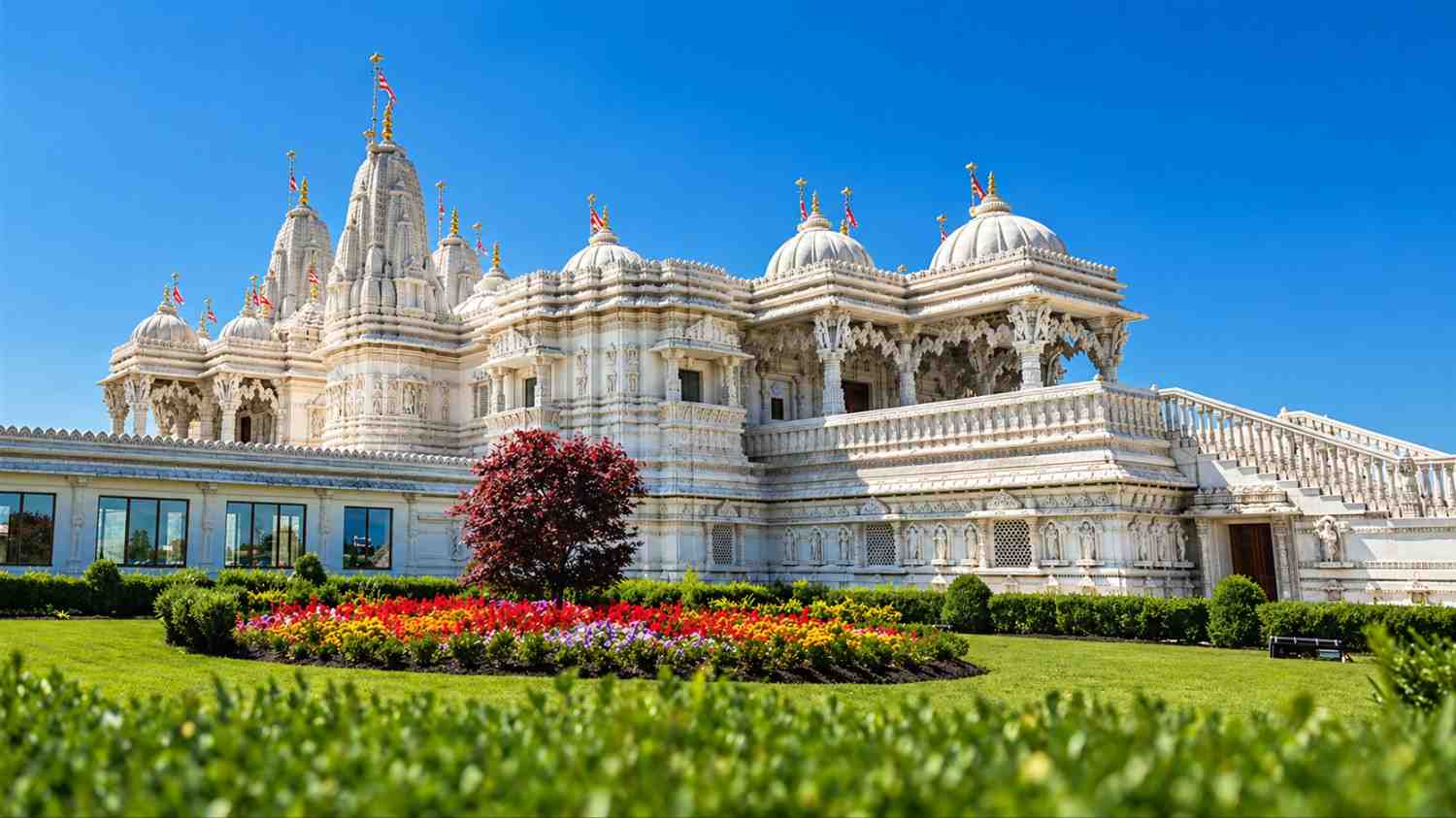
As the satsang grew, Pramukh Swami Maharaj formally announced in 1992 that a traditional stone mandir would be built on the site. The architectural design was entrusted to the BAPS team of sthapathis trained at Ambaji in Gujarat; stone was quarried in Bulgaria, Italy and India, shipped to Ambaji for master carving (26,300 individual carved pieces), then shipped to London and assembled by 1,526 professional volunteers in just two years and six months — a construction speed unmatched in modern temple building.
A mahapratishtha attended by 15,000 devotees
The mahapratishtha ceremony was performed on August 20, 1995 by Pramukh Swami Maharaj before 15,000 devotees and dignitaries. The Mandir was opened to the public the following day, and within its first year received over 1 million visitors. In 1996 the adjoining Haveli — a fully carved Gujarati wooden community hall — was completed, becoming the largest wooden structure in the UK. Subsequent additions include the Swaminarayan Exhibition (1997), the Understanding Hinduism gallery (2003), the Pramukh Swami Maharaj commemorative space (2017) and major structural renovations in 2015 to preserve the limestone against London’s acid rain.
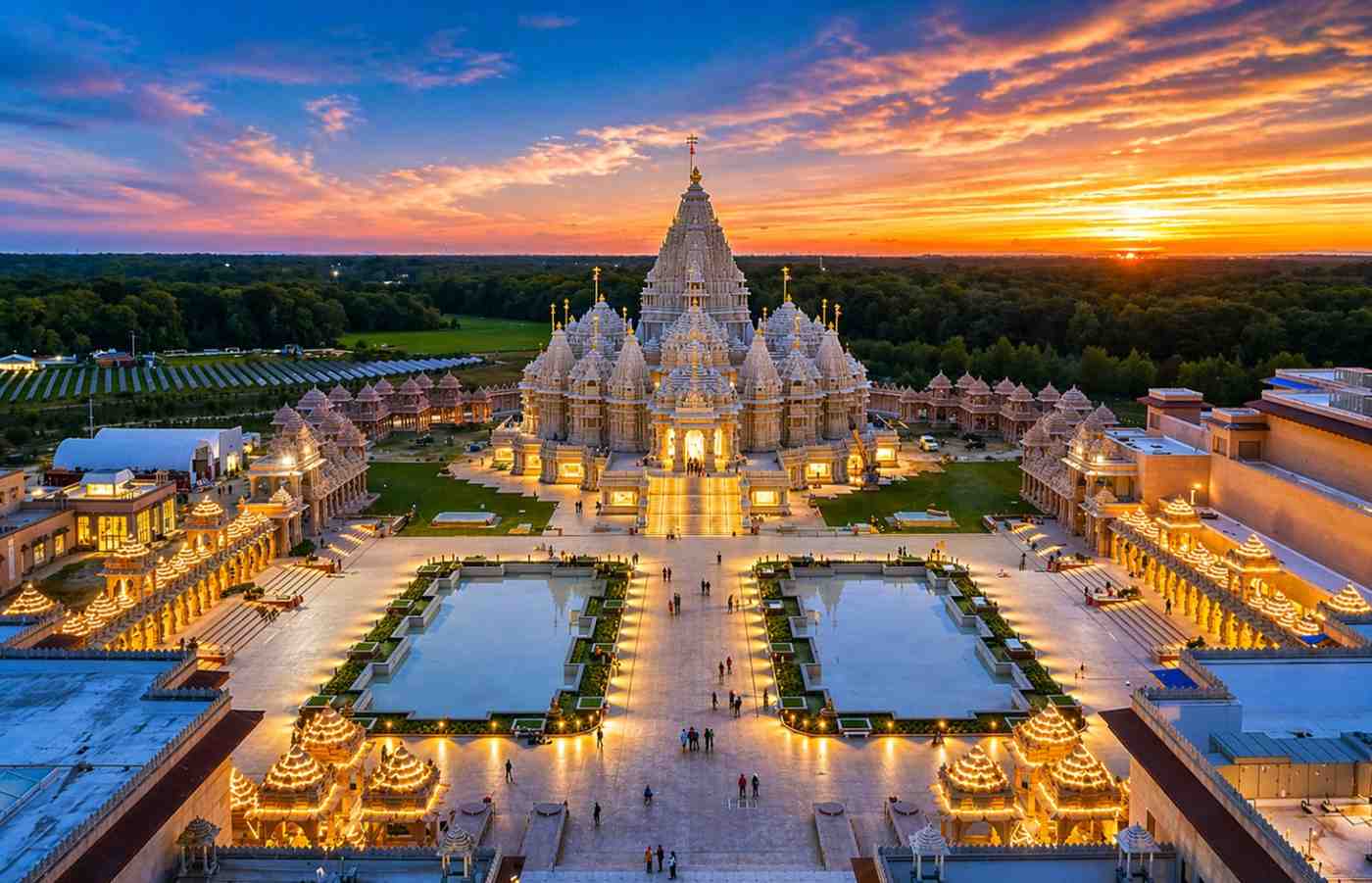
Neasden’s influence on the subsequent worldwide network of BAPS mandirs — Houston (2004), Atlanta (2007), Toronto (2007), Chicago (2015), Abu Dhabi (2024), Robbinsville NJ (2023) — is foundational. Every subsequent BAPS stone mandir follows variations of the Neasden blueprint: volunteer-built, Bulgarian-limestone / Italian-marble / Indian-sandstone construction, consecrated by the current guru, and accompanied by a Haveli community space. In 2024, the Mandir celebrated 30 years of darshan and was granted formal heritage protection by the London Borough of Brent.
The volunteer-built marvel of 1994
The construction of the Neasden Mandir between 1992 and 1995 is one of the most remarkable volunteer building projects in British religious history. Over 1,526 fully trained BAPS volunteers — entirely unpaid, from across the UK Gujarati community — worked in shifts that accumulated to 1.5 million man-hours. Every stone was lifted into place by hand and by crane; every carved panel was polished, numbered and installed by volunteers who had day jobs as doctors, engineers, accountants and shopkeepers. Weekend assembly days often drew 500+ volunteers from across the UK, France, Belgium and Scandinavia. The BBC produced a documentary "The Making of Neasden Temple" in 1996 which remains the definitive account.
The Mandir has faced several remarkable challenges since. In 2015 a heritage survey found that London's acid rain was pitting the Bulgarian limestone; the BAPS engineering team responded with a careful chemical stabilisation programme that has extended the stone's life by 300+ years. In 2017 an extreme fire at the adjacent Haveli was quickly contained but required six months of restoration work to the interior wood carvings — all performed by Indian carvers flown to London. Today the Neasden Mandir is formally listed as a British heritage asset and enjoys permanent protection from demolition or unauthorised modification.
Historical Milestones
Temple Milestones
1970 — First BAPS satsang in Golders Green with 5 Gujarati families led by Vinubhai Bhadresha.
1980 — BAPS community purchases former milk warehouse at Brentfield Road, Neasden.
1982 — Pramukh Swami Maharaj consecrates interim mandir in converted warehouse.
1992 — Pramukh Swami Maharaj formally announces traditional stone mandir.
1993 — Stone quarrying begins in Bulgaria, Italy and India; carving at Ambaji, Gujarat.
1994 — Construction in London commences with 1,526 volunteers; structural assembly completed in 2.5 years.
1995 — Mahapratishtha (consecration) performed on August 20, 1995 by Pramukh Swami Maharaj; 15,000 devotees attend.
1996 — Haveli community hall opens, becoming UK's largest wooden structure.
2003 — Understanding Hinduism exhibition opens.
2007 — Queen Elizabeth II makes state visit to the Mandir.
2015 — Mandir achieves UK heritage protection status.
2017 — Pramukh Swami Maharaj commemorative space installed (after his 2016 passing).
2023 — King Charles III visits; Mandir celebrates 30 years of public darshan.