

Pitru Tarpan Vidhi — Complete Ancestral Offering Guide
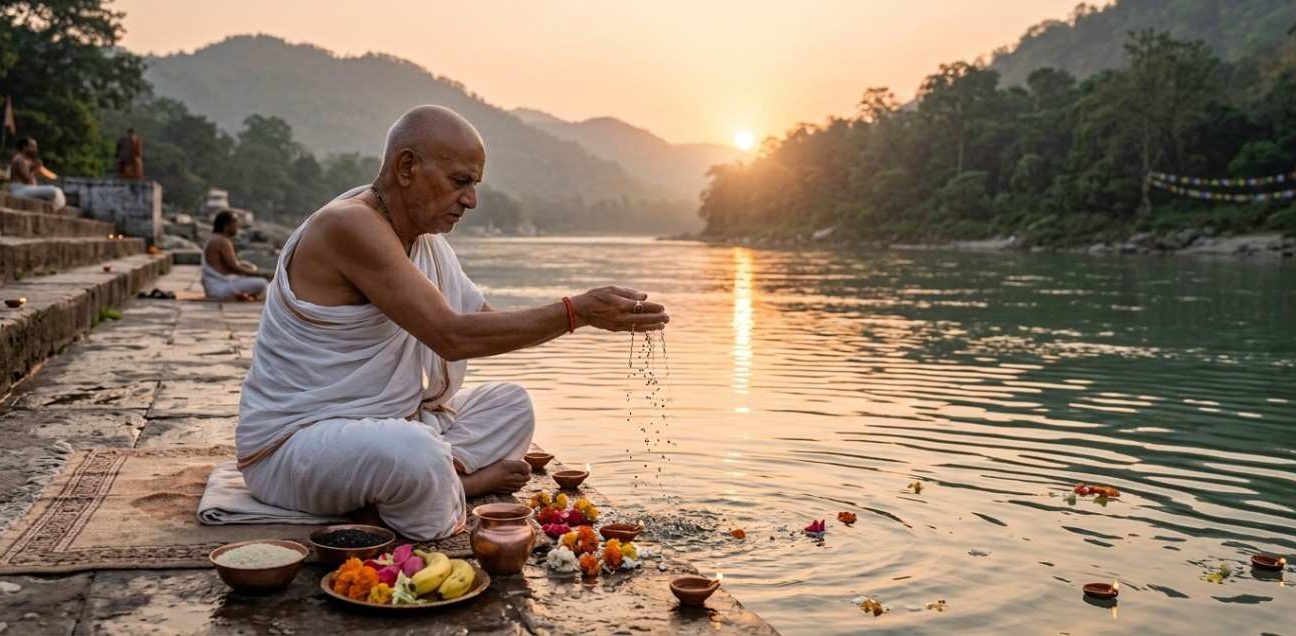
Introduction: Honoring Ancestors Through Sacred Water Offerings
Pitru Tarpan (or Pitru Tarpanam) is a profound Hindu ritual of offering water mixed with black sesame seeds (tila) to the souls of departed ancestors (Pitrus or Pitrus). It is an essential part of Pitru Paksha (the fortnight dedicated to ancestors) and performed regularly on Amavasya (new moon), during Shraddha ceremonies, or on auspicious occasions to express gratitude, seek forgiveness for any lapses, and invoke ancestral blessings for health, prosperity, peace, and spiritual progress.
The word “Tarpan” derives from “Tarpayati” — to satisfy or please. Through this simple yet powerful act, descendants quench the thirst and hunger of Pitrus in their subtle bodies, helping them attain higher realms or liberation (moksha) while receiving their benevolent blessings in return. Scriptures like the Garuda Purana, Matsya Purana, and Dharma Shastras emphasise that performing Tarpan is a sacred duty (Pitru Rina) that every householder must fulfil.
In 2026, Pitru Paksha (also called Mahalaya Paksha) runs approximately from Saturday, September 26, 2026 (Purnima Shraddha) to Saturday, October 10, 2026 (Sarva Pitru Amavasya / Mahalaya Amavasya). The most important day for collective Tarpan is Sarva Pitru Amavasya on October 10, 2026, when offerings are made for all ancestors whose specific death tithis are unknown.
This exhaustive guide for hindutone covers the complete mythology, significance, detailed step-by-step Vidhi (procedure), required samagri, mantras with Sanskrit, transliteration, and English meanings, regional variations, philosophical insights, and practical adaptations — especially for Hindus in the USA, UK, Canada, and Australia. Whether performing at home, by a river, or through proxy services, this resource helps you honour your ancestors with sincerity and devotion.
The Mythological and Scriptural Significance of Pitru Tarpan
Ancestors (Pitrus) reside in Pitru Loka, a subtle realm. They depend on the offerings and good deeds of their descendants for satisfaction and elevation. The Garuda Purana describes how unfulfilled Pitrus can cause obstacles (Pitru Dosha) in the family — such as delays in marriage, health issues, or financial difficulties — which are alleviated through sincere Tarpan and Shraddha.
Key stories include:
- King Bhagiratha brought the Ganga to earth not only for his ancestors but to provide eternal water for all Pitrus.
- In the Mahabharata, the Pandavas performed Tarpan for their departed relatives after the war.
- Sage Agastya and other rishis emphasised daily or fortnightly Tarpan as part of the five great sacrifices (Pancha Mahayajna).
Tarpan satisfies three categories: Devas (gods), Rishis (sages), and Pitrus (ancestors). Black sesame seeds (tila) are sacred because they repel negative energies and please the Pitrus. Water offered flows southward (direction of Pitru Loka), carrying the offerings to the ancestors.
Performing Tarpan brings long life, radiance, intellect, wealth, success, and digestive power while clearing ancestral debts (Pitru Rina). It also promotes family harmony and protects future generations.
When to Perform Pitru Tarpan
- Daily (ideally in the morning after bath, though many do it on Amavasya).
- During Pitru Paksha 2026 (September 26 to October 10) — especially on the death anniversary tithi or Sarva Pitru Amavasya.
- On every Amavasya, Sankranti, or eclipse.
- During Shraddha ceremonies.
Note: One whose father is alive traditionally does not perform full Pitru Tarpan for paternal ancestors, but can offer for maternal side or general Pitrus.
Complete Samagri (Materials Required) for Pitru Tarpan
- Clean water (preferably Gangajal or river water; add a few drops if using tap water).
- Black sesame seeds (tila) — the most important ingredient.
- Kusha grass (Darbha) — for pavitri (ring) on the ring finger and as a seat.
- White rice or barley (optional for some variants).
- A copper or brass vessel (lota) for water.
- Flowers (white, without strong fragrance), incense, and a ghee lamp.
- A coin or small gold/silver piece (symbolic).
- A clean cloth or asana to sit on.
- Optional: Honey, ghee, or milk for enhanced offerings; pindas (rice balls) for full Shraddha.
Detailed Step-by-Step Pitru Tarpan Vidhi
Perform the ritual in a clean space, preferably facing South (direction of Pitrus) or East. Wear clean, preferably white or traditional clothes after a bath.
- Purification and Sankalpa (Resolve) Take a bath. Sit on a clean asana. Perform Achamana (sipping water three times while chanting names of Vishnu). Make a sankalpa: “I am performing Pitru Tarpan for the satisfaction of my ancestors (paternal and maternal, known and unknown) so that they attain peace and bless the family with health, prosperity, and harmony.” Wear a Kusha ring (pavitri) on the ring finger of the right hand.
- Invocation Chant: Om Aagachchhantu Me Pitara Imaam Grihantu Jalaanjaliṃ (Meaning: May my ancestors come and accept this water offering.)
- Tarpan for Devas, Rishis, and Pitrus
- Mix black sesame seeds in water in your right palm.
- For Pitrus: Offer water by letting it flow from between the thumb and index finger (towards South). Chant three times per group: Om Sarva Pitru Devaya Namah | Triptayami Idam Tilodakam Svadhaya Namah (Meaning: Salutations to all Pitru Devas. I offer this sesame-water for their satisfaction. Svadha Namah.)
- Mention specific names if known (e.g., father’s name, grandfather’s name with gotra).
- For unknown or all ancestors: Offer for paternal (Vasu, Rudra, Aditya forms) and maternal sides.
- Also offer for friends, animals, or souls who have no descendants.
- Pinda Dana (Optional but Recommended in Full Shraddha) Prepare small rice balls mixed with sesame, ghee, and honey. Offer them while chanting appropriate mantras, then feed to cows, birds (especially crows), or immerse in water.
- Aarti and Conclusion Light incense and lamp. Offer flowers. Pray for ancestral peace and family blessings. Conclude with: Om Pitru Ganaaya Vidmahe Jagat Dhaarine Dhimahi Tanno Pitro Prachodayaat (Pitru Gayatri Mantra). Distribute any remaining water or offerings respectfully.
Key Mantras for Pitru Tarpan (with Transliteration and Meaning)
- Basic Tarpan Mantra: Om Sarva Pitru Devaya Namah | Triptayami Idam Tilodakam Svadhaya Namah (I offer this sesame-water to all Pitru Devas for their satisfaction. Svadha offerings.)
- For Father Side: Udiratam Avara Utpasa… (full Vedic mantras invoke the three generations: father, grandfather, great-grandfather as Vasu, Rudra, Aditya forms).
- Pitru Gayatri: Om Pitru Ganaaya Vidmahe Jagat Dhaarine Dhimahi Tanno Pitro Prachodayaat (We meditate upon the Pitru group, the upholders of the world. May they inspire our intellect.)
- Invocation Mantra: Om Aagachchhantu Me Pitara Imaam Grihantu Jalaanjaliṃ
Many perform separate Tarpan for Devas (water from fingertips) and Rishis before Pitrus.
Regional and Family Variations
- In South India: More emphasis on elaborate pinda dana and feeding Brahmins.
- In North India: Simple water Tarpan with sesame on river banks (e.g., Ganga, Yamuna).
- Some families include maternal ancestors prominently or perform proxy through priests at holy sites like Gaya, Trimbakeshwar, or Allahabad.
Adaptations for Hindus in the USA, UK, Canada, and Australia
Diaspora families often face challenges with access to rivers or traditional materials. Practical solutions include:
- Perform at home facing South, offering water into a sink, bowl, or potted plant (with respectful disposal later).
- Use black sesame seeds available in health stores or Indian groceries (Patel Brothers in USA, Tesco Asian in UK, etc.).
- Virtual guidance: Many join online sessions or hire proxy pujas at Indian holy sites (Gaya, Varanasi) through trusted pandits.
- Community events: Temples in New Jersey, London, Toronto, or Sydney organise collective Tarpan during Pitru Paksha.
- Eco-friendly: Use minimal water and biodegradable offerings; focus on charity (donating food or clothes) as modern daan.
- Time zones: Perform during local morning or evening equivalent of auspicious Indian muhurats.
Benefits remain the same: ancestral peace translates to family harmony and removal of obstacles.
Philosophical and Modern Relevance
Pitru Tarpan teaches gratitude, humility, and the interconnectedness of generations. In today’s fast-paced world, it reminds us that our success stands on the shoulders of ancestors. Regular practice reduces Pitru Dosha, promotes mental peace, and encourages ethical living.
Health note: Perform with a calm mind. Consult elders or priests for family-specific customs.
Conclusion: Receiving Ancestral Blessings Through Devotion
Pitru Tarpan is a simple yet deeply transformative ritual that bridges the living and the departed. By offering water and sesame with mantras and sincerity, we repay ancestral debts, seek forgiveness, and invite blessings of health, prosperity, and protection.
Perform this sacred duty during Pitru Paksha 2026 (September 26 – October 10) or on every Amavasya with pure intention. May your ancestors be pleased and bestow their eternal grace upon you and your family.
Om Sarva Pitru Devaya Namah | Triptayami Idam Tilodakam Svadhaya Namah!
Jai Pitru Devata! Shanti Shanti Shanti!
Related posts:
 Powerful Mantras and Poojas to Recover Money from Bad Debts and Loans
 Sri Maha Lakshmi Strotram: Importance and How to Chant
 Saraswati Pushkaralu 2025: Significance, Rituals, Mantras & History You Should Know
 Vishwamitra and the Birth of the Gayatri Mantra: A Divine Revelation
 Shodasha Maha Mantra: A Divine Shield for Kali Yuga
 Om Namah Shivaya: The Sacred Five-Syllable Mantra and Its Profound Significance in Hinduism
 Mahamrityunjaya Mantra: Healing & Longevity Secrets
 Kubera Mantra — Complete Guide for Wealth and Abundance | HinduTone