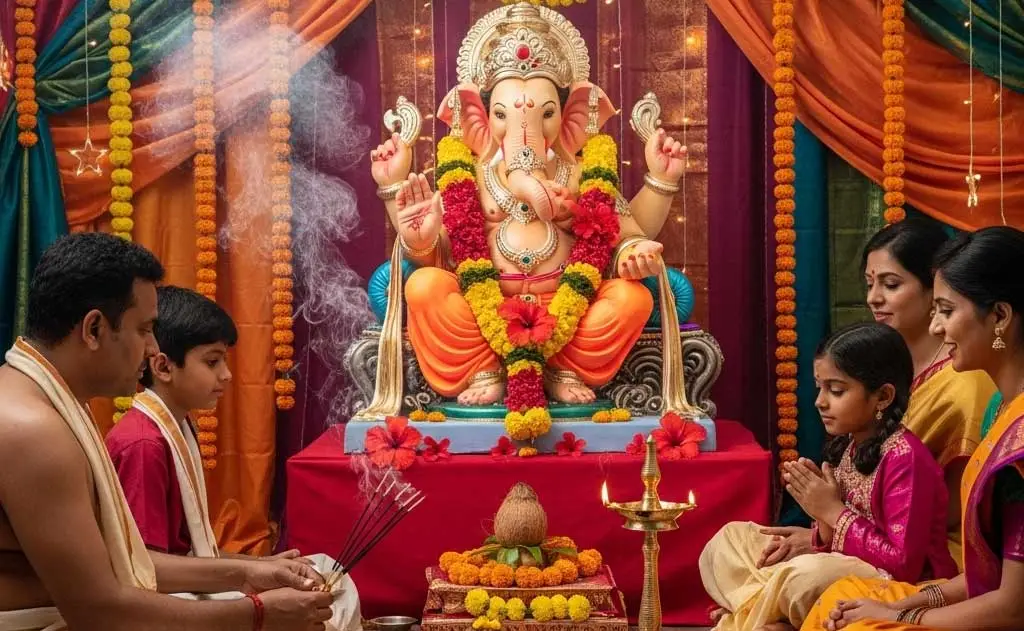
Ganesh Festival Role in India freedom struggle
The Ganesh festival, or Ganesh Chaturthi, played a transformative role in India's freedom struggle, thanks to its redefinition as a public celebration by Bal…
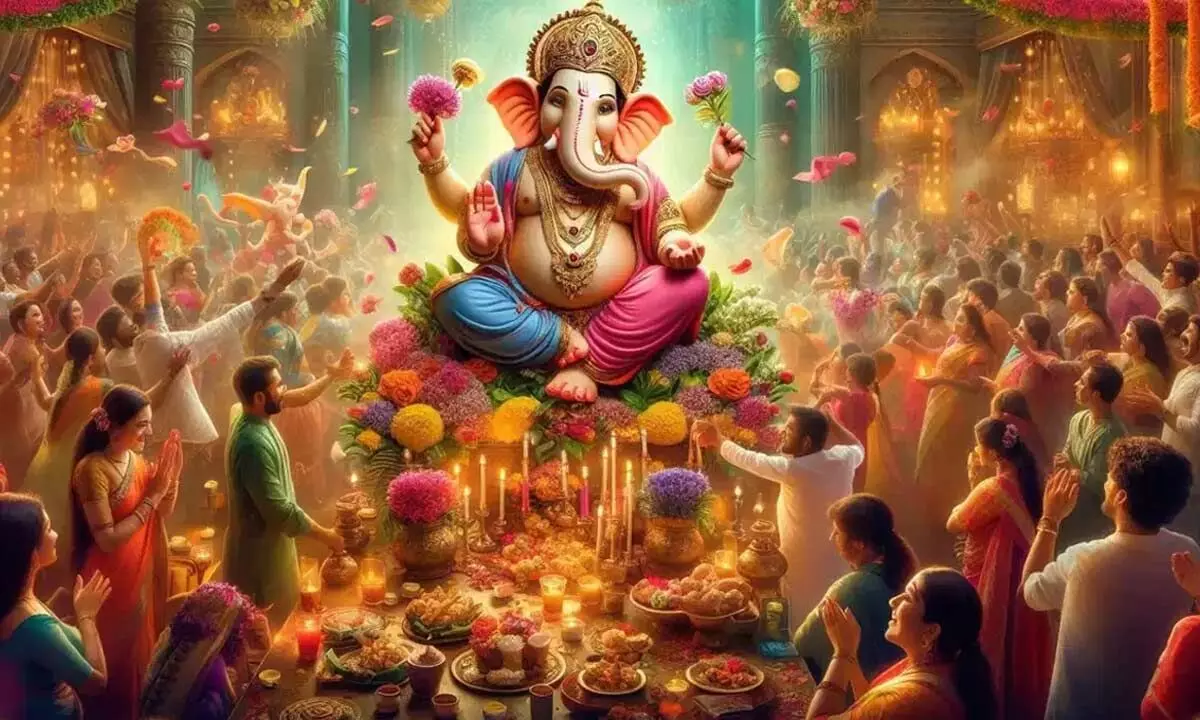
The Ganesh festival, or Ganesh Chaturthi, played a transformative role in India's freedom struggle, thanks to its redefinition as a public celebration by Bal…
The Ganesh festival, or Ganesh Chaturthi, played a transformative role in India's freedom struggle, thanks to its redefinition as a public celebration by Bal Gangadhar Tilak in the late 19th century. Tilak, a prominent leader in the Indian independence movement, harnessed the festival's cultural and religious significance to unite Indians against British colonial rule.
- Revival of Ganesh Chaturthi as a Public Event
Traditionally, Ganesh Chaturthi was a private household celebration. In 1893, Tilak transformed it into a large-scale public festival (Sarvajanik Ganeshotsav) to foster unity among Indians. He recognized the deity Lord Ganesha, who symbolizes wisdom and remover of obstacles, as an ideal figure to rally people across caste, class, and regional divisions. - Fostering National Unity
Breaking Caste Barriers: Ganesh Chaturthi encouraged people from all walks of life—irrespective of caste or social standing—to participate in the festivities. This inclusivity was revolutionary in a society divided by rigid hierarchies. Common Identity: The festival provided a platform for Indians to unite under a shared cultural identity, fostering a sense of nationalism that transcended regional and linguistic differences.
- Cultural Resistance to Colonial Suppression
The British colonial government imposed severe restrictions on public gatherings to prevent potential uprisings. Tilak ingeniously used the Ganesh festival as a cultural event, skirting these restrictions while subtly promoting nationalist sentiment. Ganesh processions, rituals, and events became opportunities to discuss the injustices of colonial rule, inspiring collective action among attendees.
- Mobilizing People Through Public Platforms
Political Awareness: Public Ganesh pandals (stages) hosted speeches, plays, and discussions that covertly spread awareness about the freedom movement, self-rule (Swaraj), and the importance of unity. Inspiring Participation: The festival involved large-scale processions and gatherings, instilling courage among Indians to stand against British oppression.
- Promoting Indigenous Art and Culture
Ganesh Chaturthi became a celebration of Indian culture, showcasing indigenous music, dance, and drama, which helped revive pride in India's rich heritage. It also countered the cultural alienation caused by British policies, fostering a sense of belonging and empowerment.
- Significance of Lord Ganesha as a Symbol
Lord Ganesha, known as the remover of obstacles, symbolized the collective will to overcome British colonial oppression. His attributes—wisdom, strength, and courage—served as metaphors for the qualities needed in the struggle for independence.
- Long-term Impact on Indian Society
Template for Future Movements: The success of Ganesh Chaturthi as a platform for nationalist mobilization inspired similar strategies for other movements, such as the revival of Shivaji Jayanti by Tilak. Legacy of Social Unity: Even after independence, the festival continues to be a symbol of unity and pride in Indian identity.
Conclusion
The transformation of Ganesh Chaturthi from a private celebration into a public festival by Bal Gangadhar Tilak was a masterstroke in blending cultural pride with political activism. It united Indians across divisions, nurtured a sense of nationalism, and provided a covert platform to challenge British rule. The festival's legacy as a catalyst for unity and resistance remains a shining example of how cultural traditions can be leveraged for social and political change.
Why did Tilak choose Lord Ganesha specifically as the symbol of national awakening?
Tilak's choice of Lord Ganesha was deeply rooted in scriptural and social logic. In the Mudgala Purana and the Ganesha Purana, Ganesha is celebrated as Vighnaharta — the remover of obstacles — and as the deity who must be invoked before any significant undertaking. Tilak understood that beginning a mass political movement under the banner of such a universally revered deity would lend it both sacred legitimacy and emotional force across Maharashtra and beyond.
Equally important was Ganesha's position as a deity without sectarian boundaries. Unlike certain deities whose worship was concentrated within specific Vaishnava or Shaiva sampradayas, Ganesha commanded devotion from virtually every Hindu community. This made the Sarvajanik Ganeshotsav a genuinely pan-community platform — a quality no purely political organization of the era could easily claim.
How did the ten-day festival format serve as a structured political training ground?
Tilak deliberately structured the public festival over ten days, culminating in the grand Anant Chaturdashi visarjan (immersion) procession. Each day's programme at the pandals was carefully curated to include kirtan, tamasha performances, and formal lectures — a sequence that moved participants from devotional emotion to rational political discourse. Orators such as Gopal Ganesh Agarkar and later figures from the Swadeshi era used these platforms to explain economic exploitation under colonial policy, translating abstract grievances into language accessible to farmers and artisans.
The procession format itself was politically ingenious. A moving crowd, united in religious observance, was far harder for British authorities to characterise as a seditious assembly than a static political meeting. Participants carried news, pamphlets, and nationalist literature under the cover of devotional processions, effectively creating a distributed communication network across Pune, Nashik, Mumbai, and neighbouring towns long before modern mass media existed.
Which other cities and regions adopted the Sarvajanik Ganeshotsav model, and how did it spread?
Within a decade of Tilak's 1893 initiative in Pune, the Sarvajanik Ganeshotsav model spread to Mumbai, Nashik, Kolhapur, and Satara. Local leaders formed organising committees modelled on Tilak's Deccan Education Society networks. The Kasba Ganesh Mandal in Pune, traditionally regarded as the manchi Ganapati (chief Ganesha) of the city, became a focal anchor around which neighbourhood-level committees competed in patriotic programming.
The festival's influence eventually crossed the Deccan Plateau. In coastal Karnataka and parts of Andhra Pradesh, communities that already observed Vinayaka Chaturthi as a household ritual began adopting the public-procession format as nationalist fervour grew during the Swadeshi Movement of 1905–1908. This organic spread demonstrated that Tilak had not merely created a local event but had provided a replicable template for culturally grounded political mobilisation.
What role did Ganesh festival publications and vernacular media play in spreading nationalist thought?
Tilak founded and edited the Marathi newspaper Kesari and the English-language Mahratta, and the Ganesh festival season became an annual high-water mark for nationalist journalism. Special festival editions of Kesari carried articles on Swaraj, economic self-reliance, and Indian history that reached literate readers who then read aloud to neighbours at the pandal gatherings. This multiplier effect meant a single printed copy could influence dozens of listeners.
Beyond newspapers, the festival sponsored the printing and free distribution of nationalist pamphlets, biographies of Shivaji Maharaj, and condensed commentaries on the Bhagavad Gita — Tilak himself was working on his monumental Gita Rahasya during these years. The Gita's concept of nishkama karma (selfless action) was invoked by speakers to urge Indians to resist colonial rule without fear of personal consequence, weaving together scriptural philosophy and political action in a way uniquely suited to the festival's devotional atmosphere.
How did British colonial authorities respond to the festival, and what legal battles followed?
British officials were acutely aware of the political undercurrents of the Ganeshotsav. District collectors in the Bombay Presidency filed detailed intelligence reports on the content of pandal speeches, and Tilak himself was prosecuted twice — in 1897 and 1908 — partly on the basis of writings and speeches delivered in the charged atmosphere surrounding the festival period. The 1897 trial followed articles in Kesari that the colonial government deemed incitement to violence after the assassination of Plague Commissioner W.C. Rand.
Despite surveillance and periodic attempts to restrict procession routes, outright banning of the festival proved politically untenable for British administrators, who feared that suppressing a religious observance would trigger far wider unrest. This very vulnerability was what Tilak had calculated. The festival's religious character gave it a protection that no purely political gathering possessed, establishing an early precedent for using cultural rights as a shield for political expression.
What is the lasting legacy of the Ganeshotsav in post-independence India?
After independence, the Sarvajanik Ganeshotsav continued to evolve as a civic institution. Mumbai's Lalbaugcha Raja pandal, established in 1934, grew into one of the largest public religious gatherings in the world, drawing millions of devotees over eleven days. The organisational infrastructure developed during the freedom-struggle era — ward-level committees, community fundraising, volunteer corps — translated seamlessly into neighbourhood civic bodies that continue to manage public health, education, and disaster relief in many Maharashtra localities.
Scholars of Indian nationalism have noted that the Ganeshotsav model anticipated several features later associated with Gandhian mass mobilisation: voluntary participation, cultural rather than military resistance, and the deliberate crossing of caste lines through shared ritual space. While the festival's contemporary expressions are often more devotional than explicitly political, its foundational character as a space where public religion and civic life intersect — first defined by Tilak in 1893 — remains intact and continues to shape how Indian communities organise around shared identity.
Frequently Asked Questions
What is Ganesh Festival Role in India freedom struggle?
The Ganesh festival, or Ganesh Chaturthi, played a transformative role in India's freedom struggle, thanks to its redefinition as a public celebration by Bal Gangadhar Tilak in the late 19th century. Tilak, a prominent leader in the Indian independence movement, harnessed the festival's cultural and religious significance to unite Indians against British col
What are the key points about Ganesh Festival Role in India freedom struggle?
Revival of Ganesh Chaturthi as a Public Event Traditionally, Ganesh Chaturthi was a private household celebration. In 1893, Tilak transformed it into a large-scale public festival (Sarvajanik Ganeshotsav) to foster unity among Indians.
Why does Ganesh Festival Role in India freedom struggle matter in Hinduism?
It deepens a devotee's connection with Lord Ganesha and with the values of Sanatana Dharma — clarity, devotion and dharmic living.
How can devotees apply Ganesh Festival Role in India freedom struggle in daily life?
By reflecting on its teaching, incorporating the related practices or observances into daily routine, and approaching it with sincere devotion and understanding.
You might also like
Gita Jayanti 2026 Prasad Recipes — Tulsi-Honoring Sweets, Krishna's Favourites & December 20 Bhog Plate
Maha Shivratri 2026 Vrat Recipes — Sabudana Khichdi, Singhada Halwa, Phalahara Foods Complete Fasting Guide
June 2026 Hindu Festival Calendar — Complete Dates, Vrat & Puja Guide for NRIs