

Ashta Lakshmi: The Eight Forms of Goddess Lakshmi and Their Meaning
Meet the Ashta Lakshmi — the eight radiant forms of Goddess Lakshmi — with iconography, meaning, how each is invoked, and their deep connection to Varalakshmi Vratam. Regional variants noted.
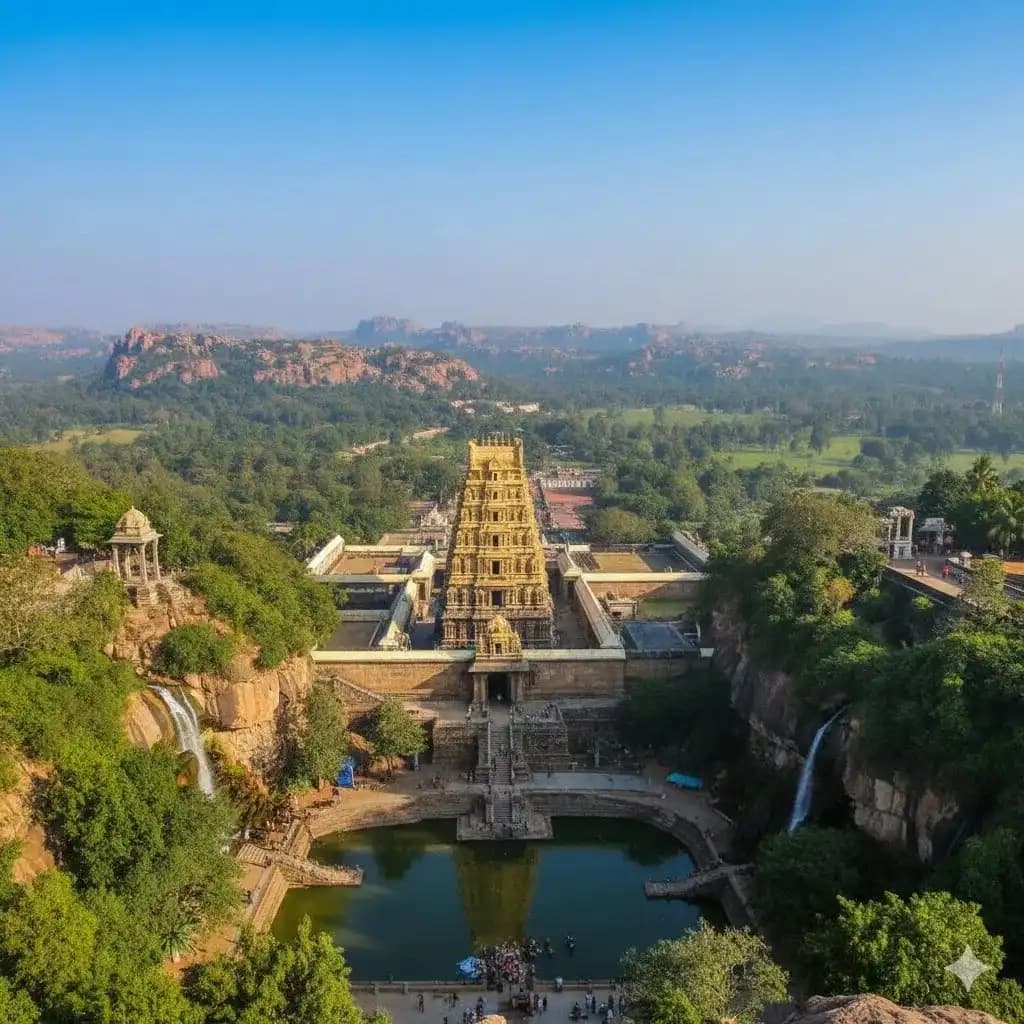
Meet the Ashta Lakshmi — the eight radiant forms of Goddess Lakshmi — with iconography, meaning, how each is invoked, and their deep connection to Varalakshmi Vratam. Regional variants noted.
Quick answer: Ashta Lakshmi are the eight classical forms of Goddess Lakshmi — most commonly Adi, Dhana, Dhanya, Gaja, Santana, Dhairya (Veera), Vijaya and Vidya Lakshmi. Each represents a distinct kind of abundance, from primordial grace to wealth, nourishment, courage and knowledge. Devotees invoke them together, especially during Varalakshmi Vratam.
Lakshmi, the goddess of abundance and auspiciousness, is honoured in Hindu tradition not as a single fixed image but as a family of eight radiant forms known collectively as the Ashta Lakshmi. Each form personifies a different dimension of prosperity — spiritual grace, material wealth, food, offspring, courage, victory and knowledge — reminding devotees that true abundance is many-sided, not merely monetary.
The Ashta Lakshmi are especially remembered during Varalakshmi Vratam, when women invoke Lakshmi in her boon-granting aspect and, through her, the fullness of all eight forms. Below is an overview of who they are, how they are pictured, and the spirit in which they are worshipped — presented as living tradition rather than as any promise of guaranteed results.
- Deity: Ashta Lakshmi (eight forms of Lakshmi)
- Number of forms: Eight (with minor regional variants)
- Key festival link: Varalakshmi Vratam
- 2026 vratam dates: Friday 21 August 2026 or Friday 28 August 2026
- Primary theme: Many-sided abundance
- Best invoked: Together, as a group of eight
Who are the Ashta Lakshmi?
The word Ashta means eight and Lakshmi means the goddess of prosperity, so Ashta Lakshmi simply means the eight Lakshmis. The grouping became widely popular through devotional hymns that praise Lakshmi in eight successive aspects, each addressed with its own salutation. While the concept is ancient in spirit, the fixed list of eight names as we know it today was crystallised largely through later stotra literature and temple traditions, especially in South India.
It is worth noting from the outset that the list has minor regional variants. The most widely recited sequence runs Adi, Dhana (or Aishwarya), Dhanya, Gaja, Santana, Dhairya (also called Veera), Vijaya (sometimes given as Jaya) and Vidya Lakshmi. Some traditions replace one name with another such as Saubhagya or Ratna Lakshmi, or reorder the sequence. None of these lists is wrong; they reflect the diversity of regional and family practice, so follow your family, kula or local-temple tradition where they differ.
The eight forms at a glance
The table below summarises each form, what she represents and a note on iconography. Treat these associations as devotional symbolism, not as a checklist of outcomes.
| Form | Represents | Iconography (commonly described) |
|---|---|---|
| Adi Lakshmi | Primordial, first form; the eternal source and moksha | Seated on a lotus, often with a lotus and flag or in a gesture of blessing |
| Dhana Lakshmi | Wealth and material prosperity | Six-armed, holding items such as a discus, conch, pot of gold and lotus |
| Dhanya Lakshmi | Grain, food and agricultural bounty | Green-hued, holding sheaves of paddy, sugarcane, banana and lotus |
| Gaja Lakshmi | Royal power, animal wealth and majesty | Flanked by elephants pouring water over her; enthroned on a lotus |
| Santana Lakshmi | Progeny, family and continuity | Often shown holding a child, with a pot (kalasha) and a shield |
| Dhairya (Veera) Lakshmi | Courage, valour and inner strength | Eight-armed, bearing weapons such as bow, discus, sword and shield |
| Vijaya (Jaya) Lakshmi | Victory and success in noble effort | Eight-armed, seated on a lotus, hands raised in blessing and holding a discus, conch and sword |
| Vidya Lakshmi | Knowledge, learning and the arts | Lotus-seated, often shown in a teaching or blessing gesture |
Adi and Dhana Lakshmi
Adi Lakshmi is honoured as the primordial or original form — the first Lakshmi from whom the others are said to unfold. She is associated with the eternal, with liberation (moksha) and with the grace that underlies all other kinds of fortune. Dhana Lakshmi, by contrast, is the most familiar face for many: the giver of dhana, or wealth. She is invoked by those seeking material sufficiency, and her worship is traditionally paired with gratitude and generosity rather than mere accumulation.
Dhanya and Gaja Lakshmi
Dhanya Lakshmi presides over dhanya — grain and food — and thus over the nourishment that sustains life. In an agrarian culture she embodies the harvest and the security of a full granary. Gaja Lakshmi, flanked by elephants, represents majesty, royal fortune and the wealth of cattle and land; the elephants showering her with water evoke abhisheka and the flow of blessings. She is among the most beloved forms and features in the famous Gaja Lakshmi imagery seen at temple entrances.
Santana, Dhairya, Vijaya and Vidya Lakshmi
Santana Lakshmi is invoked for the blessing of progeny and the wellbeing of the family line. Dhairya Lakshmi, also called Veera Lakshmi, grants courage and steadiness of mind in the face of difficulty. Vijaya Lakshmi bestows victory and success in righteous endeavours, while Vidya Lakshmi presides over learning, wisdom and the arts. Together these four remind devotees that Lakshmi's abundance extends far beyond coin — into character, family, achievement and knowledge.
How the Ashta Lakshmi are invoked
In practice, devotees rarely worship one form in isolation. The Ashta Lakshmi are typically invoked together, as a single garland of eight aspects, so that the whole spectrum of auspiciousness is welcomed at once. Common devotional approaches include the following:
- Reciting an Ashta Lakshmi hymn that salutes each form in turn, with folded hands and a lit lamp
- Offering a lotus, fresh flowers, turmeric, kumkum and simple naivedya (food offering)
- Lighting a ghee or oil lamp and keeping a clean, decorated space for the deity
- Meditating briefly on the meaning of each form rather than reciting mechanically
- Sharing prasadam and practising generosity, which tradition holds to be pleasing to Lakshmi
There is no single mandatory sequence; the exact wording of hymns and the order of the eight names vary by lineage. Where you are unsure of the precise text, it is better to worship with sincere attention and a simple lamp than to recite a garbled version — devotion is measured by the heart, not by perfect enunciation.
Connection to Varalakshmi Vratam
Varalakshmi Vratam is the festival most closely associated with the Ashta Lakshmi. Vara means boon, so Varalakshmi is Lakshmi in her boon-granting form. Tradition holds that worshipping Varalakshmi is equivalent to worshipping all eight Lakshmis at once — by honouring her, the devotee is said to receive the collective grace of the entire Ashta Lakshmi. This is why the vratam is so widely observed, especially by married women, in Telugu, Tamil and Kannada households.
During the vratam, Lakshmi is often invoked into a decorated kalasha (sacred pot) or an idol, and the Ashta Lakshmi hymn may be recited as part of the worship. Some families observe the vratam without a kalasam, using a picture or idol instead, which is an equally valid regional practice. The essence is the same: welcoming the eight-fold abundance of Lakshmi into the home.
When is Varalakshmi Vratam in 2026?
For 2026 the vratam falls on Friday 21 August 2026 according to most Telugu, Tamil and Kannada panchangs, while some panchangs place it on Friday 28 August 2026. Neither reading is wrong — the difference arises from how different almanacs compute the auspicious Friday. The safest guidance is to follow your family, kula or local-temple tradition, and to confirm timings locally, since muhurat windows are location-specific. For a full explanation, see the date and panchang guides linked below.
A note on benefits and outcomes
Devotional texts describe worship of the Ashta Lakshmi as bringing prosperity, wellbeing, courage and knowledge. These descriptions are best understood as the language of faith and tradition, not as guaranteed results. The enduring value of Ashta Lakshmi worship lies in cultivating gratitude, generosity and a balanced view of abundance — remembering that wealth, health, learning and family are all facets of a good life, and that Lakshmi is honoured as much through right conduct as through ritual.
Related reading
- linkVaralakshmi Vratam 2026: is it 21 or 28 August?urlhttps://hindutone.com/festivals/varalakshmi-vratam-2026-date-21-or-28-august/
- linkThe complete Varalakshmi Vratam 2026 guideurlhttps://hindutone.com/festivals/varalakshmi-vratam-2026/
- linkVaralakshmi Vratam puja vidhi step by stepurlhttps://hindutone.com/festivals/varalakshmi-vratam-2026-puja-vidhi/
- linkHow to do Varalakshmi Vratam without a kalasamurlhttps://hindutone.com/festivals/varalakshmi-vratam-without-kalasam/
- linkWhich panchang should NRIs follow?urlhttps://hindutone.com/festivals/which-panchang-should-nris-follow/
Frequently Asked Questions
What are the eight forms of Ashta Lakshmi?
The eight most commonly listed forms are Adi Lakshmi, Dhana Lakshmi, Dhanya Lakshmi, Gaja Lakshmi, Santana Lakshmi, Dhairya (Veera) Lakshmi, Vijaya (Jaya) Lakshmi and Vidya Lakshmi. Each represents a distinct aspect of abundance. The list has minor regional variants, with some traditions substituting names such as Saubhagya or Ratna Lakshmi.
What does each Ashta Lakshmi represent?
Adi Lakshmi is the primordial form and grace; Dhana Lakshmi wealth; Dhanya Lakshmi grain and food; Gaja Lakshmi majesty and royal fortune; Santana Lakshmi progeny; Dhairya Lakshmi courage; Vijaya Lakshmi victory; and Vidya Lakshmi knowledge. Together they express the idea that abundance is many-sided, spanning spirit, wealth, family, courage and learning.
Why do the lists of Ashta Lakshmi differ?
Because the grouping crystallised through various regional stotra and temple traditions, the exact eight names and their order vary. Some lists include Saubhagya, Ratna or Aishwarya Lakshmi in place of another. None is wrong; each reflects local and family practice. Where they differ, follow your family, kula or local-temple tradition.
How are the Ashta Lakshmi worshipped?
They are usually invoked together rather than singly, so all eight aspects of auspiciousness are welcomed at once. Common practices include reciting an Ashta Lakshmi hymn, lighting a lamp, offering flowers, turmeric and kumkum, and making a simple food offering. Sincere attention matters more than perfect recitation of any particular text.
How is Ashta Lakshmi linked to Varalakshmi Vratam?
Varalakshmi is Lakshmi in her boon-granting form, and tradition holds that worshipping her is equivalent to worshipping all eight Lakshmis at once. During the vratam the Ashta Lakshmi hymn is often recited, and Lakshmi is invoked into a kalasha or idol, so the devotee welcomes the entire eight-fold abundance into the home.
When is Varalakshmi Vratam in 2026?
Most Telugu, Tamil and Kannada panchangs place Varalakshmi Vratam on Friday 21 August 2026, while some panchangs give Friday 28 August 2026. Neither is wrong — the difference comes from how each almanac computes the auspicious Friday. Follow your family, kula or local-temple tradition, and confirm exact timings locally as muhurat windows vary by place.
Does worshipping Ashta Lakshmi guarantee wealth?
No. Devotional texts describe prosperity, courage and knowledge as fruits of worship, but these are the language of faith and tradition, not guaranteed outcomes. The lasting value lies in cultivating gratitude, generosity and a balanced view of abundance, and in honouring Lakshmi through right conduct as much as through ritual.
Can I worship Ashta Lakshmi without a kalasam?
Yes. Many families use a picture or idol of Lakshmi instead of a decorated kalasha, and this is an equally valid regional practice. The essence is welcoming the eight-fold abundance of Lakshmi with a clean space, a lamp and sincere devotion. See the guide on performing Varalakshmi Vratam without a kalasam for a simple approach.
You might also like
Diwali 2026 in Nepal: Date, Lakshmi Puja Muhurat & City-by-City Celebration Guide
Diwali 2026 in Fiji: Date, Lakshmi Puja Muhurat & City-by-City Celebration Guide
Diwali 2026 in Guyana: Date, Lakshmi Puja Muhurat & City-by-City Celebration Guide
