Diwali 2026 in Australia: Complete City-by-City Events Guide (Sydney, Melbourne, Perth, Brisbane)
Everything Australian devotees need for Diwali 2026 (8 November): the five festival days, city-by-city guidance for Sydney, Melbourne, Perth and Brisbane, and how to celebrate meaningfully far from home.
Everything Australian devotees need for Diwali 2026 (8 November): the five festival days, city-by-city guidance for Sydney, Melbourne, Perth and Brisbane, and how to celebrate meaningfully far from home.
Quick answer: Diwali 2026 in Australia is celebrated on Sunday, 8 November 2026, the main Lakshmi Puja day. The five-day festival runs from Dhanteras on 6 November to Bhai Dooj on 10 November, with community events held across Sydney, Melbourne, Perth and Brisbane.
For the Indian and wider South Asian community across Australia, Diwali is the brightest celebration of the year. In 2026 the main festival of lights falls on Sunday, 8 November, a weekend date that gives families and temples generous time to gather, pray and celebrate together. This guide brings the sacred meaning of the festival together with practical, city-by-city planning notes for Sydney, Melbourne, Perth, Brisbane and beyond.
Diwali 2026 Overview for Australia
Diwali honours the victory of light over darkness and knowledge over ignorance. For most Australian devotees it centres on the worship of Goddess Lakshmi, who bestows prosperity and wellbeing, alongside Lord Ganesha, who removes obstacles. Because Australia observes the same lunar tithi as India, the five festival days in 2026 align with the dates below.
- Main Diwali (Lakshmi Puja)Sunday, 8 November 2026
- Festival duration5 days (6-10 November 2026)
- Primary deities worshippedGoddess Lakshmi and Lord Ganesha
- Best for community eventsWeekend of 7-8 November 2026
The Five Days of Diwali 2026
The festival unfolds over five connected days, each with its own devotional focus. Keeping the sequence in mind helps families in Australia plan pujas around work, school and community gatherings.
| Day | Date | Observance |
|---|---|---|
| Dhanteras | Friday 6 November 2026 | Worship of wealth and health; buying metal or new items |
| Naraka Chaturdasi (Choti Diwali) | Saturday 7 November 2026 | Early ritual bath and lamp lighting |
| Diwali / Lakshmi Puja | Sunday 8 November 2026 | Main evening Lakshmi and Ganesha puja |
| Govardhan Puja / Annakut | Monday 9 November 2026 | Gratitude to nature; food offerings |
| Bhai Dooj | Tuesday 10 November 2026 | Celebration of the bond between siblings |
How Diwali Is Celebrated in Australia
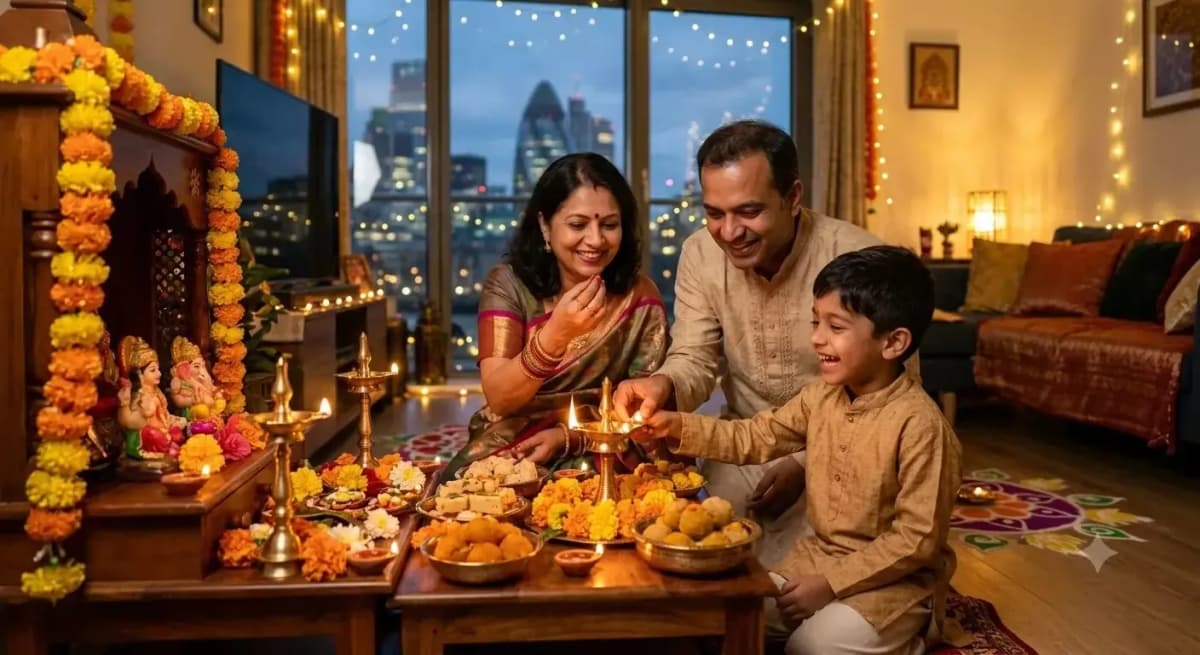
Far from home, Australian devotees keep the festival alive through a blend of home worship and community celebration. Homes are cleaned and decorated with rangoli and rows of diyas or LED lamps, families dress in new clothes, and the evening Lakshmi Puja is performed after sunset. Temples and cultural associations host melas, cultural performances, shared meals and, in some council-approved venues, festive fireworks displays.
- Clean and decorate the home, and set a clean space or altar for the puja
- Light diyas, oil lamps or LED lights at the entrance and windows
- Draw a rangoli at the doorway to welcome Goddess Lakshmi
- Prepare or buy sweets and a simple naivedya (food offering)
- Perform the Lakshmi-Ganesha puja after sunset on 8 November 2026
- Attend a local temple aarti and community mela over the weekend
Sydney: Diwali 2026 Guidance
Sydney is home to one of Australia's largest South Asian communities, and Diwali is marked across suburbs such as Parramatta, Harris Park, Wentworthville and the wider Western Sydney region. Expect major public melas, large temple celebrations and family gatherings over the 7-8 November weekend. Check announcements from your local temple and community associations for exact 2026 event dates, venues and any ticketing.
Melbourne: Diwali 2026 Guidance
Melbourne's vibrant Indian community celebrates Diwali with cultural festivals, temple pujas and public events, often concentrated in suburbs across the city's south-east and west. Large-scale community Diwali festivals are typically held on the weekend closest to the main day. Confirm the 2026 schedule directly with organisers and temples, as venues and dates are announced closer to the festival.
Perth: Diwali 2026 Guidance
In Perth, Diwali brings together the Western Australian Indian community for temple celebrations, cultural showcases and family pujas. Community organisations usually host a central Diwali event, alongside temple aartis on the main day. Because event details vary each year, look to your nearest Hindu temple or Indian association in Perth for confirmed 2026 timings.
Brisbane: Diwali 2026 Guidance
Brisbane and the wider South-East Queensland region celebrate Diwali with community festivals, temple worship and cultural programmes. Families often combine a home Lakshmi Puja on 8 November with attendance at a weekend community mela. Verify the exact 2026 dates and locations with local temples and Indian cultural societies in Brisbane.
Lakshmi Puja: Simple Steps for Australian Homes
- Bathe, wear clean or new clothes, and tidy the puja space before sunset
- Place images or idols of Goddess Lakshmi and Lord Ganesha on a clean cloth
- Light a lamp and incense, and offer flowers, kumkum and turmeric
- Offer sweets, fruit and a simple naivedya to the deities
- Chant the well-known 'Om Shreem Mahalakshmiyai Namah' with devotion
- Perform aarti, then share prasad with family and neighbours
For mantras, keep to the widely recited names such as 'Om Shreem Mahalakshmiyai Namah' for Goddess Lakshmi and 'Om Gam Ganapataye Namah' for Lord Ganesha. Chant with sincerity rather than counting perfection; devotion matters more than length.
Celebrating Responsibly Away From Home
- Follow local council rules on fireworks and open flames; use LED diyas where fire is restricted
- Never leave oil lamps or candles burning unattended, especially near curtains
- Support community events and volunteer where you can
- Include children in rangoli, decoration and simple prayers to pass on the tradition
Whether you gather at a bustling mela in Western Sydney or light a single quiet diya in a Perth apartment, the heart of Diwali 2026 is the same: inviting light, gratitude and Goddess Lakshmi's blessings into your home and life.
Related
See the main Diwali 2026 complete guide for the five-day dates, Lakshmi Puja muhurat and full rituals.
Frequently Asked Questions
When is Diwali 2026 in Australia?
The main Diwali (Lakshmi Puja) is on Sunday, 8 November 2026. The full five-day festival runs from Dhanteras on 6 November to Bhai Dooj on 10 November 2026.
Why does Diwali 2026 fall in November?
Diwali follows the Hindu lunar calendar and is celebrated on the new-moon night of the month of Kartik. In 2026 that new moon falls on 8 November, so Australia and India observe the same main day.
Which cities in Australia have the biggest Diwali celebrations?
Sydney, Melbourne, Perth and Brisbane all host significant community celebrations, with large melas, temple pujas and cultural programmes. Sydney's Western suburbs are especially known for major public events.
Where can I find exact 2026 event dates and venues?
Event dates, venues and any ticketing are confirmed each year by local temples, Indian cultural associations and city councils. Check their official announcements closer to November 2026 for accurate details.
What is the main puja performed on Diwali?
The central ritual is Lakshmi Puja, the worship of Goddess Lakshmi for prosperity and wellbeing, usually performed together with Lord Ganesha after sunset on the main day.
Can I do Diwali puja at home in Australia?
Yes. Clean your home, set up a small altar with Lakshmi and Ganesha, light a lamp, offer flowers and sweets, chant a well-known mantra, and perform aarti. A simple, sincere puja at home is complete in itself.
Are fireworks allowed for Diwali in Australia?
Fireworks are regulated by state and local council rules and are only permitted at approved venues or licensed displays. Personal fireworks are generally restricted, so many families use LED lights and diyas instead.
What mantras are recommended for Diwali?
Stick to well-known standard mantras such as 'Om Shreem Mahalakshmiyai Namah' for Goddess Lakshmi and 'Om Gam Ganapataye Namah' for Lord Ganesha, chanted with devotion.
You might also like
Diwali 2026 in Nepal: Date, Lakshmi Puja Muhurat & City-by-City Celebration Guide
Bathukamma and Dasara 2026 in Australia: Dates, Telangana Association Celebrations, Muhurat and City-by-City Guide
Bathukamma & Dasara 2026 in Canada: Dates, Telangana Association Celebrations & City-by-City Guide