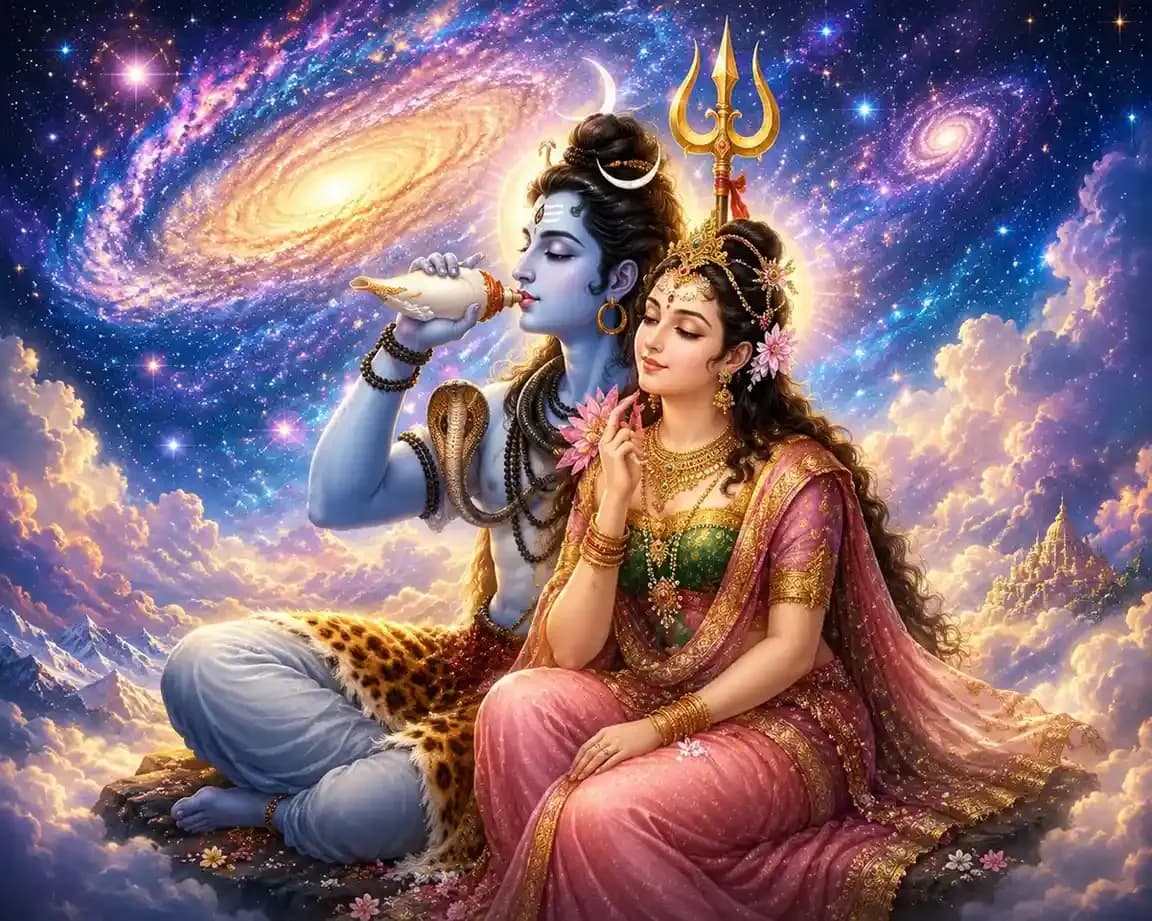
Durga Puja 2026: Shashti to Vijaya Dashami — Bengali Calendar, Rituals & Pandal Traditions
A complete devotional guide to Durga Puja 2026 — the Bengali calendar days from Shashti to Vijaya Dashami, the core rituals, pandal traditions and how families across India and the diaspora observe the festival.

A complete devotional guide to Durga Puja 2026 — the Bengali calendar days from Shashti to Vijaya Dashami, the core rituals, pandal traditions and how families across India and the diaspora observe the festival.
Quick answer: Durga Puja 2026 runs across the Bengali autumn calendar from Shashti to Vijaya Dashami, with Navpatrika on 17 October 2026 and the concluding Sindoor Khela and Visarjan around 21 October 2026. These days honour Goddess Durga's arrival, worship and farewell.
Durga Puja is the great autumn festival of eastern India, celebrated with the deepest devotion in West Bengal, Assam, Odisha, Tripura, Jharkhand and by Bengali communities across the diaspora. Over a handful of luminous days, Goddess Durga is welcomed as a daughter returning to her maternal home, worshipped as the slayer of the demon Mahishasura, and then given a loving farewell into the waters. In 2026, the central ritual of Navpatrika falls on 17 October, and the concluding Sindoor Khela and Visarjan take place around 21 October.
Durga Puja 2026: Quick Facts
- FestivalDurga Puja (Sharadiya Durgotsav)
- Navpatrika / Kalabou snan17 October 2026
- Sindoor Khela & VisarjanAround 21 October 2026
- Presiding deityGoddess Durga (with Lakshmi, Saraswati, Ganesha, Kartikeya)
- CalendarBengali autumn (Sharad) — Ashwin Shukla Paksha
- Main regionWest Bengal, Assam, Odisha, Tripura, Jharkhand and diaspora
- Core daysShashti, Saptami, Ashtami, Navami, Dashami
Please treat all dates and any clock times against your own family or temple panchang. Tithi timings shift by locality, and the day on which a tithi is 'observed' can differ from the day it technically begins or ends. Where reckonings differ, follow the practice your household and local puja committee keep.
The Bengali Calendar Days: Shashti to Vijaya Dashami
Durga Puja is anchored to the bright fortnight (Shukla Paksha) of the lunar month of Ashwin, during the Devi Paksha that follows Mahalaya. The festival proper unfolds over five tithis. The main worship begins on Shashti, the sixth day, and culminates on Dashami, the tenth day, known as Vijaya Dashami.
| Day | Tithi | Meaning & principal ritual |
|---|---|---|
| Shashti | Sixth | Bodhon — the awakening and unveiling of the Goddess; ceremonial welcome |
| Saptami | Seventh | Navpatrika (Kalabou) bathing and installation — 17 October 2026; full worship begins |
| Ashtami | Eighth | Maha Ashtami — Kumari Puja, Ashtami anjali, and the Sandhi Puja at the junction of Ashtami and Navami |
| Navami | Ninth | Maha Navami — the final full day of worship and homa (fire offering) |
| Dashami | Tenth | Vijaya Dashami — Sindoor Khela and Visarjan, around 21 October 2026 |
Note that the tithi assigned to each date depends on your panchang and on how each committee resolves overlapping tithis. Some households and temples fix a day by the tithi prevailing at a particular time of day (such as sunrise or the aparahna period), so a neighbouring family may observe the same ritual on an adjacent date. Neither is 'wrong' — follow your family and temple practice.
Core Rituals of Durga Puja
Bodhon and the Awakening
The Sharadiya (autumn) worship is considered an 'untimely' invocation — the akaal bodhon — rooted in the tradition that Sri Rama awoke the Goddess out of season to seek her blessing before battle. On Shashti, the Goddess is ceremonially awakened and her face is unveiled, marking the true beginning of the celebration in the pandal.
Navpatrika (Kalabou) — 17 October 2026
On Saptami morning, the Navpatrika, a bundle of nine plants bound together and popularly called Kalabou, is bathed and installed beside the idol. Each of the nine plants represents a form of the Goddess. This ritual, on 17 October 2026, opens the main worship of the festival.
Sandhi Puja
The Sandhi Puja is performed at the sacred junction (sandhikshan) spanning the last portion of Ashtami and the first portion of Navami. It is one of the most intense moments of the festival, traditionally marked by the lighting of many lamps and offerings to the Goddess in her fiercest, most protective aspect. The exact window depends on the panchang; confirm the timing with your temple. [VERIFY]
Kumari Puja
In many pandals and monastic traditions, a young girl is worshipped on Ashtami as a living embodiment of the Goddess. This Kumari Puja honours the divine feminine as pure, present and worthy of reverence.
A Simple Puja Vidhi at Home
Home worship during Durga Puja is kept simpler than the elaborate pandal ritual, which is led by trained priests. A devotional home observance may follow these steps:
- Clean the puja space and set up an image or picture of Goddess Durga, ideally facing a clean, well-lit direction.
- Light a lamp and incense, and offer fresh flowers, especially red hibiscus, along with durva grass and bel leaves.
- Offer bhog such as fruit, sweets, khichuri or seasonal prasad prepared with a sattvic mind.
- Recite or listen to the Durga stotras your family keeps, and offer the daily pushpanjali (flower offering) after each part of the worship.
- Conclude with aarti, then distribute prasad among family and neighbours.
Where a family lacks the resources or the trained guidance for the full ritual, sincere devotion — a lamp, a flower and a heartfelt prayer — is held in tradition to be entirely acceptable. When in doubt, take guidance from your family elders or local temple priest.
Mantras and Aarti (As Tradition)
Devotees traditionally chant the seed mantra 'Om Dum Durgayei Namaha' and offer pushpanjali with Sanskrit invocations led by the priest. Longer texts such as the Devi Mahatmya (Durga Saptashati) and the Mahishasura Mardini stotra are recited or heard during the festival; these are long compositions and are best followed from an authorised text or under a knowledgeable reciter rather than reproduced piecemeal. Use only traditional, public-domain devotional texts your family and temple keep.
Fasting During Durga Puja
Fasting practice varies widely. Some devotees keep a partial fast on Ashtami until the anjali is offered; others observe a light sattvic diet across the days, avoiding onion, garlic, grains or non-vegetarian food according to family custom. Anyone with a medical condition, and anyone who is pregnant, should consult a doctor before undertaking any fast. Fasting is a matter of devotion and family tradition, not of any promised outcome; observe within your own capacity and follow your family and temple practice.
Regional Variations
- West Bengal: The grandest expression — themed pandals, community (barowari) pujas, Kumari Puja, dhak drumming, dhunuchi naach and the famous Sindoor Khela on Dashami.
- Assam: Durga Puja is a major community festival with vibrant pandals and traditional Assamese cultural performances woven in.
- Odisha: Marked with Durga worship and, in many areas, overlapping with the region's own devotional customs and community celebrations.
- Tripura & Jharkhand: Strong Bengali-influenced community pujas with local flavour.
- Diaspora: Bengali associations across the UK, USA, Gulf, Australia and beyond host weekend-adjusted community pujas so working families can gather — confirm local dates and timings with your organisers.
Who Observes and How to Observe
Durga Puja is a community festival open to all — devotees of every age, gender and background take part in the worship, the pushpanjali and the cultural celebration. Certain rituals have their own customs: the Sindoor Khela on Dashami has traditionally been kept by married women, though in recent years many communities have opened it more inclusively. Kumari Puja centres on a young girl. Across all of these, traditional views and contemporary practice differ, and no one should feel excluded or prescribed to — follow the practice of your own family and local puja committee.
Vijaya Dashami: Sindoor Khela and Visarjan
On Vijaya Dashami, around 21 October 2026, the festival reaches its tender close. Married women smear vermilion (sindoor) on the Goddess and on one another in the joyful Sindoor Khela, bidding the daughter-Goddess farewell. The idols are then carried in procession for Visarjan — immersion in a river, pond or tank — symbolising the Goddess's return to her divine abode. Devotees exchange greetings of 'Shubho Bijoya' and embrace across generations.
Immersion is increasingly governed by local environmental rules and designated ghats. Where any lamps, flames or fireworks feature in celebrations, remember that local law governs their use and must be checked; never do anything unlawful or unsafe, and respect community and civic guidelines during processions.
Whether you celebrate in a grand Kolkata pandal, a quiet home shrine or a diaspora community hall, the heart of Durga Puja is the same: welcoming the Mother, worshipping her presence, and carrying her blessing of courage and grace into the year ahead.
Frequently Asked Questions
When is Durga Puja 2026?
Durga Puja 2026 is celebrated across the Bengali autumn calendar from Shashti to Vijaya Dashami. The central Navpatrika ritual falls on 17 October 2026, and the concluding Sindoor Khela and Visarjan take place around 21 October 2026. Confirm exact tithi timings with your family or temple panchang.
What is Navpatrika and when is it in 2026?
Navpatrika, popularly called Kalabou, is a bundle of nine plants bound together and worshipped as forms of the Goddess. It is ceremonially bathed and installed on Saptami morning, which falls on 17 October 2026, opening the main worship of Durga Puja.
What are the five main days of Durga Puja?
The five core days are Shashti (the awakening or Bodhon), Saptami (Navpatrika and full worship), Ashtami (Kumari Puja and Sandhi Puja), Navami (the final day of worship) and Dashami (Vijaya Dashami, with Sindoor Khela and Visarjan).
What is Sandhi Puja?
Sandhi Puja is performed at the sacred junction spanning the end of Ashtami and the start of Navami. It is one of the most intense moments of the festival, honouring the Goddess in her most protective aspect. The exact window depends on the panchang, so confirm the timing with your temple. [VERIFY]
Who can observe Durga Puja and its rituals?
Durga Puja is a community festival open to devotees of every age, gender and background. Some rituals have their own customs — Sindoor Khela has traditionally been kept by married women, though many communities now observe it more inclusively. Traditional and contemporary views differ; follow your family and temple practice.
Is fasting required during Durga Puja?
Fasting is optional and varies by family. Some keep a partial fast on Ashtami until the anjali; others follow a light sattvic diet across the days. Anyone with a medical condition, or who is pregnant, should consult a doctor before fasting. Observe within your capacity and family tradition.
What is Sindoor Khela and Visarjan on Dashami?
On Vijaya Dashami, around 21 October 2026, married women apply vermilion to the Goddess and to one another in the Sindoor Khela, bidding a joyful farewell. The idols are then immersed in water (Visarjan), symbolising the Goddess's return to her abode. Immersion is increasingly governed by local rules.
How is Durga Puja celebrated in the diaspora?
Bengali associations across the UK, USA, Gulf, Australia and elsewhere host community pujas, often adjusted to weekends so working families can gather for the worship, pushpanjali, cultural programmes and prasad. Confirm the exact local dates, venue and timings with your own organisers, as these vary by community.
You might also like

Navratri 2026 USA: Dates, Garba, Dandiya, Durga Puja & NRI Celebration Guide
Kati Bihu 2026: Date, Rituals & Assam's Festival of Earthen Lamps
Navratri 2026: 9 Days, Colors, Goddess Names, Puja & Significance