Ganesh Chaturthi 2026 in the USA: State-by-State Guide to Temples, Events & Traditions
A state-by-state guide to Ganesh Chaturthi 2026 across the USA — major temples, community events and visarjan from New York and New Jersey to Texas, California and beyond.
A state-by-state guide to Ganesh Chaturthi 2026 across the USA — major temples, community events and visarjan from New York and New Jersey to Texas, California and beyond.
Ganesh Chaturthi 2026 falls on Monday, 14 September — the same date as in India. Across the United States, an Indian-American community several million strong welcomes Lord Ganesha, the remover of obstacles, with a blend of temple mahotsavs, community pandals and home pujas. This state-by-state guide covers the major temples, how celebrations differ by region, visarjan across time zones, and practical tips for 2026.
Ganesh Chaturthi in the American Context
Unlike the million-strong public celebrations of Maharashtra, American observances balance community events with private home worship. Many families install small clay or eco-friendly Ganesha idols at home for 1½, 5, 7 or 10–11 days, while larger temples and cultural organisations host full festivals with daily aarti, abhishekam, cultural programmes, kids’ activities and community meals.
- Strong networks of Hindu temples and cultural associations (Maharashtra Mandals, Telugu/Tamil/Kannada/Gujarati groups, BAPS Swaminarayan Mandirs, ISKCON centres).
- A growing emphasis on eco-friendly clay idols and artificial immersion tanks or permitted water bodies to comply with environmental rules.
- Flexible scheduling for working professionals and students — evening aartis and weekend-focused programmes.
- Inclusive events that welcome interfaith participation.
- Digital tools: online sponsorships, live-streamed pujas and community coordination groups.
Puja timings (especially the Madhyahna / aparahna window) vary by time zone and exact tithi. On the main day, 14 September 2026, the approximate midday window runs from late morning to early afternoon on the East Coast, and correspondingly later in the Central and Pacific zones. Use a reliable panchang adjusted for your city, and check your local temple’s website closer to the date for final schedules.
Northeast: the Historic Hub
New York. The Hindu Temple Society of North America (Sri Maha Vallabha Ganapati Devasthanam) in Flushing, Queens — often simply called the Ganesh Temple — is America’s oldest dedicated Ganesha temple and a national focal point. It hosts an extended multi-day Ganesh mahotsav with special abhishekams, mantra japa, processions and cultural programmes (confirm the 2026 schedule on the temple’s site). Manhattan’s Broome Street Ganesh Temple also holds multi-day events, and home celebrations are widespread across the boroughs.
New Jersey. New Jersey rivals New York for public Utsav. Edison, Iselin and Jersey City (the India Square / Journal Square area) fill with pandals, dhol-tasha and cultural nights that draw large crowds, and Shree Siddhivinayak Temple USA in Toms River runs multi-day mahotsavs with full rituals. Oak Tree Road becomes a festive hub with food stalls and decorations; visarjan is usually organised at permitted river or lake sites.
Pennsylvania. Philadelphia’s Marathi community organises one of North America’s most popular Ganesh festivals, with cultural programmes, processions and community meals. Pittsburgh’s Sri Venkateswara Temple (Penn Hills) holds substantial South-Indian-style observances.
Maryland, Virginia & Washington, D.C. Siddhivinayak Temple in Glen Burnie, Maryland runs a multi-day Ganapati Utsav; Northern Virginia (Ashburn, Herndon) and the wider D.C. metro have active temple and community events, and groups such as the Baltimore Marathi Mandal organise their own celebrations. Massachusetts adds family-oriented programmes at Boston-area temples including the Ganesha Temple in Ashland.
South: Fast-Growing Celebrations
Texas. Some of the most energetic celebrations. Dallas–Fort Worth centres on the Radha Krishna Temple of Dallas (an extended Ganesh Mahotsav with daily aarti and kids’ activities) plus community pandals; Houston’s Sri Meenakshi Temple organises large pujas and cultural programmes; Austin adds multi-day temple events and dhol-filled cultural evenings. Visarjan uses immersion tanks and permitted sites.
Georgia, North Carolina & Florida. Atlanta’s community supports major events at the BAPS Swaminarayan Mandir and other centres, with Alpharetta especially active. The Hindu Society of North Carolina (Morrisville / Cary) hosts community celebrations, and Miami, Tampa and Orlando temples in Florida run events alongside strong home worship.
Midwest: Community-Driven
Illinois. The Chicago area is a major hub — the Hindu Temple of Greater Chicago (Lemont) and suburban communities in Naperville and Schaumburg host large multi-day festivals with music, dance and discourse.
Ohio & Michigan. The Columbus Ganesh Mandal runs a long-established, week-long festival of cultural programmes, bhajans, concerts and rituals; Detroit-metro temples around Troy serve a sizeable community. Indianapolis, Minneapolis and other cities have growing organised celebrations alongside university Hindu societies.
West Coast: Innovation Meets Tradition
California. California rivals the Northeast in scale. The San Francisco Bay Area is especially vibrant — the Livermore Shiva-Vishnu Temple and Fremont Hindu Temple, plus events by the Bay Area Telugu Association and Maharashtra Mandal, draw large crowds with cultural nights, kids’ zones and eco-conscious visarjan (Pacific Ocean or permitted lakes under clay-only rules). Southern California features the scenic Malibu Hindu Temple, Artesia’s "Little India", and events across Los Angeles, Irvine, San Diego and Sacramento.
Washington & the Mountain West. Seattle, Bellevue and Redmond host active temple and community celebrations for the region’s large tech workforce. Phoenix, Denver, Las Vegas and Portland have growing communities with organised events, while smaller states see primarily home observances.
How Families and Communities Prepare
- Ordering or making eco-friendly clay idols — many temples and stores stock them, and DIY workshops are popular.
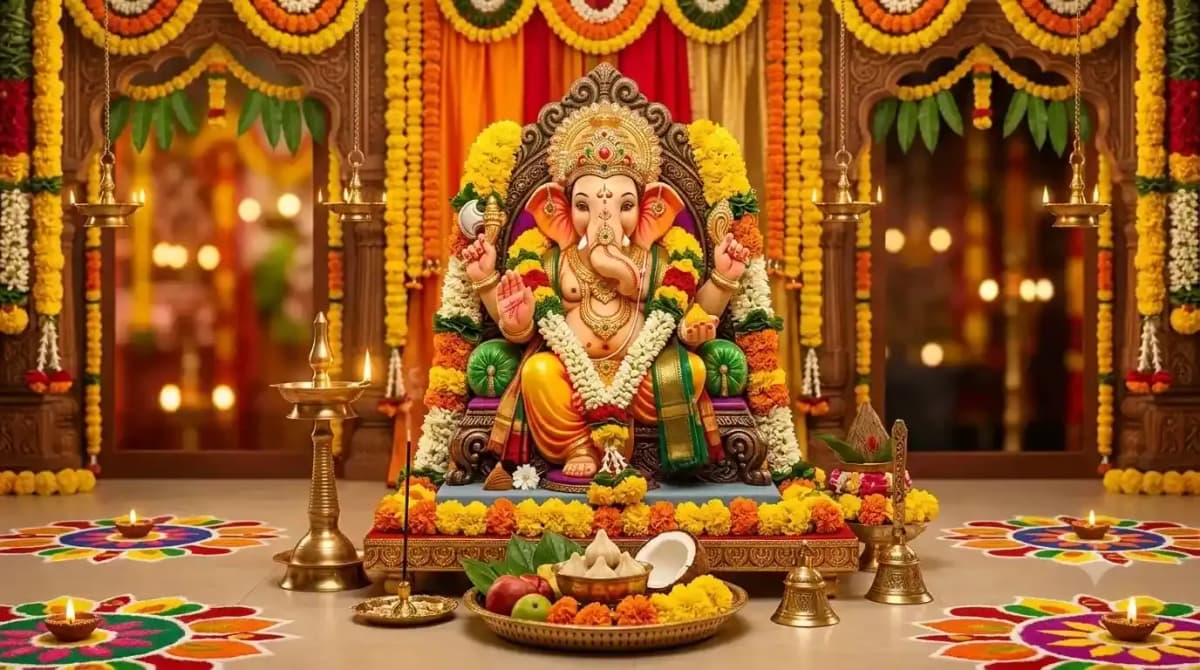
- Setting up home altars with flowers, lamps, rangoli and offerings; modak (steamed or fried) is essential, with fusion variations common.
- Coordinating with local temples for group aarti or sponsorship.
- Planning visarjan carefully — temple-organised events, artificial tanks, or local environmental rules (clay idols are preferred or required in many places).
- Involving children through storytelling, craft activities and cultural programmes.
Practical Tips for 2026
- Verify exact schedules on official temple websites closer to September.
- Account for your time zone when following the muhurat.
- Arrive early on peak days at major hubs — parking and crowds can be significant.
- Support local Indian businesses for supplies and prasad.
- Check local regulations for any outdoor gathering or immersion; many temples also offer take-home prasad or virtual participation.
Related Reading on Hindutone
You might also like
Ganesh Chaturthi 2026 in the UK: City-by-City Guide to Temples, Events & Eco-Visarjan
Ganesh Chaturthi 2026 in New York: Temples, Events & How to Celebrate
Ganesh Chaturthi 2026 in Australia: City-by-City Guide to Temples, Beach Visarjan & Events