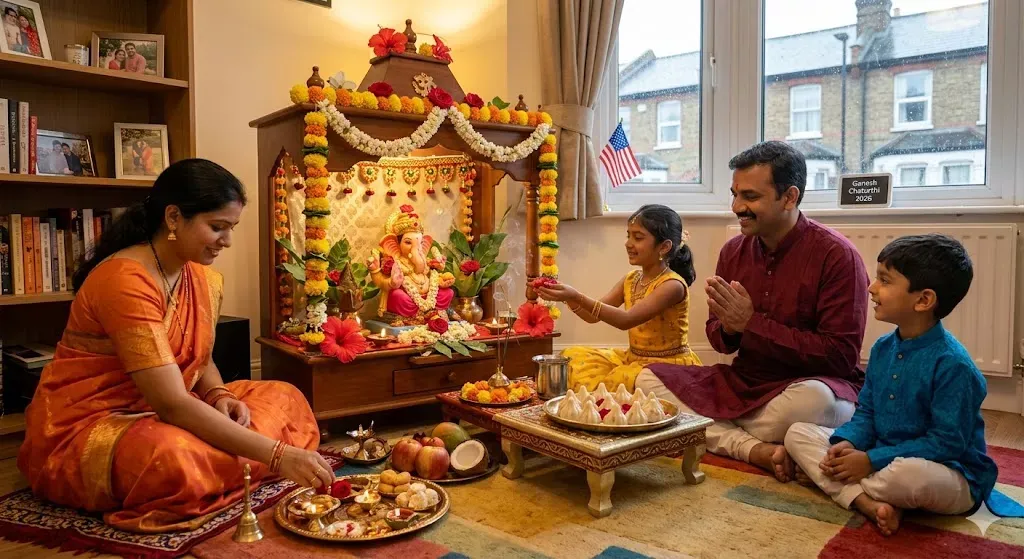
Ganesh Mandapam Design in Australia 2026: Innovative Ideas + Every Permit You Actually Need
How to design a beautiful, compliant Ganesh mandapam in Australia for Ganesh Chaturthi 2026 (14 Sep) — reusable structure and lighting ideas, eco-friendly clay murtis, the full permit stack, and legal visarjan options.
How to design a beautiful, compliant Ganesh mandapam in Australia for Ganesh Chaturthi 2026 (14 Sep) — reusable structure and lighting ideas, eco-friendly clay murtis, the full permit stack, and legal visarjan options.
Quick answer: For Ganesh Chaturthi 2026 (Monday 14 September; visarjan Friday 25 September) in Australia, a home puja generally needs no permit, but a public pandal needs local event, temporary-structure and fire approvals — and a home immersion tank is the simplest legal visarjan.
Across Sydney’s Harris Park, Melbourne’s Dandenong, Brisbane, Perth and Adelaide, families clear living rooms and temple committees book community halls. That is Ganesh Chaturthi in Australia — devotion meeting a highly regulated system of temporary structures and fire safety.
Quick answer: Ganesh Chaturthi 2026 falls on Monday, 14 September 2026, with Ganesh Visarjan on Anant Chaturdashi, Friday, 25 September 2026; shorter cycles immerse on day 1½, 3, 5 or 7. Small private home setups usually need no permit; public events trigger state/council temporary-structure permits (thresholds differ by state), fire compliance and $10–20M public liability.
Why designing a mandapam in Australia is different
- Mostly indoor or controlled-outdoor venues; low ceilings and "no permanent modification" rules.
- Rapid load-in/out; flat-pack storage.
- Fabrics must meet flammability rules under the National Construction Code and the ABCB Temporary Structures Standard (Flammability Index limits; certificates required).
- Coastal wind and rain need proper ballast.
The design foundation — three zones
| Zone | Traditional name | Function |
|---|---|---|
| The seat | Peetham / Vedika | Raised platform for the murti — height, stability, dignity |
| The frame | Torana / Prabhavali | Arch or backdrop that frames the deity — visual focus, symmetry |
| The approach | Mandapa proper | Where devotees stand or sit — flow, sightlines, accessibility |
Place the murti’s eyes at or slightly above standing-adult eye level (roughly 58–66 inches / 148–168 cm from the floor); for a 24-inch murti that is a platform of about 36–42 inches. Keep a strong central axis. Palettes that photograph well: saffron + deep maroon + gold; peacock blue + gold; white + marigold orange; deep green + copper for eco themes. The murti should be the only complex thing in the frame.
Innovation ideas that work in Australia
- Modular aluminium lighting truss; PVC flat-pack home arch with labelled pipes.
- Garage/driveway outward-facing setups (suburban Sydney/Melbourne); CNC-cut reusable gopuram panels.
- Wind/rain-ready outdoor designs with ballast; three-point LED lighting; projection backdrops.
- Seed-embedded/shadu-clay murtis; home or temple immersion tank — the safest, most practical solution.
- Community-donated saree backdrops; QR storytelling; IST-timed live-stream.
Permits and legal requirements in Australia
Requirements are set at state and local-council level — always confirm with the specific council and fire authority. General rules across states:
- Home: small private setups usually need no permit; check strata/body-corporate rules and open-flame limits.
- NSW (Sydney): many small structures on private land are exempt development under the SEPP (Exempt & Complying Development Codes); council land needs an event + temporary-structure approval (lead times 6–26 weeks for major events).
- Victoria (Melbourne): prescribed temporary structures — tents/marquees >100 m², stages >150 m², seating stands >20 people — need a VBA occupancy permit plus municipal-building-surveyor siting approval (apply ≥15 working days ahead; R126 structural certificates).
- Queensland/WA/SA: event and building approvals scale with attendance and structure size; engineering certification common for larger marquees.
- All: NCC/ABCB flame-rated fabric certificates; registered-engineer structural certification for larger marquees; public liability insurance (typically $10–20M); temporary food permits; amplified-sound/noise exemptions.
Ganesh Visarjan in Australia: the legal reality
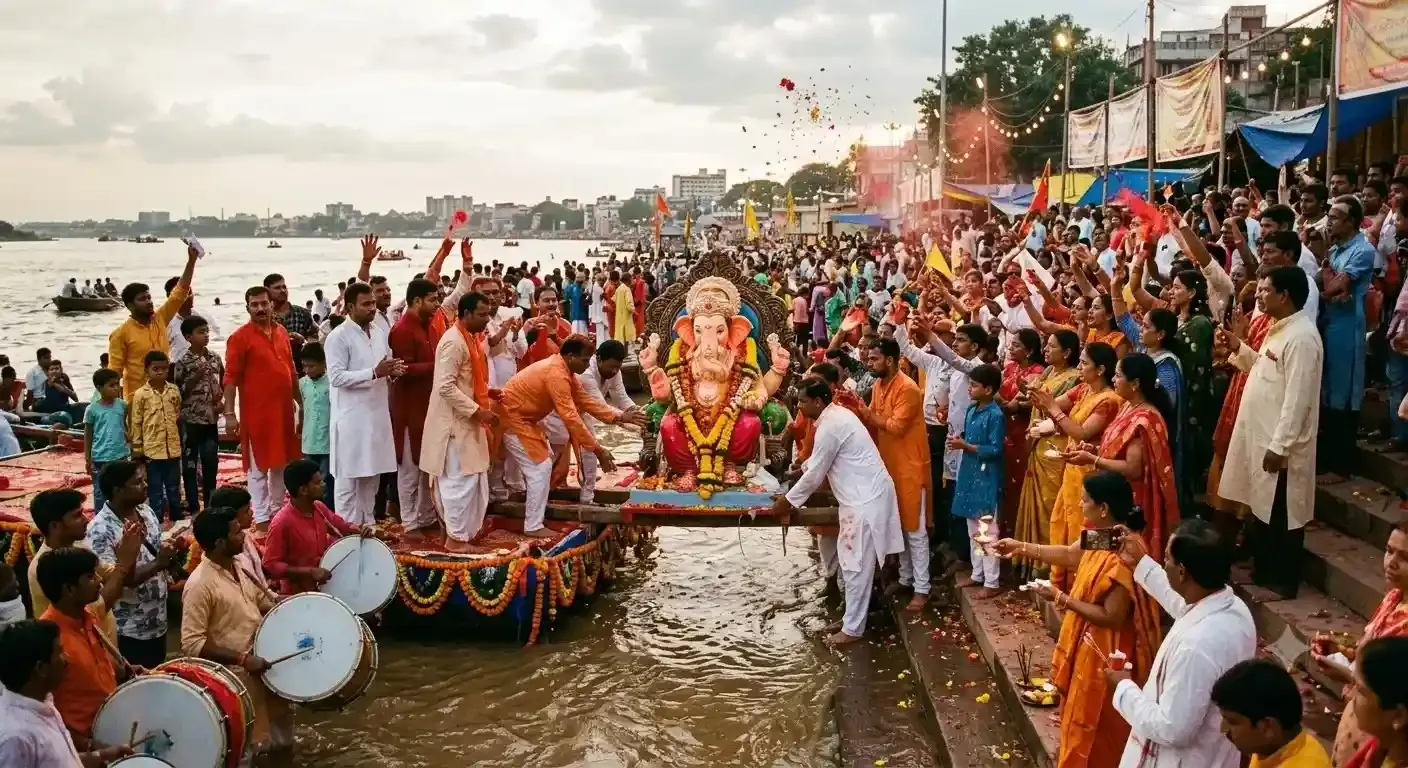
Public waterways (rivers, beaches, lakes) are heavily regulated; direct immersion without council approval is generally not permitted and can attract penalties. Eco note: choose natural shadu-clay murtis with natural colours (order by mid-August — they sell out); never immerse plaster-of-Paris or chemically painted murtis in any public water body.
- Home or temple immersion tank (strongly recommended) — full ritual, zero permit issues, clay to the garden.
- Council/temple-organised designated sites with clay-only rules and cleanup (e.g. Sydney’s Silverwater Park model, under supervision).
- Symbolic immersion while retaining a permanent murti.
Planning timeline & budget
Timeline: 12 weeks book + start council/VBA applications + order murti; 8–10 weeks structural drawings/insurance/fabric certification; 4–6 weeks test-build + fire docs; 2 weeks written confirmations. Budget (AUD): home $250–1,000; small community (100–200) $4,000–10,000; large pandal $15,000–50,000+.
Design with Australian constraints in mind, start the paperwork early, prioritise flame-rated materials and reusable structures, and favour home or temple tanks for visarjan. Ganpati Bappa Morya.
This article is for general information only. Permit requirements vary by locality and change over time — always confirm current rules with your local authorities before finalising plans.
Frequently Asked Questions
When is Ganesh Chaturthi 2026 and when is visarjan?
Ganesh Chaturthi 2026 is Monday, 14 September 2026; Ganesh Visarjan on Anant Chaturdashi is Friday, 25 September 2026. Shorter cycles immerse on day 1½, 3, 5 or 7.
Do I need a permit to celebrate Ganesh Chaturthi at home in Australia?
Generally no — a private religious observance in your own home does not require a permit. Mind local rules on open flame, decorations, parking and noise.
What permits do I need for a public Ganesh pandal in Australia?
A council special-event permit, a temporary-structure/siting or VBA occupancy permit (especially in Victoria for tents >100 m²), fire compliance with flame certificates, public liability insurance, and possibly a temporary food permit. Thresholds differ by state.
Can I immerse a Ganesh idol in a lake, river or the sea in Australia?
Only at designated council-approved sites with permits and clay-only rules. Home or temple tanks are the safest, most-recommended method.
What fabric can I use for a mandapam in a rented hall?
Fabric meeting NCC / ABCB Temporary Structures Standard flammability limits; keep test certificates for inspectors.
Where can I buy an eco-friendly clay Ganesh murti?
From Indian handicraft shops and, increasingly, larger grocery stores from early August. Order by mid-to-late August — natural shadu-clay murtis sell out before the festival.
You might also like
Raksha Bandhan 2026 in Australia: Date, Rakhi Muhurat in Your Time Zone & How to Celebrate

Gowri Vratam 2026: Importance, Rituals & How to Perform Swarna Gowri Vratam at Home
Asha Dashami 2026: Sravana Shukla Dashami — Fulfil Dharmic Wishes with Chandana Abhishekam