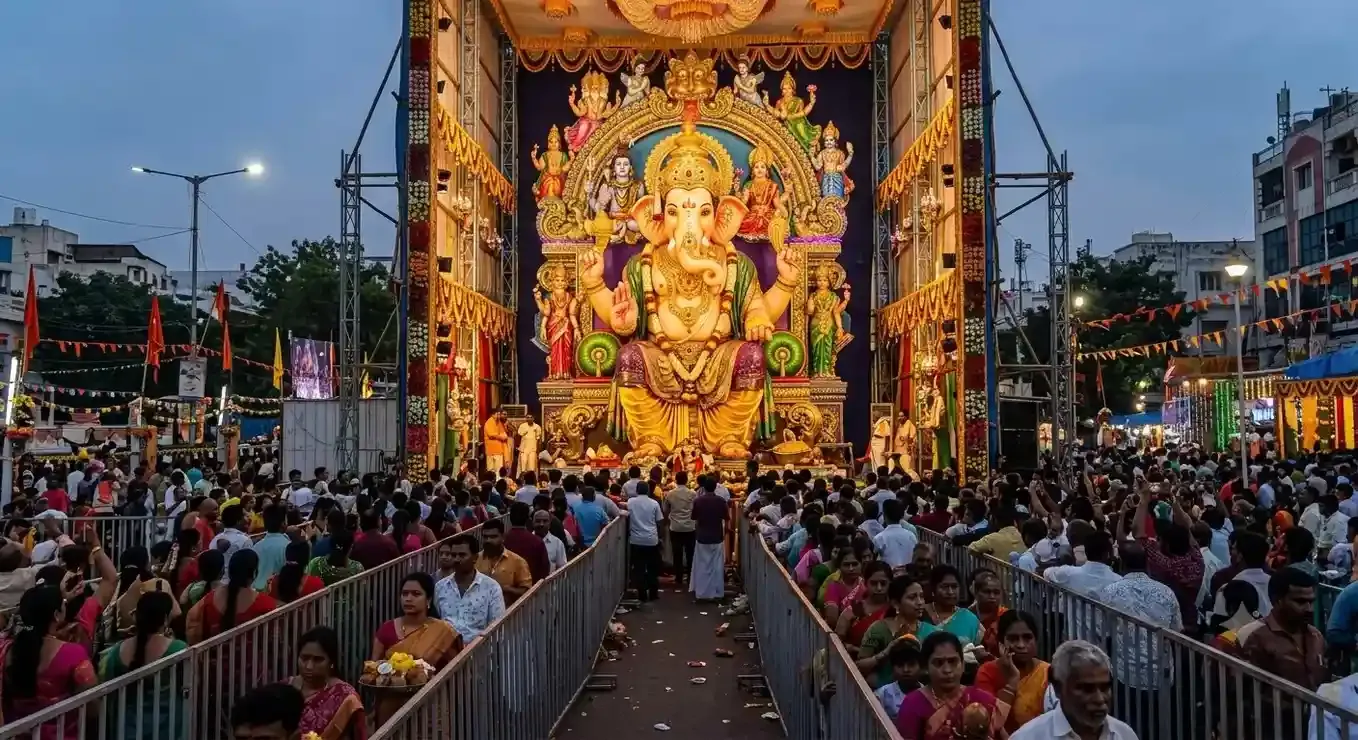
Ganesh Mandapam Design in Dubai & the UAE 2026: Innovative Ideas + Every Permit You Actually Need
How to design a beautiful, compliant Ganesh mandapam in Dubai & the UAE for Ganesh Chaturthi 2026 (14 Sep) — reusable structure and lighting ideas, eco-friendly clay murtis, the full permit stack, and legal visarjan options.
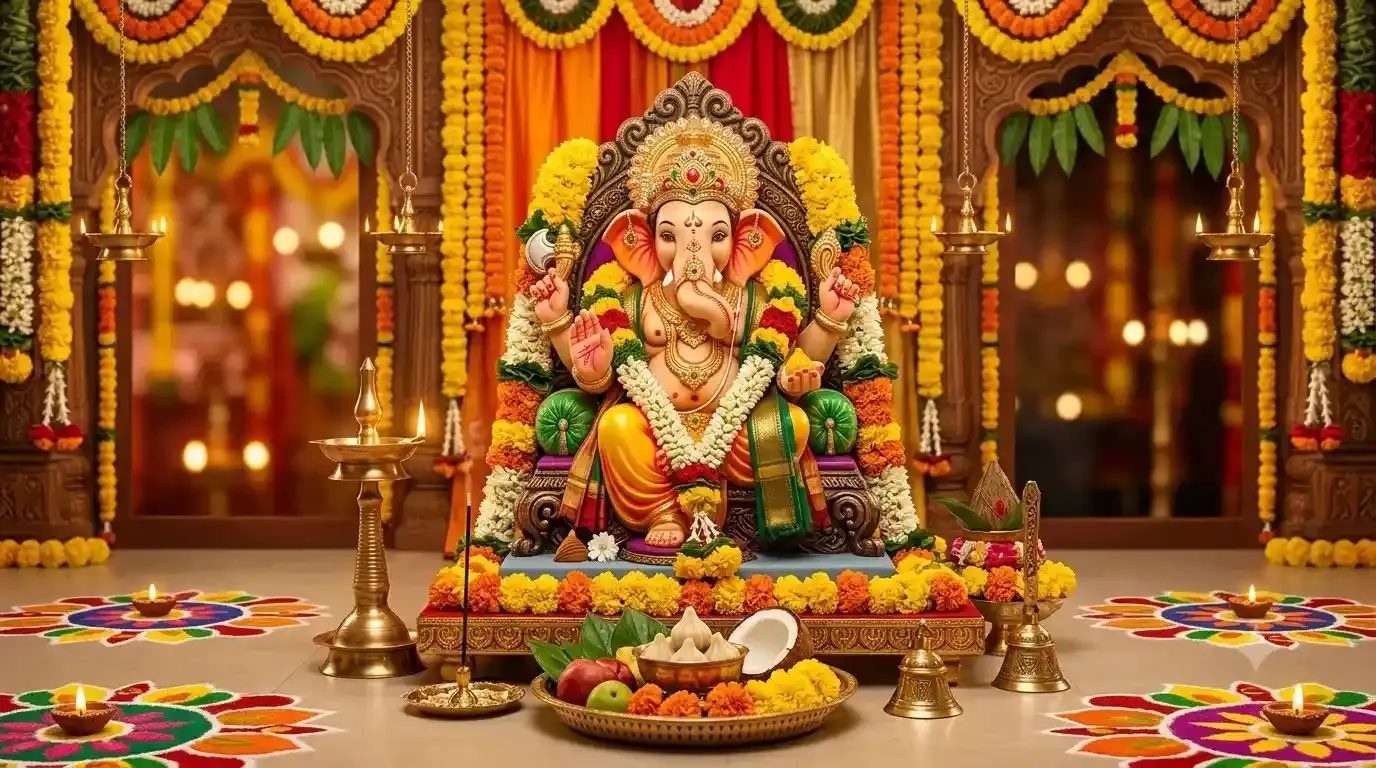
How to design a beautiful, compliant Ganesh mandapam in Dubai & the UAE for Ganesh Chaturthi 2026 (14 Sep) — reusable structure and lighting ideas, eco-friendly clay murtis, the full permit stack, and legal visarjan options.
Quick answer: For Ganesh Chaturthi 2026 (Monday 14 September; visarjan Friday 25 September) in Dubai & the UAE, a home puja generally needs no permit, but a public pandal needs local event, temporary-structure and fire approvals — and a home immersion tank is the simplest legal visarjan.
Ganesh Chaturthi 2026 falls on a Monday — a working day in the UAE — so community celebrations cluster on the weekends of 12–13 and 19–20 September, while families do sthapana at home on the Monday. The Emirates has been generous in accommodating Hindu worship; the way to honour that is to celebrate properly and correctly.
Quick answer: Ganesh Chaturthi 2026 falls on Monday, 14 September 2026, with Ganesh Visarjan on Anant Chaturdashi, Friday, 25 September 2026; shorter cycles immerse on day 1½, 3, 5 or 7. A home puja needs no permit; public events require a DET (or emirate-equivalent) permit via a licensed organisation plus Civil Defence and Municipality approvals; home immersion is the standard visarjan.
Why designing a mandapam in Dubai & the UAE is different
- Mid-September is still 38–40°C — fully indoor design, LED everything, minimal fresh flowers, no real diyas near AC/detectors.
- Most people live in apartments — a considered 400 sq ft corner beats a large cluttered build.
- A clear line divides private (free) from public (permitted): street pandals and public processions are not part of the UAE model.
The design foundation — three zones
| Zone | Traditional name | Function |
|---|---|---|
| The seat | Peetham / Vedika | Raised platform for the murti — height, stability, dignity |
| The frame | Torana / Prabhavali | Arch or backdrop that frames the deity — visual focus, symmetry |
| The approach | Mandapa proper | Where devotees stand or sit — flow, sightlines, accessibility |
Place the murti’s eyes at or slightly above standing-adult eye level (roughly 58–66 inches / 148–168 cm from the floor); for a 24-inch murti that is a platform of about 36–42 inches. Keep a strong central axis. Palettes that photograph well: saffron + deep maroon + gold; peacock blue + gold; white + marigold orange; deep green + copper for eco themes. The murti should be the only complex thing in the frame.
Innovation ideas that work in Dubai & the UAE
- The console-table mandapam and command-hook backdrop system (no drilling — protects the tenancy deposit).
- Tension-rod arch (under AED 200, no fixings); balcony-adjacent placement for light and ventilation.
- Modular truss hired from a licensed Al Quoz supplier (comes with the documentation authorities ask for).
- Flame-retardant printed tension backdrops (specify FR at quotation); CNC-cut layered gopuram; Dragon Mart LED sourcing.
- Shadu-clay/seed-embedded murtis (Meena Bazaar, Bur Dubai; Lulu/Carrefour from early August); a home immersion tank — the mainstream UAE practice.
- IST-friendly live-stream (GST is only 90 min behind IST); QR storytelling.
Permits and legal requirements in Dubai & the UAE
Requirements vary by emirate and zone/free-zone, and change. A Ganesh puja at home with family and invited guests needs no permit. For public events, confirm with the authority or a licensed UAE event company:
- Home: most towers prohibit open flame and false alarms mean evacuation + fines — use LED diyas, no havan indoors; keep amplified sound low; notify building management of large gatherings; villa/compound and labour-accommodation rules apply.
- Temple route (simplest): celebrate at the Hindu Temple Jebel Ali, Krishna Mandir Bur Dubai, ISKCON Dubai, or BAPS Abu Dhabi — they hold their own approvals and sanctioned visarjan.
- Public event core permit — Dubai’s DET requires a permit for religious (and other) events via the ePermit portal; it generally needs a valid UAE trade licence, so apply through a licensed community association, a licensed event company, or the venue. Do not promote or sell tickets before approval.
- Dubai Civil Defence (Fire & Life Safety Code) — layout/egress, FR certificates for every fabric, extinguishers, structural load data, declared open flame; Dubai Municipality for tents/food/waste; Police/SIRA security; RTA/DEWA as needed; zone authorities (Trakhees/DDA/DIFC) by venue.
- Abu Dhabi (DCT + ADCD + Municipality) and Sharjah (SCTDA, more conservative) have parallel frameworks; licensed catering for public prasad.
Ganesh Visarjan in Dubai & the UAE: the legal reality
Immersion in the sea, creek, canals, lakes and fountains should be assumed restricted; arrangements have varied by year and municipality announcement. Do not rely on last year’s blog post or a WhatsApp forward. Eco note: choose natural shadu-clay murtis with natural colours (order by mid-August — they sell out); never immerse plaster-of-Paris or chemically painted murtis in any public water body.
- Home immersion (recommended, mainstream) — a bucket/tub, full uttar puja, clay to balcony plants; no permission, zero exposure.
- Temple eco-tanks during the festival period (check temple notices; slots fill).
- Symbolic visarjan with murti retention.
- Any designated municipal arrangement, only if announced for that season — follow the announced rules precisely and verify directly.
Planning timeline & budget
Timeline: June–July line up a licensed umbrella organisation + hold the venue; mid-July begin the DET application + Civil Defence layout; early August order murti + FR drape + licensed caterer; only after approval begin public promotion. Budget (AED): apartment 400–1,500; villa 3,000–10,000; community event (200–400) 25,000–80,000; large Utsav (1,000+) 150,000+.
It is not Lalbaug and was never going to be — but the Emirates has given the community temples, space and genuine accommodation. Design carefully, ask the right authorities early, choose clay, and immerse at home. Ganpati Bappa Morya.
This article is for general information only. Permit requirements vary by locality and change over time — always confirm current rules with your local authorities before finalising plans.
Frequently Asked Questions
When is Ganesh Chaturthi 2026 and when is visarjan?
Ganesh Chaturthi 2026 is Monday, 14 September 2026; Ganesh Visarjan on Anant Chaturdashi is Friday, 25 September 2026. Shorter cycles immerse on day 1½, 3, 5 or 7.
Do I need a permit to celebrate Ganesh Chaturthi at home in Dubai & the UAE?
Generally no — a private religious observance in your own home does not require a permit. Mind local rules on open flame, decorations, parking and noise.
What permits do I need for a public Ganesh pandal in Dubai & the UAE?
A DET (or emirate-equivalent) event permit — usually filed via a licensed community association, event company or the venue because a UAE trade licence is required — plus Civil Defence and Municipality approvals. Do not promote before approval.
Can I immerse a Ganesh idol in a lake, river or the sea in Dubai & the UAE?
Assume immersion in the sea, creek, canals and lakes is restricted. The standard is home immersion in a bucket/tub with a natural clay murti; some temples run eco-tanks. Verify current arrangements each year.
What fabric can I use for a mandapam in a rented hall?
Flame-retardant fabric with a supplier FR certificate — checked by Civil Defence; regular banner fabric will not pass.
Where can I buy an eco-friendly clay Ganesh murti?
From Indian handicraft shops and, increasingly, larger grocery stores from early August. Order by mid-to-late August — natural shadu-clay murtis sell out before the festival.
You might also like

Gowri Vratam 2026: Importance, Rituals & How to Perform Swarna Gowri Vratam at Home
Asha Dashami 2026: Sravana Shukla Dashami — Fulfil Dharmic Wishes with Chandana Abhishekam
Ganesh Mandapam Design in the UK 2026: Innovative Ideas + Every Permit You Actually Need