



Margashirsha Masam 2025 Tuesday Rituals: Complete Guide to Mangalvar Vrat, Hanuman Worship & Benefits
Introduction: Divine Power of Margashirsha Tuesdays
When the most sacred month of the Hindu calendar meets Tuesday—the day of divine strength and courage—an extraordinary spiritual opportunity emerges. Margashirsha Mangalvar (Tuesday) in 2025 combines Lord Krishna’s beloved month with Lord Hanuman’s powerful day, creating a spiritually charged period for devotion, obstacle removal, and divine blessings.
In the Bhagavad Gita (10.35), Lord Krishna declares himself as Margashirsha among all months, making this period exceptionally potent for all spiritual practices. When combined with Tuesday—dedicated to Lord Hanuman, the epitome of strength, devotion, and fearlessness—the spiritual benefits multiply exponentially.
Tuesday is also associated with Mangal (Mars), the planet governing courage, energy, and determination. Observing Mangalvar Vrat during Margashirsha month helps devotees overcome Mangal Dosha, gain physical strength, remove obstacles, and achieve success in all endeavors.
Margashirsha Masam 2025: Important Dates
According to the traditional Hindu calendar, Margashirsha Masam 2025 spans:
Start Date: November 21, 2025 (Thursday) – Shukla Paksha begins
End Date: December 19, 2025 (Friday) – Krishna Paksha concludes
Margashirsha Tuesdays in 2025
The sacred Tuesdays falling during Margashirsha Masam 2025 are:
- November 25, 2025 – First Margashirsha Tuesday (Vivah Panchami also falls this week)
- December 2, 2025 – Second Margashirsha Tuesday
- December 9, 2025 – Third Margashirsha Tuesday
- December 16, 2025 – Fourth Margashirsha Tuesday
Special Note: Vivah Panchami (celebrating Lord Rama and Sita’s wedding) falls on November 25, 2025, making the first Margashirsha Tuesday doubly auspicious for Hanuman devotees, as Hanuman is Rama’s greatest devotee.
Note: Dates may vary by 1-2 days based on regional calendars (North Indian Amanta vs South Indian Purnimanta systems). Always consult your local Panchang for precise timings.
Why Margashirsha Tuesdays Are Supremely Powerful
The Divine Confluence
Margashirsha Mangalvar represents a rare spiritual convergence:
Lord Krishna’s Month: Margashirsha is personally declared by Lord Krishna as His own manifestation, making all spiritual practices during this month yield multiplied results.
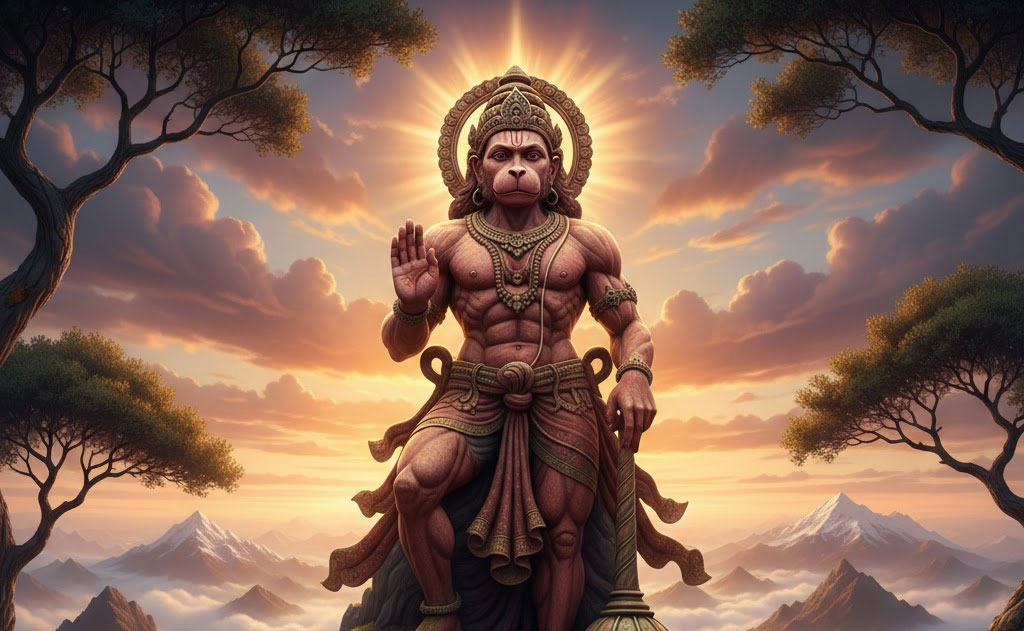
Lord Hanuman’s Day: Tuesday (Mangalvar) is intrinsically dedicated to Lord Hanuman, who embodies unwavering devotion, supernatural strength, and the power to overcome any obstacle.
Mars Energy: Tuesday is ruled by Mangal (Mars), the planet of courage, determination, and victory. Proper Tuesday worship strengthens positive Martian influences while neutralizing negative effects.
Enhanced Karmic Benefits: Ancient scriptures declare that worship, charity, and spiritual discipline performed during Margashirsha yield up to 100 times the normal spiritual merit.
The Legend of Hanuman and Tuesday
According to Hindu tradition, Tuesday is considered Lord Hanuman’s birthday. It was on a Tuesday that Anjana Devi gave birth to Hanuman through Lord Shiva’s blessing (Hanuman is considered the 11th Rudra avatar). This makes every Tuesday special for Hanuman worship, and Margashirsha Tuesdays exceptionally powerful.
Lord Hanuman: The Perfect Devotee
Lord Hanuman’s connection to both Lord Shiva (as his avatar) and Lord Rama (as his supreme devotee) creates a unique spiritual bridge. During Margashirsha—Lord Krishna’s month—worshipping Hanuman gains additional potency because:
- Hanuman exemplifies perfect devotion, just as Krishna teaches in the Bhagavad Gita
- Both Krishna and Rama are Vishnu avatars, creating divine alignment
- Hanuman’s celibacy (Brahmacharya) and self-discipline mirror Margashirsha’s sattvic energy
Complete Benefits of Margashirsha Mangalvar Vrat
Spiritual Benefits
Divine Grace and Blessings:
- Direct blessings from Lord Hanuman, the most accessible and compassionate deity
- Enhanced connection with divine consciousness
- Purification of karmic burdens across lifetimes
- Protection from negative energies, black magic, and evil influences
- Spiritual strength to overcome attachments and move toward moksha
Astrological Remedies:
- Neutralization of Mangal Dosha (Manglik) in horoscope
- Strengthening weak or afflicted Mars in birth chart
- Balancing aggressive or impulsive tendencies
- Protection from accidents, injuries, and blood-related disorders
- Harmony in planetary alignments
Material and Personal Benefits
Life Challenges and Obstacles:
- Removal of all obstacles in career, business, and personal life
- Victory over enemies, competitors, and adversaries
- Success in legal matters, disputes, and conflicts
- Protection during travels and journeys
- Courage to face difficult situations
Health and Vitality:
- Enhanced physical strength, stamina, and immunity
- Recovery from chronic illnesses and health issues
- Relief from blood disorders, skin problems, and infections
- Mental fortitude and emotional resilience
- Protection from epidemic diseases
Family and Relationships:
- Harmonious marital life and domestic peace
- Finding a suitable life partner (especially for those affected by Mangal Dosha)
- Blessing of progeny (especially male children, according to tradition)
- Resolution of family conflicts and misunderstandings
- Protection for siblings and loved ones
Career and Success:
- Success in competitive examinations and interviews
- Promotions, recognition, and professional growth
- Business prosperity and new opportunities
- Leadership qualities and decision-making abilities
- Confidence and fearlessness in endeavors
Mental and Emotional Well-being:
- Freedom from fear, anxiety, and depression
- Mental clarity and focused thinking
- Control over anger and aggressive tendencies
- Emotional balance and inner peace
- Enhanced memory, intelligence, and concentration
The 21 Consecutive Tuesday Vrat (Ekavish Mangalvar)
One of the most powerful spiritual practices is observing 21 consecutive Tuesday fasts dedicated to Lord Hanuman. When at least 4-5 of these Tuesdays fall during Margashirsha month, the spiritual potency increases dramatically.
The Sacred Tradition
According to Hindu scriptures and countless devotee experiences, observing 21 consecutive Tuesday fasts with complete devotion fulfills even the most difficult wishes. This practice is particularly powerful for:
- Overcoming severe Mangal Dosha
- Blessing of children
- Marriage proposals and marital harmony
- Business establishment and financial stability
- Serious health recovery
- Legal victory and justice
Starting the 21 Tuesday Vrat
Most Auspicious Starting Periods:
- Margashirsha Month (November-December) – Most powerful
- Chaitra Month (March-April) – Hanuman Jayanti period
- Shravan Month (July-August) – General auspiciousness
- Any Tuesday after a New Moon (Amavasya)
Important Guidelines:
- Once started, complete all 21 Tuesdays without break (except for unavoidable circumstances like serious illness or women’s monthly cycle)
- If one Tuesday is missed, add an extra Tuesday at the end to maintain the count
- Maintain celibacy (Brahmacharya) throughout the 21-week period
- Avoid non-vegetarian food, alcohol, and tamasic substances
- Practice truth, non-violence, and compassion
Complete Margashirsha Tuesday Vrat Vidhi (Ritual Procedure)
Pre-Dawn Preparation (Brahma Muhurta: 4:00 AM – 6:00 AM)
1. Sacred Wake-Up and Purification
- Rise during Brahma Muhurta (approximately 1.5 hours before sunrise)
- Recite upon waking: “Om Shree Hanumate Namah”
- Take a thorough bath, adding a pinch of rock salt and turmeric to the water
- If possible, add Ganga Jal or water from a sacred river
- The bath symbolizes purification of body, mind, and consciousness
2. Wear Appropriate Attire
- Color Significance: Red is the most auspicious color for Tuesday as it represents Mars energy and Hanuman’s power
- Men: Clean dhoti (preferably red, saffron, or white) with upper cloth
- Women: Clean saree or salwar suit in red, orange, yellow, or white
- Avoid black, dark blue, or torn/unwashed clothes
- Apply a small tilak of sindoor or kumkum on the forehead
3. Sankalp (Sacred Vow)
- Stand or sit facing east in your puja room
- Hold water, rice grains, and a flower in your right palm (over a small vessel)
- With focused intention and folded hands, take your vow:
Sankalp Mantra:
“Om Tat Sat Adya (current date and day) Mangalvaare, Margashirsha Maase, (your name) aham, Shree Hanumad prasaadartham, Mangalvar vratam karishye.”
Translation: “On this auspicious Tuesday of Margashirsha month, I (your name) shall observe the Tuesday fast for Lord Hanuman’s grace.”
- Release the water with rice and flowers into the vessel
- Clearly state your intention: why you’re fasting and what blessings you seek
Morning Puja Ritual (6:00 AM – 8:00 AM)
1. Prepare the Puja Space
- Clean your puja room or worship area thoroughly
- Wipe the floor and surfaces with clean water
- Sprinkle Ganga Jal throughout the space for purification
- Arrange a small wooden platform (chowki) or clean surface
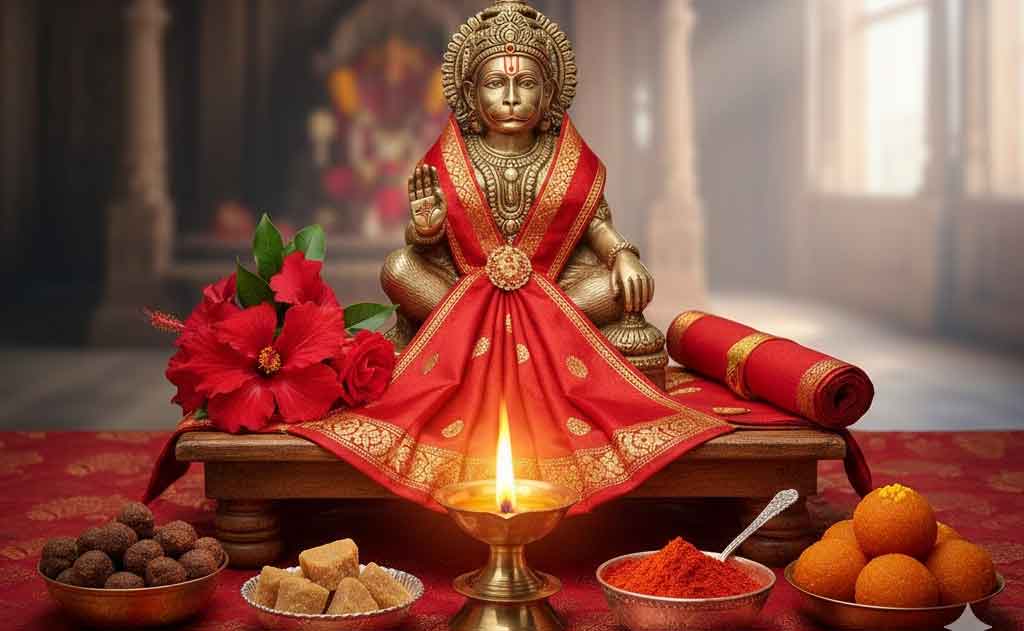
- Spread a red or yellow cloth on the platform
2. Set Up the Altar
Place in order:
- Lord Hanuman’s idol or picture (center position)
- Lord Ganesha’s image (on the left, to remove obstacles)
- Optional: Lord Rama, Sita, and Lakshmana picture (as Hanuman is their devotee)
- A small kalash (water pot) with mango leaves
- Incense holder, lamp holder, and bell
3. Ganesh Puja (Obstacle Removal)
Always begin with Lord Ganesha to ensure obstacle-free worship:
- Offer red flowers to Ganesha
- Chant: “Om Gan Ganapataye Namah” (11 times)
- Pray for successful completion of the Tuesday vrat
4. Main Hanuman Puja
a) Invocation:
Light a ghee lamp and incense sticks. Ring the bell and invoke Hanuman’s presence:
“Om Hanumate Namah, Aagaccha Aagaccha, Sthapayami, Pujayami Cha”
b) Offerings (Upachara):
Offer each item while chanting “Om Hanumate Namah”:
- Asanam (Seat): Offer a seat by visualizing Hanuman seated on your altar
- Arghyam (Water for washing feet): Offer water with flowers
- Achamaniyam (Water for sipping): Offer water in a small spoon
- Snanam (Bath): Sprinkle water on the idol/picture
- Vastram (Cloth): Offer a new red cloth or handkerchief
- Yagnopaveet (Sacred thread): Offer a sacred thread if available
- Gandham (Sandalwood paste): Apply sandalwood paste or offer it in a small bowl
- Pushpam (Flowers): Offer fresh red flowers—especially jasmine, hibiscus, and marigold
- Dhoop (Incense): Wave incense sticks in circular motion
- Deepam (Lamp): Show the ghee lamp in circular motion while ringing bell
- Naivedyam (Food offerings): Offer the prepared prasad (detailed below)
- Tambulam (Betel leaves): Offer betel leaves with areca nut
- Dakshina (Offering): Place a coin or currency note as symbolic offering
- Pradakshina (Circumambulation): Mentally circumambulate three times
- Namaskara (Prostration): Bow down and offer your respects
c) Special Margashirsha Offerings:
During Margashirsha, add these special offerings:
- Tulsi leaves (sacred basil) – especially significant during this month
- Besan ladoos (gram flour sweet balls)
- Red flowers in abundance
- Jasmine oil or sindoor
- Bananas, coconuts, and seasonal fruits
- Jaggery (gur) pieces
- Roasted gram (chana)
Sacred Mantras for Margashirsha Tuesday
1. Primary Hanuman Mantra (108 times):
ॐ हनुमते नमः
Om Hanumate Namah
This simple yet powerful mantra invokes Hanuman’s presence and blessings. Use a rudraksha mala (prayer beads) to count.
2. Hanuman Beej Mantra (at least 21 times):
ॐ ऐं भ्रीं हनुमते
श्री राम दूताय नमः
Om Aeem Bhreem Hanumate
Shree Ram Dootaaya Namah
This seed mantra carries concentrated Hanuman energy and is extremely powerful for protection and strength.
3. Mangal (Mars) Beej Mantra (for Mangal Dosha removal – 108 times):
ॐ क्रां क्रीं क्रौं सः भौमाय नमः
Om Kraam Kreem Kraum Sah Bhaumaya Namah
Chant this specifically if you have Mangal Dosha or weak Mars in your horoscope.
4. Hanuman Gayatri Mantra (11 times):
ॐ अञ्जनेयाय विद्महे
वायुपुत्राय धीमहि।
तन्नो हनुमत् प्रचोदयात्॥
Om Anjaneya Vidmahe
Vayuputraya Dhimahi
Tanno Hanumat Prachodayat
5. Hanuman Chalisa (Complete Recitation):
Recite the complete Hanuman Chalisa at least once (preferably 3, 7, 11, or 108 times if possible). This 40-verse devotional hymn is the most beloved Hanuman prayer, composed by Goswami Tulsidas.
Key verse for Mangalvar:
“संकट कटें मिटें सब पीरा।
जो सुमिरै हनुमत बलबीरा॥”
Sankat katein mitein sab peera
Jo sumirai Hanumat balbeera
Translation: “All crises are resolved and all pains vanish for those who remember the powerful and mighty Hanuman.”
6. Bajrang Baan (For Ultimate Protection – Optional but Powerful):
If facing serious obstacles, black magic, or extreme difficulties, recite the Bajrang Baan—an extremely powerful protective prayer. However, this should be recited with proper guidance and complete purity.
Reading the Mangalvar Vrat Katha
After completing the puja and mantras, sit comfortably and read or listen to the Mangalvar Vrat Katha—the sacred story explaining the origin and power of Tuesday fasting:
The Story of the Brahmin Couple (Brief Summary):
Once upon a time, a devoted Brahmin couple lived in poverty. Despite their hardships, they remained faithful to God. The wife, distressed by their childlessness, began observing strict Tuesday fasts with complete devotion to Lord Hanuman.
She would wake early, bathe, wear clean clothes, and worship Hanuman with red flowers, sindoor, and besan ladoos. Her husband traveled to another village for work. During his absence, through her unwavering devotion and 21 consecutive Tuesday fasts, Lord Hanuman blessed her with a beautiful baby boy.
When the husband returned months later and saw the child, he doubted his wife’s fidelity and accused her of adultery. The wife explained that the child was Hanuman’s blessing, but the husband refused to believe her. That very night, Lord Hanuman appeared in the husband’s dream and revealed the entire truth.
The next morning, filled with remorse and gratitude, the husband accepted his wife and son with great love. They named the child Mangal (meaning auspicious), as he was born through Mangalvar Vrat’s grace. The family lived happily, continuing to observe Tuesday fasts with devotion, and were blessed with prosperity, health, and divine protection throughout their lives.
Moral: This story demonstrates that sincere devotion and regular Tuesday fasting please Lord Hanuman, who removes all obstacles and fulfills righteous desires, including the blessing of children.
Daytime Observances
Throughout Tuesday (Morning to Evening):
1. Maintain Sattvic Energy:
- Avoid anger, harsh speech, and negative thoughts
- Practice patience and kindness with everyone
- Speak truth and avoid gossip or unnecessary conversation
- Maintain mental focus on Hanuman’s divine form
2. Chanting Practice:
- Continue chanting “Om Hanumate Namah” throughout the day
- Use a mala to count mantras during free time
- Mental chanting is acceptable when vocal chanting isn’t possible
3. Study Sacred Texts:
- Read from the Ramayana, especially the Sundara Kanda (Hanuman’s chapter)
- Study the Hanuman Chalisa meaning and significance
- Read devotional stories of Hanuman’s miracles
4. Fasting Discipline:
- Maintain your chosen fasting method strictly
- Stay hydrated with water or permitted beverages
- Avoid watching inappropriate content or entertainment
- Use the day for spiritual growth and self-reflection
5. Temple Visit (If Possible):
- Visit a Hanuman temple in the late afternoon or evening
- Circumambulate the temple 7 or 11 times
- Offer your prepared prasad or temple-specific offerings
- Participate in evening aarti if available
Evening Rituals (Sunset Time: 5:30 PM – 7:00 PM)
1. Evening Aarti:
- Light a new ghee lamp and fresh incense
- Perform the complete Hanuman Aarti
- Ring the bell continuously during aarti
- Wave the lamp in circular clockwise motion
- Sing or play recorded aarti with devotion
Popular Hanuman Aarti:
“आरती कीजै हनुमान लला की।
दुष्ट दलन रघुनाथ कला की॥”
Aarti keejai Hanuman lala ki
Dusht dalan Raghunath kala ki
2. Final Prayers:
- Seek forgiveness for any mistakes in the vrat
- Thank Lord Hanuman for his blessings and protection
- Pray for strength to continue the Tuesday vrat
- Distribute prasad among family members
3. Special Margashirsha Practice:
- If possible, light a mustard oil lamp near a Tulsi plant
- Offer water to Tulsi while chanting Vishnu mantras
- This combines Margashirsha’s special Tulsi worship with Tuesday observances
Breaking the Fast (Parana)
Timing: After evening aarti and prayers, ideally after moonrise or after sunset
Step-by-Step Parana:
- First consume the prasad offered to Hanuman (ladoo, fruit, etc.)
- Drink water mixed with Tulsi leaves or plain water
- If observing partial fast, eat the permitted vrat foods
- If observing full fast, break with light, sattvic food
Recommended Breaking-Fast Foods:
Light Option:
- Milk with jaggery or honey
- Fresh fruits (bananas, apples, pomegranates)
- Dry fruits and nuts
Complete Meal Option:
- One meal consisting of wheat chapatis with jaggery (roti with gur)
- Simple potato curry with rock salt
- Plain rice with ghee
- Yogurt or buttermilk
- Simple vegetable preparation
Dietary Guidelines for Margashirsha Tuesday Vrat
Types of Fasting
1. Nirjala Vrat (Waterless Fast):
- Most rigorous form—no food or water from sunrise to sunset
- Only for those in excellent health
- Particularly powerful for severe Mangal Dosha
- Break fast after sunset with water first, then prasad
2. Phalahar Vrat (Fruit-based Fast):
- Most common method for Tuesday fasting
- Consume fruits, milk products, and specific fasting foods
- Permitted throughout the day
- More sustainable for regular practice
3. One Meal Vrat (Eka Bhukta):
- One sattvic meal in late afternoon after completing puja
- Meal should include wheat and jaggery
- No food before or after the designated meal time
4. Simple Food Restriction:
- Avoid specific items like salt, grains, and non-veg
- Normal eating with restrictions
- Suitable for beginners or those with health conditions
Foods Allowed During Phalahar Vrat
Fruits:
- All fresh fruits: bananas, apples, oranges, pomegranates, mangoes (seasonal), grapes, papaya, watermelon
- Dry fruits: almonds, cashews, raisins, dates, walnuts, pistachios
- Coconut and coconut water
Dairy Products:
- Milk (cow’s milk preferred)
- Curd/yogurt (plain, homemade)
- Buttermilk
- Paneer (cottage cheese)
- Butter and ghee
Fasting Flours:
- Sabudana (sago/tapioca pearls)
- Singhare ka atta (water chestnut flour)
- Kuttu ka atta (buckwheat flour)
- Rajgira (amaranth flour)
Vegetables (Limited):
- Potatoes
- Sweet potatoes
- Pumpkin (kaddu)
- Bottle gourd (lauki)
- Raw banana
Seasonings:
- Rock salt (sendha namak) ONLY
- Black pepper
- Cumin seeds
- Green chilies
- Ginger
- Curry leaves
- Lemon
Beverages:
- Water (plenty of it)
- Coconut water
- Herbal tea (without regular tea leaves)
- Milk
- Fresh fruit juices (without sugar; use honey or jaggery if needed)
Foods to Strictly Avoid
Grains and Pulses:
 Rice
Rice- Wheat (except one meal after puja if following that tradition)
- All lentils (dal)
- Regular atta (wheat flour)
- Besan (except for making prasad ladoos)
Vegetables:
- Onion and garlic (most important)
- Brinjal (eggplant)
- Mushrooms
- Most regular vegetables
Seasonings:
- Regular table salt (only rock salt allowed)
- Turmeric (some allow, some don’t)
- Hing (asafoetida)
- Packaged spice mixes
Prohibited Foods:
- Non-vegetarian food (meat, fish, eggs)
- Alcohol and intoxicants
- Tobacco and smoking
- Processed and packaged foods
- Outside restaurant food
Sample Tuesday Vrat Meal Plan
Early Morning (4-5 AM):
- Water with soaked almonds (3-5 pieces)
Post-Puja (7-8 AM):
- Milk with banana
- OR Fruit salad with honey
- Handful of dates and nuts
Mid-Morning (10-11 AM):
- Coconut water or fresh fruit juice
Lunch Time (12-1 PM):
- Option 1: Sabudana khichdi with peanuts and potatoes (using rock salt)
- Option 2: Kuttu ki puri with potato curry
- Option 3: Singhare ki roti with curd
- Fresh fruits
Evening Snack (3-4 PM):
- Dry fruits and nuts
- OR Fruit smoothie with milk
After Puja/Breaking Fast (6-7 PM):
- Hanuman prasad (besan ladoo or offered fruit)
- If full meal: Wheat chapati with jaggery, simple potato curry, curd
- Milk with saffron
Special Margashirsha Tuesday Practices
Brahmacharya (Celibacy and Self-Discipline)
Lord Hanuman is the epitome of Brahmacharya—complete celibacy and self-control. To fully receive his blessings:
Physical Brahmacharya:
- Abstain from sexual activity on Tuesday (especially during the 21-week vrat period)
- Avoid lustful thoughts and activities
- Maintain purity of body through cleanliness
Mental Brahmacharya:
- Control sensory indulgences
- Avoid watching inappropriate content
- Practice thought control and meditation
- Focus energy on spiritual growth
Benefits of Brahmacharya Practice:
- Enhanced willpower and mental strength
- Spiritual energy conservation
- Deeper meditation experiences
- Faster manifestation of vrat results
Charity and Dana (Donations)
Tuesday is highly auspicious for specific types of charity:
Items to Donate on Margashirsha Tuesdays:
- Red cloth or red clothing
- Besan ladoos to temples or poor people
- Jaggery and chana (gram) to the needy
- Red flowers to Hanuman temples
- Sindoor (vermillion) to temple
- Jasmine or mustard oil for temple lamps
- Books, especially Hanuman Chalisa or Ramayana
- Red lentils (masoor dal) – although consumption is avoided
- Money to genuine charitable causes
Who to Give To:
- Temple priests and workers
- Poor and needy families
- Elderly people and widows
- Genuine spiritual seekers
- Educational institutions
- Cow shelters (gaushalas)
Proper Dana Method:
- Give with respect and humility
- Don’t expect recognition or thanks
- Give with your right hand
- Accompany with prayers for the recipient’s well-being
Temple Worship and Community Participation
Temple Visit Guidelines:
- Visit Hanuman temple on Tuesday evening if possible
- Best time: After 4 PM, especially during sunset
- Circumambulate (pradakshina) 7 or 11 times clockwise
- Sit and meditate before the deity
- Participate in community aarti and bhajans
- Offer your prepared prasad or donate to temple
Famous Hanuman Temples for Margashirsha Tuesday:
- Sankat Mochan Hanuman Temple, Varanasi
- Hanuman Garhi, Ayodhya
- Balaji Temple, Mehandipur, Rajasthan
- Panchmukhi Hanuman Temple, Karnatka
- Local neighborhood Hanuman temples (equally powerful with devotion)
Sundara Kanda Recitation
The Sundara Kanda (Beautiful Chapter) from Valmiki’s Ramayana describes Hanuman’s heroic journey to Lanka. It’s the only chapter entirely focused on Hanuman.
Special Practice:
- Recite Sundara Kanda on Tuesdays during Margashirsha
- Can be read in Hindi, Sanskrit, or your regional language
- Even listening to recorded versions brings blessings
- Particularly powerful for: removing obstacles, finding lost items/people, achieving impossible goals
Hanuman Jayanti Connection
While Hanuman Jayanti is celebrated in Chaitra month (March-April), devotees who begin their 21 Tuesday vrat during Margashirsha often complete it around Hanuman Jayanti, creating a perfect spiritual cycle.
Rules and Restrictions for Tuesday Vrat
Do’s (Acharana)
Spiritual Practices:
 Wake early during Brahma Muhurta
- Maintain physical and mental cleanliness
- Wear red or orange clothes
- Chant Hanuman mantras throughout the day
- Read Hanuman Chalisa at least once
- Maintain silence (mauna) as much as possible
- Practice meditation and pranayama
- Speak truth and practice non-violence
- Show compassion to all beings
Daily Life:
- Complete your puja before starting daily work
- Share prasad with family and others
- Help those in need
- Feed animals, especially monkeys and cows
- Keep your home and surroundings clean
Don’ts (Niyama)
Prohibited Actions:
- Do not shave or cut hair on Tuesday (especially during 21-week vrat)
- Avoid cutting nails
- Don’t use sharp objects unnecessarily
- Avoid watching violent or inappropriate content
- Don’t engage in gossip or idle talk
- Avoid arguments, fights, and anger
- Don’t speak lies or harsh words
- Avoid gambling and wasteful activities
- Don’t sleep during daytime
- Avoid laziness and procrastination
Kitchen Rules:
- Don’t let food burn in the kitchen
- Strictly avoid cooking non-vegetarian food at home
- Don’t waste food or water
- Avoid using onion and garlic in cooking
For Women:
- During menstrual periods, women should not enter the puja room or touch the deity
- However, they can continue fasting (if comfortable) from outside
- Mental prayers and chanting are perfectly acceptable
- The vrat count continues; no need to repeat that Tuesday
Margashirsha Tuesday Benefits by Intent
For Mangal Dosha Removal
If you have Mangal Dosha in your horoscope:
- Observe 21 consecutive Tuesday fasts
- Chant Mangal Beej Mantra: “Om Kraam Kreem Kraum Sah Bhaumaya Namah” 108 times
- Donate red items (red cloth, red lentils, copper items)
- Wear a red coral gemstone after astrological consultation
- Feed red-faced monkeys with jaggery and gram
For Marriage and Relationships
Singles seeking marriage:
- Observe 16 or 21 consecutive Tuesday fasts
- Offer red flowers and sindoor to Hanuman
- Pray with clear intention for a suitable partner
- Practice Brahmacharya sincerely
- Read the Mangalvar Vrat Katha with faith
Married couples for harmony:
- Both partners observe fast together
- Pray for marital bliss and understanding
- Avoid conflicts on Tuesdays
- Share prasad with love
For Child Blessing
Couples seeking children:
- Wife should observe Tuesday fasts (husband can support by fasting too)
- Complete 21 consecutive Tuesdays without break
- Read the Mangalvar Vrat Katha which specifically mentions child blessing
- Offer besan ladoos to Hanuman
- Donate to children’s causes and educational institutions
For Career and Success
For job seekers and professionals:
- Observe Tuesday fasts with specific intention
Related posts:
 Margashirsha Masam 2025: Complete Guide, Dates, Rituals & Best Temples to Visit in USA
 Margasira Masam 2025 – Complete Guide for Hindus in Germany
 Decorating Your Puja Room for Margasira: Creating a Sacred Space
 Traditional Margasira Recipes for Naivedyam (Food Offering to God)
 Margashira Masam Sunday: Sacred Surya Worship for Health, Vitality and Prosperity
 Tiruppavai & Gita Jayanti: The Divine Connection of Margashirsha


 ︎
︎

