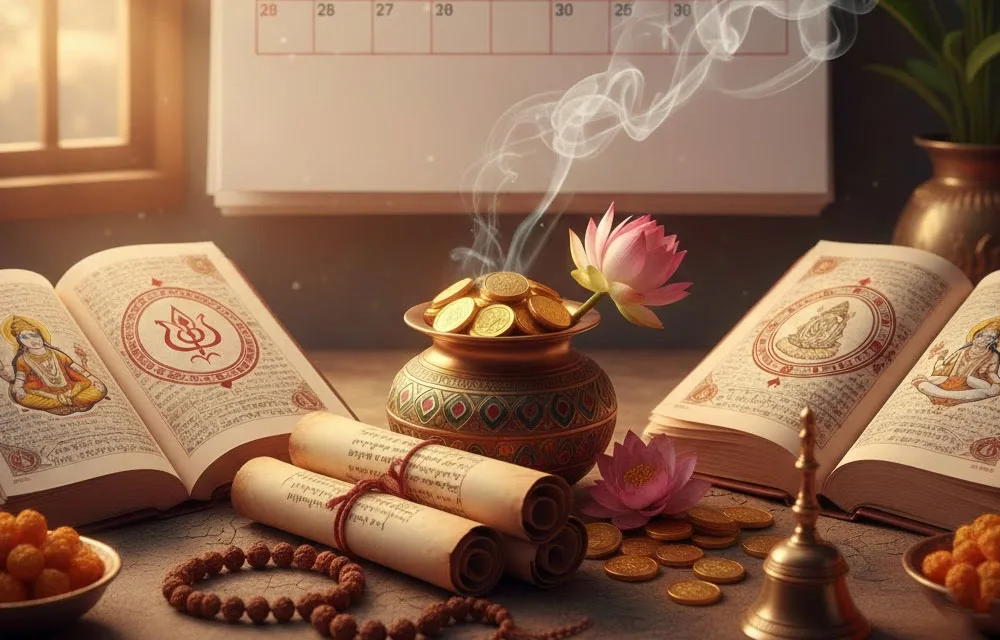
Margasira Masam 2025 – Complete Guide for Hindus in Germany
“Among the months, I am Mārgaśīrṣa” – Bhagavad Gita 10.35 The Most Divine Winter Month of Lord Krishna – Perfectly Suited to German Winters Specially crafted…

“Among the months, I am Mārgaśīrṣa” – Bhagavad Gita 10.35 The Most Divine Winter Month of Lord Krishna – Perfectly Suited to German Winters
Specially crafted for Hindu families in Berlin, Munich, Frankfurt, Hamburg, Cologne, Stuttgart, Düsseldorf, Hamburg-Nord & across Deutschland.
Exact Dates & Timings – Germany (CET Timezone – Winter 2025)
Why Margasira Masam 2025 Feels Magical in Germany
- Long, peaceful nights → extended bhajans & Gita study
- Weihnachtsferien (Christmas holidays) → children can join Tiruppavai & temple programs
- Cold & quiet winters → natural atmosphere for inner reflection and devotion
Daily & Special Rituals (German Winter-Friendly)
Daily Essentials
- Warm Usha Snan before sunrise (~8 AM)
- Light 5-face ghee deepam every evening for light & warmth
- Offer fresh tulsi leaves to Lord Vishnu/Krishna
- Read minimum 1 chapter of Bhagavad Gita daily
- Strictly sattvic diet (no onion/garlic) – hot soups allowed on vrat days
Thursday Guruvar Vrat – Dedicated to Maha Lakshmi Fast till sunset | Light 8–16 deepams | Offer yellow flowers & kheer | Chant Lakshmi Ashtakam & Kanakadhara Stotram
Ekadashi & Dhanurmasam Highlights
- 27 Nov – Utpanna Ekadashi
- 1 Dec – Mokshada Ekadashi + Gita Jayanti (full Gita parayana recommended)
- From 16 Dec – Daily Tiruppavai at Brahma Muhurta + hot pongal naivedyam
5 Most Powerful Mantras for Margasira 2025
Top Hindu Temples in Germany Hosting Special Events
Practical Winter Tips for German Hindus
- Keep tulsi plant indoors near window or with grow-light
- Warm water ritual bath only – stay healthy!
- Hot herbal teas, milk, soups permitted on fasting days
- Decorate puja corner with fairy lights & candles
- Join temple WhatsApp/Zoom groups for daily Tiruppavai sharing
Warming Naivedyam Ideas
- Sweet pongal loaded with ghee & nuts
- Spicy pepper-ginger ven pongal
- Hot sesame-jaggery laddoos
- Creamy cardamom kheer
Benefits of Devoted Observance
Inner peace • Mahalakshmi’s blessings • Strong health • Family harmony • Protection from winter blues • Karmic purification
Make this sacred month the most luminous winter of your life in Germany. Light your diyas, chant His name, and let Krishna’s favourite month fill your home with divine warmth!
Jai Sri Krishna! Om Namo Narayanaya!
Why Did Krishna Choose Margashirsha — The Scriptural Significance Behind Bhagavad Gita 10.35
In the Vibhuti Yoga chapter of the Bhagavad Gita (10.35), Sri Krishna declares 'māsānāṁ mārgaśīrṣo'ham' — among all months, I am Mārgaśīrṣa. Ancient commentators including Adi Shankaracharya explain this choice by pointing to the month's unique spiritual quality: in the traditional Vedic calendar, Margashirsha was once considered the first month of the year, making it inherently the most auspicious starting point for any sacred endeavour.
The Skanda Purana and Padma Purana both describe Margashirsha as 'Hemanta's crown jewel,' a month when the atmospheric stillness, shorter days, and longer nights create a natural tapas-like environment. The Sanskrit root 'Mriga' (deer) and 'Shiras' (head) together reference the Mrigashira nakshatra, under whose lunar influence this month begins — a constellation associated with Soma, the divine nectar of devotion and wisdom.
For Hindu families in Germany, this scriptural backdrop transforms the cold December darkness into something purposeful: the long northern European night mirrors the inward, contemplative quality that the Puranas describe as this month's defining spiritual gift.
Dhanurmasam — The Sacred 30-Day Vrata That Begins on 16 December 2025
Dhanurmasam, also called Dhanur Masa, runs from 16 December 2025 to 14 January 2026 (CET), beginning when the Sun enters the zodiac sign Dhanus (Sagittarius) and concluding at Makar Sankranti. This month-long vrata is especially sacred in Sri Vaishnava tradition, and the Divya Prabandham — the 4,000 Tamil hymns of the Alvar saints — prescribes daily recitation of the Tiruppavai composed by Andal (Godadevi) as the central observance.
Andal's 30 pasurams (verses) of the Tiruppavai are sung one per day at Brahma Muhurta, the pre-dawn hour roughly 96 minutes before sunrise. In Germany during December and January, sunrise falls around 8:20–8:30 AM (CET), which means Brahma Muhurta begins near 6:40–6:50 AM — a very manageable time for working families and students on Weihnachtsferien holiday break.
The traditional naivedyam for Dhanurmasam is sakkarai pongal (sweet rice with jaggery and ghee) or ven pongal (savoury rice with pepper and ginger). Both can be prepared indoors on a German winter morning and offered warm to the Lord — the steam itself is considered a form of fragrant offering (dhupa) in cold climates, as described in regional Agamic cooking traditions.
Mokshada Ekadashi and Gita Jayanti — The Most Important Day of Margashirsha 2025
Mokshada Ekadashi, falling on 1 December 2025, holds a singular rank among all 24 Ekadashis of the year because the Vishnu Purana identifies it as the day Sri Krishna imparted the Bhagavad Gita to Arjuna on the battlefield of Kurukshetra. This cosmic event is celebrated as Gita Jayanti, and a full parayana (uninterrupted recitation) of all 18 chapters — approximately 700 verses — is the highest observance recommended on this day.
The Padma Purana states that fasting on Mokshada Ekadashi and meditating on Vishnu with sincere desire for liberation (moksha) grants liberation not only to the devotee but also to departed ancestors. This makes it a uniquely powerful day for pitru tarpana remembrance alongside the usual nirjala or phalahar fast.
Hindu communities in Frankfurt (Shri Venkateshwara Temple, Sindlingen), Munich, and Berlin regularly organise all-day Gita Jayanti programmes on this date. Families unable to attend in person can participate in online Gita parayana relay groups — many German Hindu sabhas coordinate WhatsApp reading chains where each household recites one or two chapters sequentially throughout the day.
The Five Powerful Mantras of Margashirsha — How and When to Chant Them
The five mantras traditionally emphasised during Margashirsha are: (1) the Ashtakshara Mantra 'Om Namo Narayanaya,' (2) the Dvadakshara 'Om Namo Bhagavate Vasudevaya,' (3) the Kanakadhara Stotram of Adi Shankaracharya for Mahalakshmi, (4) the Gopika Geetam from Srimad Bhagavatam (Canto 10, Chapter 31), and (5) the Mrigashira Nakshatra Mantra 'Om Somaaya Namaha' for inner calm and mental clarity.
Optimal chanting windows in CET during Margashirsha are: Brahma Muhurta (approx. 6:45–7:30 AM) for Vishnu mantras and Tiruppavai, evening Pradosha Kala (5:00–6:30 PM) for Lakshmi stotras and deepa pradakshinam, and the quiet hour after 9 PM for japa on a tulsi mala. The Brihat Samhita advises that mantra japa performed during winter evenings carries amplified potency because the mind naturally turns inward (antarmukha) when external sensory stimulation is reduced.
A minimum of 108 repetitions of the chosen mantra daily is recommended throughout the month. Families with children may begin with 27 repetitions — one full round of a tulsi mala — as a sustainable starting practice, gradually building to 108 by the month's midpoint.
Connecting with Hindu Temple Sanghas Across Germany During Margashirsha
Several established mandirs in Germany hold extended Margashirsha and Dhanurmasam programmes. The Sri Venkateswara Swami Temple in Hamm-Uentrop (one of the largest South Indian temples in Europe) conducts daily Suprabhatam and Tiruppavai seva throughout Dhanurmasam. The Sri Mahalakshmi Temple in Oberhausen and the Shiva Vishnu Temple community in Frankfurt announce special Ekadashi and Gita Jayanti events that families from across Germany travel to attend.
For Hindus in cities without a dedicated mandir — such as Dresden, Leipzig, or Nuremberg — digital sangha is a viable and scripturally valid substitute. The Bhaktivedanta tradition cites the Narada Bhakti Sutras in affirming that satsanga (community of the devoted) achieved through any medium purifies the mind. Zoom-based Tiruppavai recitations, WhatsApp Gita study circles, and YouTube livestreams from Tirumala Tirupati Devasthanams (TTD) and ISKCON provide continuity of communal worship.
It is worth noting that many German cities now host Tamil, Telugu, and Hindi cultural associations that organise Margashirsha bhajan evenings independently of temple infrastructure. Connecting with these associations — often listed through the Hindu Forum Germany or regional Indian community portals — ensures that even families in smaller towns can observe the month with communal support rather than in isolation.
Sattvic Winter Cooking as Devotional Practice — The Ayurvedic Dimension of Margashirsha Fasting
Ayurveda classifies the Hemanta ritu (winter season, which includes Margashirsha) as the period when digestive fire (jatharagni) is strongest. The Ashtanga Hridayam of Vagbhata advises that winter is the ideal time for nourishing, warming foods — ghee, sesame (til), jaggery, warm milk with turmeric, and freshly ground spices like dry ginger (shunti) and black pepper (maricha). These foods both satisfy the heightened digestive capacity and support the immune system through European winters.
On Ekadashi fasting days, traditional phalahar (fruit and milk fast) translates beautifully to the German winter pantry: warm stewed apples with cardamom, chestnut kheer, pear and ginger compote, and roasted sweet potato with rock salt are all within Ekadashi norms and readily available in German supermarkets (Aldi, Rewe, or bio markets) throughout November and December.
The Dhanurmasam pongal offering carries an additional Ayurvedic rationale: the combination of newly harvested rice, moong dal, fresh ghee, black pepper, and cumin constitutes what classical texts call a tridosha-balancing preparation — warming without inflaming, nourishing without dulling. Preparing and offering this dish daily during Dhanurmasam is thus simultaneously an act of devotion (bhakti), bodily care (svastha-vritta), and communal sharing (prasada) — three pillars the Dharmashastra tradition consistently links together.
Frequently Asked Questions
When does Dhanurmasam start for Hindus in Germany?
Dhanurmasam runs from 16 December 2025 to 14 January 2026 (CET), beginning when the Sun enters Dhanus and ending at Makar Sankranti. Devotees recite one Tiruppavai pasuram daily at Brahma Muhurta.
What time is Brahma Muhurta in Germany during winter?
Sunrise falls around 8:20 to 8:30 AM CET in December and January, so Brahma Muhurta begins near 6:40 to 6:50 AM. This suits working families and students on Weihnachtsferien break.
When are Mokshada Ekadashi and Gita Jayanti in 2025?
Mokshada Ekadashi and Gita Jayanti fall on 1 December 2025, with Utpanna Ekadashi on 27 November. A full parayana of all 18 chapters of the Bhagavad Gita is the highest observance recommended.
How can Hindus in German cities without a mandir observe Margashirsha?
Digital satsanga is described as a valid substitute. Families join Zoom Tiruppavai recitations, WhatsApp Gita reading chains and livestreams from TTD and ISKCON, or connect with local cultural associations.
Which temples in Germany hold Margashirsha programmes?
The Sri Venkateswara Swami Temple in Hamm-Uentrop holds daily Suprabhatam and Tiruppavai seva during Dhanurmasam. The Sri Mahalakshmi Temple in Oberhausen, and Frankfurt's Shri Venkateshwara Temple in Sindlingen, host Ekadashi and Gita Jayanti events.
How can I keep winter fasting comfortable in Germany?
Hot soups, herbal teas and milk are permitted on fasting days. Use warm water for the ritual bath and keep the tulsi plant indoors near a window or under a grow-light.
Share this with family and friends
Send it on WhatsApp, post it, or copy the link.
More from Margashirsha Masam 2025
- Margashirsha Masam Friday Lakshmi Puja: Complete Guide to Rituals, Mantras & Benefits
- Margashirsha Masam 2025 in USA: Sacred Month of Krishna Bhakti and Divine Blessings
- Margashirsha Masam 2025 Tuesday Rituals: Complete Guide to Mangalvar Vrat, Hanuman Worship & Benefits
- Tiruppavai & Gita Jayanti: The Divine Connection of Margashirsha
- Why Lord Vishnu is Worshipped Before Sunrise in Dhanurmasam? Mythological & Cosmic Reasons
You might also like
Science Behind Margasira Masam: Why This Month Is Considered Energetically Auspicious

Nostalgia for USA NRIs: Margasira Masam Memories From Telugu States

How Margasira Masam is Celebrated Across Different States of India: A Complete Regional Guide