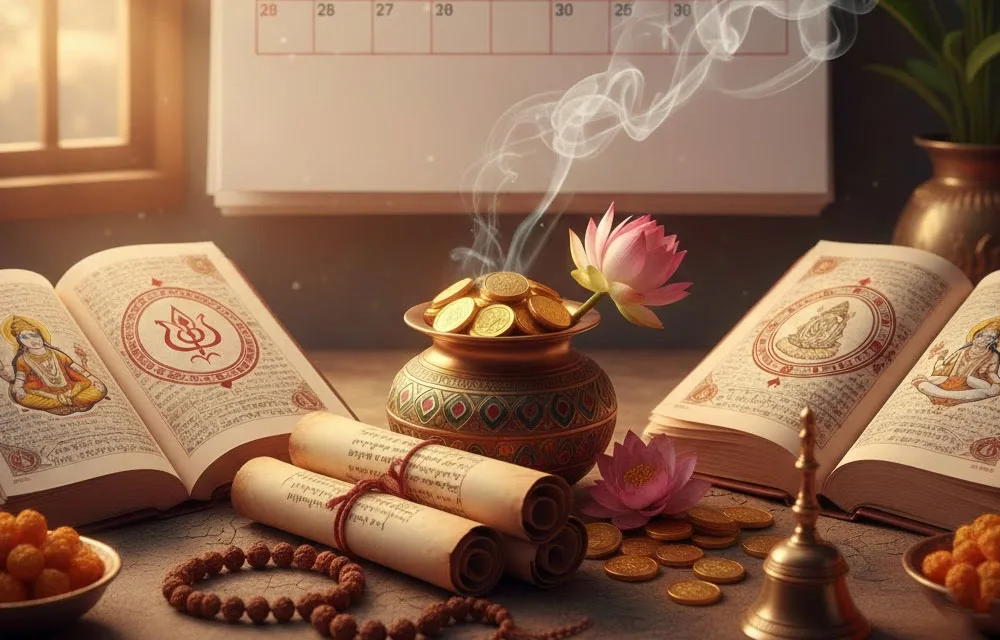
Margasira Masam 2025 – Complete Guide for British Hindus
“Among the months, I am Mārgaśīrṣa” – Bhagavad Gita 10.35 The Most Beloved Month of Lord Krishna – Perfectly Aligned with British Winter Specially crafted for…

“Among the months, I am Mārgaśīrṣa” – Bhagavad Gita 10.35 The Most Beloved Month of Lord Krishna – Perfectly Aligned with British Winter
Specially crafted for UK Hindus in London, Manchester, Birmingham, Leicester, Leeds, Glasgow, Edinburgh, Cardiff, Belfast & beyond.
Exact Dates & Timings for Britain (GMT – Winter 2025)
Why Margasira Masam 2025 is Extra Special in Britain
- Short days & long nights = perfect for deep sadhana & cosy family puja
- Winter half-term & Christmas buildup = children can join Tiruppavai & Gita study
- Cold, dark evenings = beautiful time to light ghee diyas & feel inner radiance
Daily Must-Do Rituals (UK Winter-Friendly)
- Warm Usha Snan before sunrise (~7–8 AM)
- Light Panchamukhi deepam with pure ghee every evening
- Offer fresh tulsi dal to Lord Vishnu/Krishna after sandhya aarti
- Read at least 1 chapter of Bhagavad Gita daily
- Strictly sattvic diet – no onion, garlic, non-veg, mushrooms
Most Powerful Thursdays – Margashirsha Guruvar Vrat (Lakshmi Vrat)
Every Thursday in Margasira is dedicated to Sri Mahalakshmi
- Fast till sunset (warm milk, fruits, nuts, soups allowed in cold weather)
- Light 8 or 16 deepams
- Offer yellow flowers, kheer, coins & sweets
- Chant: Lakshmi Ashtakam + Kanakadhara Stotram
Key Ekadashi & Dhanurmasam Observances
- 28 Nov – Utpanna Ekadashi
- 1 Dec – Mokshada Ekadashi + Gita Jayanti (read full Gita if possible)
- From 16 Dec – Dhanurmasam: Wake at Brahma Muhurta (~5 AM) for Tiruppavai pasuram & sweet pongal naivedyam
5 Powerful Mantras for Margasira Masam (with pronunciation)
Top UK Temples Hosting Special Margasira Events
Winter-Friendly Tips for British Hindus
- Keep tulsi indoors near window or under grow-lights
- Use warm water for snanam – never cold in winter
- Enjoy hot herbal teas & soups on fasting days
- Light diyas from 4 PM – transforms dark evenings
- Decorate puja corner with fairy lights & warm blankets
- Join temple Zoom/WhatsApp groups for daily Tiruppavai sharing
Warming Naivedyam Ideas
- Sweet pongal with extra ghee & dry fruits
- Pepper-ginger ven pongal
- Hot kheer/payasam with cardamom
- Sesame-jaggery laddoos
Benefits of Sincere Observance
Spiritual growth • Mahalakshmi’s abundant blessings • Health & vitality • Family harmony • Protection from winter blues • Karmic purification
Make Margasira Masam 2025 your most radiant winter yet – fill your British home with Krishna’s divine light!
Jai Sri Krishna! Om Namo Narayanaya!
Why Krishna Himself Chose Margashirsha — The Scriptural Significance
In Bhagavad Gita 10.35, Sri Krishna declares 'māsānāṁ mārgaśīrṣo'ham' — among all twelve months, He identifies Himself with Margashirsha. This is not a casual statement; it appears within the Vibhuti Yoga chapter, where Krishna describes the most exalted expressions of His own divine glory. Acharyas from Adi Shankaracharya to Madhvacharya have commented that this month carries a unique śakti for sādhana, making all worship performed during it extraordinarily fruitful.
The Skanda Purana and Padma Purana both describe Margashirsha as 'māsottama' — the supreme month — because the sun is positioned in Vrischika Rashi (Scorpio) and begins its northward journey toward Uttarayana. Ancient rishis observed that the lunar nakshatra Mrigashira (from which the month takes its name) governs soma, the nectar of devotion, making the mind naturally inclined toward contemplation, bhakti, and renunciation during this period. British Hindus experiencing early sunsets and quiet winter evenings are, knowingly or not, living in alignment with exactly the rasa this month is meant to cultivate.
Gita Jayanti 2025 — How to Mark the Most Important Single Day of the Month
Gita Jayanti falls on Mokshada Ekadashi, which in 2025 corresponds to 1 December. This is the tithi on which, according to tradition recorded in the Mahabharata's Bhishma Parva, Sri Krishna revealed the Bhagavad Gita to Arjuna on the battlefield of Kurukshetra approximately 5,000 years ago. The Gita itself consists of 700 shlokas spread across 18 chapters, and many devout households observe an Akhanda Gita Pārāyaṇam — a continuous, unbroken recitation — beginning the previous evening and concluding before sunset on Ekadashi.
For UK families with school and work commitments, a practical observance is to divide the 18 chapters among family members or WhatsApp groups, each person reciting one or two chapters during the day and posting audio to the group. Temples such as ISKCON Leicester, BAPS Swaminarayan Mandir in Neasden (London), and Shree Kutch Satsang Swaminarayan Temple in Birmingham frequently host Gita Jayanti programmes with talks, competitions for children, and prasad distribution — it is worth contacting them for 2025 event confirmations. Offering a Gita book to someone who does not own one is considered a highly meritorious act on this day, and many UK Hindu organisations coordinate free-distribution drives in December.
Dhanurmasam and Tiruppavai — The Vaishnava Heart of British December Mornings
From 16 December, Dhanurmasam (Dhanurmasa) begins as the sun transits into Dhanus (Sagittarius). This is the month most sacred to Sri Vaishnava tradition, during which the Alvars prescribed worship at Brahma Muhurta — roughly 4:30–5:30 AM in UK winter time. The Tiruppavai, composed by the Alvar saint Andal of Srivilliputtur in Tamil Nadu, consists of 30 pāśurams (verses) to be sung on each of the 30 mornings of the month. Andal is understood to have composed these verses longing to serve Sri Ranganatha at Srirangam, and their recitation is considered equivalent to directly meditating upon the divine.
In the UK, the Sri Venkateswara (Balaji) Temple in Tividale, Tirupati Balaji Temple in Birmingham, and various Tamil Saiva Siddhanta sabhas in London and Leicester run morning Tiruppavai sessions throughout Dhanurmasam, sometimes live-streamed for those unable to attend in person. For home observance, the traditional offering on each morning is Sakkarai Pongal (sweet rice with jaggery and ghee) — a warming, wholesome naivedyam perfectly suited to British December. Waking an hour before sunrise, lighting a ghee lamp in the puja room, and reciting that day's pāśuram while the household is still quiet creates a quality of stillness — called 'prātar kāla śānti' in Sanskrit — that practitioners report carries through the entire working day.
Margashirsha Lakshmi Vrat in Detail — The Thursday Fast That Transforms Family Life
The Margashirsha Guruvar Vrat, dedicated to Sri Mahalakshmi, is sourced in the Skanda Purana's account of a devotee named Charumati, whose sincere observance of this vrat over successive Margashirsha Thursdays brought both material prosperity and liberation to her entire family. There are four or five Thursdays in Margashirsha 2025 (falling on 27 November, 4, 11, 18, and 25 December — verify against the Hindu Panchang for your city's GMT offset). The vrat katha should be read or heard on each Thursday, and the puja culminates with an āratī to a gold-coloured yantra or a framed image of Mahalakshmi.
The Kanakadhara Stotram, composed by Adi Shankaracharya when he witnessed the poverty of a devout woman and spontaneously praised the Goddess, is the pre-eminent stotra for this observance. Its 21 shlokas describe Lakshmi's golden radiance (kanaka = gold) and Her limitless compassion, and the text is widely available in transliterated form for those not yet fluent in Sanskrit. Alongside chanting, devotees are encouraged to perform anna dāna — donating food or groceries to a needy family — on at least one of the five Thursdays, as Lakshmi is said to reside wherever charity is given freely (Lakshmi Tantra: 'dāne ramate Śrī').
Tulsi Worship in Margashirsha — Sacred Plant, British Conditions
The Tulsi (Ocimum tenuiflorum), known in scripture as Vrinda or Tulasī Devī, is inseparable from Margashirsha observance. The Padma Purana states that offering even a single Tulsi leaf to Lord Vishnu in this month yields merit equal to donating one lakh cows. Importantly, the month of Margashirsha follows immediately after the Tulsi Vivah celebration (Kartik Purnima), when Tulsi is ritually wedded to Shaligrama Vishnu — making the plant especially charged with Vaishnava śakti throughout December.
British winters present a real challenge, as Tulsi is a tropical plant that struggles below 10°C and dies in frost. Experienced UK Hindu households recommend placing Tulsi near a south-facing window to maximise the limited winter daylight, supplementing with a small LED grow-light (warm spectrum, 16 hours daily), and misting sparingly to prevent root rot in the colder air. Avoid placing the plant directly on a cold windowsill — a ceramic saucer placed on a cork mat provides insulation. If the plant does not survive winter, it is acceptable to worship a Tulsi mala (rosary of Tulsi wood beads) or a silver Tulsi idol in its place; this substitution is described in the Hari Bhakti Vilasa and is practised widely in north European Hindu communities.
Connecting the Diaspora — Margashirsha Communities and Resources Across Britain
For British Hindus, particularly in cities such as Leicester — home to one of the largest Diwali celebrations outside India — and Harrow in London, Margashirsha has become an anchor for community re-gathering after the post-Diwali festive lull. Local mandals, women's satsang groups, and ISKCON centres often organise weekly Bhagavad Gita study circles specifically timed to Margashirsha, running from late November through to Makar Sankranti in January. These are particularly valuable for young British Hindus seeking structured engagement with dharmic texts in English.
Online resources have vastly expanded access: the Chinmaya Mission UK, Art of Living UK, and various Swaminarayan satsang channels post daily Gita commentaries in English, Hindi, Gujarati, and Telugu throughout the month. Parents are encouraged to register children for Gita chanting competitions organised by Bochasanwasi Akshar Purushottam Sanstha (BAPS) and Hindu Swayamsevak Sangh (HSS) UK branches ahead of the December calendar — these events build both scriptural literacy and cultural pride. The spiritual wealth of Margashirsha is most fully realised not in solitary practice but in sangha; the Bhagavata Purana reminds us that 'satāṁ prasaṅgāt' — through the company of the righteous — even a brief encounter with dharma ignites lasting transformation.
Frequently Asked Questions
Why is Margasira Masam considered special?
In Bhagavad Gita 10.35, Krishna says "among the months, I am Margashirsha." Tradition holds that worship in this month is especially fruitful, and its quiet winter evenings suit sadhana.
When are the key Ekadashi days in Margasira Masam 2025?
Utpanna Ekadashi is on 28 November, and Mokshada Ekadashi on 1 December, which is also Gita Jayanti. Dhanurmasam begins on 16 December.
How is the Margashirsha Guruvar Vrat observed?
Every Thursday in the month is dedicated to Sri Mahalakshmi. Devotees fast till sunset, light 8 or 16 deepams, offer yellow flowers, kheer, coins and sweets, and chant the Lakshmi Ashtakam and Kanakadhara Stotram.
How can UK Hindus keep a Tulsi plant through the British winter?
Place the Tulsi near a south-facing window, add a warm-spectrum LED grow-light for 16 hours daily, and mist sparingly. If it does not survive, a Tulsi mala or silver Tulsi idol can be worshipped in its place.
What is Dhanurmasam and when should Tiruppavai be recited?
Dhanurmasam begins on 16 December as the sun enters Dhanus. Devotees wake at Brahma Muhurta, roughly 4:30–5:30 AM in UK winter, to recite one Tiruppavai pasuram each morning and offer sweet pongal.
Which temples in the UK hold Gita Jayanti programmes?
ISKCON Leicester, BAPS Swaminarayan Mandir in Neasden (London) and Shree Kutch Satsang Swaminarayan Temple in Birmingham frequently host Gita Jayanti programmes. Contact them for event confirmations.
Share this with family and friends
Send it on WhatsApp, post it, or copy the link.
More from Margashirsha Masam 2025
- Margashirsha Masam Friday Lakshmi Puja: Complete Guide to Rituals, Mantras & Benefits
- Margashirsha Masam 2025 in USA: Sacred Month of Krishna Bhakti and Divine Blessings
- Margashirsha Masam 2025 Tuesday Rituals: Complete Guide to Mangalvar Vrat, Hanuman Worship & Benefits
- Tiruppavai & Gita Jayanti: The Divine Connection of Margashirsha
- Why Lord Vishnu is Worshipped Before Sunrise in Dhanurmasam? Mythological & Cosmic Reasons
You might also like
Science Behind Margasira Masam: Why This Month Is Considered Energetically Auspicious

Nostalgia for USA NRIs: Margasira Masam Memories From Telugu States
How Margasira Masam is Celebrated Across Different States of India: A Complete Regional Guide