Mithuna Sankranti & Raja Parba 2026: Date, Rituals & Meaning
Mithuna Sankranti 2026 (15 June) marks the Sun’s entry into Gemini and the start of Odisha’s Raja Parba — honouring Mother Earth. Dates, significance, rituals and how the diaspora observes it.

Mithuna Sankranti 2026 (15 June) marks the Sun’s entry into Gemini and the start of Odisha’s Raja Parba — honouring Mother Earth. Dates, significance, rituals and how the diaspora observes it.
Mithuna Sankranti 2026 falls on Monday, 15 June 2026, when the Sun leaves Taurus and enters Mithuna rashi (Gemini). In Odisha this same transit opens Raja Parba — one of India’s most distinctive festivals, a three-day celebration of womanhood and of Bhudevi, Mother Earth, herself. For the Odia diaspora especially, Raja is a cherished marker of identity far from home. This HinduTone guide covers the dates, the deep significance, the rituals and how families observe it abroad. See it in context in the June 2026 Hindu festivals calendar.
Mithuna Sankranti 2026 Date & Timings
Because Hindu festivals follow the tithi at local sunrise, the observance date can differ by a day between India and the West. The table below reflects that — always confirm the exact day and muhurat with your local temple or panchang.
| Region | Sankranti date (2026) | Notes |
|---|---|---|
| India (IST) | Mon, 15 June | Sankranti punya-kaal in the day; Raja spans ~13–15 June |
| USA & Canada | Mon, 15 June | Solar event — same calendar day; muhurat time differs |
| UK & Europe | Mon, 15 June | Same day |
| UAE / Gulf | Mon, 15 June | Same day |
| Singapore · Australia · NZ | Mon, 15 June | Same day; confirm punya-kaal locally |
Unlike lunar (tithi) festivals, a Sankranti is a fixed astronomical moment, so the calendar day is essentially the same worldwide; only the exact punya-kaal (auspicious window for daan and bathing) shifts with your timezone. Raja Parba runs across roughly three days: Pahili Raja (the day before Sankranti), Raja Sankranti / Mithuna Sankranti (the main day), and Basi Raja, followed by Vasumati Snana honouring Bhudevi.
Significance & Story
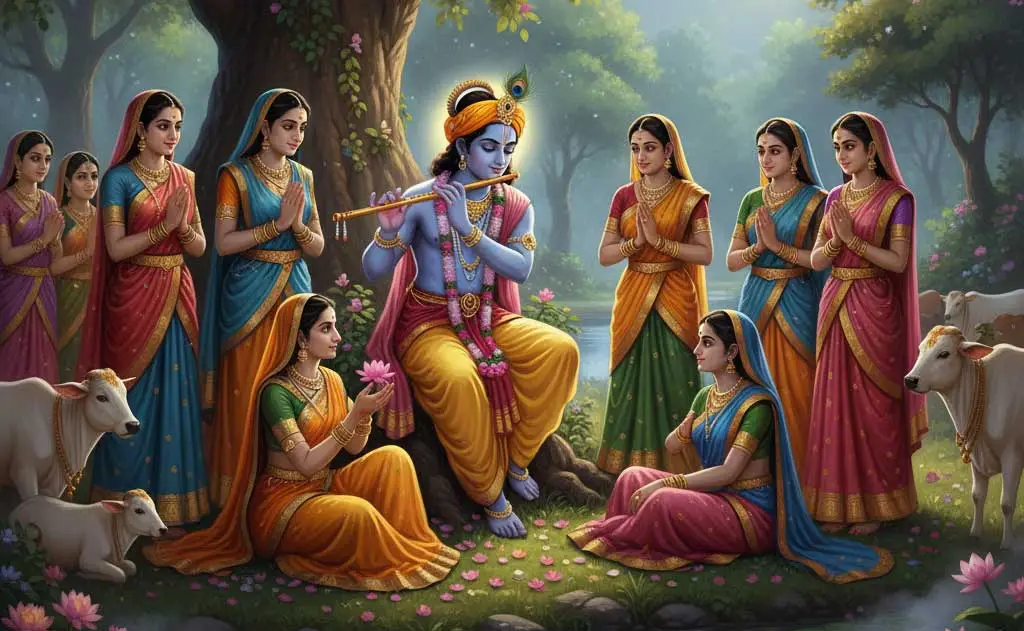
Two streams meet on this day. As a Sankranti, it is a day of charity (daan), ritual bathing and Surya worship — every solar transit is auspicious for giving and gratitude. As Raja Parba, it carries a uniquely Odia meaning: the earth, personified as Bhudevi (the consort of Lord Jagannath in his Vishnu form), is believed to undergo her menstrual cycle and to prepare, with the coming monsoon, to bear new life.
Out of reverence the soil is given rest — no ploughing, digging or sowing. Women and girls, who keep the household and carry life, are likewise honoured: they set aside heavy work, wear new clothes and alta, and celebrate. It is one of Hinduism’s most graceful affirmations that the feminine and the earth are sacred and deserving of rest.
Rituals & Observance (Step by Step)
- Pahili Raja: clean the home; girls and women take an oil bath the night before and rest from the next morning.
- Sankranti morning: a Surya Namaskar and Surya Arghya — offering water to the rising Sun.
- Bhudevi is honoured; the grinding stone (a symbol of the earth) is rested and worshipped.
- Swings (doli) are hung for girls; folk songs (Raja geeta) are sung.
- Special pithas — especially poda pitha — are prepared and shared.
- Vasumati Snana on the closing day: a ceremonial bath of Bhudevi (a grinding stone bathed, anointed and adorned).
Samagri checklist: water vessel for Surya Arghya, turmeric/kumkum, flowers, new cloth for the symbolic Bhudevi, ingredients for pitha (rice, jaggery, coconut), and alta for the women of the house.
Mantras
For the solar dimension, the simplest authentic invocation is the Surya mantra and the universal Gayatri:
ॐ सूर्याय नमः — Oṃ Sūryāya Namaḥ — “Salutations to the Sun.” Offer with the arghya water.
ॐ भूम्यै नमः — Oṃ Bhūmyai Namaḥ — “Salutations to Mother Earth (Bhudevi).” A fitting prayer for Raja. // VERIFY: Bhudevi bija/namah forms vary by tradition; the namah form above is widely used.
How the Odia Diaspora Can Observe Raja Parba
- Gather with your local Odia Samaj / cultural association — most major Western and Gulf cities host community Raja events.
- Make poda pitha and other pithas at home; share with neighbours to keep the tradition alive abroad.
- Set up a simple swing for the children if you have a garden or balcony beam; teach them a Raja song.
- Offer Surya Arghya at sunrise and a short Bhudevi prayer — a houseplant or a small pot of soil makes a lovely focus for honouring the earth.
- Use the day to talk to children about ecological reverence — why the tradition rests the soil.
Regional Variations
The Sun’s entry into Gemini is marked across India — in Tamil Nadu as the start of Aani month, and as a general Sankranti for daan and Surya worship. The distinctive Raja Parba celebration, however, is specific to Odisha and the Odia diaspora. Some communities also observe it as a harbinger of the monsoon planting season.
Frequently Asked Questions
Is Mithuna Sankranti the same date in the USA and India?
Effectively yes — Monday, 15 June 2026. As a solar transit the calendar day is near-identical worldwide; only the punya-kaal time changes by timezone.
What food is special to Raja Parba?
Poda pitha (a slow-baked rice-and-coconut cake) is the signature Raja delicacy, along with other pithas and chhena sweets.
How is Raja connected to Lord Jagannath?
Bhudevi, honoured during Raja, is a consort of Vishnu — and Lord Jagannath of Puri is a form of Vishnu/Krishna. The festival’s reverence for the earth sits within the wider Jagannath culture of Odisha, just weeks before Rath Yatra.
Quick Summary
- Mithuna Sankranti 2026 = Monday, 15 June (Sun → Gemini); same day worldwide.
- Raja Parba: a 3-day Odia festival honouring Bhudevi (Mother Earth) and womanhood.
- Earth is rested — no ploughing; women celebrate with swings, pithas and new clothes.
- Mantras: Om Suryaya Namah and Om Bhumyai Namah.
Continue in the June 2026 Hindu festivals calendar, and explore the other June solar/lunar observances including Sankashti Chaturthi and Nirjala Ekadashi 2026.
You might also like
Tulsi Vivah 2026: Date, Puja Vidhi, Samagri, Katha and Significance
Dussehra 2026 Date, Puja Muhurat, Significance and Celebrations Around the World
Dev Deepawali 2026: Date, Purnima Time, Story, Significance and How to Celebrate