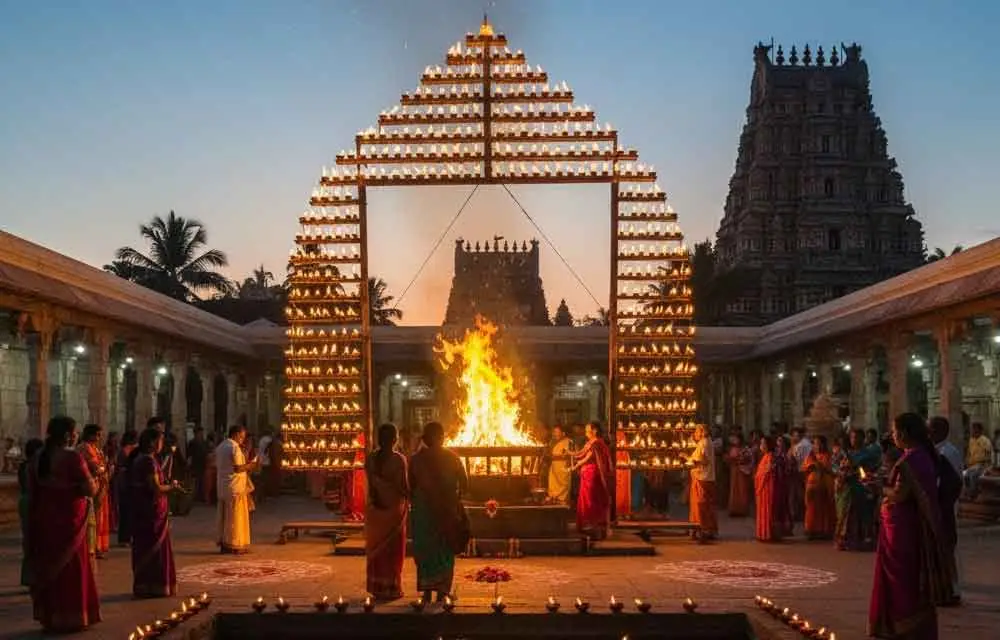
Narak Chaturdashi 2026 in the USA: Saturday 7 November, a Day Before India, with Abhyang Snan and Choti Diwali at Home
In the USA, Narak Chaturdashi (Choti Diwali) 2026 falls on Saturday 7 November, one day before India's Sunday 8 November. This guide explains why the dates differ, how to do the Abhyang Snan before sunrise in an American home, the Yama Deepam, Hanuman puja and Kali Chaudas customs, and the Narakasura story as commonly told.
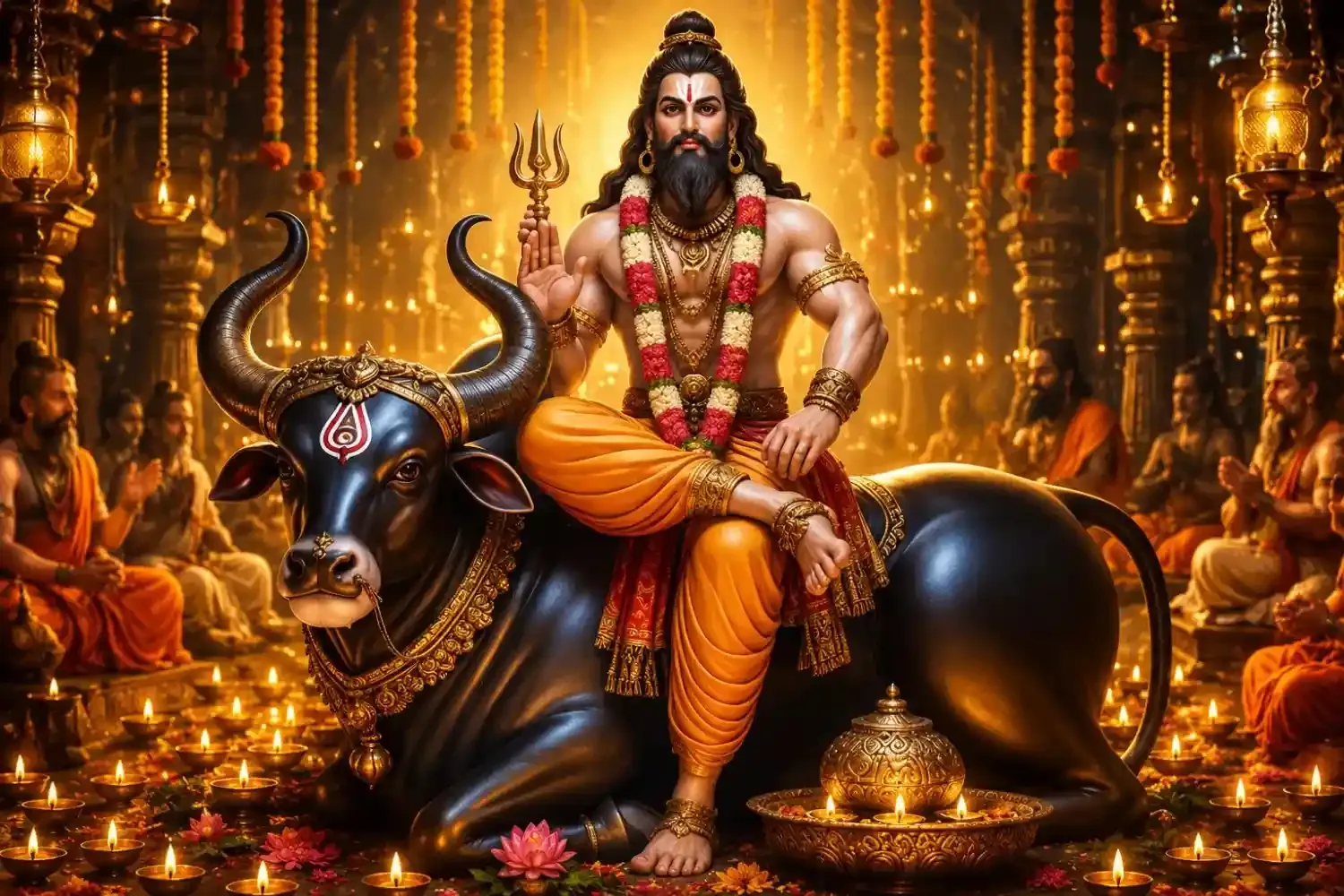
In the USA, Narak Chaturdashi (Choti Diwali) 2026 falls on Saturday 7 November, one day before India's Sunday 8 November. This guide explains why the dates differ, how to do the Abhyang Snan before sunrise in an American home, the Yama Deepam, Hanuman puja and Kali Chaudas customs, and the Narakasura story as commonly told.
Quick answer: Narak Chaturdashi 2026 USA falls on Saturday 7 November 2026. That is one day before India, where Narak Chaturdashi is on Sunday 8 November. The date comes from Drik Panchang for the USA and is the same from the East Coast to the West Coast.
So if your parents in Delhi, Pune or Chennai take their oil bath on Sunday morning, you will already have taken yours on Saturday. That is correct, not a mix-up. Diwali itself (Lakshmi Puja) stays on Sunday 8 November in both countries. All dates here are local US dates.
Narak Chaturdashi 2026 USA date compared with India
| Day | USA (2026) | India (2026) |
|---|---|---|
| Dhanteras | Fri 6 Nov | Fri 6 Nov |
| Narak Chaturdashi (Choti Diwali) | Sat 7 Nov | Sun 8 Nov |
| Diwali (Lakshmi Puja) | Sun 8 Nov | Sun 8 Nov |
| Govardhan Puja | Mon 9 Nov | Tue 10 Nov |
| Bhai Dooj | Tue 10 Nov | Wed 11 Nov |
Source: Drik Panchang, diwali dates for the USA and India. In India, Choti Diwali and the main Diwali night share one Sunday this year. In the US they fall on two separate days, which gives you a full five-day festival across a weekend.
Why the US date is a day earlier
Hindu festivals follow the tithi, the lunar day, and each festival has its own rule for which local moment counts. For Narak Chaturdashi, the deciding moment is the early morning before sunrise, when the Abhyang Snan (ritual oil bath) is done. Many panchangs describe this as the period from moonrise to sunrise on Chaturdashi.
The tithi changes at the same instant everywhere in the world. But that instant falls at a different local clock time in New York than in New Delhi. In 2026, Drik Panchang's calculation places the Chaturdashi pre-dawn window on Saturday morning in US time zones, and on Sunday morning in India. That is why the USA keeps Choti Diwali on Saturday 7 November.
The practical rule is simple: follow the date for the place where you live. Do not copy the date or the time from an Indian calendar.
Abhyang Snan before sunrise in an American home
The heart of the day is the oil bath before dawn. Traditionally, family members massage warm sesame oil into the hair and body, then apply ubtan (a paste of gram flour, turmeric and fragrant powders) and bathe. In Maharashtrian homes a small bitter fruit called karit is crushed underfoot as a sign of crushing evil.
- It's a Saturday: there is no school run or commute, so the whole family can bathe early without rushing.
- Clocks have changed: daylight saving time ends on Sunday 1 November, so sunrise comes earlier by the clock than it did in late October. A pre-dawn bath does not need a very early alarm.
- Cold mornings: in the Northeast and Midwest early November mornings are cold. Warm the bathroom first and keep towels and a warm change of clothes ready, especially for children and elders.
- Oil and safety: oil on a tub or tile floor is slippery. Put down a bath mat, and wipe the floor afterwards.
- Ingredients: sesame oil, besan and turmeric are easy to find at Indian grocery stores. Buy them over the Dhanteras weekend.
For the exact pre-dawn window in your city, open Drik Panchang and select your city. We do not list clock times on this page.
Yama Deepam, Hanuman puja and Kali Chaudas
Three other customs are linked with this day, and families differ on which they keep:
- Yama Deepam: a single lamp, often with four wicks, lit in the evening and placed facing south for Yama, the lord of death, with a prayer for protection from untimely death. Some families light it on Dhanteras evening, others on Choti Diwali. Follow your family's custom.
- Hanuman puja: in some North Indian traditions Hanuman is worshipped on this day, with sindoor, oil and sweets. Many US temples with a Hanuman shrine see visitors on this day; ask your temple what it plans.
- Kali Chaudas: in Gujarati homes this night is linked with Kali or Mahakali, and with prayers to keep away negativity. Because it is set by the midnight tithi, check its date separately.
Many families also light a few diyas at the door in the evening. It is the small light before the big night of Diwali.
The Narakasura story as commonly told
As the story is commonly told, Narakasura was a powerful asura king who troubled the gods and held thousands of women captive. Krishna, with his wife Satyabhama, fought and killed him on Chaturdashi. Before he died, Narakasura asked that the day of his death be remembered with lights and joy. The oil bath is said to wash away the dust of battle and of sin, and the lamps celebrate the victory of light over darkness.
Different regions tell the story with different details. In some versions, Satyabhama herself strikes the final blow. The theme is the same in all of them: freedom from fear and the return of light.
Practical tips for Choti Diwali in the USA
- Saturday is a good day to clean the house, make rangoli at the door and finish sweets for Sunday's Lakshmi Puja.
- In apartments, keep lamps away from curtains and smoke detectors. Electric diyas are a safe choice for windows.
- Fireworks rules vary by state, county and city. Check your local rules before buying any.
- Saturday evening in the US is already Sunday morning in India. A family video call at that time lets you greet relatives on their Choti Diwali morning.
- If you attend a temple, check its own calendar. Some temples hold programmes on the nearest weekend, and this year the weekend and the festival line up.
Frequently asked questions
What is the date of Narak Chaturdashi 2026 in the USA?
Drik Panchang gives Saturday 7 November 2026 for the USA. In India it is Sunday 8 November, the same day as Lakshmi Puja there.
Why is Choti Diwali a day earlier in the USA than in India?
Narak Chaturdashi is kept on the day when the Chaturdashi tithi is current before local sunrise, because that is when the Abhyang Snan is done. The US is many hours behind India, so in American time zones that pre-dawn window falls on Saturday. If you live in the US, follow the US date.
What time should I do the Abhyang Snan in the USA?
Traditionally before sunrise. We do not give a clock muhurat here. Check Drik Panchang with your own city selected for the exact window. Do not use timings published for India.
Is Diwali also on a different day in the USA?
No. Diwali (Lakshmi Puja) is Sunday 8 November 2026 in both the USA and India. Only Narak Chaturdashi, Govardhan Puja and Bhai Dooj shift a day earlier in the US this year.
Is Kali Chaudas on the same day as Narak Chaturdashi?
Not always. Kali Chaudas is fixed by the night (Chaturdashi at midnight), while the Abhyang Snan is fixed by the pre-dawn hours, so the two can fall on different dates. Check Drik Panchang or your temple's calendar for your city.
Do South Indian families celebrate Deepavali on this day?
Many Tamil, Telugu and Kannada families treat the Naraka Chaturdashi oil-bath morning as Deepavali itself. If your family follows that custom, your big morning in the US is Saturday 7 November. Your own panchangam has the final word.
Editor's note
Editor's note (6 October 2026): This guide has been restored at its original address after the earlier version was lost. The dates are from Drik Panchang for the USA and India. We have not listed a clock muhurat for the Abhyang Snan; check Drik Panchang for your own city. Stories are given as commonly told, and customs differ from family to family.
Related guides
You might also like
November 2026 Festivals State-Wise in India: Diwali, Chhath, Karthika Masam, Dev Diwali and More
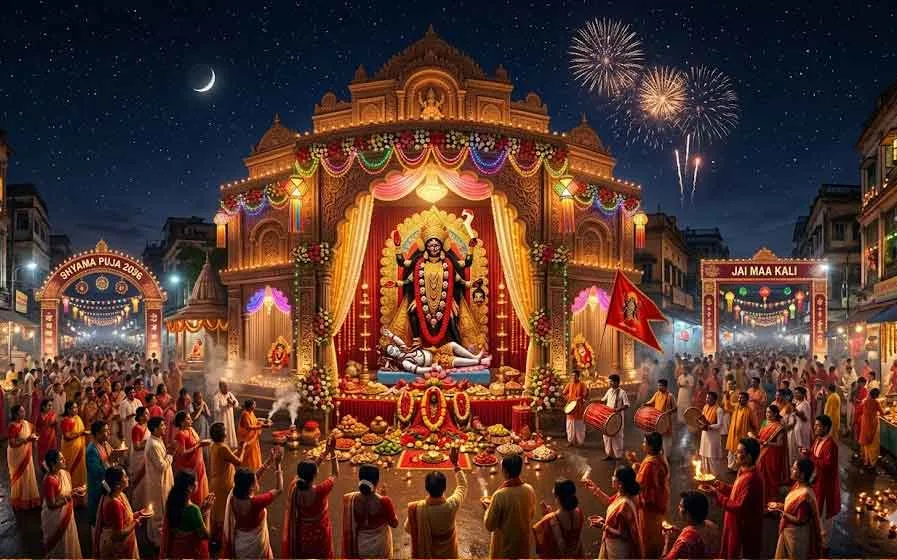
Kali Chaudas 2026 in Gujarat: Date, Night Puja to Mahakali and Hanuman, and How It Differs from Narak Chaturdashi
Ganadhipa Sankashti Chaturthi 2026: Date (27 November), Moonrise Fast, Vrat Katha and Puja