
Vijaya Dashami in Kolkata 2026: A Vibrant Tapestry of Faith and Festivity
Ah, Dasara in Kolkata—it's like the city exhales after the whirlwind of Durga Puja and sighs with a mix of triumph and tenderness. In 2026, Vijaya Dashami falls on Tuesday, 20 October.
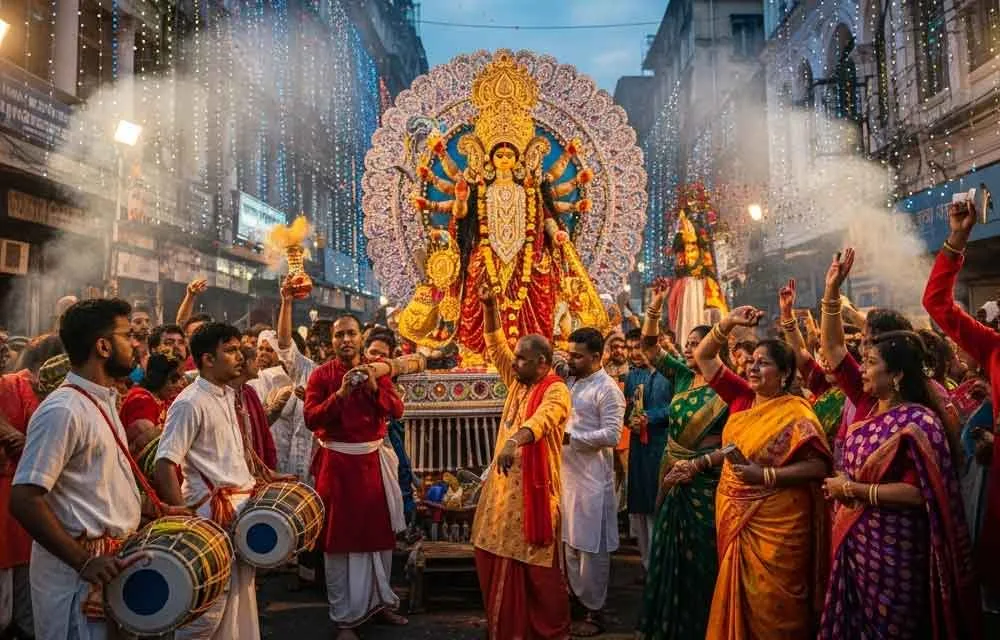
Ah, Dasara in Kolkata—it's like the city exhales after the whirlwind of Durga Puja and sighs with a mix of triumph and tenderness. In 2026, Vijaya Dashami falls on Tuesday, 20 October.
Ah, Dasara in Kolkata—it's like the city exhales after the whirlwind of Durga Puja and sighs with a mix of triumph and tenderness. Growing up in the narrow lanes of North Kolkata, where the air still hums with the echoes of dhak drums and the scent of shiuli flowers, Dasara wasn't just the 10th day; it was the gentle goodbye to Maa Durga, the goddess who'd blessed us with her presence for nine glorious days. In Bengal, we call it Vijayadashami, but "Dasara" slips in too, especially when chatting with friends from the south or flipping through old family albums filled with faded photos of idol immersions. It's the victory of good over evil—Durga slaying Mahishasura, Rama felling Ravana—but in Kolkata, it's wrapped in our unique rhythm of rituals, community feasts, and a touch of melancholy as the pandals empty out.
Let me take you through it, as if we're strolling down Park Street on that crisp October morning, the sun filtering through the gulmohar trees, and the Hooghly River sparkling like it's in on the secret.
The Heart of the Celebration: Vijayadashami Rituals
Dasara kicks off right after Navami, the ninth day of Durga Puja, but the real magic unfolds on the 10th—Vijayadashami. Families gather early, before the sun climbs too high, for Sindoor Khela. Picture this: women in red-and-white sarees, their palms smeared with vermilion, playfully dabbing sindoor on each other's foreheads, cheeks, and even the feet of the Durga idol. It's not just a game; it's a symbol of marital bliss and the goddess's enduring shakti (power). Laughter fills the air, mingled with the clink of kumkum bowls and the soft chants of "Ya Devi Sarvabhuteshu." In my aunt's house in Behala, we'd chase each other around the courtyard, turning the ritual into a joyous chase, only pausing when the elders reminded us it was Durga's way of blessing us all.
By afternoon, the mood shifts to reverence. Homes buzz with Aparajita Puja, a quiet homage to the unconquerable goddess. A small clay idol of Aparajita (another form of Durga) is worshipped alongside nine types of grass (nava patr) and the sacred shami leaves, invoking prosperity and protection. It's intimate, almost secretive—families huddled in the puja room, the flicker of diyas casting long shadows on walls adorned with alponas (rice paste designs). And then, as dusk falls, the grand immersion begins. The Visarjan procession— that's what we call the farewell to the idols. Trucks decked with marigolds and fairy lights rumble through the streets, idols swaying to the beat of recorded bhajans and live bands belting out "Jai Ambe Gauri." From Kumartuli's artisan alleys to the riverbanks at Babu Ghat, thousands converge, tossing flowers into the water as Maa returns to her cosmic home. I remember one year, during a sudden downpour, the crowds didn't scatter; they danced harder, as if the rain was her final blessing.
Why "Dasara"? Unpacking the Names and Meanings
In Kolkata, we mostly say Vijayadashami (Victory on the Tenth Day), but "Dasara" is that affectionate shorthand that pops up in conversations, especially when blending traditions with visitors from Karnataka or Tamil Nadu. It's derived from Dashahara—literally "remover of ten sins" or a nod to the ten-headed Ravana's defeat. In Bengal, though, it's deeply tied to Durga's triumph, not so much Rama's tale (that's more a North Indian vibe with the Ramlila plays). No fancy abbreviations here like in emails or reports—Dasara isn't "DSR" on a calendar; it's a full-hearted shout during processions. But if you're jotting notes for a travel diary, think of it as the emotional acronym for Dazzling, Auspicious, Sacred, Autumnal, Ritualistic, Auspicious—wait, that's me getting poetic. In truth, it's just "Dashami" in everyday lingo, clipped from the full Vijaya Dashami.
A Day in the Life: What Makes Kolkata's Dasara Unforgettable
Imagine waking to the aroma of khichuri and labra simmering on coal chulhas—simple, sattvic food to break the fast. By mid-morning, kids in their finest kurtas are off to touch elders' feet for pranam and pocketfuls of tika blessings. The streets? A riot of colors: red sindoor streaks on cheeks, yellow flowers tucked into hair, and green plantain leaves lining thalis for the feast. In my neighborhood, the local club hosts a mini fair—cotton candy stalls, puppet shows retelling the Mahishasura vadh, and even a symbolic Ravana dahan with eco-friendly effigies (Kolkata's gone green these days!).
But it's not all pomp; there's a poignant undercurrent. As the sun sets on Vijayadashami, Tuesday, October 20th this year (2026), the city feels a little emptier. The pandals that housed 10-foot-tall Durga idols now stand bare, fairy lights dimmed, ready for next year's rebirth. Families return home, share stories over mishti doi and sandesh, reflecting on the year's trials—much like Durga's battles. It's a reminder: victory isn't just conquest; it's the courage to let go and begin anew.
If you're in Kolkata for Dasara, don't miss the immersions at Prinsep Ghat or the serene Sindoor Khela at community pandals like those in Ekdalia or Singhi Street. Wear comfortable shoes—the processions go late—and carry an umbrella for Maa's unpredictable tears. This isn't a festival; it's a feeling, woven into the soul of the City of Joy.
There, that's my slice of Dasara—raw, real, and straight from the heart. If you've got memories of your own or want recipes for that post-puja feast, spill the beans! What's your favorite part of the celebrations?
Related 2026 guides
- Navratri 2026: complete guide to the nine nights
- Navratri 2026 colours: 9-day list
- Dussehra / Vijayadashami 2026: date & Vijay Muhurat
- Kanya Pujan 2026: Ashtami & Navami
- Durga Puja 2026 dates (Kolkata)
Share the Vijayadashami 2026 blessing
Bijoya Dashami in Kolkata is both a celebration and a tender goodbye. As commonly told, Maa Durga triumphed over Mahishasura and Lord Rama over Ravana, and this day honours that victory of dharma, of light over darkness. As the dhak falls quiet and Maa returns home, Bengali families embrace, touch elders' feet and share sweets. Keep that spirit alive by sending a warm Bijoya blessing to your family and loved ones, wherever they are.
Shami shloka for Vijayadashami
शमी शमयते पापं शमी शत्रुविनाशिनी। अर्जुनस्य धनुर्धारी रामस्य प्रियदर्शिनी॥
Shami shamayate papam shami shatru-vinashini, arjunasya dhanurdhari ramasya priyadarshini.
Meaning: The Shami tree takes away sin and destroys enemies; it held Arjuna's bow and is dear to Lord Rama. Many families recite this while offering Shami (Jammi) leaves on Vijayadashami.
Rama mantra to chant on Dussehra
रामाय रामभद्राय रामचन्द्राय वेधसे। रघुनाथाय नाथाय सीतायाः पतये नमः॥
Ramaya ramabhadraya ramachandraya vedhase, raghunathaya nathaya sitayah pataye namah.
Meaning: Salutations to Rama, to Ramabhadra, to Ramachandra the creator, to the lord of the Raghu clan, to the husband of Sita.
Vijayadashami 2026 messages to share
Shubho Bijoya to our whole family! 🪔 May Maa Durga's blessings stay in our home long after the dhak falls silent, filling it with love and peace. Share on WhatsApp
Dear Maa and Baba, Shubho Bijoya. 🙏 I touch your feet in pranam today. May the Divine Mother keep you healthy, calm and smiling all year. Share on WhatsApp
Shubho Bijoya, dear friend! 🌸 Here's to the sweets, the laughter and the memories. May Maa Durga walk with you until she returns next year. Share on WhatsApp
Warm Bijoya Dashami wishes to you and your family. May this season of victory bring our team clarity, harmony and many good beginnings. Share on WhatsApp
🔱 As Maa Durga returns to her home, may she leave behind courage in your heart and protection over your family. Asche bochor abar hobe! Share on WhatsApp
🏹 On this Vijaya Dashami, may Lord Rama bless you with truth and patience, and may goodness triumph over every difficulty in your life. Share on WhatsApp
A short Vijayadashami prayer
Maa Durga, as you return to your home, I bow to you with a full and grateful heart. Thank you for the days you stayed with us. Give me the strength to face my fears, the courage to let go of what weighs me down, and the wisdom to begin again. Protect my family, keep us united and free from negativity, and come back to us again next year.
Use the share buttons on this page to send these blessings to your family and friends.
Frequently Asked Questions
When is Vijaya Dashami in Kolkata in 2026?
Vijayadashami 2026 falls on Tuesday, 20 October in India. Drik Panchang lists Bijoya Dashami and Sindoor Khela for Kolkata on Wednesday, 21 October, so check your local panchang or pandal schedule.
What is Sindoor Khela in Kolkata?
Sindoor Khela is the Bijoya Dashami ritual in which married women offer vermilion to Maa Durga and then smear sindoor on each other's foreheads and cheeks. It is a joyful farewell to the goddess and a symbol of her enduring shakti.
What is Aparajita Puja on Bijoya Dashami?
Aparajita Puja is a quiet home worship of Aparajita, the unconquerable form of Durga. Families worship a small clay idol along with nine kinds of leaves and sacred shami leaves, praying for protection and prosperity.
Where can I watch Durga visarjan in Kolkata?
Large immersion crowds gather at the Hooghly riverbanks, including Babu Ghat and Prinsep Ghat. Processions with decorated trucks, dhak drums and music move through the city from dusk.
What food is eaten on Vijaya Dashami in Kolkata?
Many homes cook khichuri and labra, and families share sweets such as mishti doi and sandesh in the evening. Children touch elders' feet for pranam and receive blessings.
What should visitors know about Dasara in Kolkata?
Wear comfortable shoes because processions run late, carry an umbrella for sudden rain, and visit community pandals early for Sindoor Khela. Be respectful near the ghats, where crowds can be very large.
You might also like
Dussehra 2026 (Vijayadashami) in New York, USA f
Dussehra 2026 USA: Vijayadashami Muhurat, Ravana Dahan Timings in Major US Cities, Complete Story & State-Wise Celebration Guide
Dussehra 2026 in Odisha, District by District: Durga Puja and Dussehra