

Vijaya Dasami at Kanaka Durga Temple, Vijayawada – October 2, 2025
On October 2, 2025, the Kanaka Durga Temple atop Indrakeeladri hill in Vijayawada radiated divine energy as thousands celebrated Vijaya Dasami, the triumphant…
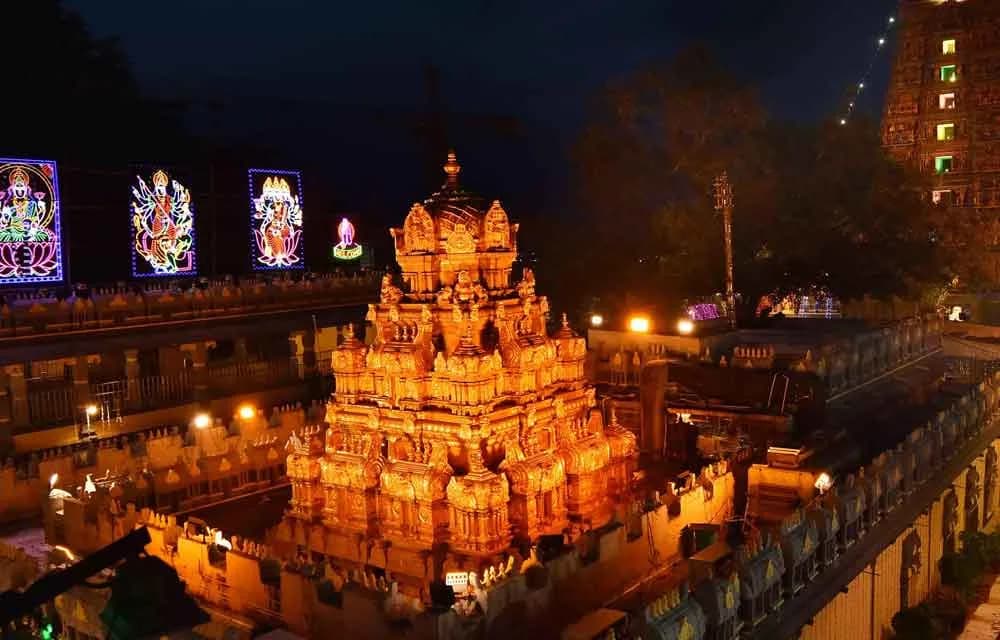
On October 2, 2025, the Kanaka Durga Temple atop Indrakeeladri hill in Vijayawada radiated divine energy as thousands celebrated Vijaya Dasami, the triumphant…
On October 2, 2025, the Kanaka Durga Temple atop Indrakeeladri hill in Vijayawada radiated divine energy as thousands celebrated Vijaya Dasami, the triumphant finale of the 11-day Dasara Sharan Navaratri Utsavams. The day marked the Goddess’s victory over Mahishasura, embodied in her majestic Rajarajeshwari Devi alankaram, draped in a resplendent rani (magenta) saree.
Devotees began their pilgrimage at 4 AM, many taking a sacred dip in the Krishna River at Durga Ghat before climbing the 577 steps to the temple. Long queues buzzed with devotion, supported by free annadanam for over 50,000, special darshan for the elderly, and drone-monitored crowd management. The Maha Aarati at 9 AM saw priests chanting Vedic hymns, bathing the Goddess in milk, honey, and sandalwood paste, while the Purnahuti homam at noon symbolized the cleansing of negativities with its roaring fire.
The evening’s Teppotsavam stole the show. The Utsava Murthies of Goddess Kanaka Durga and Lord Malleswara Swamy were placed on a swan-shaped boat adorned with twinkling diyas. Gliding across the Krishna River upstream of the Prakasam Barrage, the boat completed three rounds amid eco-friendly fireworks and live Ramayana recitals. Bhavani devotees in red robes, some offering locks or carrying kalasams, added vibrant fervor to the spectacle.
Vijayawada itself came alive, with cultural stalls at the Gollapudi Exhibition showcasing folk dances like Kolattam. Live telecasts ensured even distant devotees could join the celebration. The day was a powerful reminder of triumph and faith, leaving hearts uplifted.
Jai Mata Di!
Why Vijaya Dasami Holds Special Power at Indrakeeladri
The Indrakeeladri hill is not merely a scenic location — it is identified in the Skanda Purana as the very spot where the sage Indrakila performed intense tapas, and where the Goddess Kanaka Durga, also called Krishnaveni, is said to have taken svayambhu (self-manifested) form. This makes the kshetra a Shakti Peetha of exceptional significance in the Telugu tradition, distinct from the 51 Shakti Peethas enumerated in the Devi Bhagavata Purana, yet revered as one of the pancha Kshetra divya stalas of Andhra Pradesh.
Vijaya Dasami at this temple carries a layered meaning rooted in the Devi Mahatmyam (Markandeya Purana, chapters 81–93), which narrates the Goddess slaying Mahishasura on the tenth day of the bright fortnight of Ashvayuja masa. The very name of the city — Vijayawada, 'the city of victory' — is etymologically linked to this divine triumph, reinforcing why this particular celebration resonates so deeply with local devotees and pilgrims arriving from across Andhra Pradesh, Telangana, and Karnataka.
The Significance of the Rajarajeshwari Alankaram on the Final Day
Each of the eleven days of the Dasara Sharan Navaratri Utsavams at the Kanaka Durga Temple features a distinct alankaram — a ceremonial adornment that reveals a specific aspect of the Goddess. The Rajarajeshwari alankaram presented on Vijaya Dasami places the Devi in her supreme sovereign form, echoing the description in the Lalita Sahasranama (verse 1) where she is addressed as 'Shri Mata, Shri Maharajni, Shrimat Simhasaneshvari' — the great queen seated on the royal throne. The magenta (rani) saree chosen for this alankaram is deliberate; magenta combines the energy of red (shakti, courage) and the serenity of white, signifying the Goddess's dual role as both fierce slayer and compassionate mother.
The alankaram is executed by hereditary archakas (temple priests) belonging to the Vaikhanasa Agama tradition, which governs the ritual procedures at this temple. Every ornament, from the crown (kireetam) to the anklets (silambu), is sourced from the temple treasury accumulated over centuries of royal patronage, including significant donations recorded from the Vijayanagara and later Maratha-influenced periods. Devotees believe that witnessing the Rajarajeshwari swarupam on this day grants the boon of Vijaya — victory in one's personal, professional, and spiritual endeavors throughout the coming year.
The Teppotsavam Ritual: Sacred Waters and the Significance of the Swan Boat
The Teppotsavam, or float festival, is a practice rooted in the Agamic concept of tirtha snanam — the idea that when divine Utsava Murtis (processional deities) travel across sacred water, the water body itself becomes charged with divine presence, sanctifying all who behold it. The Krishna River, known as Krishnaveni in classical Telugu poetry and praised in the Brahmanda Purana as one of the sacred rivers of the Deccan, serves as the ideal tirtha for this ritual.
The choice of a swan-shaped boat (hamsa vahana) is theologically precise. The hamsa is the vahana (vehicle) of Goddess Saraswati and symbolizes Paramahamsa — the supreme state of discriminative wisdom — in Vedantic thought. Pairing this vahana with the Utsava Murthis of Kanaka Durga and Lord Malleswara Swamy (a form of Shiva, her consort) during the float festival reinforces the Shakta-Shaiva unity central to the temple's theology. The three rounds completed by the boat correspond to the triple aspect of Devi as Mahakali, Mahalakshmi, and Mahasaraswati, as elaborated in the Devi Mahatmyam.
Ayudha Puja and the Tradition of Shastra Worship on Vijaya Dasami
Across Andhra Pradesh and Telangana, Vijaya Dasami is also observed as Ayudha Puja — the worship of tools, instruments, and weapons — a practice with roots in the Arthashastra-era concept that skill and the instruments of one's livelihood are extensions of the divine. On this day, farmers place their ploughs before a puja, artisans sanctify their implements, and students traditionally begin new lessons (Vidyarambham), placing their books and musical instruments before Saraswati.
At the Kanaka Durga Temple, this tradition manifests in the ritual presentation of the temple's ceremonial weapons — including a sword (asi) and a trident (trishula) — before the Goddess during morning puja on Vijaya Dasami. This echoes the episode in the Devi Mahatmyam where all the devas surrendered their weapons to the Goddess for her battle against the asura forces. Families in Vijayawada also traditionally begin new business ledgers (rojanamalu) on this day, seeking the Goddess's blessing before the first entry.
The Purnahuti Homam: What the Vedic Fire Ritual Accomplishes
The Purnahuti homam performed at noon on Vijaya Dasami is the concluding fire sacrifice of the eleven-day festival, and its name itself carries meaning: 'purna' means complete or full, and 'ahuti' means oblation into fire. The Taittiriya Upanishad's teaching 'Purnamadah, Purnamidam' — that wholeness emerges from wholeness — underlies the theological purpose of this ritual: the festival cycle that began with the invocation of the Goddess is now brought to a wholesome, complete conclusion.
The materials offered into the Purnahuti — typically including ghee (clarified butter), sesame, rice, and specific herbs prescribed by the Agamic texts — are understood in the Vedic tradition to carry prayers through the fire (Agni, the divine messenger) directly to the presiding deity. The 'cleansing of negativities' that devotees associate with this homam refers specifically to the burning of ahamkara (ego) and avidya (spiritual ignorance), transforming the worshipper just as the Goddess's battle transforms chaos into cosmic order. Priests at the Kanaka Durga Temple perform this homam according to the Vaikhanasa Agama's Yajna Padhati, a manual of ritual procedure maintained through generations of temple priesthood.
Planning Your Visit: Pilgrimage Logistics and Spiritual Preparation for Kanaka Durga Temple
The Kanaka Durga Temple in Vijayawada is accessible year-round, but peak pilgrimage seasons are Navaratri (Ashvayuja masa, September–October), Karthika masa (October–November), and Ugadi (Telugu New Year). Pilgrims arriving at Vijayawada Junction railway station can reach Durga Ghat — the traditional starting point for the climb — within 15 minutes by auto-rickshaw. The 577-step climb up Indrakeeladri hill takes approximately 40–60 minutes at a moderate pace; rope trolley services are available for elderly and differently-abled devotees.
Spiritually, tradition recommends that pilgrims observe a fast or at minimum a sattvic (pure vegetarian) diet on the day of their visit, and take a bath in the Krishna River at Durga Ghat before ascending — a practice that combines the Agamic concept of shaucha (ritual purity) with the tirtha snanam principle. The temple's official website provides real-time information on darshan wait times and special seva booking. Devotees undertaking the Bhavani Deeksha — the 41-day vow observed by wearing red robes and maintaining ritual disciplines — must register formally before the vow period begins.
Frequently Asked Questions
Where is Vijaya Dasami at Kanaka Durga Temple, Vijayawada – located?
On October 2, 2025, the Kanaka Durga Temple atop Indrakeeladri hill in Vijayawada radiated divine energy as thousands celebrated Vijaya Dasami, the triumphant finale of the 11-day Dasara Sharan Navaratri Utsavams. The day marked the Goddess’s victory over Mahishasura, embodied in her majestic Rajarajeshwari Devi alankaram, draped in a resplendent rani (magen
Who is the presiding deity of Vijaya Dasami at Kanaka Durga Temple, Vijayawada –?
The presiding deity is Goddess Durga.
What are the timings and how do I reach Vijaya Dasami at Kanaka Durga Temple, Vijayawada –?
Temples typically open early morning and evening; confirm current darshan timings before visiting. The nearest airport, railway station and road routes are covered in the guide above.
What is the best time to visit Vijaya Dasami at Kanaka Durga Temple, Vijayawada –?
Major festival days and the cooler months are popular, though weekday mornings offer a calmer darshan. Plan around the temple's key festivals for the most vibrant experience.
You might also like
Janmashtami 2026 in India: Date, Rituals & Top Temples to Visit
June 2026 Hindu Festival Calendar — Complete Dates, Vrat & Puja Guide for NRIs
The Resolve of a Monk – A Divine Incident Showcasing Kanchi Paramacharya’s Compassion
