Shivling Puja & Rudrabhishek at Home for NRIs: Apartment Guide, Offerings, What NEVER to Offer
NRI home Shivling puja guide. Minimum apartment setup, daily 10-min vidhi, simplified Rudrabhishekam, what to offer, what NEVER to offer (with traditional reason), valid substitute lingas, sourcing bel patra abroad.
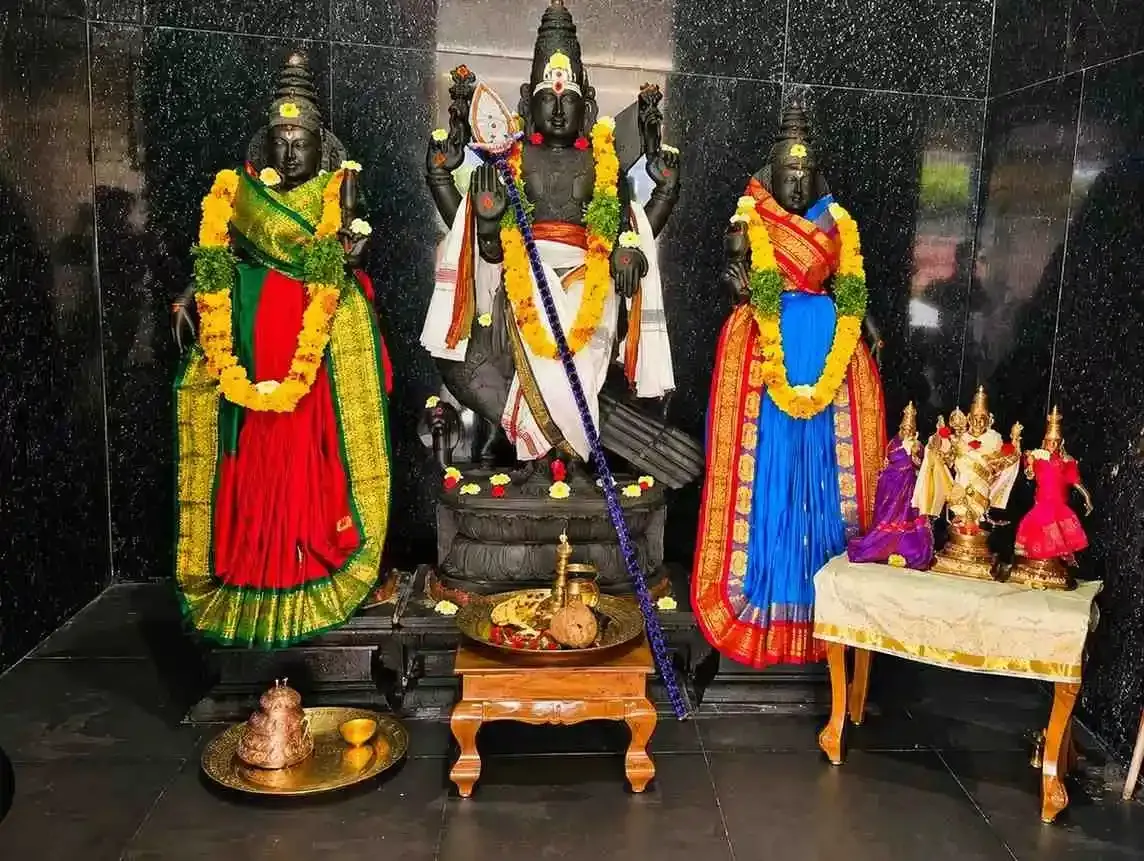
You live in an apartment in New York, London, Sydney, or Dubai. The nearest Shiva temple is 30 km away. You want to do a proper Shivling puja at home — including occasional Rudrabhishekam — without the temple priests, the open courtyard, the ceremonial samagri, or the drainage that a traditional Indian house provides. This is the practical NRI guide.
Lord Shiva is the most accessible deity — bel patra and water are enough. The shastra explicitly accommodates home worship. This guide covers minimum setup, what to offer, what NEVER to offer (and the traditional reason), sourcing abroad, valid substitute lingas, and apartment-friendly drainage.
Minimum Setup for a Diaspora Apartment
You need very little. The essentials:
- A Shivling: brass (most common, USD 20-40 online), parad (mercury, more expensive but spiritually potent), clay (temporary; consecrate fresh each major puja), or a smooth round stone designated as a Banalinga for the puja. Size: 2-6 inches for home altar.
- A copper or brass abhishek patra (yoni pitha): the platform the Shivling sits on, with a spout for water drainage. USD 15-30 online. Without one, use a deep brass plate.
- Copper or silver kalash (water vessel)
- Small oil lamp + cotton wicks + sesame oil or ghee
- Camphor + incense (sandalwood preferred)
- Bel (bilva) leaves, white flowers, fresh fruit, milk-sweet for naivedya
- Bhasma (sacred ash) — small jar available online
Sourcing the Materials Abroad
- USA: Patel Brothers, Spices of India online, Amazon (search "brass Shivling India"), Indian temple gift shops in major cities (Flushing, Pittsburgh, Lemont)
- UK: VB & Sons Wembley, Sira Cash & Carry, BAPS temple bookshops
- Australia: Bharat Bazaar, online Australian Indian-goods stores
- Dubai/UAE: LuLu Hypermarket Indian section, Bur Dubai Hindu shops near Sri Krishna Mandir
- Singapore/Malaysia: Little India shops in Singapore (Serangoon Road), KL's Brickfields area
Step-by-Step Daily Shivling Puja Vidhi (10 minutes)
- Bathe; wear clean clothes. Set up your altar.
- Sankalpa: Om Shivaya namah... [intention].
- Achaman (sipping water 3 times for purity), then sprinkle water on the altar.
- Light lamp and incense.
- Jalabhishek: pour water on the Shivling chanting "Om Namah Shivaya" 11 times. Water flows through the yoni-pitha spout into the catch plate.
- Offer bilva leaves (3 leaves at a time, smooth side down) chanting "Om Namah Shivaya" with each.
- Offer white flowers and a fruit.
- Read or recite one verse of the Lingashtakam or Shiva Tandava Stotram (any 8 verses; full version on weekends).
- Aarti with the lit lamp.
- Offer naivedya (fruit or milk-sweet); take prasad yourself.
Rudrabhishekam at Home (Longer; for Mondays / Pradosh / Sawan)
Rudrabhishekam is the elaborate Shiva abhishekam with multiple liquids while reciting the Sri Rudram (Yajurveda). Full traditional Rudrabhishekam requires priest expertise and 1-2 hours. NRI-practical short form:
- Begin with sankalpa and standard puja preliminaries (above steps 1-4).
- Abhishekam sequence — pour each over the Shivling in turn while chanting "Om Namah Shivaya" or the Maha Mritunjaya:
- Water → ghee → milk → curd → honey → sugar water → panchamrita (mix of milk, curd, ghee, honey, sugar) → water again.
- Recite the Mahamrityunjaya Mantra 11 or 21 times during the abhishekam.
- Offer bilva leaves continuously (108 ideal, fewer if not available).
- Recite the Lingashtakam.
- Aarti, naivedya, prasad.
What to Offer Lord Shiva — Traditional List
- Water (jala): Ganga jal preferred; tap water with a few drops of Ganga jal is sanctified
- Milk (dugdha): cow milk preferred
- Bel patra (bilva leaves): the supreme offering; three leaflets per leaf
- White flowers: jasmine, mogra, dhatura (datura), arka (calotropis)
- Bhasma (sacred ash)
- Sesame seeds
- Honey, ghee, curd, sugar (the panchamrita ingredients)
- Coconut, fruits, simple naivedya
What NEVER to Offer on a Shivling — With Traditional Reason
- Tulsi (holy basil): Tulsi devi is the eternal consort of Vishnu. The Padma Purana narrates that Tulsi cursed herself never to be offered to Shiva. Tulsi is for Vishnu/Krishna worship only.
- Ketaki (kewra) flower: the Shiva Purana narrates that during the Lingodbhava episode, Brahma falsely claimed to have reached the top of the infinite Linga, and Ketaki flower lied to corroborate him. Shiva cursed Ketaki not to be used in his worship.
- Turmeric (haldi): haldi is associated with the female principle (Devi worship, marriage rituals) and is considered too "warm" for Shiva. Avoid.
- Kumkum: kumkum is for Devi/Shakti worship and married women — not for Shiva. Bhasma is the appropriate forehead mark for Shiva.
- Broken / red akshat rice: only unbroken whole grains for any Hindu deity; for Shiva, white unbroken akshat only — red kumkum-mixed rice should NOT be used.
- Coconut water as direct abhishek: coconut is offered whole as naivedya, but coconut water is generally NOT used as abhishek dravya — opinions vary by tradition.
Apartment-Friendly Drainage
The abhishekam water becomes sacred and should not be disposed of in regular sewage. Options for NRI apartment-dwellers:
- Catch the water in a large brass or steel pot below the yoni-pitha spout, then pour it into your indoor plants, garden, or under any tree.
- Apartments without a garden: pour into a potted plant (especially a Tulsi plant or any flowering plant).
- Some devotees collect the water across a Sawan month and immerse in a river / sea / lake on a special day.
- Avoid kitchen sink, toilet, or general drain — this is considered disrespectful to the sanctified water.
Valid Substitute Lingas When You Cannot Get a Standard Shivling
Hindu tradition explicitly allows substitute lingas. All are shastrically valid:
- Banalinga: a naturally formed smooth round stone from the Narmada River (sold online; or a smooth river stone designated by sankalpa for the day).
- Parad linga: made of solidified mercury — most spiritually potent in traditional Shaivism, expensive
- Clay linga: consecrate fresh; immerse in water at end of puja. Used in temporary pujas, festivals.
- Supari (areca nut): emergency substitute when nothing else is available. Designate by sankalpa as Shivling for the day.
- A printed photograph of Shiva or a Shivling: valid for daily darshan, mantra, simple offering; not used for abhishekam directly (offer flowers and water nearby instead).
Frequently Asked Questions
Can I do daily Shivling puja in a high-rise apartment?
Absolutely. The Shiva Purana explicitly permits and praises home worship of the Shivling. The small altar setup described above fits any apartment.
Where can I order bel patra abroad if no Indian grocery nearby?
Amazon (dried bel patra; long shelf life), Patel Brothers online (USA), VB & Sons (UK), Bharat Bazaar (Australia), LuLu Hypermarket (UAE). If genuinely unavailable, the Linga Purana explicitly accepts any leaf offered with sincere devotion — rose petals or white flowers are acceptable substitutes.
Can my Western roommate / spouse who is not Hindu participate?
Yes — any sincere participant is welcome. Hindu tradition does not gatekeep Shiva worship by birth or background. They can offer flowers, light a lamp, or simply sit in respectful silence.
How much does it cost to set up a basic Shiva altar abroad?
Approximately USD 60-100 total: small brass Shivling (~USD 25), yoni-pitha (~USD 20), kalash + plate (~USD 25), starter samagri (bel patra, oil, wicks ~USD 20). A one-time investment that lasts a lifetime.
Can I do Rudrabhishekam without a priest?
The simplified panchamrita abhishekam described above can be self-performed daily. The full traditional Sri Rudram-based Rudrabhishekam ideally needs a priest who knows the Yajurveda Rudra section — book through your local temple, or arrange a video-call Rudrabhishekam with a priest in India while you perform the physical actions at home.
Do I need to do this every day?
Daily is ideal but not required. Mondays are the minimum (Somvar Vrat). For most NRI families, daily 5-minute home darshan + a longer Monday puja + Sawan / Maha Shivratri / Pradosh on special days is a sustainable practice.
🕉 Om Namah Shivaya. Whether your apartment is in Hyderabad or Hyderabad-on-Hudson, Lord Shiva's grace is the same. Begin your home sadhana today. 🕉
Share this with family and friends
Send it on WhatsApp, post it, or copy the link.
More from Festivals
- Pradosh Vrat 2027 Dates: All 25 Pradosham Days, Pradosh Kaal Times and Dates Abroad
- Amavasya 2027 Dates: New Moon Days, Darsha Amavasya, Tithi Times and Dates Abroad
- Purnima 2027 Dates: Full Moon Vrat Days, Snan-Daan Days, Tithi Times and Dates Abroad
- Ekadashi 2027 List: All 25 Ekadashi Dates, Smarta and Vaishnava Days, Tithi Times and Dates Abroad
- Firecracker Safety for Children in Nepal: A Parent's Guide to a Safe Tihar
You might also like

The Sacred Panchmukhi Shivling at Chandrashila Summit: A Divine Journey of Spirituality and Beauty

Mirabai Jayanti 2026: A Living Symbol of Krishna Bhakti – Life, Significance and Bhajans
Masik Shivaratri 2027 Dates: Monthly Shivaratri List, Nishita Kaal Times and Dates Abroad