Why Do We Offer 21 Durva Grass Blades to Lord Ganesha?
Durva (garike) grass is Ganesha's most cherished offering, traditionally presented in 21 blades tied in bunches of three. Discover the Analasura legend, the meaning behind the number 21, and how devotees select and offer durva today.
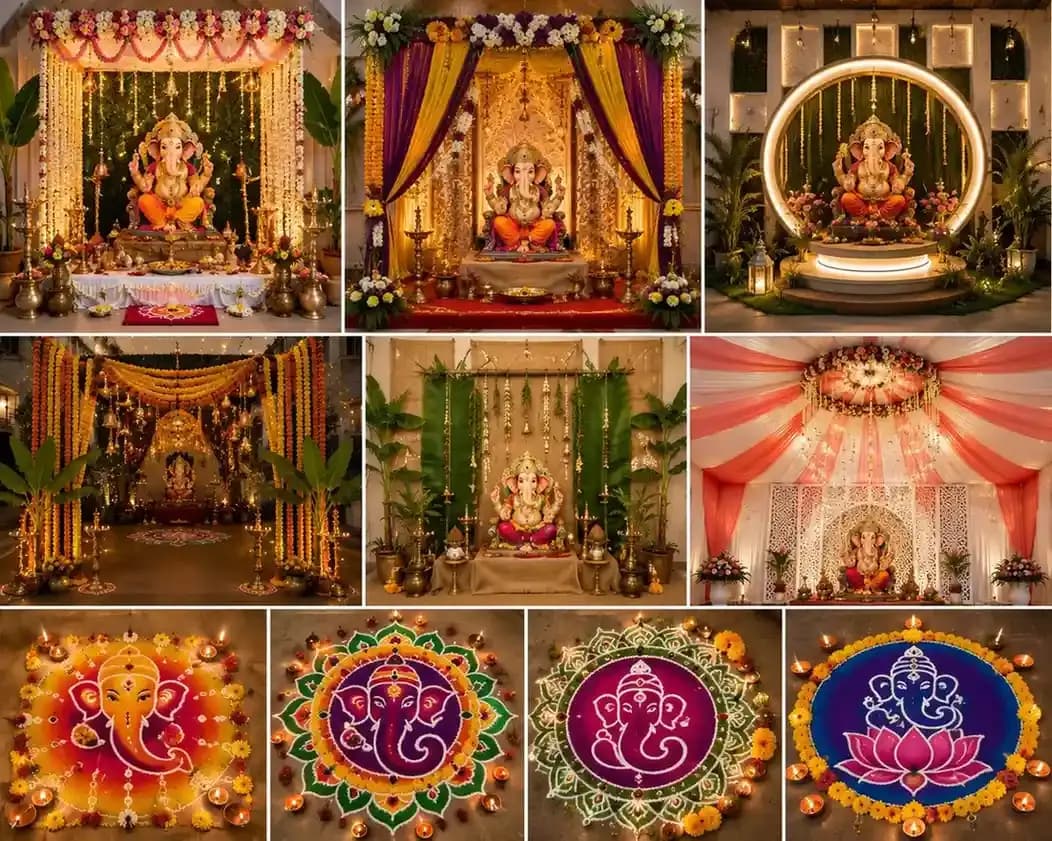
Durva (garike) grass is Ganesha's most cherished offering, traditionally presented in 21 blades tied in bunches of three. Discover the Analasura legend, the meaning behind the number 21, and how devotees select and offer durva today.
Quick answer: Devotees traditionally offer 21 blades of durva (garike) grass to Lord Ganesha, presented in bunches of three, because durva is said to have cooled Ganesha after he swallowed the demon Analasura. The number 21 is read as a symbolic whole — the five karmendriyas, five jnanendriyas, five pranas, five tanmatras, and the mind — surrendered at his feet.
Among all the offerings made to Lord Ganesha, few are as beloved as durva grass — the slender, three-tipped blades known as garike in Telugu and Kannada, haritali or durva in Sanskrit and Marathi. While flowers, modak and fruit are all offered with devotion, tradition holds that Ganesha is especially pleased by durva, and that even a single sincere blade carries the weight of elaborate worship. Most commonly it is offered in 21 blades, arranged in bunches of three.
This article explains where the custom comes from, what the number 21 is traditionally taken to mean, how devotees select and offer durva during Ganesh puja, and what to do when fresh durva is hard to find — a common situation for families living abroad. Everything below is presented as living tradition, with regional variations treated as equally valid.
The Analasura legend: why durva cooled Ganesha
The most widely told story connects durva to a fierce demon named Analasura, whose name suggests fire (anala). According to the Puranic narrative, Analasura terrorised the three worlds and the sages, emitting an unbearable heat and burning everything in his path. When the devas and rishis appealed for protection, Lord Ganesha confronted the demon and, in one telling, swallowed Analasura whole to end his rampage.
But having taken the fiery demon within himself, Ganesha's own body began to burn with an intense internal heat. Various remedies were tried, and relief finally came when sages placed durva grass upon him and offered blades of durva to him. The cool, tender grass is said to have soothed the burning at once. From that time, tradition holds, durva became especially dear to Ganesha, and offering it became a lasting part of his worship. You can read the fuller cycle of stories about him in our account of the birth of Lord Ganesha and his elephant head, https://hindutone.com/ganesh-chaturthi/lord-ganesha-birth-story-elephant-head/.
As with many Puranic accounts, the details vary between regions and retellings. What remains constant across versions is the core idea: durva is the grass that cooled Ganesha, and so it is offered to him with love.
Why 21? Traditional explanations of the number
Durva is very often offered in a count of 21 blades, and the number itself is read symbolically. There is no single official interpretation; rather, several traditional explanations circulate, each pointing to the idea of surrendering the whole of one's being. One popular framework counts 21 as a sum of the faculties through which a person acts and knows the world.
| Group of five (or the mind) | What it represents |
|---|---|
| 5 Karmendriyas | Organs of action — speech, hands, feet, and the organs of elimination and generation |
| 5 Jnanendriyas | Organs of knowledge — the ears, skin, eyes, tongue and nose |
| 5 Pranas | The vital airs — prana, apana, vyana, udana and samana |
| 5 Tanmatras | The subtle sense-objects — sound, touch, form, taste and smell |
| 1 Manas | The mind, which coordinates them all |
Added together these give 5 + 5 + 5 + 5 + 1 = 21, and the offering is understood as laying every instrument of action, perception, life-force, sensation and thought at Ganesha's feet. Other traditional readings connect 21 to sets of sacred principles, or simply treat it as an auspicious ritual count; devotees are free to hold whichever interpretation their family or teacher follows.
A closely related and very common practice is to offer durva together with the recitation of Ganesha's names — often 21 names, or the fuller 108 — placing one bunch of three blades with each name. If you would like to combine durva with a name-recitation, see our Ganesha Ashtottara 108 names guide, https://hindutone.com/ganesh-chaturthi/ganesh-ashtottara-108-names-mantra/.
Why bunches of three?
Durva is almost never offered as loose single blades; it is tied or held in small bunches, most often of three tips or three blades. Twenty-one blades therefore naturally form seven bunches of three. Several reasons are offered in tradition for the grouping in threes:
- The three tips of a durva sprig are themselves seen as auspicious, and a sprig with three or five leaflets is considered especially fit for offering.The number three is linked in various explanations to the three gunas, the three states of experience, or a threefold completeness.Bunching keeps the delicate grass together so it rests neatly on the deity's head or feet rather than scattering.
When counting 21, most families count the bunches (seven bunches of three) rather than individual leaflets, so a little flexibility in the exact leaf-count is normal and accepted.
How durva is selected
Not every patch of grass qualifies as durva for worship. Durva is the common Bermuda-type creeping grass (Cynodon dactylon), with fine, soft, bright-green blades that grow low to the ground. Traditional guidance on selecting it includes several points:
- Choose fresh, tender, green blades — avoid grass that is dry, yellowed, cut short by mowing, or wilted.Prefer sprigs with an odd number of tips, especially three or five leaflets, which are considered most auspicious.Gather durva from a clean place, away from footpaths, drains and areas where animals have soiled the ground.Rinse the blades gently in clean water before offering, and shake off excess water.Where local custom advises, avoid plucking durva on days it is traditionally not gathered, and never take more than you need.
Durva is one of several sacred plants in Ganesha worship. It is often offered alongside specific leaves during the more elaborate puja; our guide to the 21 patri (leaves) for Ganesh puja, https://hindutone.com/ganesh-chaturthi/21-patri-ganesh-puja-leaves-guide/, explains that separate tradition of leaf offerings.
How durva is offered during puja
Durva is usually offered after the deity has been welcomed, bathed and adorned, at the point in the puja where flowers and leaves are presented. A simple, commonly followed sequence is described below; families should follow the specific vidhi their tradition or priest prescribes.
- Prepare the durva in advance — rinse it and tie or gather it into small bunches of three.At the appropriate point in the puja, take a bunch in the right hand.Offer each bunch to Ganesha, placing it gently on his head, at his feet, or on the puja tray, while reciting his name or a short mantra.Continue until all 21 blades (seven bunches) have been offered, ideally in a spirit of unhurried devotion.Where the family recites 21 or 108 names, offer one bunch with each name as far as the durva allows, then continue the recitation.
Durva is a natural part of the wider Ganesh Chaturthi observance. Ganesh Chaturthi in 2026 falls on Monday, 14 September 2026 (Bhadrapada Shukla Chaturthi). For the muhurat and city-wise timings — which are location-specific and should always be confirmed from a reliable local panchang — see our Ganesh Chaturthi 2026 date and muhurat guide, https://hindutone.com/ganesh-chaturthi/ganesh-chaturthi-2026-date-muhurat-city-wise/.
NRI substitutes when durva is unavailable
Families living abroad often cannot find durva grass easily, and the same problem arises in cities during winter. Tradition is gentle here: the offering is about devotion, not about a scarce commodity. Several accepted approaches exist:
- If any clean, fresh, tender grass of the Bermuda/Cynodon type grows locally, it may be used — many lawns and parks contain it.Some families grow a small pot of durva at home from seed or a transplanted clump, so a few fresh blades are always available.Where no durva at all can be found, devotees offer whatever tender green leaves or grass are clean and available, offered with the same intention, and mentally request forgiveness for the substitution.The heart of the practice is the sincerity of the offering; a single blade offered with love is traditionally said to please Ganesha as much as an abundance.
Whatever is offered should be clean, fresh and given with a settled mind. The tradition consistently emphasises that Ganesha, the remover of obstacles, receives even the simplest offering when it is made with genuine bhakti.
Related reading
- Ganesh Chaturthi 2026 date and muhurat
- The 21 patri leaves for Ganesh puja
- Ganesha Ashtottara — 108 names and mantra
- The birth story of Lord Ganesha
- Modak and undrallu — Ganesha's prasadam
Frequently Asked Questions
Why is durva grass so dear to Lord Ganesha?
Tradition holds that durva grass cooled Lord Ganesha's body after he swallowed the fiery demon Analasura and burned with intense internal heat. The tender, cooling grass soothed him at once, and from then on durva became especially beloved to him. Devotees offer it as a mark of love, believing even a single blade pleases him greatly.
How many durva blades should be offered to Ganesha?
Durva is most commonly offered in 21 blades, arranged in seven bunches of three. Some families offer durva alongside 21 or 108 names of Ganesha, placing one bunch with each name. The exact count follows family or teacher tradition; a small variation in leaf-count is normal, as most people count the bunches rather than individual leaflets.
What does the number 21 symbolise in the durva offering?
One popular explanation reads 21 as the five karmendriyas (organs of action), five jnanendriyas (organs of knowledge), five pranas (vital airs), five tanmatras (subtle sense-objects) and the one mind. Offering 21 blades is understood as surrendering the whole of one's being at Ganesha's feet. Other traditional readings exist and are equally valid.
Why is durva offered in bunches of three?
A durva sprig with three tips is considered especially auspicious, so blades are gathered in threes; twenty-one blades naturally form seven bunches of three. The number three is variously linked to the three gunas or a threefold completeness. Bunching also keeps the delicate grass together so it rests neatly on the deity rather than scattering.
What kind of grass counts as durva?
Durva is the common creeping Bermuda-type grass, Cynodon dactylon (garike in Telugu and Kannada), with fine, soft, bright-green blades that grow low to the ground. For worship, choose fresh tender blades, prefer sprigs with three or five leaflets, gather from a clean spot away from paths and drains, and rinse gently in clean water before offering.
Can NRIs use a substitute if durva is unavailable?
Yes. Tradition is gentle here — the offering is about devotion, not a scarce commodity. If clean, fresh Bermuda-type grass grows locally it may be used; some families grow durva in a pot at home. Where none is available, other clean tender green grass or leaves may be offered with the same intention, mentally requesting forgiveness for the substitution.
When is Ganesh Chaturthi in 2026, and does durva relate to it?
Ganesh Chaturthi in 2026 falls on Monday, 14 September 2026 (Bhadrapada Shukla Chaturthi). Durva is a central part of the festival's puja, offered along with flowers, leaves and modak. Muhurat and city-wise timings are location-specific, so always confirm them from a reliable local panchang rather than relying on a single fixed time.
Is offering just one durva blade enough?
Tradition consistently teaches that Ganesha, the remover of obstacles, values the sincerity of an offering above its quantity. A single durva blade offered with genuine devotion is said to please him as much as an abundance. The count of 21 is a beautiful traditional ideal, but a heartfelt offering of whatever clean, fresh grass is available is fully accepted.
You might also like
Bathukamma 2026 in Malaysia: Dates, Kuala Lumpur Celebration & Vijayadasami Guide
Bathukamma & Dasara 2026 in Canada: Dates, Telangana Association Celebrations & City-by-City Guide
Bathukamma and Dasara 2026 in Australia: Dates, Telangana Association Celebrations, Muhurat and City-by-City Guide