Why Hindus Should Celebrate India’s Independence Day & How to Celebrate Meaningfully
India marks its 80th Independence Day on Saturday, 15 August 2026. A reflective guide to why the day matters to Hindus and how to celebrate it meaningfully at home, in temples and abroad.
India marks its 80th Independence Day on Saturday, 15 August 2026. A reflective guide to why the day matters to Hindus and how to celebrate it meaningfully at home, in temples and abroad.
Quick answer: India’s 80th Independence Day falls on Saturday, 15 August 2026 — marking 79 years of freedom. For Hindus it is a day of national pride and spiritual reflection: honouring the sacrifices of freedom fighters, affirming freedom as a civilizational value, teaching children, and renewing commitment to a strong, dharma-aligned Bharat through flag-hoisting, prayer, seva and community celebration in India and the diaspora.
India’s Independence Day falls on 15 August every year. In 2026, the nation marks its 80th Independence Day on Saturday, 15 August — 79 years of freedom. For Hindus, this day holds deep national, cultural and civilizational significance. It is not merely a political anniversary; it is a celebration of freedom, sacrifice, dharma and the enduring spirit of Bharat.
This guide explores why Hindus should actively celebrate Independence Day, and offers practical, meaningful ways to observe it at home, in temples and within the community — whether in India or abroad.
- Occasion: India’s 80th Independence Day
- Date 2026: Saturday, 15 August 2026
- Milestone: 79 years of freedom (since 1947)
- Spirit: Har Ghar Tiranga — fly the flag per the Flag Code of India
- Greetings: Jai Hind! Vande Mataram!
Why Hindus should celebrate India’s Independence Day
1. Honouring the sacrifices of freedom fighters
Countless Hindus — along with people of all communities — gave their lives, freedom and comfort for India’s independence. From revolutionaries to leaders who drew strength from the Bhagavad Gita, the Ramayana and the ideal of Swaraj, the freedom struggle was deeply intertwined with spiritual and ethical values. Celebrating the day is a way of remembering and expressing gratitude for their sacrifice.
2. Freedom as a civilizational value
The idea of freedom (Swarajya / Atma-Swaraj) is not new to Indian thought. The Upanishads speak of inner freedom, the Gita teaches duty without attachment, and saints across the centuries inspired people to live with dignity and self-respect. Political independence in 1947 allowed the continuation and revival of this civilizational ethos.
3. Strengthening identity with national pride
Independence Day is an opportunity for Hindus to affirm that love for Sanatana Dharma and love for Bharat go hand in hand. A free India provides the space for temples, festivals, education in dharma and cultural expression. Celebrating the day reinforces the connection between spiritual heritage and national responsibility.
4. Teaching the next generation
For children growing up in India or the diaspora, Independence Day is a powerful occasion to learn history and the values of courage, unity and service. It helps them understand that the freedom they enjoy today was hard-won, and must be protected through good citizenship and cultural rootedness.
5. Expressing gratitude and renewing commitment
The day is ideal for collective reflection — gratitude for freedom, and a renewed pledge to contribute to a strong, prosperous and dharma-aligned society.
How Hindus can celebrate Independence Day meaningfully
Hoist or display the Tiranga with respect
- Join the Har Ghar Tiranga spirit by displaying the national flag at home, following the Flag Code of India.
- In the diaspora, many temples and community centres hoist the flag; families can also display it respectfully at home.
A simple home celebration
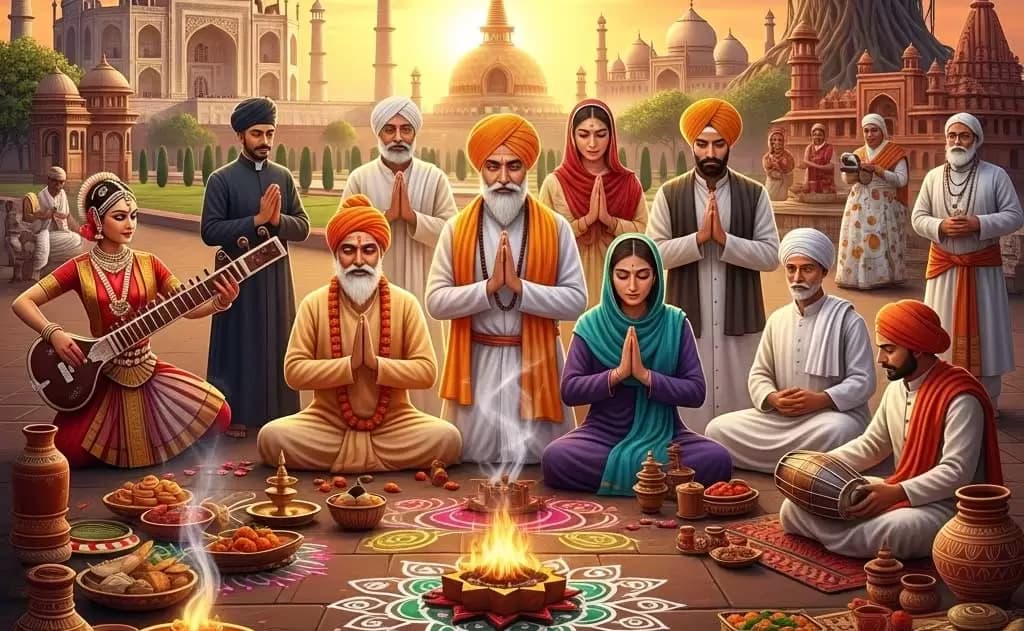
- Begin the day with a short prayer or the lighting of a diya.
- Sing or play the National Anthem and patriotic songs such as Vande Mataram, Jana Gana Mana or Saare Jahan Se Achcha.
- Share stories of freedom fighters — Bhagat Singh, Chandrashekhar Azad, Rani Lakshmibai, Subhas Chandra Bose and many others — with children.
- Prepare a simple meal or sweets in the colours of the Tiranga (saffron, white and green).
Temple and community observance
- Many Hindu temples organise special programmes, flag hoisting, bhajans and cultural events on 15 August.
- Attend or volunteer at local temple or association events.
- In the diaspora (USA, UK, Australia, Canada, the Gulf and elsewhere), Indian associations and Hindu temples often host combined cultural and patriotic programmes.
Educational & cultural activities
- Watch documentaries or read short accounts of the freedom struggle as a family.
- Organise a small quiz or storytelling session for children.
- Discuss the deeper meaning of freedom — both outer (political) and inner (from ego, fear and division) as taught in the Gita.
Acts of seva (service)
- Perform a small act of service: donate to a cause, plant a tree, help the needy or clean a public space.
- Many families combine patriotism with environmental or social responsibility.
For the diaspora
- Host or attend community gatherings organised by Indian / Hindu associations.
- Wear traditional attire or clothes in the colours of the flag.
- Connect virtually with family in India while watching the Red Fort ceremony.
- Use the day to strengthen cultural identity among second-generation children.
A balanced perspective for Hindus
Celebrating Independence Day does not require diminishing anyone else’s contribution. It simply means recognising that the freedom of Bharat is precious to Hindus as the homeland of their civilisation, temples, scriptures and way of life. A free and strong India remains the foundation for the flourishing of Sanatana Dharma in the modern world.
Conclusion
India’s Independence Day is a day of national pride and spiritual reflection for Hindus. It reminds us of the price of freedom, the value of dharma, and our responsibility toward the nation and future generations. This 15 August, hoist the Tiranga with pride, remember the sacrifices, share the stories with your children, and renew your commitment to a strong, united and culturally rooted Bharat. Jai Hind! Vande Mataram!
Related reading
- Independence Day during Sravana Masam 2026
- September 2026 Hindu festival calendar
- Varalakshmi Vratam 2026 — date, vidhi and NRI guide
Frequently Asked Questions
When is India’s Independence Day in 2026?
India’s 80th Independence Day falls on Saturday, 15 August 2026, marking 79 years of freedom since 1947. It is observed nationwide and by the diaspora with flag hoisting, cultural programmes and reflection.
Why should Hindus celebrate Independence Day?
The day honours the sacrifices of freedom fighters, affirms freedom as a civilizational value rooted in the Gita and Upanishads, strengthens cultural identity with national pride, teaches the next generation, and renews commitment to a strong, dharma-aligned Bharat.
How can families celebrate Independence Day at home?
Begin with a short prayer or lighting a diya, sing the National Anthem and patriotic songs, share freedom-fighter stories with children, display the Tiranga per the Flag Code of India, and prepare food or sweets in saffron, white and green.
How is the Tiranga displayed respectfully?
Follow the Flag Code of India and the Har Ghar Tiranga spirit — display the national flag with dignity at home, or take part in flag hoisting at temples and community centres. Ensure the flag is treated with honour at all times.
How can the diaspora celebrate Independence Day?
Attend community gatherings hosted by Indian or Hindu associations, wear traditional attire or flag colours, connect virtually with family in India while watching the Red Fort ceremony, and use the day to strengthen cultural identity among children.
What acts of seva suit Independence Day?
Small acts of service embody the spirit of the day — donating to a cause, planting a tree, helping the needy, or cleaning a public space. Many families combine patriotism with environmental or social responsibility.
What is the deeper, spiritual meaning of freedom for Hindus?
Beyond political independence, Hindu thought describes inner freedom — Atma-Swaraj — freedom from ego, fear and division, as taught in the Gita. Independence Day invites reflection on both outer and inner freedom.
Does celebrating Independence Day diminish other communities?
No. Celebrating the day recognises that the freedom of Bharat is precious to Hindus as the homeland of their civilisation, without diminishing anyone else’s contribution. A free, strong India benefits all who call it home.
You might also like
Navratri 2026: 9 Days, Colors, Goddess Names, Puja & Significance
Navratri 2026 USA: Dates, Garba, Dandiya, Durga Puja & NRI Celebration Guide

Indian Temple Flowers: Sacred Blooms & What Each Deity Loves