

Why Does the Varalakshmi Toram Have Nine Threads and Nine Knots?
The toram tied during Varalakshmi Vratam carries nine threads and nine knots. Learn the traditional protective and auspicious meanings behind each, why turmeric is applied, and why it is worn on the right wrist.
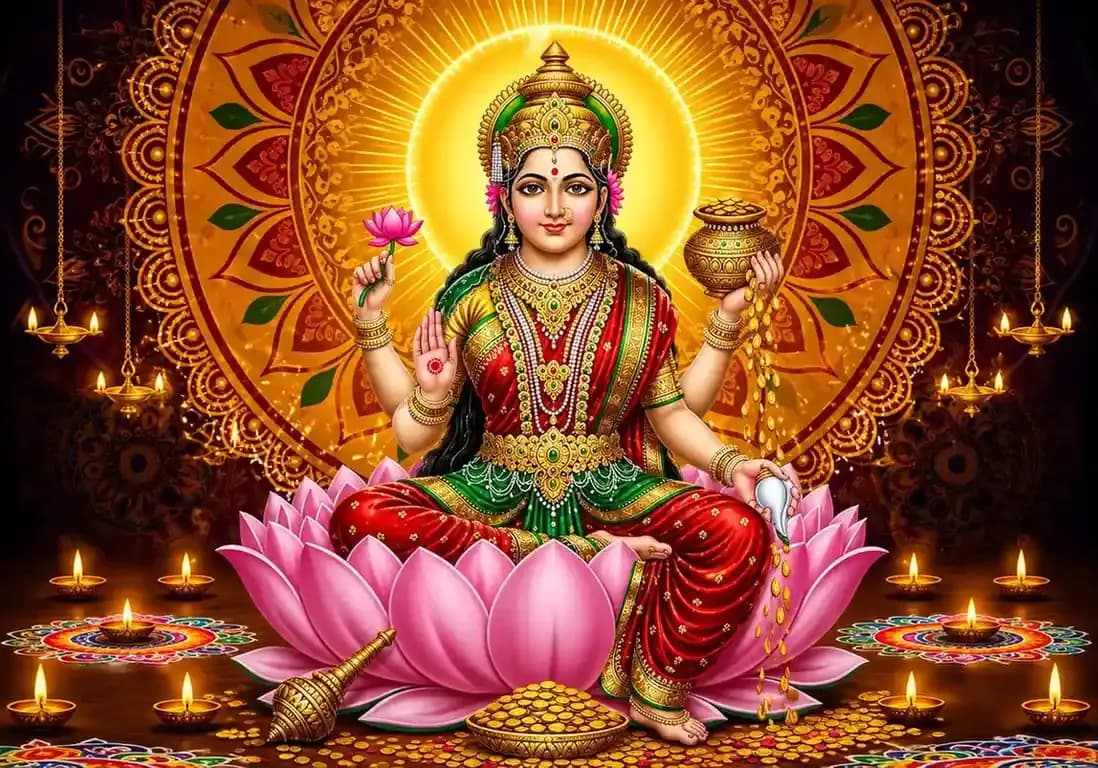
The toram tied during Varalakshmi Vratam carries nine threads and nine knots. Learn the traditional protective and auspicious meanings behind each, why turmeric is applied, and why it is worn on the right wrist.
Quick answer: The Varalakshmi toram is traditionally made of nine threads twisted together and tied with nine knots. Elders explain the nine as standing for auspicious wholeness — often linked to nine forms or nine blessings of the Goddess. Turmeric sanctifies it, and it is tied on the right wrist as a protective, sacred cord.
During Varalakshmi Vratam, one of the most tender moments comes near the end of the puja, when the sacred yellow cord — the toram — is tied on the wrist. Many families notice, sometimes for the first time, that this little thread is not random: it is traditionally twisted from nine strands and knotted nine times. Why nine? And why turmeric, and why the right wrist? This article gathers the traditional explanations passed down in Telugu, Tamil and Kannada households, always presented as tradition rather than as fixed doctrine.
Before we begin, a quick note on the date. Varalakshmi Vratam in 2026 falls on Friday, 21 August 2026 in most Telugu, Tamil and Kannada panchangs, while some panchangs observe it on Friday, 28 August 2026. Neither is wrong — the difference reflects how the second Friday of the bright fortnight of Shravana is reckoned. Please follow your family, kula and local-temple tradition, and see our detailed date explainer linked below.
What exactly is the toram?
The toram (also spelled thoram or toranam in some regions) is a small consecrated cord prepared as part of the vratam. It is typically made from cotton thread, dyed or smeared with turmeric so that it turns a deep auspicious yellow, and often a small flower or a twist of thread is added at the centre. After the Goddess Lakshmi is invoked into the kalasam and worshipped, the toram is placed before the deity, sanctified with the same akshata (turmeric rice) and kumkum, and then tied on the wrist of the woman performing the vratam — and often on the wrists of others in the household.
In many families the toram is worn until it naturally comes off, or until a fixed number of days, after which it is respectfully removed and placed in flowing water or at the base of a tulsi plant. It is treated as prasadam — a physical carrier of the blessing invoked during the puja.
Why nine threads?
The number nine recurs throughout Hindu observance, and elders offer several overlapping explanations for the nine strands of the toram. None of these cancels the others; different families hold different favourites.
- The nine strands are often said to represent nine forms or nine aspects of Goddess Lakshmi — the family of blessings sometimes grouped as Ashta Lakshmi (the eight Lakshmis) together with the presiding Varalakshmi herself, making nine.
- Others link the nine to nine kinds of wealth or blessing — health, prosperity, progeny, knowledge, courage, victory, longevity, good conduct and devotion — so that the single cord carries a request for wholeness rather than one narrow boon.
- Some connect the nine threads to Navadurga or to the nine planetary influences (Navagraha), framing the toram as a small protective shield that harmonises unseen forces.
- In a simpler devotional reading, nine is a number of completeness and auspiciousness in itself, and the toram gathers that completeness into a single wearable strand.
What unites all these readings is the idea of gathering many blessings into one bound cord. The twisting of separate threads into a single strong strand is itself symbolic: individually thin, together they hold — an image of a family or community bound in mutual protection and prosperity.
Why nine knots?
If the nine threads are the substance, the nine knots are the seal. In traditional understanding, a knot binds an intention into the thread. Each knot is often tied while remembering the Goddess, sometimes with a short prayer or the recitation of a name, so that the finished cord is not merely thread but thread charged with sankalpa (resolve).
Elders explain the nine knots in ways that mirror the nine threads: nine seals for nine blessings, nine bindings that 'lock in' the auspiciousness so it does not slip away, or nine knots echoing the nine forms of the Goddess so that each aspect is honoured and secured. The knot, in Hindu ritual grammar, is a recurring motif of protection — seen also in the rakhi, the mangalsutra tying, and the kankanam tied at weddings.
| Element | Traditional meaning offered by elders |
|---|---|
| Nine threads | Nine forms of Lakshmi / nine blessings gathered into one cord |
| Nine knots | Nine seals binding the blessing so it is secured, not lost |
| Turmeric coating | Purification, auspiciousness and the presence of the Goddess |
| Right wrist | The auspicious, giving/receiving side in ritual custom |
| Yellow colour | Colour of Lakshmi, gold, prosperity and sanctity |
Why is turmeric applied to the toram?
Turmeric (haldi, pasupu) is inseparable from Lakshmi worship. Its deep golden-yellow colour is associated with gold, prosperity and the very presence of the Goddess; in many households a small turmeric cone is itself worshipped as Gauri or Lakshmi. Applying turmeric to the toram is understood as sanctifying and purifying the thread, transforming plain cotton into a consecrated object fit to carry the Goddess's grace.
Turmeric also carries an old association with protection and auspiciousness in domestic ritual — it is smeared at doorways, on kalasams, and on the wrists of the married. Coating the toram in turmeric therefore does two things at once in the traditional imagination: it beautifies the cord in Lakshmi's own colour, and it wraps the wearer in an auspicious, protective hue.
Why is the toram tied on the right wrist?
In Hindu ritual custom the right side is generally the auspicious, honoured side — the hand used for giving, receiving prasadam, and performing sacred acts. Protective and sacred cords such as the kankanam or the raksha are traditionally tied on the right wrist of the person performing or being blessed by the rite. Following this pattern, the Varalakshmi toram is tied on the right wrist of the woman keeping the vratam.
Practices do vary by region and family — some tie it on the wrist of every family member present, some tie it for daughters and daughters-in-law, and customs about which wrist can differ. As with all such details, the guiding principle is to follow your family and local-temple tradition rather than to treat any single practice as the only correct one.
How the toram is prepared and tied — a simple sequence
- Take nine strands of clean cotton thread of equal length and twist or braid them together into one cord.
- Smear the cord with turmeric (and a touch of kumkum at the centre) until it is fully coated and auspiciously yellow; a flower is often added at the middle.
- Tie nine knots along the cord, remembering the Goddess at each knot — many recite a name of Lakshmi or a short prayer.
- Place the finished toram before the kalasam and worship it along with the Goddess, offering akshata, kumkum and flowers.
- After the puja and aarti, tie the sanctified toram on the right wrist of the one performing the vratam, and on other family members as your custom holds.
- Wear it as prasadam; when it is time to remove it, do so respectfully and place it in flowing water or at the base of a tulsi plant.
If your household observes the vratam without a full kalasam, or in a small NRI apartment, the toram can still be prepared and honoured simply — the intention and the nine-thread, nine-knot form matter more than elaborate materials. See our linked guides below for kalasam-free and NRI-friendly approaches.
A note on meaning versus mechanism
It is worth saying clearly: these explanations are traditions of meaning, lovingly handed down, not guarantees of outcome. The toram is a devotional symbol — a way of tying intention, gratitude and hope into a form you can wear and remember. Its power in family life is the power of shared observance, of grandmothers teaching granddaughters, and of a household pausing together in devotion. Approached this way, the nine threads and nine knots are less a formula and more a small, beautiful language of blessing.
Related reading
- p[object Object],[object Object]
- p[object Object],[object Object]
- p[object Object],[object Object]
- p[object Object],[object Object]
- p[object Object],[object Object]
Frequently Asked Questions
Why does the Varalakshmi toram have exactly nine threads?
The nine threads are traditionally said to gather nine blessings or nine forms of Goddess Lakshmi into a single cord — often the Ashta Lakshmi plus Varalakshmi herself. Twisting separate threads into one strong strand also symbolises many blessings and a family bound together. Different households hold different explanations, all cherished as tradition.
What do the nine knots on the toram represent?
In traditional understanding each knot seals an intention into the thread. The nine knots are described as nine seals that 'lock in' the auspiciousness so it is not lost, echoing the nine threads and the nine aspects of the Goddess. Knots are a recurring protective motif in Hindu ritual, as in the rakhi and wedding kankanam.
Why is turmeric applied to the toram?
Turmeric's golden-yellow is the colour of Lakshmi, gold and prosperity, and it is deeply associated with purity, auspiciousness and the Goddess's presence. Coating the cotton cord in turmeric is understood as sanctifying it — transforming plain thread into a consecrated object fit to carry grace, and wrapping the wearer in an auspicious, protective hue.
Why is the toram tied on the right wrist?
In Hindu ritual custom the right side is the auspicious, honoured side, used for sacred acts and receiving prasadam. Protective cords like the kankanam are traditionally tied on the right wrist. Following this pattern the Varalakshmi toram is tied on the right wrist of the woman keeping the vratam, though family customs can vary.
When is Varalakshmi Vratam in 2026?
Varalakshmi Vratam in 2026 falls on Friday, 21 August 2026 in most Telugu, Tamil and Kannada panchangs, while some panchangs observe it on Friday, 28 August 2026. Both reflect valid ways of reckoning the second Friday of bright-fortnight Shravana. Please follow your family, kula and local-temple tradition, and check our detailed date page.
How long should the toram be worn?
Many families wear the toram until it naturally comes off, while others keep it for a fixed number of days set by their custom. It is treated as prasadam. When the time comes to remove it, do so respectfully and place it in flowing water or at the base of a tulsi plant, rather than discarding it casually.
Can the toram be prepared without a full kalasam setup?
Yes. Households observing the vratam simply, or NRIs in small homes, can still prepare and honour a nine-thread, nine-knot toram with turmeric. The intention and the traditional form matter more than elaborate materials. See our kalasam-free and NRI guides for adapted, respectful approaches that keep the heart of the observance intact.
Is the meaning of the nine threads fixed doctrine?
No — these are traditions of meaning lovingly handed down, not fixed doctrine or guarantees of outcome. Nine forms, nine blessings, Navadurga and Navagraha readings all coexist, and families favour different ones. The toram is a devotional symbol for tying intention and gratitude into a wearable form; approach it as tradition, following your own family's practice.
You might also like

Indian Temple Flowers: Sacred Blooms & What Each Deity Loves
Indian Flower Festivals: 10 Beautiful Celebrations Beyond Bathukamma
Bathukamma Flowers: Meaning, Symbolism & the Wisdom Behind Each Bloom