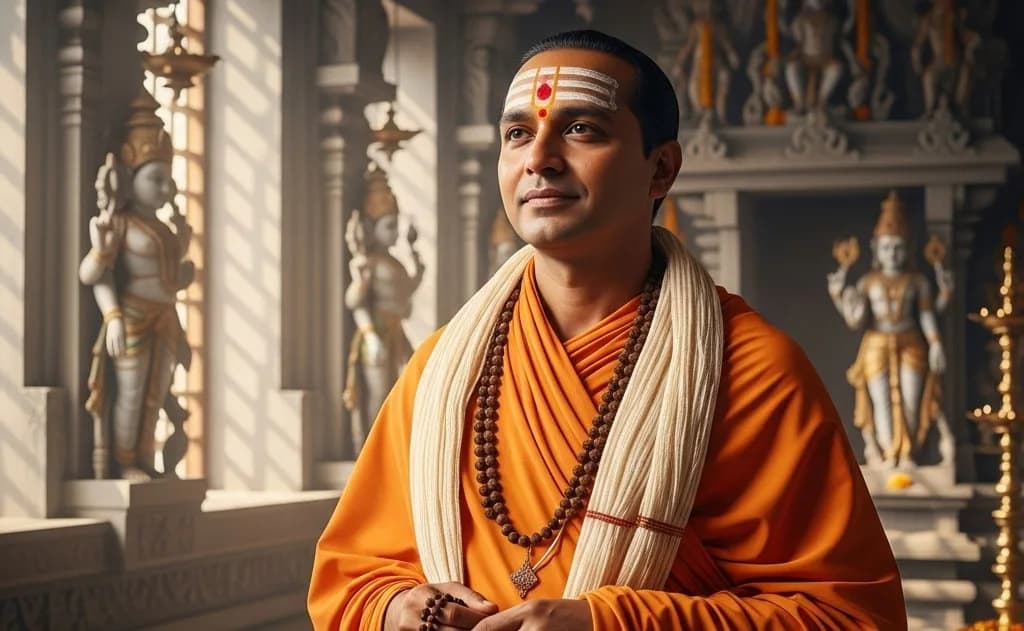
Navigating Identity: What It Means to Be a Hindu in America, Britain, and Canada Today
For the Hindu diaspora in America, Britain, and Canada, balancing ancient traditions with modern Western identities is both a challenge and an opportunity.
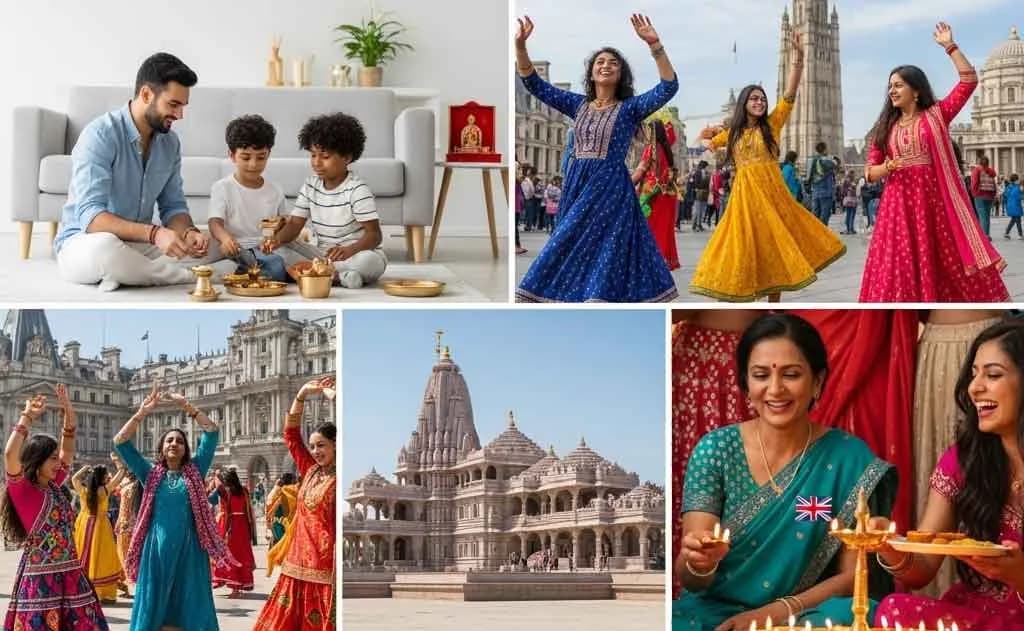
For the Hindu diaspora in America, Britain, and Canada, balancing ancient traditions with modern Western identities is both a challenge and an opportunity.
For the Hindu diaspora in America, Britain, and Canada, balancing ancient traditions with modern Western identities is both a challenge and an opportunity. As young Hindu professionals and students navigate careers, education, and social life in the West, they are redefining what it means to be Hindu in a globalized world. This article explores their stories, highlighting how they preserve Hindu traditions while embracing contemporary Western culture. Through interviews and insights, we delve into the vibrant experiences of the Hindu diaspora, focusing on Hinduism in America, Hinduism in the UK, and the broader Hindu diaspora for Hindutone.com.
The Hindu Diaspora: A Growing Presence
The Hindu diaspora in the West has grown significantly since the 1965 Immigration and Nationality Act in the United States and similar policy changes in the UK and Canada, which welcomed skilled professionals from India. Today, over 2.5 million Hindus live in the US, around 1 million in the UK (1.6% of the population), and approximately 830,000 in Canada (2.3% of the population). Most are first- or second-generation immigrants, often highly educated and working in professional fields like technology, medicine, and academia.https://en.wikipedia.org/wiki/Hinduism_in_the_United_Stateshttps://en.wikipedia.org/wiki/Hinduism_in_the_United_Kingdom
For young Hindus, particularly students and professionals, the challenge lies in maintaining cultural and spiritual roots while thriving in fast-paced, secular Western societies. Their stories reflect a dynamic interplay of tradition and modernity, shaped by community, family, and personal exploration.
Stories from the Diaspora: Voices of Young Hindus
Arjun Patel, 28, Software Engineer, San Francisco, USA
Arjun, a second-generation Indian-American, grew up in California, where his parents built a small shrine at home for daily puja. “Hinduism for me is less about rigid rituals and more about the values my parents instilled—dharma (duty), compassion, and community,” he shares. Arjun attends the local Shiva-Vishnu temple for major festivals like Diwali and Navratri but admits he’s adapted traditions to fit his lifestyle. “I don’t do elaborate pujas daily, but I meditate using techniques from the Bhagavad Gita. It helps me stay grounded in a high-pressure tech job.”
Arjun’s story reflects a broader trend among young Hindus in America. A 2014 Pew Research survey found that while 88% of American Hindus believe in God, only 26% consider religion “very important” in their daily lives, with 51% praying daily. For Arjun, yoga and meditation—rooted in Hindu philosophy—bridge his spiritual and professional worlds, aligning with the 30 million Americans who practice Hatha yoga as a lifestyle.https://en.wikipedia.org/wiki/Hinduism_in_the_United_Stateshttps://en.wikipedia.org/wiki/Hinduism_in_the_West
Priya Sharma, 22, University Student, London, UK
Priya, a British Hindu studying at University College London, describes her experience navigating identity in a diverse city. “Growing up in Leicester, Diwali was huge—streets lit up, community dances, everyone celebrating, Hindu or not,” she says. “But at uni, I’m often the only Hindu in my classes, and explaining my beliefs can feel isolating.” Priya faced challenges when teachers mischaracterized Hinduism in religious education classes, echoing findings from a UK study where Hindu students reported feeling singled out or misrepresented.https://www.tandfonline.com/doi/full/10.1080/01416200.2023.2184326
To preserve her heritage, Priya joined the Hindu Students Council, which organizes events like Holi celebrations and discussions on the Vedas. “It’s empowering to connect with other young Hindus who are proud of their identity,” she says. She also incorporates Hindu principles like ahimsa (non-violence) into her activism, volunteering for environmental causes. For Priya, being Hindu in the UK means blending tradition with modern values like sustainability and social justice, a balance she sees as central to sanatana dharma (eternal duty).
Rohan Desai, 30, Doctor, Toronto, Canada
Rohan, a first-generation immigrant who moved to Canada from Gujarat, India, at age 15, finds his Hindu identity a source of strength in his medical career. “The concept of seva (selfless service) drives my work as a doctor,” he explains. “It’s rooted in Hinduism’s emphasis on compassion and duty.” Rohan maintains traditions like fasting during Navratri and visiting the Swaminarayan Temple in Toronto, one of Canada’s largest Hindu temples.
However, Rohan also navigates tensions between tradition and his Western lifestyle. “My colleagues don’t always understand why I avoid meat during certain festivals, but I explain it as a personal choice, not dogma,” he says. He appreciates Canada’s multiculturalism, which allows him to celebrate Diwali publicly, with events drawing diverse crowds. Yet, he notes the challenge of passing traditions to the next generation. “My younger cousins see Hinduism as ‘cultural’ rather than spiritual. I try to show them how it’s a way of life, not just rituals.”
Preserving Tradition in a Modern Context
Young Hindus like Arjun, Priya, and Rohan illustrate how the diaspora adapts traditions to fit Western contexts while staying connected to their roots. Key ways they preserve Hinduism include:
- Temples as Community Hubs: Unlike in India, where temples often focus on a single deity, Western temples like the Shiva Kartikeya Temple in California or the Swaminarayan Temple in London house multiple deities, fostering pan-Indian unity. These spaces offer language classes, scripture studies, and festivals, helping young Hindus stay connected.https://en.wikipedia.org/wiki/Hinduism_in_the_United_Stateshttps://en.wikipedia.org/wiki/Hinduism_in_the_United_Kingdom
- Festivals and Public Celebrations: Diwali, Holi, and Navratri are celebrated vibrantly in the West, often with non-Hindus joining in. In the UK, Leicester’s Diwali celebrations are among the largest outside India, fostering cultural pride.https://en.wikipedia.org/wiki/Hinduism_in_the_United_Kingdom
- Digital and Social Engagement: Young Hindus use platforms like Instagram and YouTube to share content on Hindu philosophy, yoga, and festivals, making traditions accessible to peers. Organizations like the Hindu American Foundation also advocate for accurate portrayals of Hinduism in education and media.https://www.hinduamerican.org/https://rpl.hds.harvard.edu/religion-context/case-studies/minority-america/hindus-american-textbooks
- Integration with Western Values: Many young Hindus blend Hindu principles like ahimsa and dharma with Western ideals like social justice and environmentalism, creating a modern Hindu identity that resonates globally.
Challenges of Identity in the West
Despite these efforts, young Hindus face challenges in preserving their identity:
- Misrepresentation: In schools, Hinduism is sometimes oversimplified or misrepresented, focusing on outdated stereotypes like caste or polytheism. In the US, Hindu groups have campaigned to correct errors in textbooks, such as mislabeling scripts or trivializing beliefs.https://rpl.hds.harvard.edu/religion-context/case-studies/minority-america/hindus-american-textbooks
- Cultural Disconnect: Second-generation Hindus often feel caught between Indian heritage and Western norms. As a study notes, some young Hindus identify as “culturally Hindu” without strong religious ties, prioritizing career and secular lifestyles.https://onlinelibrary.wiley.com/doi/full/10.1002/he.20500https://dcfusa.org/2018/11/future-of-hinduism-in-americas-changing-religious-landscape/
- Hindu Nationalism Concerns: Some young Hindus, like Priya, distance themselves from Hindu nationalist movements like Hindutva, which can polarize communities. They focus instead on universal Hindu values like compassion and unity.https://www.aljazeera.com/news/2022/10/19/religious-polarisation-in-india-seeping-into-us-diaspora
Embracing a Dual Identity
For young Hindus, embracing a modern Western identity doesn’t mean abandoning tradition. Arjun’s meditation, Priya’s activism, and Rohan’s seva show how Hinduism’s flexible, orthoprax nature—emphasizing practice over rigid doctrine—allows adaptation. As Swami Vivekananda, who popularized Hinduism in the West at the 1893 World’s Parliament of Religions, said, “The divine exists in all beings.” This universalist philosophy resonates with young Hindus, who see their faith as a way of life that complements their Western identities.https://onlinelibrary.wiley.com/doi/full/10.1002/he.20500https://pluralism.org/hinduism
Conclusion
Being Hindu in America, Britain, and Canada today means navigating a dynamic interplay of tradition and modernity. Young professionals and students like Arjun, Priya, and Rohan are preserving Hindu values—dharma, seva, and ahimsa—while thriving in Western societies. Through temples, festivals, and digital platforms, they keep their heritage alive, adapting it to fit modern contexts. Despite challenges like misrepresentation and cultural disconnect, their stories reflect resilience and pride in their Hindu identity, contributing to the vibrant Hindu diaspora in the West.
For more on Hindu culture and spirituality, explore Hindutone.com for resources and insights into living a Hindu life globally.
Frequently Asked Questions
What is Navigating Identity?
For the Hindu diaspora in America, Britain, and Canada, balancing ancient traditions with modern Western identities is both a challenge and an opportunity. As young Hindu professionals and students navigate careers, education, and social life in the West, they are redefining what it means to be Hindu in a globalized world.
What are the key points about Navigating Identity?
This article explores their stories, highlighting how they preserve Hindu traditions while embracing contemporary Western culture. Through interviews and insights, we delve into the vibrant experiences of the Hindu diaspora, focusing on Hinduism in America , Hinduism in the UK , and the broader Hindu diaspora for Hindutone.com .
Why does Navigating Identity matter in Hinduism?
It reflects core values of Sanatana Dharma and offers practical and spiritual guidance that remains relevant across generations.
How can devotees apply Navigating Identity in daily life?
By reflecting on its teaching, incorporating the related practices or observances into daily routine, and approaching it with sincere devotion and understanding.
You might also like
Purushottam Maas 2026: Lord Vishnu's Sacred Gift of Spiritual Multiplication & Divine Grace
Hindu Priest Jobs New Zealand 2026 — Auckland, Wellington, Christchurch Vacancies & NZ Religious Worker Visa Guide
Hindu Priest Jobs Malaysia 2026 — Batu Caves, KL, Penang Vacancies & Tamil Hindu Career Guide