Outrage at ISKCON Govinda Restaurant: Act of Disrespect or Targeted Hate?
London, July 20, 2025 – A disturbing incident at ISKCON’s Govinda Restaurant in London has sparked outrage within the Hindu community.
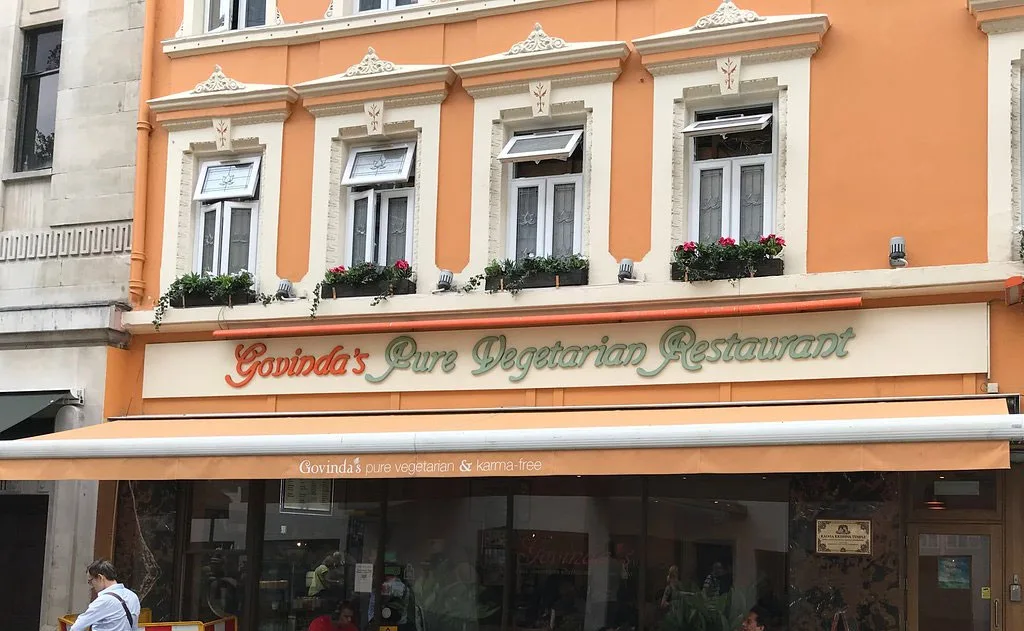
London, July 20, 2025 – A disturbing incident at ISKCON’s Govinda Restaurant in London has sparked outrage within the Hindu community. An African-British youth reportedly entered the sacred vegetarian eatery and, despite knowing its sattvic (pure vegetarian) ethos, consumed a KFC chicken meal inside—offering it provocatively to devotees, staff, and other patrons.
The shocking act, captured on video and now viral on social media, has ignited a fierce debate: Was this racism, Hindu hate, or both?
A Deliberate Act of Provocation?
Govinda Restaurant, operated by the International Society for Krishna Consciousness (ISKCON), is known for serving sanctified vegetarian meals aligned with Hindu spiritual values.
On July 20, 2025, the individual allegedly inquired whether meat was served. Upon being informed that only vegetarian food is available, he pulled out a KFC meal, began eating it inside the premises, and mockingly offered it to others—causing visible discomfort among the staff and devotees.
Eyewitnesses described the scene as a “total nightmare,” with the video fueling widespread anger. The Free Press Journal reported the chaos, and many online users labeled the act as intentional harassment.
Racism or Hindu Hate? The Debate Rages
The incident has sparked a flurry of reactions, especially on X (formerly Twitter).
- “Disrespecting Hindu spaces is now a social media flex. Try this with pork in a Muslim café and see the reaction,” one user commented.
- Another called it "shocking and shameful," highlighting that the youth confirmed the restaurant's vegetarian policy before his provocative act.
Many believe this wasn’t just a prank but a calculated insult—raising concerns over increasing instances where Hindu spaces and beliefs are allegedly targeted with impunity.
Double Standards in Religious Respect
Several netizens pointed out what they see as glaring double standards in how religious disrespect is perceived globally.
- Would a similar act in a Muslim-owned restaurant provoke immediate outrage and legal action?
- Why, some ask, are acts against Hindu sentiments often dismissed or trivialized?
One user stated, “As it happened to Hindus, no one cares.” The sentiment resonates among many who are calling for accountability, with some urging the community to pursue legal action. However, it remains unclear if formal charges have been filed.
ISKCON’s Stand: Advocating Peace Amid Provocation
Rooted in the Gaudiya Vaishnava tradition, ISKCON upholds vegetarianism and non-violence as core spiritual values.
While ISKCON has faced past challenges—such as vandalism at temples in Utah (USA) and Bangladesh—this latest incident brings renewed attention to the broader issue of rising anti-Hindu sentiment globally.
Though no official statement has been released yet, ISKCON remains committed to promoting peace, compassion, and unity.
A Call for Action—and Reflection
This incident has triggered urgent calls from the Hindu community for:
- Greater respect for religious spaces
- Awareness of cultural and spiritual sensitivities
- Stronger measures to prevent such deliberate provocations
Was this a mere prank, racial bias, or a direct attack on Hindu values? The community—and the world—must reflect on where the lines between freedom of expression, hate, and harassment are drawn.
What do you think? Was this an act of Hindu hate, racism, or sheer ignorance?
Join the conversation on protecting religious sanctity and cultural respect.
Published by Hindutone News on July 20, 2025. For more updates, visit Hindutone.com.
Why Govinda's Is Not Simply a Restaurant: The Sacred Nature of ISKCON Dining Spaces
Govinda's restaurants worldwide are not merely vegetarian eateries in the commercial sense. They function as prasadam halls — spaces where food is first offered to Shri Krishna before being served to guests. The concept derives directly from the Bhagavad Gita (9.26), in which Krishna declares: 'If one offers Me with devotion a leaf, a flower, fruit, or water, I will accept it.' Food prepared and offered in this spirit is considered spiritually purified, and consuming it within the premises is understood as an act of receiving divine grace.
ISKCON temples and their associated dining facilities are governed by strict standards of shuddhi (ritual purity). Meat, fish, eggs, onion, and garlic are all prohibited — not as an arbitrary dietary restriction, but as a practice rooted in Vaishnava theology that regards these items as tamasic or rajasic, unsuitable for offering to the deity. Deliberately introducing non-vegetarian food into such a space therefore carries a significance far beyond a simple breach of house rules; it is widely understood by devotees as a desecration of prasadam culture itself.
A Pattern of Targeting Hindu Sacred Spaces: Is This an Isolated Event?
Community advocates and Hindu organizations in the United Kingdom have noted that the London incident does not exist in a vacuum. Over recent years, there have been documented episodes across Britain of Hindu mandirs being vandalized, Navratri gatherings being disrupted, and devotees being publicly mocked for their religious practices. Organizations such as the Hindu Council UK and the National Hindu Students' Forum have repeatedly raised concerns that such incidents receive disproportionately less media attention and legal scrutiny than comparable acts directed at other faith communities.
The 'social media flex' dimension observed in the Govinda's incident — where the act was deliberately filmed and circulated — points to an emerging trend in which Hindu spaces are chosen as arenas for performative provocation designed to go viral. Legal scholars and hate-crime advocates have argued that intentionality and the targeted selection of a religiously significant space are key factors that distinguish a provocative prank from an act that should be examined under hate-crime legislation. The Metropolitan Police has faced calls from community leaders to investigate the incident under the UK's Public Order Act 1986 and the Racial and Religious Hatred Act 2006.
Scriptural and Theological Weight Behind the Community's Outrage
The Vaishnava tradition, which forms the theological backbone of ISKCON, holds that the kitchen and dining hall of a temple are extensions of the deity's abode. The Skanda Purana and various Pancharatra Agama texts describe strict protocols for who may enter a sacred kitchen and what substances may be brought inside. Srila Prabhupada, ISKCON's founder-acharya, consistently taught that prasadam distribution was one of the highest forms of seva (devotional service), citing the Padma Purana's statement that food offered to Vishnu purifies even those who consume it unknowingly.
When a devotee witnesses the deliberate introduction of slaughtered animal flesh into such a space, the theological injury is real and documented within the tradition. The Manusmriti and the Vishnu Purana both discuss the concept of ashaucha — ritual impurity — that attaches to spaces where such violations occur, requiring purification rites before normal worship or prasadam service can resume. For practicing Vaishnavas, the incident is therefore not merely offensive; it triggers concrete liturgical consequences for the community that uses the space.
Double Standards in Media Coverage and Law Enforcement: What the Data Suggests
Critics have drawn a pointed comparison: had a similar act of deliberate food-based desecration been carried out inside a mosque, a church, or a synagogue in London, the likelihood of immediate media condemnation and police action would arguably be higher. This perception is reinforced by several high-profile incidents in recent UK history where the introduction of prohibited food items into sacred spaces belonging to other faiths led to swift arrests and widespread national coverage.
Hindu advocacy groups have long argued that a lack of statutory recognition for anti-Hindu prejudice as a specific category of religious hate crime creates a legislative blind spot. While the Equality Act 2010 protects individuals from discrimination on the grounds of religion or belief, the threshold for prosecuting religiously motivated public-order offences is interpreted inconsistently. Community leaders are now calling on the UK government and the Crown Prosecution Service to issue clearer guidance ensuring that Hindu sacred spaces receive the same institutional protection as those of other recognized faiths.
ISKCON's Global Response and the Broader Vaishnava Community's Stand
ISKCON's global communications office, based at the Bhaktivedanta Manor in Aldenham, Hertfordshire — the largest Hindu temple complex in the United Kingdom — has a history of responding formally to incidents of religious intolerance. Following the viral spread of the Govinda's video, senior devotees and temple presidents in the UK issued statements reaffirming that all visitors are welcome regardless of background, while also asserting that the deliberate violation of prasadam space cannot be normalized or dismissed as harmless individual behavior.
The incident has also reignited conversation within the broader Hindu diaspora about the need for greater self-advocacy. Vaishnava scholars at institutions affiliated with Oxford's Hindu Studies program and the Bhaktivedanta Research Centre in Kolkata have emphasized that articulating why such acts cause genuine theological harm — rather than merely expressing emotional hurt — is essential for making credible legal and civic arguments. Educating the wider British public about the spiritual function of prasadam halls, they argue, is as important as demanding accountability from law enforcement.
What Can the Hindu Community and Temple Authorities Do Going Forward?
Temple management committees across the UK have begun reviewing their visitor conduct policies in the wake of this incident, looking at measures including clearer signage about the religious and sattvic nature of their premises, staff training in de-escalation, and the installation of security systems that can document incidents in real time. Legal consultants working with Hindu community organizations have advised that prominently displaying the religious status of the premises — akin to signage at church doors or mosque entrances — can strengthen the evidentiary basis for any future hate-crime prosecution.
At the grassroots level, Hindu youth organizations have called for peaceful but firm public demonstrations outside Govinda's London to express solidarity with the staff and devotees affected. Community leaders have also urged members to file formal complaints with the Metropolitan Police, the Independent Press Standards Organisation (IPSO) regarding media coverage, and local elected representatives. The Mahabharata's counsel in the Shanti Parva remains apt here: adharma left unaddressed does not diminish on its own — it is confronted through informed, persistent, and righteous engagement with the structures of accountability available in one's society.
Frequently Asked Questions
What happened at ISKCON's Govinda Restaurant in London on July 20, 2025?
A youth reportedly asked whether meat was served, was told the restaurant is vegetarian, then pulled out a KFC meal, ate it inside and mockingly offered it to staff and devotees. The scene was filmed and went viral on social media.
Why is a Govinda's restaurant treated as more than an ordinary vegetarian eatery?
Govinda's restaurants function as prasadam halls, where food is first offered to Shri Krishna before being served. Meat, fish, eggs, onion and garlic are prohibited, so bringing non-vegetarian food in is seen by devotees as a desecration of prasadam culture.
Was the London incident called racism or Hindu hate?
Reactions online were split, with many calling it a calculated insult to Hindu spaces rather than a prank, while others framed it as racism. Community voices argue that intent and the choice of a religiously significant space are what distinguish a prank from a hate-crime matter.
Has any legal action been taken over the Govinda Restaurant incident?
Some in the community urged legal action, and community leaders called on the Metropolitan Police to examine it under the Public Order Act 1986 and the Racial and Religious Hatred Act 2006. It remains unclear whether formal charges have been filed.
How has ISKCON responded to the incident?
No official statement had been released at the time of reporting. ISKCON upholds vegetarianism and non-violence as core values, and senior devotees in the UK reaffirmed that all visitors are welcome regardless of background.
What does the incident mean for Hindus in the UK and the wider diaspora?
Hindu organizations in the United Kingdom, such as the Hindu Council UK and the National Hindu Students' Forum, say such incidents receive less attention than those against other faiths. They are calling for clearer guidance from the government and the Crown Prosecution Service on protecting Hindu sacred spaces.
Share this with family and friends
Send it on WhatsApp, post it, or copy the link.
More from Hinduism
- AI and the Sanskrit Revival in 2026: Language Models, Manuscript OCR, Translation Tools and What AI Still Gets Wrong
- Can a Robot Perform Puja? Robot Aarti, AI in Rituals and What Hindu Tradition Says
- GitaGPT and AI Bhagavad Gita Chatbots: How Accurate Are They, and What Does Hindu Tradition Say?
- Robotic Elephants and AI in Hindu Temples: Kerala's Mechanical Tuskers, Tirumala's AI Command Centre and the Debate
- Quantum Computing Explained for Hindus: Qubits, Superposition and Entanglement, with Vedanta Analogies (Not Equivalences)
You might also like

Raja Ravi Varma’s ‘Yashoda and Krishna’ Sells for Record ₹167.2 Crore – A Defining Moment for Indian Art
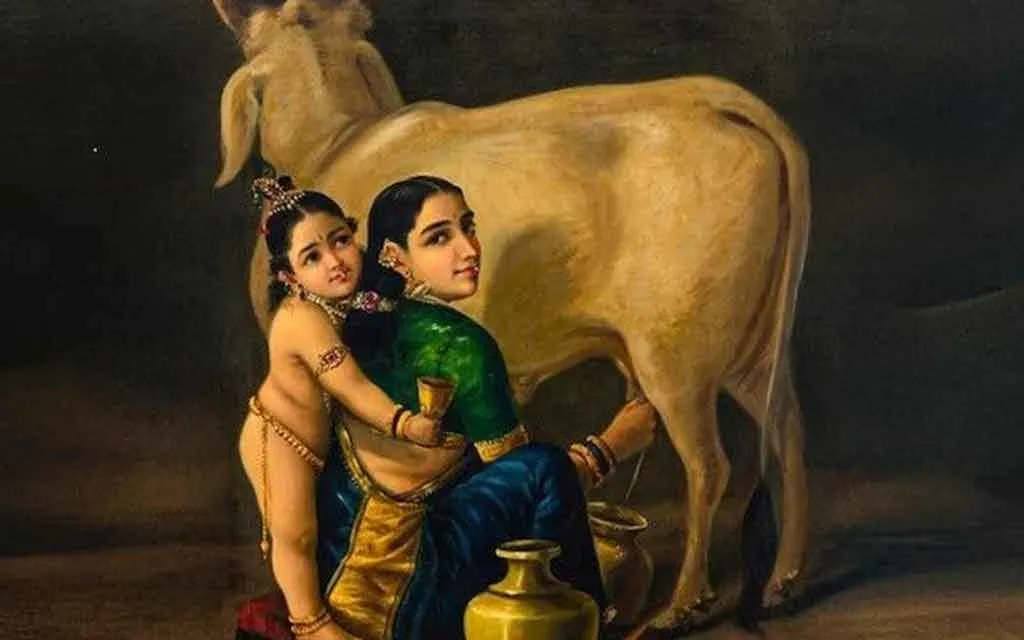
Cyrus Poonawalla Acquires Raja Ravi Varma’s Divine Masterpiece ‘Yashoda and Krishna’ for ₹167.2 Crore – A Historic Moment for Sanatan Heritage

How to Pray Lord Radha Krishna in 2026: Mantras, Poojas, Important Dates, Temples & Rituals | HinduTone