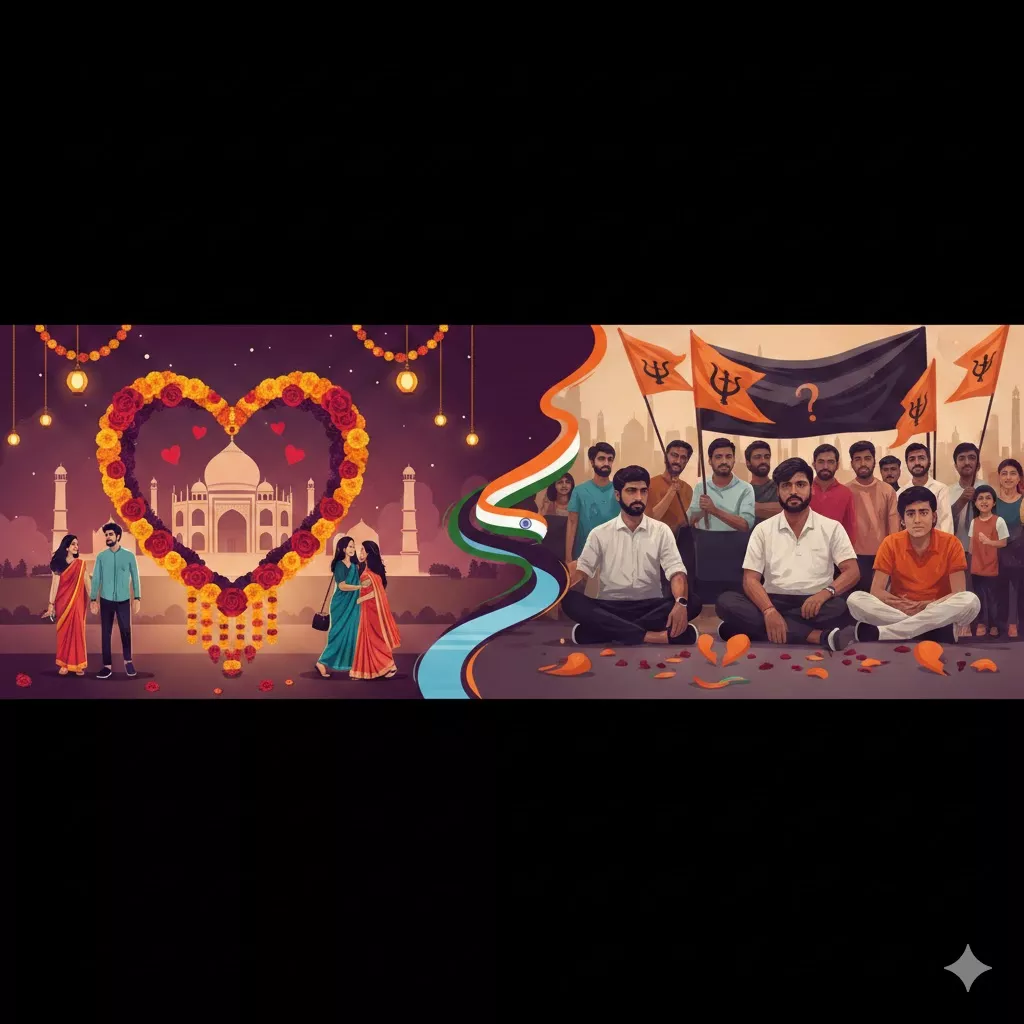
Why Many Hindus Reject Valentine’s Day: Protecting Sanatan Dharma Values
Why Hindus Reject Valentine's Day: Protecting Sanatan Dharma from Western Cultural Invasion Many Hindus, particularly those aligned with Sanatan Dharma…
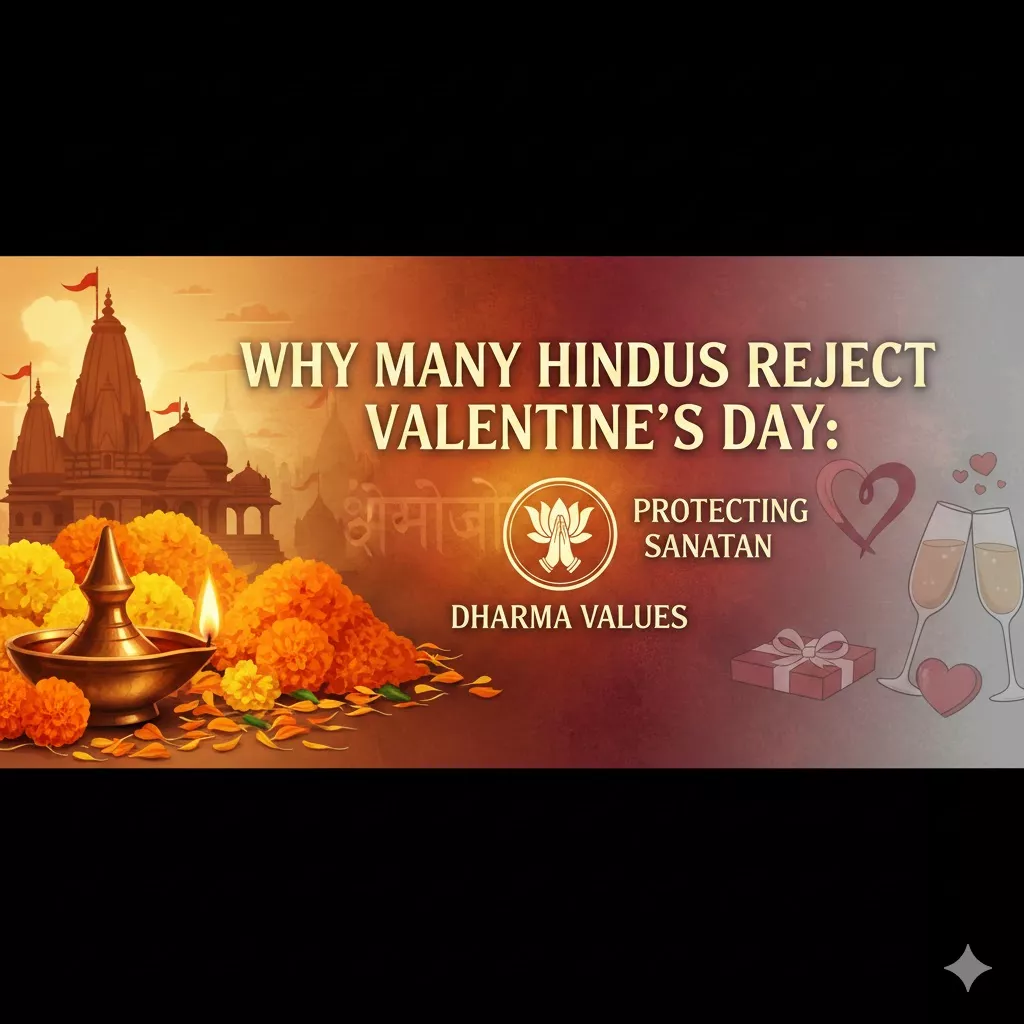
Why Hindus Reject Valentine's Day: Protecting Sanatan Dharma from Western Cultural Invasion Many Hindus, particularly those aligned with Sanatan Dharma…
Why Hindus Reject Valentine's Day: Protecting Sanatan Dharma from Western Cultural Invasion
Many Hindus, particularly those aligned with Sanatan Dharma (eternal Hindu way of life), reject Valentine's Day as it represents a form of Western cultural invasion that threatens traditional Bharatiya values. This opposition stems from deep-rooted cultural and religious principles emphasizing premarital purity, family honor, restraint, and dharma over individualism, consumerism, and unchecked expressions of lust.
Cultural and Religious Reasons for Opposition
In Hindu tradition, love is sacred and ideally expressed within the bounds of marriage, guided by concepts like brahmacharya (celibacy and self-control in youth) and grihastha (householder stage). Premarital romantic pursuits, especially public displays of affection or casual relationships promoted on Valentine's Day, are seen as promoting kama (lust) in isolation from dharma (righteousness), leading to moral erosion.
Valentine's Day, originating from Western commercialization (often linked to a Christian saint but heavily secularized), encourages fleeting infatuation, consumerism (gifts, chocolates, dates), and premarital intimacy. This clashes with Hindu ideals where relationships are community-oriented, often arranged with family involvement, prioritizing lifelong commitment, respect for elders, and societal harmony over personal gratification.
Critics argue it erodes family values by normalizing dating culture, which can lead to broken homes, disrespect toward parents, and a decline in traditional arranged marriages that uphold caste, community, and familial stability. It is viewed as part of a broader Western invasion through media and globalization, diluting indigenous Bharatiya sanskriti (culture) and replacing it with hedonistic individualism.
Hindu organizations have long highlighted how such celebrations incite youth toward immorality, including increased alcohol consumption, substance use, and promiscuity under the guise of "love."
Views from Prominent Hindu Organizations
Organizations like the Hindu Janajagruti Samiti (HJS) and Vishwa Hindu Parishad (VHP), along with its youth wing Bajrang Dal, have consistently campaigned against Valentine's Day.
- Hindu Janajagruti Samiti (HJS) describes Valentine's Day as a tool for "cultural conversion" of Hindus, ruining youth morality by promoting sensuality and Western fads. They urge boycotts, label it responsible for malpractices like teasing and immorality, and advocate celebrating February 14 as "Parents' Day" to honor elders and true familial love instead of superficial romance.
- Vishwa Hindu Parishad (VHP) and Bajrang Dal view it as a "violation of Indian culture" and "foreign festival." They have warned against celebrations, stating it promotes "fake love" in public spaces and conflicts with Bharatiya traditions. Leaders emphasize that real love is exemplified in Hindu icons like Ram-Sita or Krishna's devotion, not one-day commercial events. They have protested, submitted memorandums, and called for awareness to protect youth from Western imposition.
These groups frame opposition as safeguarding Sanatan Dharma from cultural erosion, urging Hindus to reject such imports and embrace indigenous expressions of love and respect.
Call to Preserve Bharatiya Traditions
Hindus must awaken to this subtle invasion and proudly uphold Sanatan Dharma. Instead of aping Western customs, celebrate love through our eternal values—respect for family, self-discipline, and dharma-guided relationships. Let February 14 inspire devotion to parents, nation, and divine ideals rather than transient pleasures.
By rejecting Valentine's Day, we protect our cultural sovereignty and ensure future generations inherit the richness of Bharatiya sanskriti untainted by foreign influences.
Preserve Sanatan Dharma – Say No to Western Cultural Invasion!
For more insights on protecting Hindu traditions, visit www.hindutone.com.
What Do Hindu Scriptures Actually Say About Kama and Righteous Love?
The Vedic tradition does not condemn love itself — it contextualizes it. The Rigveda extols the union of husband and wife as a sacred cosmic partnership, and the Atharvaveda contains hymns specifically composed for marital harmony and fidelity. Kama, one of the four Purusharthas (goals of human life), is fully honoured when it operates within the boundaries of dharma and artha — righteous conduct and social responsibility. The Kama Sutra of Vatsyayana, frequently misread through a modern lens, opens with a clear statement that kama subordinated to dharma is virtuous; kama in isolation from dharma is a path to destruction.
The Mahabharata's Shanti Parva elaborates that unchecked desire (asamyata kama) is listed among the six internal enemies — kama, krodha, lobha, moha, mada, and matsarya — that destabilize both the individual and society. This is not a rejection of romantic emotion but a philosophical insistence that love must be disciplined, purposeful, and embedded in commitment. Hindu opposition to Valentine's Day, then, is not prudishness but an appeal to this scriptural architecture of balanced living.
How Does the Ashrama System Shape Hindu Views on Romantic Expression?
The Ashrama Dharma divides human life into four stages — Brahmacharya (student life, roughly ages 5–25), Grihastha (householder, roughly 25–50), Vanaprastha (forest-dweller/retirement), and Sannyasa (renunciation). Each stage carries specific duties and prohibitions. The Brahmacharya ashrama, governed by discipline, study of the Vedas, and celibacy, is considered the foundation upon which the householder stage is built. Ancient gurukulas enforced this code strictly; a student who dissipated his energy in romantic distractions was understood to be undermining his future dharmic responsibilities.
Valentine's Day targets primarily the youth demographic — students and young professionals — who, according to this framework, are in or near the Brahmacharya stage. The concern among traditionalists is not that these young people feel love, but that a commercially driven festival actively encourages them to bypass the discipline of this stage entirely. The Manusmriti and the Taittiriya Upanishad both address the householder stage as the primary āśrama that supports all others; if its foundation in disciplined youth is weakened, the entire social structure is believed to suffer.
Which Hindu Festivals Already Celebrate Divine and Human Love?
One of the strongest counter-arguments offered by Hindu scholars and organizations is that Bharatiya culture has never lacked celebrations of love — it has simply expressed them differently. Vasanta Panchami, observed on Shukla Panchami of the Magha month, is traditionally associated with the arrival of spring and is considered an auspicious day for new beginnings in relationships and learning. In many regions of Bengal and Uttar Pradesh, it is celebrated with the worship of Saraswati and marks the season when Kamadeva, the deity of love, is said to roam the earth.
Holi, rooted in the love of Radha and Krishna as described in the Bhagavata Purana and the Gita Govinda of Jayadeva, celebrates divine love (prema) in its purest, most transcendent form. The love between Radha and Krishna is interpreted by Vaishnava Acharyas — including Shri Chaitanya Mahaprabhu and Vallabhacharya — as the highest expression of the soul's longing for the Divine, not a model for casual romance. Similarly, Karva Chauth and Mangala Gauri Vrata celebrate conjugal love within the structure of committed marriage, honouring the bond of wife and husband through fasting and prayer.
What Role Have Hindu Organizations Played in Mobilizing Cultural Opposition?
Since the early 1990s, when satellite television accelerated the penetration of Western popular culture into Indian households, organizations such as the Vishwa Hindu Parishad (VHP), Bajrang Dal, and various state-level Dharma Sena units have conducted annual campaigns urging Hindus to observe February 14th as Matri-Pitri Puja Divas — a day to honour one's parents and elders — rather than celebrate Valentine's Day. The reframing is deliberate: it positions familial reverence (pitr-bhakti) as the authentic Bharatiya response to a day that critics believe promotes the opposite sentiment.
These campaigns have been most visible in cities such as Bengaluru, Varanasi, Ayodhya, and parts of Rajasthan, where activists have distributed flowers to parents and organized public programmes at temples. While these efforts have attracted both support and controversy, they reflect a broader pattern in which Hindu civil society chooses cultural assertion — proposing indigenous alternatives — over mere protest. Critics of these organizations caution, however, that any approach that shames or intimidates individuals in public spaces runs counter to the dharmic principle of ahimsa (non-violence) and respectful persuasion.
Is There a Meaningful Distinction Between Prema and Kama in the Hindu Understanding of Love?
Sanskrit has multiple words for love, and the distinction among them is philosophically crucial. Kama refers to desire-based, sensory love — pleasurable but transient. Sneha denotes affectionate attachment, particularly within family bonds. Bhakti is devotional love directed toward the Divine. And Prema is the rarest: a selfless, unconditional love that the Bhagavata Purana describes as the ultimate fruit of spiritual practice. The Narada Bhakti Sutras define Prema as that love which makes one forget all else, including the self — a state epitomized by the Gopis of Vrindavana in their devotion to Krishna.
Hindu critics of Valentine's Day argue that the festival, as commercially promoted, exclusively celebrates kama — desire, infatuation, and sensory pleasure — while ignoring the richer spectrum of love that Dharmic culture has always recognized. The invitation extended to Hindus by traditionalists is not to suppress love but to aspire toward its higher forms: the prema of devoted partnership in marriage, the sneha of family bonds, and ultimately the bhakti of the soul's relationship with the Divine. This hierarchy of love, they contend, is what Bharatiya sanskriti has always sought to protect and transmit across generations.
Frequently Asked Questions
Why do some Hindus reject Valentine's Day?
They see it as a Western, commercialised custom that promotes premarital romance and consumerism. Critics hold that this clashes with ideals of brahmacharya, family honour and love within marriage.
Which Hindu organizations campaign against Valentine's Day?
The Hindu Janajagruti Samiti, Vishwa Hindu Parishad and Bajrang Dal have campaigned against it. They have protested, submitted memorandums and urged awareness among youth.
What do Hindu groups suggest doing on February 14 instead?
They urge observing it as Parents' Day, also called Matri-Pitri Puja Divas, to honour parents and elders. Activists have distributed flowers to parents and organised programmes at temples.
Do Hindu scriptures condemn love and desire?
No. Kama is one of the four Purusharthas and is honoured when it operates within dharma. Unchecked desire is listed among the six internal enemies, along with krodha, lobha, moha, mada and matsarya.
How does the ashrama system shape this view?
Brahmacharya, the student stage of roughly ages 5 to 25, stresses discipline and study as the foundation for the householder stage. Traditionalists argue Valentine's Day pulls young people away from that discipline.
Which Hindu festivals celebrate love in a traditional way?
Vasanta Panchami, Holi, Karva Chauth and Mangala Gauri Vrata are cited. Holi celebrates the divine love of Radha and Krishna, while the last two honour conjugal love within marriage.
You might also like
Love Jihad: How Hindus and Hindu Girls Can Protect Themselves – Complete Guide for 2026
Hindus Safe Under Modi Government: Analyzing Safety, Policies, and Communal Harmony in India
Brahmins in Indian History: Facts, Myths & Social Reality