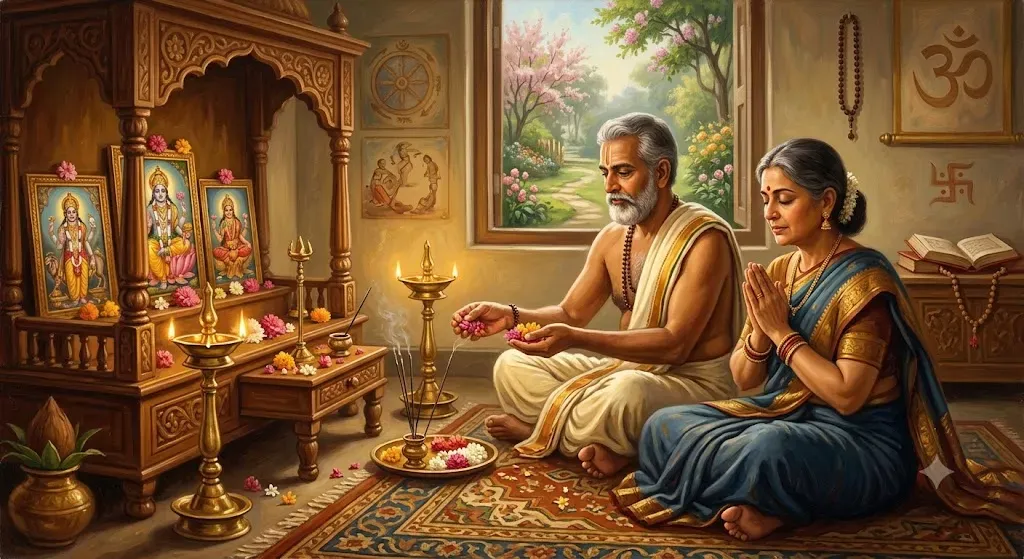
Neti Neti — Social Media in 2026, AI, Mental Health & The Upanishadic Wisdom That Cuts Through Digital Noise
Neti Neti — the Upanishadic 'not this, not this' discernment practice applied to social media, AI overload, and mental health in 2026. Hindu wisdom for digital age.
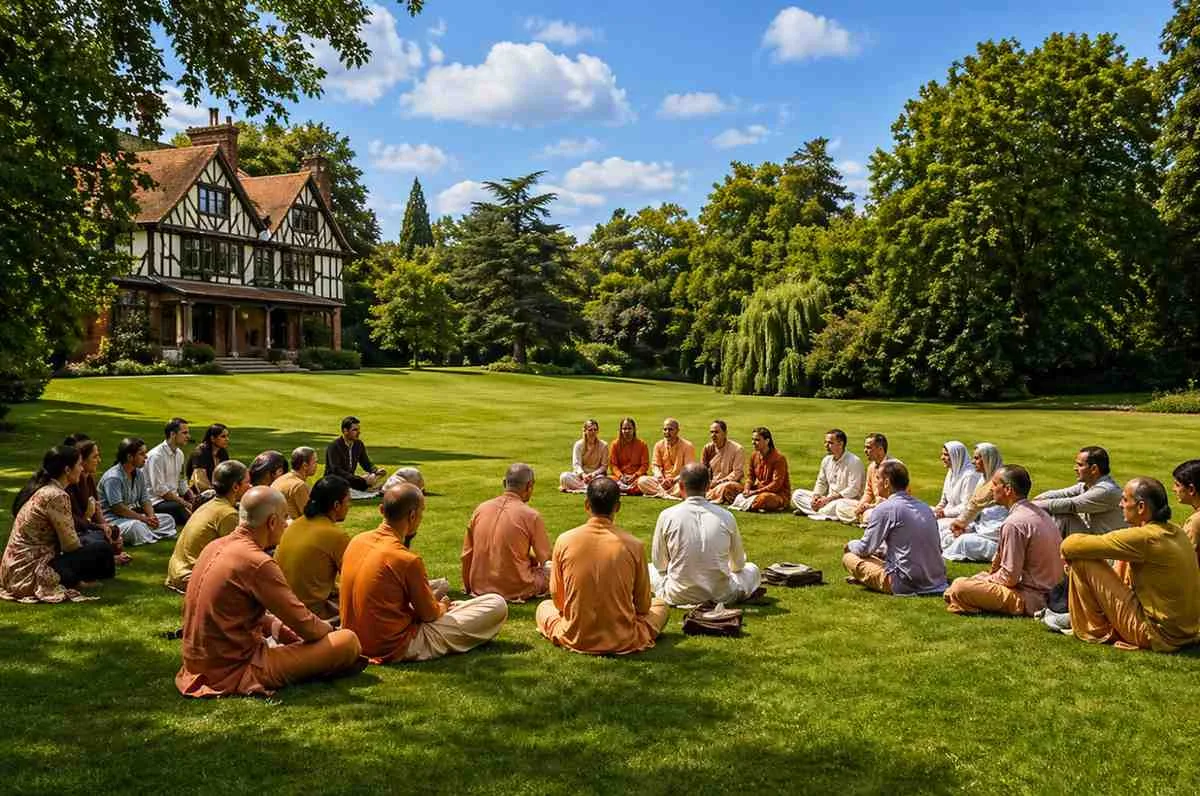
Neti Neti — the Upanishadic 'not this, not this' discernment practice applied to social media, AI overload, and mental health in 2026. Hindu wisdom for digital age.
Quick Answer: "Neti Neti" (नेति नेति) — meaning "not this, not this" — is one of the most powerful single phrases in the Hindu philosophical tradition. Found in the Brihadaranyaka Upanishad as the central teaching of sage Yajnavalkya, the phrase describes the meditative practice of identifying what the true Self (Atman) is NOT until only the irreducible witness-consciousness remains. In 2026 — with social media algorithms, AI-generated content, infinite scrolling, comparison culture, and digital identity formation creating unprecedented mental-health crises — Neti Neti emerges as the most practically useful Hindu wisdom for the modern condition. Every social media platform, every AI tool, every notification is neti — not the Self. Recognising what we are not is the daily practice of recovering what we are.
The Original Teaching
In the Brihadaranyaka Upanishad (1.4.10, 2.3.6, 4.4.22), sage Yajnavalkya teaches:
"Neti, neti — na iti, na iti."
Not this, not this.
The teaching is the technique of negative knowledge — discovering the Self by recognising what it is not.
When confronted with anything — a thought, a feeling, a body sensation, a possession, a relationship, an identity, an achievement — the practice is to ask: Is this what I truly am?
The answer is neti — not this. Whatever can be observed cannot be the observer. Whatever has limits cannot be the limitless. Whatever changes cannot be the unchanging.
By systematically negating every false identification, the practitioner discovers what remains when all identifications are released — pure awareness, the Atman, identical with Brahman.
The 2026 Crisis That Neti Neti Addresses
The modern condition presents a particular kind of suffering that earlier eras did not face at this intensity:
Identity proliferation
Social media platforms encourage continuous identity-construction. LinkedIn version. Instagram version. TikTok version. X/Twitter version. Each platform demands a particular self-presentation. The result: fragmented, performative identity that exhausts the soul.
Algorithm-driven attention
Algorithms identify what triggers your emotional response and feed you more of it. Outrage, comparison, envy, anxiety, addiction — all manufactured and amplified. The result: you become what the algorithm trains you to be.
Comparison at scale
Pre-internet, you compared yourself to a few dozen people you knew. Now, instantly accessible — the most successful, beautiful, accomplished people in the world. The comparison is structurally impossible to win.
AI-generated content
ChatGPT, Gemini, Midjourney, AI-generated everything. The distinction between authentic and generated is blurring. What does it mean to be "yourself" when AI can produce content "in your voice"?
Infinite scroll
The endless feed has no completion. There is always more. The mind's natural completion signal — "I have read enough" — is structurally defeated.
Notification anxiety
Constant interruption fragments attention into smaller and smaller fragments. Deep work, sustained thought, contemplation become harder.
The result, documented by mental health professionals across NRI communities and globally: rising anxiety, depression, attention disorders, identity uncertainty, sleep disruption, and a general sense of having lost the thread of one's own life.
Neti Neti as the Practical Cure
Yajnavalkya's teaching, applied to 2026 conditions:
Recognise — that LinkedIn version is not you
The carefully curated professional persona is neti — not what you are. You are not your job title, your years of experience, your achievements list. These are roles. The person beneath is more.
Recognise — that Instagram version is not you
The filtered, sunset-lit moments are neti. The person who took them — that's also neti in deeper sense. The witness watching the photo being taken is closer to the Self.
Recognise — that the algorithm's prediction of you is not you
What the algorithm thinks you are — based on your clicks, your dwell time, your purchases — is neti. It is a model of you, not you.
Recognise — that the comparison-anxiety is not you
The mind that compares is observable. The Self watching the comparison is not the comparison. Neti.
Recognise — that the AI-generated content "in your voice" is not you
AI can imitate patterns. It cannot replicate the awareness that is generating those patterns. The pattern is neti. The awareness is not neti.
Daily Neti Neti Practice
Morning (5 minutes)
Sit quietly. Bring attention to:
- The body — recognise it as observable, therefore neti (not Self)
- The mind's thoughts — recognise them as observable, therefore neti
- The emotions — recognise them as observable, therefore neti
- Identifications (Hindu, professional, parent, etc.) — recognise them as observable, therefore neti
- What remains — that is the Self
The goal is not to attain a particular state but to remember the underlying observer.
Before phone (each time)
Before unlocking the phone, ask: Whatever I see in the next 5 minutes — is it me? The answer is no. The content is neti. The watcher is what I am.
Social media engagement protocol
When something on social media triggers a strong reaction (envy, anger, anxiety, FOMO), pause for 10 seconds. Apply Neti Neti — recognise this reaction is observable, therefore not the Self. The Self is what is observing the reaction.
Evening reflection (10 minutes)
Review the day: which moments felt most authentic? Often those were quiet, unscreened, unmediated moments. The moments when the Self was most present, when neti neti had been intuitively applied.
What Hindu Wisdom Adds That Modern Therapy Doesn't
Modern cognitive-behavioural therapy (CBT) and mindfulness teach similar techniques — observing thoughts, noting emotions, recognising patterns. The Hindu Neti Neti tradition adds something deeper:
The Self that is recognising the patterns is itself ultimate reality — identical with Brahman.
This is not just mental health technique. It is the foundational insight of Vedanta. The peace that emerges is not just stress reduction; it is the recovery of awareness as awareness.
When working with social media stress through CBT alone, you get a healthier relationship with social media. When working through Neti Neti, you also discover that what you fundamentally are is unaffected by social media — the entire structure of digital identity stress reveals itself as a play happening in front of an unmoved witness.
NRI Hindu Application
For NRI Hindus particularly vulnerable to digital identity-construction:
Career identity
"I am a senior software engineer at Google" — neti. The job is observable, you are observing.
Visa identity
"I am H1-B" — neti. The status is observable, you are observing.
Diaspora identity
"I am an Indian-American" — partially neti (the constructed cultural label) and partially structural (the dharmic lineage that runs deeper than label).
Family identity
"I am [person]'s son/daughter/spouse/parent" — neti. The relationships are real and dharmic; the labels don't exhaust who you are.
Religious identity
"I am Hindu" — interesting question. The cultural label is neti. The underlying recognition of the Hindu insight — that you are Brahman — is not neti. It is the truth.
FAQs
Q: Is Neti Neti only for advanced practitioners?
A: No. The framework is accessible at any level. Even basic application (recognising that emotions are observable) starts the practice.
Q: What's the connection between Neti Neti and modern mindfulness?
A: Mindfulness teaches non-judgmental observation; Neti Neti adds the structural recognition that what observes is the Self. Mindfulness with Vedanta framework is Neti Neti.
Q: Should I quit social media to practice Neti Neti?
A: Not necessarily. The practice is meant to be applied IN engagement with the world, including digital. Quitting may help temporarily; the long-term practice is to be present with the world without identifying with it.
Q: Can children learn Neti Neti?
A: Yes — adapted. For young children, teach them to notice their own feelings as "things that happen, not who I am." Older children can engage more directly with the Upanishadic teaching.
Q: Does AI threaten this practice?
A: AI can become a new attachment to neti (be careful with it as you are with social media). But AI is also a neti — observable, not the observer. The practice extends to AI naturally.
Final Words
For NRI Hindus in 2026 — caught between professional demands that require digital presence, family expectations that mandate visibility, and inner unease at the relentless demands of social-media identity — Neti Neti offers the most practical and most profound recovery technique.
You are not your LinkedIn profile. You are not your Instagram feed. You are not the algorithm's prediction of you. You are not the AI-generated content in your voice. Neti, neti, neti.
What you are — the awareness that knows all of this — is identical with Brahman. Has always been. Will always be. The recovery of this recognition, daily, multiple times a day, in tiny moments before unlocking the phone or scrolling the feed — this is the modern Hindu practice for the digital age.
Neti, neti.* — Brihadaranyaka Upanishad
Not this, not this.
Om Tat Sat. The Self remains.
HinduTone Editorial Team · Tags: Neti Neti, Upanishad Wisdom, Social Media Mental Health, AI Hindu Perspective, Digital Detox, Brihadaranyaka Upanishad, Vedanta Practice, Modern Hindu
Frequently Asked Questions
What does 'Neti Neti' mean?
'Neti Neti' (not this, not this) is a teaching from the Brihadaranyaka Upanishad and Sage Yajnavalkya. It is a meditative practice of negation — setting aside everything the true Self (Atman) is not, until only pure witness-consciousness remains.
How can Neti Neti help with social media and digital overload?
By repeatedly recognising 'I am not this feed, not this notification, not this online identity', one loosens identification with the digital stream — restoring the inner witness and easing comparison, anxiety and compulsive scrolling.
Is Neti Neti a ritual or a philosophy?
It is a contemplative method of self-inquiry (jnana yoga), not a ritual. It requires no materials — only attentive discernment — making it accessible to anyone seeking clarity.
How do I practise Neti Neti daily?
Pause amid distraction and gently note what passes — thoughts, images, emotions, online personas — labelling each 'not the Self', then rest as the awareness observing them. Even a few mindful minutes a day strengthen discernment.
You might also like

Utpanna Ekadashi 2026 — Date (December 4), Significance, Vrat Vidhi & Complete NRI Guide
Margasira Masam 2026 — Yoga, Meditation & Winter Morning Spiritual Practice Complete Guide
Complete MBBS Once in Life: The Spiritual Meaning of Mahabharata, Bhagavatam, Bhagavad Gita & Ramayana