Saddula Bathukamma 2026 Saddulu Recipes: Lemon, Tamarind, Coconut, Curd and Sesame Rice
Home-cook recipes for the five classic saddulu of Saddula Bathukamma: nimmakaya pulihora, chintapandu pulihora, coconut rice, daddojanam and nuvvula annam, plus a short malida recipe, quantities for big community gatherings and how to pack saddulu for Bathukamma grounds abroad.

Home-cook recipes for the five classic saddulu of Saddula Bathukamma: nimmakaya pulihora, chintapandu pulihora, coconut rice, daddojanam and nuvvula annam, plus a short malida recipe, quantities for big community gatherings and how to pack saddulu for Bathukamma grounds abroad.
Quick answer: Saddulu are the flavoured rices offered to Gauramma and shared on Saddula Bathukamma, the last and biggest day of Bathukamma, which falls on Sunday 18 October 2026 under the Telangana government schedule. The five most commonly made are lemon rice, tamarind rice, coconut rice, curd rice and sesame rice. All five start from plain cooked rice and a tempering of mustard, chana dal, urad dal, red chillies and curry leaves, so you can make them together in about 90 minutes. Many families also share malida, a sweet roti crumble.
This page gives standard home recipes for each, with quantities, timings, substitutions, bulk-cooking guidance and packing tips for families heading to a Bathukamma ground in India or abroad. For the festival itself, see our Bathukamma 2026 dates guide, from Engili Pula to Saddula and the Hyderabad Saddula Bathukamma guide for Tank Bund.
Saddula Bathukamma and its food
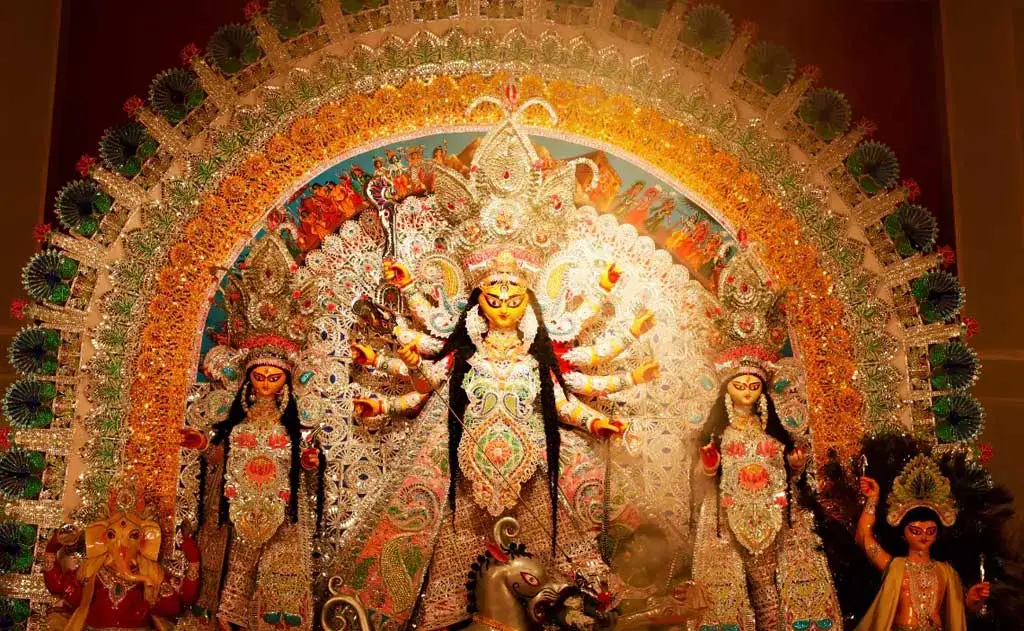
Bathukamma is Telangana's flower festival, celebrated by women over nine days that end just before Dasara. Each day is named after its naivedyam, the food offered to the Goddess, and the final day is named after the saddulu. On that evening the tallest Bathukammas of the season are carried to a lake or tank, women sing and dance around them in circles, and after the immersion the saddulu are opened and shared with family, neighbours and friends.
In 2026 the festival runs from Engili Pula Bathukamma on Saturday 10 October to Saddula Bathukamma on Sunday 18 October in the state schedule. Navratri runs from 11 to 19 October and Dussehra is on Tuesday 20 October (Drik Panchang, India). For the nine days and their offerings, see our Bathukamma 2026 dates guide.
Before you start: a 90-minute plan
- Cook 5 cups (1 kg) raw rice the night before or early in the day, a little firmer than usual, and spread it on trays to cool. Keep about one portion softer for curd rice.
- Make the tamarind paste first, since it needs simmering and resting.
- Roast and grind the sesame powder while the tamarind simmers.
- Fry one large batch of tempering (peanuts, dals, mustard, chillies, curry leaves, hing), then divide it among lemon, coconut and sesame rice.
- Make curd rice last and keep it cool.
The saddulu recipes
Each recipe below is for about 1 cup (200 g) of raw rice, cooked, which serves 3 to 4 people on its own. When five varieties are served together, each recipe stretches further. Timings and yields are approximate.
Lemon Rice (Nimmakaya Pulihora)
Turmeric-yellow rice soured with lemon juice and tempered with lentils, peanuts and curry leaves.
Prep: about 10 minutes (with rice already cooked). Cook: about 10 minutes. Makes: Serves 3 to 4 (approximate).
Ingredients
- 3 cups cooked rice (from about 1 cup / 200 g raw rice), cooled and grains separate
- 2 tablespoons oil
- 2 tablespoons peanuts
- 1 teaspoon chana dal
- 1 teaspoon urad dal
- 1/2 teaspoon mustard seeds
- 2 dry red chillies, broken
- 1 sprig curry leaves
- A pinch of hing (asafoetida)
- 2 green chillies, slit
- 1 teaspoon grated ginger
- 1/2 teaspoon turmeric
- Juice of 1 large lemon (about 3 tablespoons)
- Salt to taste
Method
- Spread the cooked rice on a plate so it cools and the grains stay separate.
- Heat the oil, fry the peanuts until crunchy, then add the chana dal, urad dal and mustard seeds and fry until the dals turn golden.
- Add the red chillies, curry leaves, hing, green chillies and ginger and stir for a few seconds. Add the turmeric and switch off the heat.
- Pour the tempering over the rice, add salt and mix gently with your fingers or a flat spoon.
- Add the lemon juice last, mix again, taste and adjust salt and lemon. Rest 15 minutes before serving.
Tips: Add lemon juice off the heat; cooking it makes it bitter. Use day-old rice or rice cooled on a tray so the grains do not mash.
Tamarind Rice (Chintapandu Pulihora)
Tangy, spiced tamarind rice, the best-known pulihora of Telugu festival cooking and often offered as prasadam.
Prep: about 15 minutes. Cook: about 20 minutes. Makes: Serves 3 to 4 (approximate).
Ingredients
- 3 cups cooked rice (from about 1 cup / 200 g raw rice), cooled and grains separate
- A lemon-sized ball of tamarind (about 30 g), soaked in 1/2 cup hot water
- 3 tablespoons sesame or groundnut oil
- 2 tablespoons peanuts
- 1 teaspoon chana dal
- 1 teaspoon urad dal
- 1/2 teaspoon mustard seeds
- 2 dry red chillies, broken
- 1 sprig curry leaves
- A pinch of hing (asafoetida)
- 2 green chillies, slit
- 1/2 teaspoon turmeric
- 1 teaspoon jaggery (optional)
- Salt to taste
Method
- Squeeze the soaked tamarind and strain to get about 1/2 cup of thick extract.
- Heat the oil, fry the peanuts, then the chana dal, urad dal and mustard seeds until golden.
- Add the red chillies, curry leaves, hing, green chillies and turmeric.
- Pour in the tamarind extract with salt and jaggery and simmer, stirring, for 8 to 10 minutes until thick and glossy and the oil starts to separate.
- Cool the paste slightly, then mix it into the rice a little at a time until every grain is coated. Rest at least 30 minutes; it tastes better after an hour.
Tips: Use ready tamarind concentrate (about 2 tablespoons diluted in 1/2 cup water) if block tamarind is not available. Some families finish with a spoon of roasted sesame or mustard powder.
Coconut Rice (Kobbari Annam)
Mild, fragrant rice tossed with fresh grated coconut and a simple tempering.
Prep: about 10 minutes. Cook: about 10 minutes. Makes: Serves 3 to 4 (approximate).
Ingredients
- 3 cups cooked rice (from about 1 cup / 200 g raw rice), cooled and grains separate
- 1 cup (about 80 g) fresh or frozen grated coconut
- 2 tablespoons oil or ghee
- 8 to 10 cashews
- 1 teaspoon chana dal
- 1 teaspoon urad dal
- 1/2 teaspoon mustard seeds
- 2 dry red chillies, broken
- 1 sprig curry leaves
- A pinch of hing (asafoetida)
- 2 green chillies, slit
- Salt to taste
Method
- Heat the oil or ghee and fry the cashews until golden. Add the chana dal, urad dal and mustard seeds and fry until golden.
- Add the red chillies, curry leaves, hing and green chillies.
- Add the grated coconut and stir on low heat for 2 to 3 minutes until it smells toasty but stays white.
- Add the rice and salt and mix gently until well combined.
Tips: Frozen grated coconut, sold in Indian stores abroad, works well; thaw it fully. Desiccated coconut can be used if soaked in a little warm milk for 10 minutes.
Curd Rice (Daddojanam)
Soft rice mixed with curd and milk and tempered with ginger and chillies, the cooling saddi that closes the meal.
Prep: about 10 minutes. Cook: about 5 minutes. Makes: Serves 3 to 4 (approximate).
Ingredients
- 3 cups soft-cooked rice (from about 1 cup / 200 g raw rice), slightly mashed
- 1 1/2 cups (about 360 g) plain curd
- 1/2 cup (120 ml) milk
- 1 tablespoon oil
- 1/2 teaspoon mustard seeds
- 1 teaspoon urad dal
- 1 teaspoon grated ginger
- 2 green chillies, finely chopped
- 1 sprig curry leaves
- A pinch of hing
- Salt to taste
Method
- Mash the warm rice lightly and let it cool to room temperature.
- Mix in the curd, milk and salt until creamy.
- Heat the oil, splutter the mustard seeds, fry the urad dal until golden, then add the ginger, green chillies, curry leaves and hing.
- Pour the tempering over the rice and mix. Add a little more milk if it is too thick.
Tips: If it will travel, add extra milk and a few spoons of curd only just before leaving, so it does not turn sour. Grated carrot, cucumber or pomegranate seeds can be stirred in.
Sesame Rice (Nuvvula Annam)
Rice tossed with a freshly ground roasted sesame and red chilli powder, nutty and simple.
Prep: about 10 minutes. Cook: about 10 minutes. Makes: Serves 3 to 4 (approximate).
Ingredients
- 3 cups cooked rice (from about 1 cup / 200 g raw rice), cooled and grains separate
- 4 tablespoons (about 35 g) white or black sesame seeds
- 3 dry red chillies for the powder
- 1 tablespoon sesame oil or ghee
- 1 teaspoon chana dal
- 1 teaspoon urad dal
- 1/2 teaspoon mustard seeds
- 1 sprig curry leaves
- A pinch of hing
- Salt to taste
Method
- Dry-roast the sesame seeds on low heat until they pop and smell nutty. Roast the 3 red chillies for a few seconds.
- Cool and grind the sesame and chillies with a little salt into a coarse powder.
- Heat the oil or ghee, fry the chana dal, urad dal and mustard seeds until golden, and add the curry leaves and hing.
- Add the rice, the sesame powder and salt and mix gently until evenly coated.
Tips: Watch the sesame closely; it burns in seconds. Black sesame gives a darker, stronger rice. A teaspoon of grated dry coconut in the powder is a common variation.
Malida (Sweet Roti Crumble)
A sweet of crumbled wheat rotis with jaggery and ghee, made by many Telangana families during Bathukamma.
Prep: about 20 minutes. Cook: about 15 minutes. Makes: Serves 4 (approximate).
Ingredients
- 1 cup (130 g) whole-wheat flour
- Water to knead
- 2 tablespoons ghee, plus a little for cooking the rotis
- 1/2 cup (about 100 g) grated jaggery
- 1/4 teaspoon cardamom powder
- 1 tablespoon chopped cashews or almonds (optional)
Method
- Knead the flour with water into a firm dough and roll 4 thick rotis.
- Cook them on a hot tawa with a little ghee until spotted and slightly crisp.
- While warm, tear the rotis into pieces and pulse them in a mixer to coarse crumbs.
- Add the jaggery and cardamom and pulse briefly, or rub together by hand.
- Warm 2 tablespoons of ghee, fry the nuts if using, and mix into the crumble. Serve loose or press into small balls.
Tips: Leftover rotis from the previous day work well. Jaggery can be replaced with sugar.
Cooking for a big community gathering
Telugu associations, apartment committees and temples often hold a large Saddula Bathukamma with shared food. Use the table below as a rough guide when several households pool their saddulu. Quantities are approximate and depend on what else is served.
| Guests | Total raw rice (all varieties) | Suggested split |
|---|---|---|
| 20 | About 2 kg | 400 g each of 5 varieties |
| 50 | About 5 kg | 1 kg each of 5 varieties |
| 100 | About 9 to 10 kg | Around 2 kg each; increase tamarind and lemon rice, the most popular |
Scale the tempering in proportion, add salt and lemon gradually, cool rice on wide trays and mix in batches. Label each container so volunteers can serve quickly after the immersion.
Packing saddulu for Bathukamma grounds abroad
In the USA, UK, Canada, Australia and the Gulf, Saddula Bathukamma is often celebrated on the nearest weekend in a park, community hall or temple hall, and October evenings can be cold. A few practical points:
- Check the rules first. Some halls and parks restrict outside food or open flames; ask the organiser before you cook.
- Pack separately. Use lidded steel or food-safe containers, one per variety, so flavours do not mix.
- Keep hot and cold apart. Wrap warm varieties in a towel or insulated bag; keep curd rice in a cool box with ice packs.
- Plan for leftovers. Bring empty boxes so families can take saddulu home, as is customary.
For celebrations abroad, see our Dussehra and Bathukamma 2026 USA guide and Bathukamma and Dasara 2026 in Canada.
Substitutions and storage
- Rice: sona masoori is the usual choice; basmati or any medium-grain rice works if cooked firm.
- Peanuts: replace with cashews, or leave out for allergies and say so on the label.
- Tamarind paste: keeps 3 to 4 days in the fridge in a clean jar.
- Sesame powder: keeps about a week in an airtight jar.
- Mixed saddulu: best eaten the same day. Refrigerate leftovers within two hours and eat within a day; curd rice should always be kept chilled.
Frequently asked questions
When is Saddula Bathukamma in 2026?
Saddula Bathukamma is on Sunday 18 October 2026, the date used in the Telangana government's festival schedule (10 to 18 October). Ashtami tithi prevails on the evening of 18 October, when Bathukamma is played. Dussehra follows on Tuesday 20 October.
What does 'saddulu' mean?
Saddulu (or sattulu) is the word for the mixed and flavoured rice dishes prepared for the last day of Bathukamma, which gives Saddula Bathukamma its name. Families commonly make five or more varieties to offer and share.
Which saddulu are made on Saddula Bathukamma?
The varieties most commonly prepared are lemon rice, tamarind rice, coconut rice, curd rice and sesame rice. Some families add others; there is no fixed list.
Can I make saddulu a day ahead?
Make the tamarind paste and sesame powder ahead (see storage above), but cook the rice and mix all varieties on the day.
What is malida?
Malida (also spelt maleeda) is a sweet crumble of wheat rotis, jaggery and ghee. Many Telangana families make it during Bathukamma and share it with the saddulu; which day it is offered varies between families.
How do I keep curd rice fresh at an outdoor Bathukamma gathering?
Mix it with a little extra milk so it does not turn sour or dry, pack it in an insulated container with ice packs, and keep it chilled until you serve. Do not leave curd rice out in the sun for a long time.
Editor's note (8 October 2026)
We wrote this recipe page in October 2026. Saddula Bathukamma is given as Sunday 18 October 2026, following the Telangana government's festival schedule; Drik Panchang gives Durga Ashtami as Monday 19 October in India and Dussehra as Tuesday 20 October 2026. The list of saddulu and the day on which malida is offered vary between families and districts. Recipes are standard home versions with approximate quantities and timings.
Related guides
You might also like
Telugu Deepavali Recipes 2026: Ariselu, Kajjikayalu, Gavvalu and Chekkalu
Dussehra Recipes 2026: What India Cooks for Vijayadashami and the Last Days of Navratri, Region by Region
Tamil Deepavali Recipes 2026: Murukku, Adhirasam, Ribbon Pakoda and Rava Laddu