Bijoya Dashami 2026 Food: Narkel Naru, Nimki and Ghugni Recipes for Bijoya Visits
What Bengali families serve when elders and friends visit after Bijoya Dashami: home-cook recipes for narkel naru with jaggery or sugar, flaky nimki and yellow-pea ghugni, a note on rosogolla and sandesh, and storage and shopping tips for Bengali families abroad.
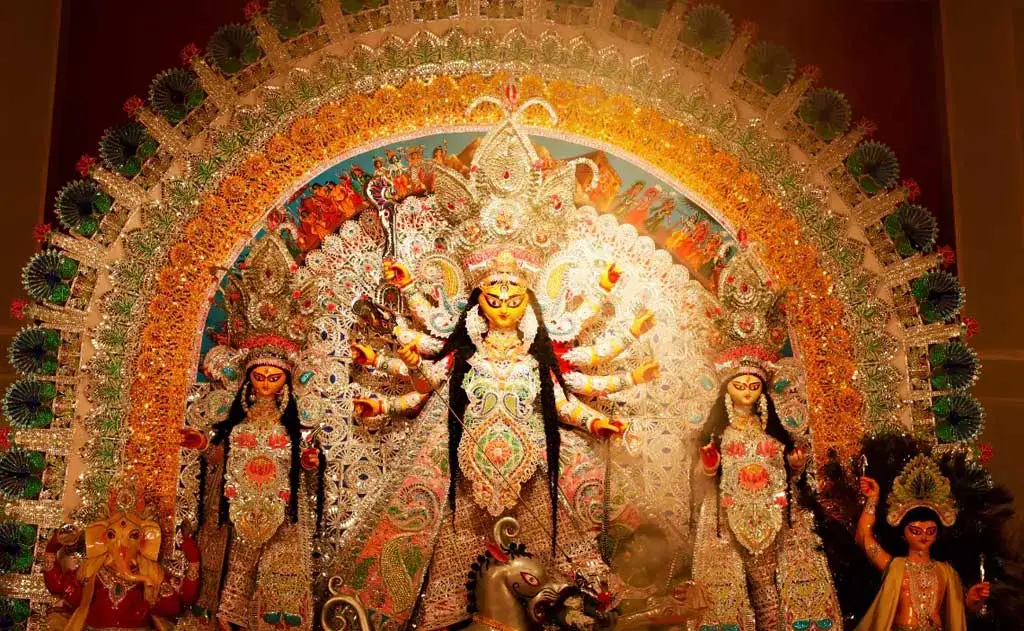
What Bengali families serve when elders and friends visit after Bijoya Dashami: home-cook recipes for narkel naru with jaggery or sugar, flaky nimki and yellow-pea ghugni, a note on rosogolla and sandesh, and storage and shopping tips for Bengali families abroad.
Quick answer: After the Goddess is immersed on Bijoya Dashami (Wednesday 21 October 2026 in Kolkata, per Drik Panchang), Bengali families visit elders and friends, exchange 'Shubho Bijoya' greetings and offer sweets. The home-made classics are narkel naru (coconut balls with jaggery or sugar) and nimki (flaky savoury diamonds), often with a bowl of ghugni (yellow pea curry), alongside shop-bought rosogolla and sandesh. All three can be made at home with standard pantry ingredients; recipes follow.
For the full festival calendar, see our Durga Puja 2026 dates guide, from Mahalaya to Sindoor Khela and Durga Puja and Bijoya Dashami 2026 in West Bengal.
Bijoya: the custom of greetings and sweets
Bijoya Dashami closes Durga Puja. In the morning the final puja is performed, married women take part in Sindoor Khela, smearing vermilion on the Goddess and on each other, and the idols are taken for immersion. When the family returns, the mood shifts from farewell to greeting.
- Pranam to elders. Younger family members touch the feet of elders, who bless them.
- Kolakuli. Friends and equals embrace, often three times.
- Mishti mukh. Every guest is offered something sweet; turning away a Bijoya sweet is considered impolite in many homes.
- Bijoya visits. Over the following days and weeks, families visit relatives and neighbours, and many communities and housing societies hold a Bijoya gathering.
Because visits go on for days, Bengali kitchens make sweets and snacks that keep well. That is why narkel naru and nimki, made in batches and stored in tins, are the traditional Bijoya pair. Practices vary between families, districts and Bangladeshi and Indian Bengali homes, so treat this as a general picture.
Bijoya Dashami recipes
Quantities are in cups and grams, and timings and yields are approximate. Make nimki first, since it keeps the longest, then narkel naru, and ghugni on the day of visits.
Narkel Naru (Coconut Jaggery Laddoo)
Small, fragrant balls of fresh coconut cooked with jaggery, the classic home-made sweet of Bijoya in many Bengali homes.
Prep: about 20 minutes, including grating. Cook: about 20 minutes. Makes: About 15 to 18 naru (approximate).
Ingredients
- 2 1/2 cups (about 200 g) freshly grated coconut, white part only
- 3/4 cup (about 150 g) grated jaggery (date-palm gur if available), or 3/4 cup (150 g) sugar for white naru
- 1/4 teaspoon cardamom powder (optional)
- 1 teaspoon ghee for greasing your palms
Method
- Put the grated jaggery (or sugar) in a heavy-bottomed pan over low heat and let it melt, stirring.
- Add the coconut and mix well. Keep the heat low to medium.
- Stir continuously for 12 to 15 minutes, until the mixture turns sticky, darkens slightly and starts to come away from the sides of the pan.
- Test by rolling a little between greased fingers: it should hold a ball. Stir in the cardamom if using.
- Take off the heat and let it cool just enough to handle.
- Grease your palms with ghee and roll small balls while the mixture is still warm. Cool completely on a plate.
Tips: Low heat is the secret: high heat makes naru hard and the jaggery bitter. Date-palm jaggery (nolen or patali gur) gives the classic flavour; regular jaggery works too. With sugar, the naru stay white, and a spoonful of khoya or milk powder makes them richer. Roll while warm; the mixture sets as it cools.
Nimki (Flaky Savoury Diamonds)
Crisp, flaky diamond-shaped crackers of flour, ghee and nigella seeds, kept in tins for Bijoya visitors.
Prep: about 30 minutes, including resting. Cook: about 30 minutes. Makes: About 4 cups (a medium tin) (approximate).
Ingredients
- 2 cups (250 g) maida (plain flour)
- 1/2 teaspoon kalonji (nigella seeds)
- 1/2 teaspoon salt
- 4 tablespoons (about 50 g) ghee or oil, for the dough
- About 1/2 cup (100 to 110 ml) water
- Oil for deep-frying
Method
- Mix the flour, kalonji and salt. Add the ghee or oil and rub it in with your fingertips for 3 to 4 minutes, until a fistful of flour holds its shape when pressed.
- Add water a little at a time and knead into a stiff, smooth dough. Cover and rest for 20 minutes.
- Divide into 3 or 4 portions. Roll each into a circle about 2 to 3 mm thick.
- Cut into small diamonds with a knife, and prick each piece with a fork so it does not puff.
- Heat the oil to medium-low and fry the nimki in batches for 8 to 10 minutes, stirring now and then, until crisp and light golden.
- Drain and cool completely before storing in an airtight tin.
Tips: Some families add a pinch of ajwain or crushed black pepper. For layered nimki, roll the dough, brush with ghee, fold and roll again before cutting. Frying slowly on medium-low heat is what makes nimki flaky rather than hard.
Ghugni (Yellow Pea Curry)
A spiced curry of dried yellow peas, topped with roasted cumin-chilli powder, onion and coriander, served warm to Bijoya guests.
Prep: about 8 hours soaking. Cook: about 40 minutes. Makes: Serves 4 to 6 (approximate).
Ingredients
- 1 cup (200 g) dried yellow peas (motor), soaked overnight
- 1 small potato, peeled and diced (optional)
- 2 tablespoons mustard oil or any oil
- 1 bay leaf
- 1 teaspoon cumin seeds
- 1 dry red chilli
- 1 medium onion, finely chopped
- 1 teaspoon ginger paste
- 1 medium tomato, chopped
- 1/2 teaspoon turmeric
- 1 teaspoon cumin powder
- 1 teaspoon coriander powder
- 1/2 teaspoon red chilli powder
- 1/2 teaspoon sugar
- Salt to taste
- 1 teaspoon bhaja masala (roasted cumin and dry red chilli, ground)
- Chopped onion, green chilli and coriander leaves to garnish
Method
- Drain the soaked peas and pressure-cook with the potato, a pinch of turmeric, salt and water to cover for 3 to 4 whistles, until soft but still holding shape.
- Heat the oil, add the bay leaf, cumin seeds and dry red chilli, then fry the onion until golden.
- Add the ginger paste and tomato and cook until soft. Add the turmeric, cumin, coriander and red chilli powders with a splash of water and cook until the oil separates.
- Add the cooked peas and potato with their water, the sugar and salt. Simmer for 10 minutes, lightly mashing a few peas to thicken the gravy.
- Serve warm, sprinkled with bhaja masala, chopped onion, green chilli and coriander.
Tips: For a version without onion, leave out the onion, add a pinch of hing with the cumin, and use a little extra ginger. A squeeze of lemon or a spoon of tamarind chutney on top is common. Dried white peas can replace yellow peas.
Shop-bought mishti: rosogolla, sandesh and more
Few families make every Bijoya sweet at home. Boxes of mishti from the neighbourhood sweet shop are a central part of Bijoya visits in India: rosogolla, sandesh, pantua, langcha, mihidana and many more. Guests often arrive with a box, and hosts set out a plate of mixed sweets beside the home-made naru and nimki.
Abroad, families commonly buy mishti from Indian or Bangladeshi sweet shops, or keep tinned rosogolla and gulab jamun in the pantry for unexpected visitors. Home-made narkel naru and nimki fill the gap well, and they travel better than syrupy sweets when you are visiting friends across a city.
A simple Bijoya plate
| Item | Make ahead? | Keeps |
|---|---|---|
| Nimki | Yes, up to a week ahead | 2 to 3 weeks in an airtight tin |
| Narkel naru | 1 to 2 days ahead | 3 to 4 days at cool room temperature; about a week in the fridge |
| Ghugni | Cook peas a day ahead | 2 days in the fridge |
| Rosogolla, sandesh | Buy close to the day | Follow the shop's advice; refrigerate |
Tips for Bengali families abroad
- Frozen grated coconut and dried yellow peas are sold in most South Asian grocery stores in the USA, UK, Canada and Australia; date-palm jaggery is harder to find, so buy it early in the season.
- Many Bengali associations abroad hold their Durga Puja and Bijoya gathering on a weekend near Dashami. Check with your local puja committee for their dates.
- If you are bringing food to a hall or temple, ask about outside-food rules and label anything containing nuts.
- Nimki and narkel naru pack well into small boxes as Bijoya gifts for friends and neighbours.
Frequently asked questions
When is Bijoya Dashami in 2026?
In Kolkata, Bijoya Dashami, with Durga visarjan and Sindoor Khela, is on Wednesday 21 October 2026, per the Drik Panchang Durga Puja calendar. The all-India Dussehra (Vijayadashami) date is Tuesday 20 October 2026; the difference comes from how the Dashami tithi falls.
What is the Bijoya greeting custom?
After the immersion, family members and friends greet each other with 'Shubho Bijoya'. Younger people touch the feet of elders and receive blessings, friends and equals embrace (kolakuli), and everyone is offered sweets. Visits to relatives and neighbours with sweets continue for days, and often for weeks, after Dashami.
Which sweets are given on Bijoya?
Home-made narkel naru and savoury nimki are the classics, often with ghugni for visitors. Store-bought mishti such as rosogolla, sandesh, pantua and langcha are also commonly exchanged. There is no fixed list; families serve what they make and buy.
Can I make narkel naru with desiccated coconut?
Yes, though fresh or frozen grated coconut gives a softer, juicier naru. If using desiccated coconut, sprinkle it with a few tablespoons of warm milk and leave for 15 minutes first, and cook a little less.
How long do narkel naru and nimki keep?
Narkel naru keep 3 to 4 days at cool room temperature and about a week in the fridge in a closed box. Nimki stays crisp for 2 to 3 weeks in an airtight tin. Ghugni keeps 2 days in the fridge.
Why does my nimki turn hard instead of flaky?
Usually there is too little fat in the dough or it was fried too hot. Rub in the ghee until the flour holds its shape when pressed, keep the dough stiff, and fry on medium-low heat.
Editor's note (8 October 2026)
We wrote this recipe page in October 2026. Bijoya Dashami is given as Wednesday 21 October 2026 from the Drik Panchang Durga Puja calendar for Kolkata. All-India dates, also from Drik Panchang, are Navratri 11 to 19 October, Durga Ashtami and Maha Navami on Monday 19 October, and Dussehra on Tuesday 20 October 2026. Bijoya customs vary between families and communities. Recipes are standard home versions with approximate quantities and timings.
Related guides
You might also like
Telugu Deepavali Recipes 2026: Ariselu, Kajjikayalu, Gavvalu and Chekkalu
Dussehra Recipes 2026: What India Cooks for Vijayadashami and the Last Days of Navratri, Region by Region
Tamil Deepavali Recipes 2026: Murukku, Adhirasam, Ribbon Pakoda and Rava Laddu