Ganga Harathi (Aarti): History, Rituals and Every Special Aarti Across India
A complete guide to Ganga Harathi (Aarti) — its mythology, how the modern tradition began, the daily Dashashwamedh ceremony, the grand Dev Deepawali Maha Aarti, and the aartis of Haridwar and Rishikesh.
A complete guide to Ganga Harathi (Aarti) — its mythology, how the modern tradition began, the daily Dashashwamedh ceremony, the grand Dev Deepawali Maha Aarti, and the aartis of Haridwar and Rishikesh.
Quick answer: Ganga Harathi (Aarti) is the daily Hindu ritual of offering lit lamps to the river Ganga, worshipped as a goddess. Its most famous form is performed each evening by seven priests at Varanasi’s Dashashwamedh Ghat, about 30–45 minutes after sunset. Grand special aartis include the Dev Deepawali Maha Aarti on Kartik Purnima, and daily ceremonies at Haridwar’s Har Ki Pauri and Rishikesh’s Parmarth Niketan.
Every evening, as the sun dips behind the ghats, the banks of the Ganga come alive with fire, sound and devotion. This is Ganga Harathi — known across most of India simply as the Ganga Aarti — one of Hinduism’s most visually powerful daily rituals. The aarti at Varanasi’s Dashashwamedh Ghat is only the most famous version of a tradition that takes distinct, special forms all along the sacred river.
What is Ganga Harathi (Aarti)?
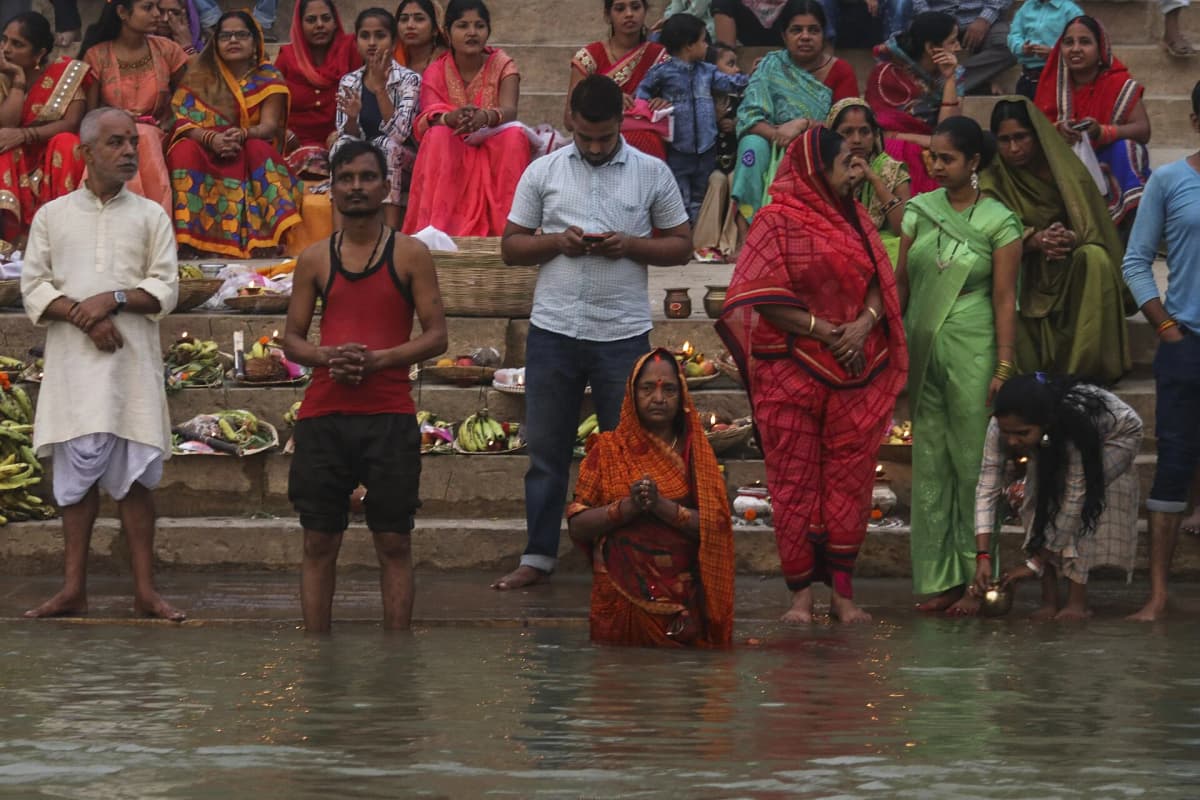
Aarti — called Harathi in Telugu and several South Indian languages — is a ritual of worship in which lit lamps are offered in a circular motion before a deity, accompanied by chanting, bells and incense. Ganga Aarti applies this act of reverence to the river Ganga herself, worshipped as a goddess. Performed at sunset (and at a few ghats, sunrise), it typically involves multi-tiered brass lamps, conch shells, bells and Sanskrit hymns offered by priests at the water’s edge, watched by hundreds on the steps and in boats.
The mythology behind Ganga Aarti
The ritual’s roots lie in the story of Ganga’s descent to Earth. According to the Puranas, King Bhagiratha performed severe penance to bring the celestial Ganga down and liberate his ancestors. Her descent was so powerful that only Lord Shiva could tame it, catching the river in his matted locks before releasing her gently. Ganga Aarti is a daily act of gratitude for that descent — an offering of fire and light in thanks for the river that has purified and sustained Indian civilisation ever since.
How the modern Ganga Aarti tradition began
While devotees have offered lamps to the Ganga for centuries, the large-scale, choreographed public Ganga Aarti familiar today is comparatively recent. It traces back to 1997, when Parmarth Niketan ashram in Rishikesh, under Swami Chidanand Saraswati, began organising a structured evening aarti. A similar grand aarti followed on Nepal’s Bagmati River at Pashupatinath in 1998, and by 1999 a major public Ganga Aarti had been organised in Varanasi. The model later extended to Gangotri, Prayagraj and Rudraprayag.
The daily Ganga Aarti at Dashashwamedh Ghat, Varanasi
The best-known Ganga Aarti takes place every evening at Dashashwamedh Ghat, Kashi’s most famous ghat, organised by the Ganga Seva Nidhi trust. Seven young priests, said to represent the Sapta Rishis, stand in a row facing the river and perform a synchronised sequence of offerings: incense, multi-hooded lamps, camphor flames, peacock-feather fans and yak-tail whisks, all moved in rhythm to Vedic chants, conch shells and bells.
The aarti begins roughly 30–45 minutes after sunset — around 6 PM in winter and 7 PM in summer — and lasts about 45 minutes. It is held 365 days a year without exception, drawing crowds who watch from the ghat steps or from boats on the river.
Special Ganga Aartis: an occasion-wise guide
Dev Deepawali — the grandest aarti of the year
Held on Kartik Purnima (usually November), Dev Deepawali marks the belief that the gods descend to bathe in the Ganga at Varanasi. The Ganga Seva Nidhi organises a special Maha Aarti performed not by seven priests but by twenty-one Brahmins accompanied by forty-two dev kanyas — a vastly expanded ceremony. Every ghat is lined with hundreds of thousands of earthen lamps, and wreaths are laid at the Amar Jawan Jyoti near Dashashwamedh and Rajendra Prasad Ghats in honour of India’s soldiers.
Ganga Dussehra and Ganga Mahotsav
Ganga Dussehra (Jyeshtha, May–June) marks the day the Ganga is believed to have descended to Earth, with special aartis and bathing at Varanasi, Haridwar and Rishikesh. In the days before Dev Deepawali, Varanasi hosts the five-day Ganga Mahotsav — from Prabodhini Ekadashi to Kartik Purnima — a cultural festival building toward the grand Maha Aarti on its final evening.
Ganga Aarti across India: a city-wise guide
Haridwar — Har Ki Pauri
At Har Ki Pauri, believed to mark where the Ganga leaves the Himalayan foothills for the plains, the evening aarti centres on Brahma Kund, where legend says a drop of amrit fell during the Samudra Manthan. Both morning and evening aartis are held daily, with evening timings generally between 5 PM and 7 PM by season — drawing some of the largest crowds of any Ganga Aarti, especially during Kumbh Mela and the Kanwar Yatra.
Rishikesh — Parmarth Niketan and Triveni Ghat
Rishikesh offers a quieter alternative. At Parmarth Niketan — the ashram that helped originate the modern organised aarti in 1997 — the ceremony is led largely by young residents studying the Vedas and centres on a havan alongside the lamp offerings, framed by a towering Shiva statue. Nearby, Triveni Ghat hosts its own nightly Maha Aarti. Both generally begin between 5:30 and 7 PM by season.
Morning aarti vs evening aarti
While the evening aarti is by far the most attended, a few ghats hold a quieter sunrise version. Har Ki Pauri performs a daily morning aarti, and in Varanasi, Assi Ghat’s Subah-e-Banaras opens each day with music, yoga and prayer. Morning aartis tend to be smaller and more contemplative — a good option for those who prefer a peaceful start over the evening crowds.
The rituals and elements of Ganga Aarti, explained
- Deep (multi-tiered lamp) — fire representing divine light and knowledge.
- Dhoop (incense) — fragrance offered as a mark of respect.
- Shankha (conch shell) — sounded to mark the ritual’s start and ward off negativity.
- Ghanti (bell) — rung to invoke divine presence and focus attention.
- Peacock-feather and yak-tail fans — waved to honour the river, echoing royal fan-bearing traditions.
- Floating diyas — small lamps set adrift by devotees at the end, carrying prayers downstream.
Why Ganga Aarti matters, and tips to experience it
For Hindus, Ganga Aarti is a daily act of thanksgiving to a river regarded as both a resource and a living goddess. Many families visiting for ancestral rites such as Pind Daan or Asthi Visarjan attend the aarti the same evening. For the fullest experience, arrive at least 45 minutes to an hour early — the best spots at Dashashwamedh and Har Ki Pauri fill quickly, and a boat offers the widest view. Timing a visit around Dev Deepawali or Kartik Purnima rewards you with the most elaborate version anywhere in India, though it brings the year’s largest crowds — book accommodation well in advance.
Frequently Asked Questions
What is the difference between Ganga Aarti and Ganga Harathi?
They are the same ritual. “Aarti” is the common Hindi and pan-India term, while “Harathi” is the Telugu and South Indian transliteration of the same word.
What time does the Ganga Aarti happen in Varanasi?
The Dashashwamedh Ghat aarti begins roughly 30–45 minutes after sunset — around 6 PM in winter and 7 PM in summer — and lasts about 45 minutes.
Which is better — Ganga Aarti in Varanasi, Haridwar or Rishikesh?
Varanasi’s Dashashwamedh Ghat offers the grandest, most crowded spectacle; Haridwar’s Har Ki Pauri is similarly large and tied to Kumbh Mela traditions; Rishikesh’s Parmarth Niketan offers the most intimate, meditative experience.
Is there a special Ganga Aarti for Dev Deepawali?
Yes. On Dev Deepawali the Ganga Seva Nidhi organises a Maha Aarti performed by 21 Brahmins and 42 dev kanyas — far larger than the daily seven-priest ceremony — alongside hundreds of thousands of lamps across every ghat.
Can I sponsor or participate directly in a Ganga Aarti?
Yes. Most trusts organising the daily aarti, including Ganga Seva Nidhi in Varanasi, accept sponsorships or donations for the ceremony, sometimes with reserved seating offered in return.
Is Ganga Aarti held every day without exception?
The Dashashwamedh Ghat aarti in Varanasi is held 365 days a year, including through floods and extreme weather.
Where did the modern organised Ganga Aarti begin?
The large-scale choreographed public aarti traces to 1997 at Parmarth Niketan in Rishikesh, spreading to Pashupatinath (1998) and Varanasi (1999), and later to Gangotri, Prayagraj and Rudraprayag.
What is offered during the Ganga Aarti?
The ritual offers fire and light through multi-tiered lamps, incense, conch, bells, and peacock-feather and yak-tail fans, ending with devotees floating small diyas on the river to carry their prayers downstream.
You might also like

Amarnath Yatra Altitude Profile: Every Stage and Its Elevation, Stage by Stage

Pahalgam Route Amarnath Yatra: A Complete Day-by-Day Pilgrim's Guide
Mahagunas Pass: The Highest Point of the Amarnath Yatra — and Where Altitude Trouble Hits Hardest