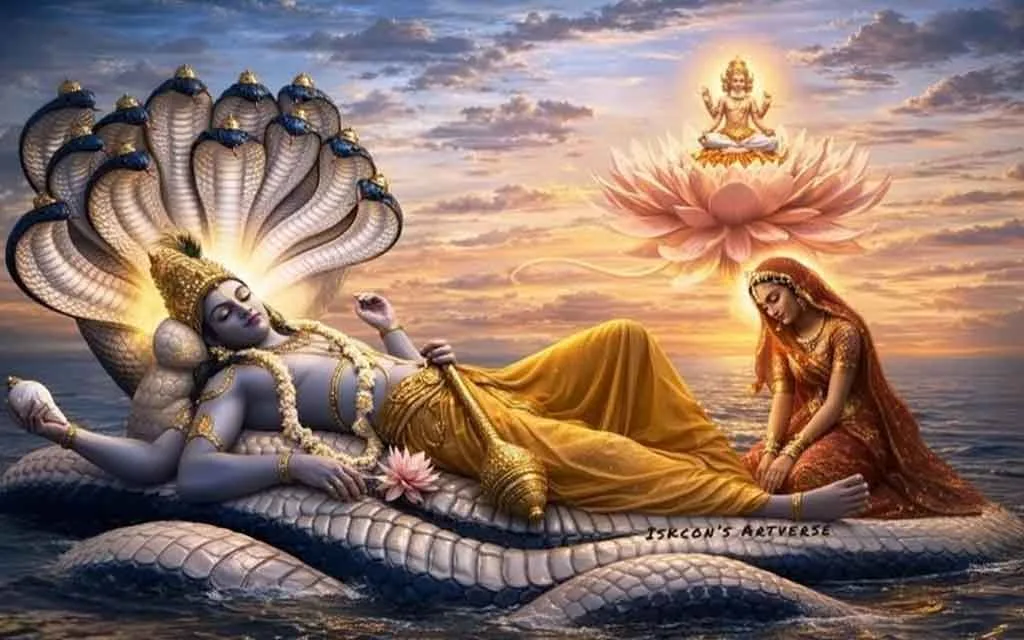
Radha Krishna Love: The Eternal Divine Romance That Transcends Time
Introduction: The Most Sacred Love in Hindu Mythology The love of Radha and Krishna is not merely a romantic tale from ancient scriptures — it is the very…
Introduction: The Most Sacred Love in Hindu Mythology
The love of Radha and Krishna is not merely a romantic tale from ancient scriptures — it is the very heartbeat of Hindu devotional tradition. Celebrated across thousands of years through poetry, music, dance, temples, and festivals, Radha Krishna love stands as the supreme symbol of the soul's longing for the Divine. Whether you are a devoted bhakta, a curious seeker, or someone exploring Hindu spirituality, understanding the love between Radha and Krishna opens a gateway to one of the most profound spiritual truths ever expressed.
At HinduTone, we explore the depth of this divine relationship — its origins, its symbolism, its spiritual teachings, and why it continues to inspire millions around the world.
Who Are Radha and Krishna?
Lord Krishna: The Supreme Personality of Godhead
Krishna is one of the most revered deities in Hinduism, worshipped as the eighth avatar of Lord Vishnu and, in Vaishnavism, as the Supreme Being himself. Known as Govinda, Madhava, Murlidhar, and countless other names, Krishna is the embodiment of love, wisdom, joy, and cosmic power. His life and teachings are enshrined in texts like the Bhagavata Purana, the Mahabharata, and the sacred Bhagavad Gita.
Radha: The Divine Feminine Energy
Radha, also called Radhika or Radharani, is Krishna's eternal consort. She is revered as the highest expression of Shakti — the divine feminine energy — and as the embodiment of prema (pure, unconditional love). Though Radha is not mentioned extensively in the earliest Puranas, she emerges powerfully in the Brahma Vaivarta Purana, the Gita Govinda of Jayadeva, and the poetry of the Bhakti saints. In Vaishnavism, particularly in the Gaudiya tradition founded by Chaitanya Mahaprabhu, Radha is considered even superior to Krishna in one profound sense: she represents the highest form of devotion.
The Radha Krishna Love Story: A Journey Through Sacred Texts
Vrindavan: The Land of Their Love
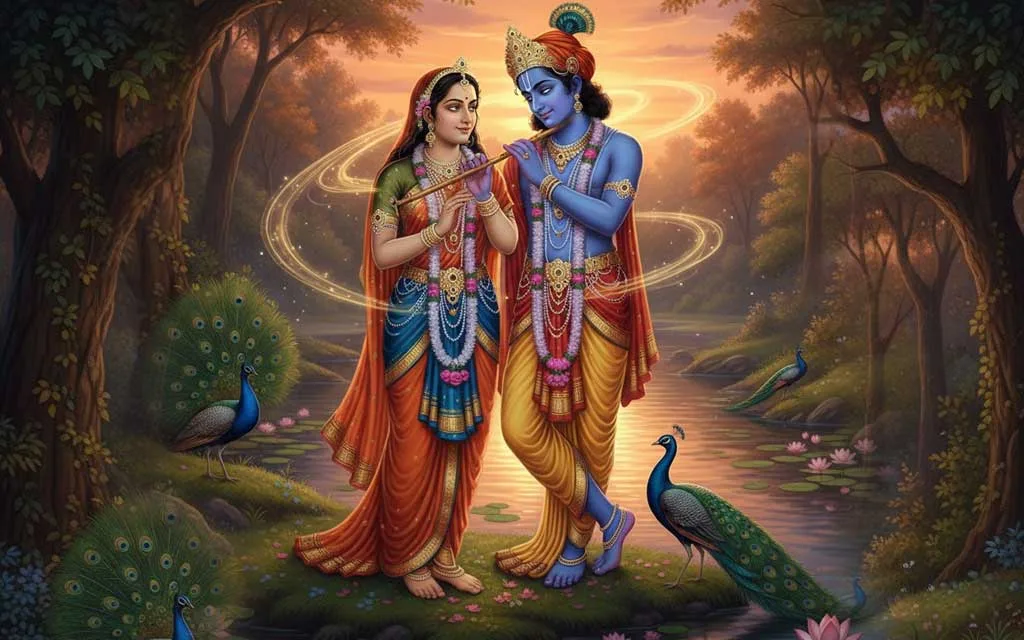
The love story of Radha and Krishna is rooted in Vrindavan, a small town in present-day Mathura, Uttar Pradesh. This sacred land is described in scriptures as the eternal abode of Krishna — a forest filled with flowering Kadamba trees, the gentle Yamuna River, and the music of Krishna's flute drifting through the air.
In Vrindavan, the young Krishna grew up among the Gopis (cowherd women), playing his divine flute whose melody was irresistible to all who heard it. Among all the Gopis, Radha held the most special place. Her love for Krishna was total, selfless, and all-consuming.
The Rasa Lila: The Cosmic Dance of Love
One of the most celebrated episodes in the Radha Krishna love story is the Rasa Lila — the divine dance performed by Krishna with Radha and the Gopis on the banks of the Yamuna under the full moon. According to the Bhagavata Purana (10th Canto), Krishna multiplied himself so that each Gopi felt his undivided presence. Yet among all of them, Radha's bond with Krishna transcended even this cosmic celebration.
The Rasa Lila is not interpreted as a sensual dance but as a spiritual metaphor — the eternal dance of the soul (Gopi) with the Supreme (Krishna), a symbol of union between the individual self and the Divine consciousness.
The Separation (Viraha): Love's Deepest Teaching
Perhaps the most emotionally profound aspect of the Radha Krishna love story is their separation — known as Viraha. After his childhood in Vrindavan, Krishna left for Mathura and later Dwarka, never returning to Radha. Yet their love did not diminish. It intensified.
Viraha in the Radha Krishna tradition teaches that longing for God is itself a form of worship. Radha's separation from Krishna is seen as the highest state of devotion — a soul yearning completely for union with the Divine. The 12th-century poet Jayadeva immortalized this aching love in the Gita Govinda, one of Sanskrit literature's greatest masterpieces.
Spiritual Significance of Radha Krishna Love
Radha as the Soul, Krishna as the Supreme Self
The most widely accepted spiritual interpretation of the Radha Krishna relationship is allegorical. Radha represents the Jivatma (individual soul) and Krishna represents the Paramatma (Supreme Soul or God). Their love, longing, union, and separation mirror the soul's spiritual journey — its fall into worldly illusion, its yearning for the Divine, and its ultimate liberation through devotion.
This interpretation transforms the Radha Krishna love story into a roadmap of spiritual evolution, making it deeply relevant for every seeker.
Radha Krishna and the Philosophy of Bhakti
The love between Radha and Krishna is the cornerstone of Bhakti Yoga — the path of devotion. Unlike paths that emphasize ritual, knowledge, or austerity alone, Bhakti teaches that love is the highest spiritual force. Radha's love for Krishna is offered as the perfect example:
- It is selfless — she seeks nothing in return
- It is total — her entire being is surrendered to Krishna
- It is joyful — even in separation, she finds spiritual bliss
- It is pure — untouched by ego or worldly desire
The great Vaishnava saints — Mirabai, Surdas, Tulsidas, Chaitanya Mahaprabhu, and Ramananda — all drew inspiration from the divine love of Radha and Krishna to teach their disciples the essence of devotion.
Why Radha's Name Comes Before Krishna's
In Hindu devotional tradition, the name "Radha" comes before "Krishna" — we say Radha Krishna, not Krishna Radha. This is deeply intentional. It signifies that devotion (Radha) is the gateway to God (Krishna). Without Radha's grace, one cannot truly reach Krishna. She is the mediator, the compassionate divine mother who guides the devotee toward the Lord.
Radha Krishna in Art, Music, and Poetry
The Gita Govinda by Jayadeva
Composed in the 12th century CE, the Gita Govinda is a Sanskrit lyrical poem that narrates the love of Radha and Krishna with exquisite beauty. Divided into 12 chapters, it portrays their union, separation, longing, and reunion in deeply moving verses. It remains one of the most performed pieces in classical Indian music and dance to this day.
Mirabai: Love's Fearless Poet
Mirabai (1498–1547 CE), a Rajput queen turned mystic poet, is perhaps the most famous human embodiment of Radha's love. She considered herself Krishna's bride and composed hundreds of devotional songs (bhajans) in his honor, often defying social norms in her all-consuming devotion. Her poetry bridges the human and the divine, making Radha Krishna love accessible to every heart.
Radha Krishna in Classical Dance
The Manipuri, Odissi, Bharatanatyam, and Kathak classical dance traditions of India regularly depict scenes from the Radha Krishna story. The Rasa Lila is a central theme in Manipuri dance, performed with grace, precision, and deep devotion as an offering to the divine couple.
Radha Krishna Paintings
From the intricate miniatures of the Pahari and Rajasthani school to the vivid canvases of contemporary Indian artists, Radha Krishna has inspired countless works of visual art. These paintings often depict the couple in the forests of Vrindavan, surrounded by peacocks, lotuses, and the eternal Yamuna — a visual paradise representing divine bliss.
Radha Krishna Temples: Sacred Spaces of Divine Love
Across India and the world, temples dedicated to Radha Krishna serve as spiritual centers for devotees.
- ISKCON Temples – The International Society for Krishna Consciousness, founded by A.C. Bhaktivedanta Swami Prabhupada, has established hundreds of Radha Krishna temples globally, spreading the message of Bhakti to millions.
- Banke Bihari Temple, Vrindavan – One of the most beloved Krishna temples in India, dedicated to the playful aspect of Krishna.
- Radha Raman Temple, Vrindavan – Famous for the self-manifested deity of Radha Raman, associated with the saint Gopala Bhatta Goswami.
- Prem Mandir, Vrindavan – A modern marble temple glorifying the divine love of Radha Krishna through stunning sculptures and light shows.
Radha Krishna Love and Modern Life: Timeless Lessons
The story of Radha and Krishna is not confined to ancient times. Its teachings are profoundly relevant in modern life:
1. Love without expectation. Radha's love for Krishna was never transactional. In an age of conditional relationships, her example teaches us to love freely and fully.
2. Devotion as the highest form of connection. Whether you are spiritual or not, the Radha Krishna story teaches that deep, sincere connection — with God, with others, with life — is transformative.
3. Beauty in longing. Viraha (separation) is not presented as failure but as a purifying, deepening experience. The Radha Krishna story teaches us that longing and yearning can lead us to our truest selves.
4. The feminine as sacred. Radha's elevation in Hindu tradition honors the divine feminine — compassion, devotion, grace, and love — as equal to and inseparable from divine masculine power.
5. Inner union. Ultimately, the reunion of Radha and Krishna within the heart of the devotee symbolizes the spiritual goal of self-realization — discovering that the Divine already dwells within you.
Radha Krishna Festivals
Holi: The Festival of Colors
Holi traces its roots to the playful love of Radha and Krishna in Vrindavan. Legend says Krishna, with his dark complexion, playfully applied color on the fair Radha and the Gopis. Today, Holi is celebrated across the world as a festival of love, joy, and the victory of devotion.
Janmashtami: Krishna's Birthday
Janmashtami, the birth celebration of Lord Krishna, is one of India's grandest festivals. Observed with midnight prayers, devotional singing, dramatic enactments of Krishna's life, and joyous celebration, it draws millions of devotees to temples worldwide.
Radha Ashtami: Radha's Birthday
Radha Ashtami, celebrated 15 days after Janmashtami, honors the birth of Radha. Particularly celebrated in Vrindavan and Barsana (Radha's birthplace), it is a day of special prayers, bhajans, and devotion to the divine feminine.
Chanting and Mantras for Radha Krishna Devotion
Devotees seeking to connect with the energy of Radha Krishna often chant sacred mantras:
- Hare Krishna Maha Mantra: Hare Krishna, Hare Krishna, Krishna Krishna, Hare Hare / Hare Rama, Hare Rama, Rama Rama, Hare Hare
- Radhe Radhe: A simple, loving invocation of Radha's name, widely chanted in Vrindavan
- Radha Krishna Govinda: A devotional chant honoring the divine couple
According to the scriptures, sincere chanting of Krishna's names purifies the heart, dissolves ego, and leads the devotee toward the experience of divine love.
Frequently Asked Questions (FAQs) About Radha Krishna Love
Q1: Did Radha and Krishna marry?
Radha and Krishna's union is primarily understood as spiritual rather than conventional. Different regional traditions have different accounts — some describe a divine marriage (Gandharva vivah), while others emphasize that their bond transcends all worldly categories.
Q2: Why is Radha important even though she is not mentioned in early scriptures?
Radha's spiritual importance grew significantly through the Bhakti movement. She represents the ideal devotee, and her mention in texts like the Brahma Vaivarta Purana and the Gita Govinda cemented her central place in Hindu devotional tradition.
Q3: What is the spiritual meaning of the Rasa Lila?
The Rasa Lila symbolizes the soul's joyful union with the Divine. It is not interpreted as a physical or sensual dance but as a cosmic spiritual experience where the individual self dissolves into divine love.
Q4: Why did Krishna leave Radha?
Krishna's departure from Vrindavan is seen spiritually as part of the divine play (Lila). Their separation (Viraha) intensified their love and became the basis for the highest form of devotion — longing for God. It teaches that true love transcends physical proximity.
Q5: How can I incorporate Radha Krishna devotion into my daily life?
You can begin by chanting Krishna's names, reading devotional texts like the Gita Govinda or Bhagavata Purana, visiting a Radha Krishna temple, listening to bhajans, or simply setting aside a few minutes each day to reflect on the qualities of love, devotion, and surrender.
Conclusion: Why Radha Krishna Love Speaks to Every Heart
Across centuries, languages, and cultures, the love of Radha and Krishna continues to shine as the brightest star in the galaxy of Hindu spirituality. It is a love that is human in its tenderness and divine in its depth — a perfect mirror reflecting what every soul truly longs for: complete union with the source of all love.
At HinduTone.com, we are dedicated to bringing you the wisdom, beauty, and spiritual richness of Hindu tradition. Whether you are drawn to the devotional poetry of Mirabai, the classical art of Vrindavan, or the philosophy of Bhakti Yoga, the story of Radha and Krishna is a living tradition that has the power to transform hearts and awaken souls.
Jai Radhe! Jai Sri Krishna!
Explore more articles on Hindu spirituality, festivals, temples, and devotional traditions at HinduTone.com.
Share this with family and friends
Send it on WhatsApp, post it, or copy the link.
More from Spiritual Yatra
- Ashtavinayak Yatra: Complete Guide to the Eight Ganesha Temples of Maharashtra
- Pashupatinath: Divine Mysteries & Soul-Stirring Miracles of Lord Shiva in Nepal
- Dwarkadhish: Divine Mysteries & Soul-Stirring Miracles of Lord Krishna's Eternal Kingdom
- Badrinath: Divine Mysteries & Soul-Stirring Miracles of Lord Vishnu's Himalayan Abode
- Ayodhya Ram Mandir: Divine Mysteries & Soul-Stirring Miracles of Lord Rama's Birthplace
You might also like
How to Pray Lord Radha Krishna in 2026: Mantras, Poojas, Important Dates, Temples & Rituals | HinduTone
Radha Krishna and Holi: The Divine Love Story Behind the Festival of Colors
Cyrus Poonawalla Acquires Raja Ravi Varma’s Divine Masterpiece ‘Yashoda and Krishna’ for ₹167.2 Crore – A Historic Moment for Sanatan Heritage