


History of Ayodhya Deepotsav: The Complete Story
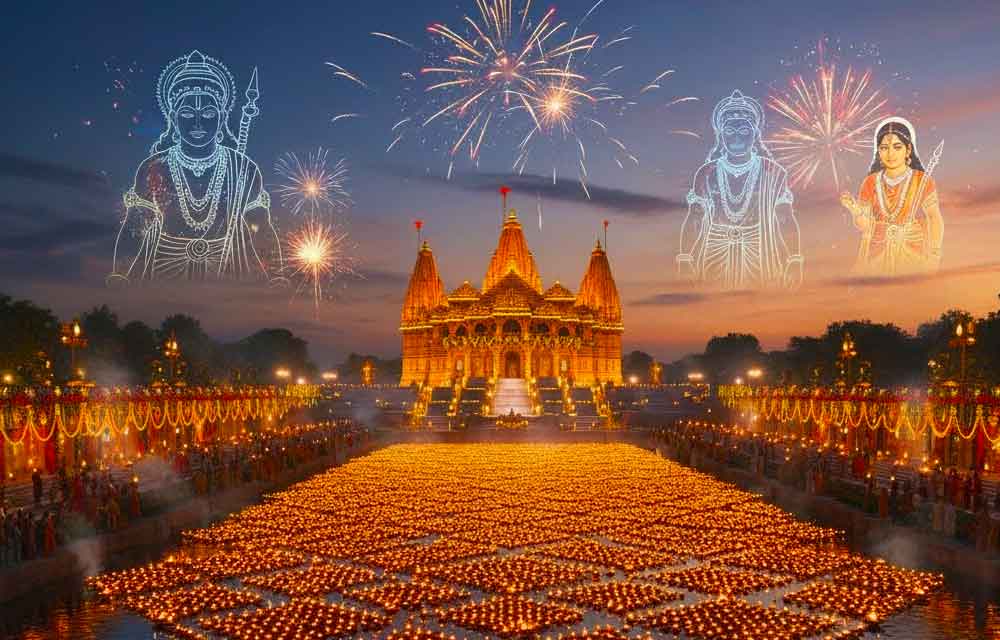
Ayodhya Deepotsav, also known as Deepotsavam, is one of India’s most enchanting festivals, illuminating the sacred city of Ayodhya with millions of earthen lamps (diyas). This grand celebration commemorates Lord Ram’s return to Ayodhya after his 14-year exile, as described in the ancient epic Ramayana. For devotees and cultural enthusiasts searching for the “history of Ayodhya Deepotsav” or the “complete story of Deepotsav,” this article delves into its mythological roots, historical evolution, and modern-day grandeur. As a beacon of Hindu heritage, Deepotsav blends spirituality, tradition, and record-breaking spectacles, making it a must-know for anyone exploring India’s festive legacy.
## Ancient Origins: Deepotsav in the Ramayana
The story of Ayodhya Deepotsav traces its divine origins to the Uttara Kanda of Valmiki’s Ramayana, one of Hinduism’s most revered scriptures. According to the epic, Lord Ram, the seventh avatar of Lord Vishnu and the rightful heir to the throne of Ayodhya, was exiled for 14 years due to a palace intrigue orchestrated by his stepmother Kaikeyi. Accompanied by his devoted wife Sita and brother Lakshman, Ram ventured into the forests, faced numerous trials, and ultimately defeated the demon king Ravana in Lanka.
Upon Ravana’s defeat on Vijayadashami (Dussehra), Ram, Sita, and Lakshman began their journey back to Ayodhya in the Pushpak Vimana, a celestial chariot. As news of their return spread, the people of Ayodhya, overjoyed and eager to welcome their beloved prince, lit thousands of earthen lamps along the streets, homes, and the banks of the Saryu River. This act of lighting diyas symbolized the triumph of good over evil, light over darkness, and knowledge over ignorance—themes central to Diwali celebrations worldwide.
The Ramayana vividly describes Ayodhya glowing like a starry sky, with citizens adorning the city in festivities. This event, occurring on the Amavasya (new moon) night of Kartik month, marked the first “Deepotsav” or Festival of Lights. It not only celebrated Ram’s homecoming but also his coronation as king, establishing him as Maryada Purushottam (the ideal man). This ancient narrative forms the spiritual foundation of Deepotsav, linking it inseparably to Diwali and Ayodhya’s identity as Ram Janmabhoomi (birthplace of Lord Ram).
## Historical Evolution: From Myth to Medieval Traditions
While the Ramayana provides the mythological blueprint, historical references to Deepotsav-like celebrations in Ayodhya appear in various ancient texts and inscriptions. Ayodhya, known as Saketa in Buddhist and Jain literature, has been a center of religious activity for millennia. During the Gupta Empire (4th-6th century CE), often called India’s Golden Age, festivals honoring Ram and Diwali were likely observed with lamp-lighting rituals, as evidenced by archaeological findings of terracotta lamps.
In medieval times, despite invasions and shifts in rulership—including the Mughal era when the Babri Masjid was built on a site believed to be Ram’s birthplace—local traditions persisted. Devotees continued small-scale Diwali celebrations along the Saryu Ghats, maintaining the custom of lighting diyas in honor of Ram’s return. Travelogues from the 19th century, such as those by British colonial officials, mention vibrant lamp festivals in Ayodhya, blending Hindu rituals with community gatherings.
Over centuries, Deepotsav evolved from a simple homecoming ritual into a symbol of cultural resilience. It incorporated elements like Ramlila performances (dramatic enactments of the Ramayana), aarti ceremonies, and processions, reflecting India’s syncretic heritage. These traditions kept the spirit alive, even as Ayodhya faced historical upheavals.
—
## Modern Revival: The Grand Deepotsav Since 2017
The contemporary version of Ayodhya Deepotsav was revived in 2017 by the Uttar Pradesh government under Chief Minister Yogi Adityanath, transforming it into a state-sponsored mega-event. This initiative aimed to promote Ayodhya’s cultural tourism, revive ancient traditions on a grand scale, and enter the Guinness World Records for the largest display of oil lamps.
Since its inception, Deepotsav has grown exponentially, involving thousands of volunteers, international artists, and cutting-edge technology like drones for verification. Each year focuses on themes from the Ramayana’s seven Kands (chapters), with elaborate tableaux, laser shows, and eco-friendly practices. The festival now attracts millions of visitors, boosting local economies and fostering global cultural exchange.
### Year-by-Year Evolution and Records
Deepotsav’s modern history is marked by progressive record-breaking attempts, showcasing organizational prowess and devotion. Here’s a detailed timeline:
| Year | Number of Diyas Lit | Key Highlights and Records |
|——|———————|—————————-|
| 2017 | 1.71 lakh | Inaugural edition; First Guinness World Record for largest oil lamp display. Featured basic illuminations along Saryu Ghats. |
| 2018 | 3.01 lakh | Expanded to more ghats; Introduced international Ramlila performances; Broke previous record. |
| 2019 | 4.04 lakh | Incorporated drone shows; Emphasized eco-friendly diyas; New Guinness record. |
| 2020 | 6.06 lakh | Held amid COVID-19 with safety measures; Virtual participation; Record for simultaneous lamp lighting. |
| 2021 | 9.41 lakh | Post-pandemic revival; Themed around Ramayana Kands; Guinness record updated. |
| 2022 | 15 lakh (approx.) | Larger volunteer involvement; Cultural fusion with global artists; Enhanced tourism focus. |
| 2023 | 22 lakh | Massive scale-up; Record for largest diya display; Included grand aarti with thousands. |
| 2024 | 25 lakh (approx.) | First after Ram Mandir inauguration; Two Guinness records, including diya rotation by 1,100 people. |
| 2025 | 26.17 lakh | Ninth edition; Twin records: Largest oil lamp display (26,17,215 diyas) and simultaneous aarti by 2,128 participants. Featured wax museum and international troupes. |
This progression highlights Deepotsav’s evolution from a modest revival to a world-renowned event, with visitor numbers reaching 23.82 crore in the first half of 2025 alone.
## Cultural and Spiritual Significance
Beyond records, Ayodhya Deepotsav embodies unity, devotion, and heritage. It promotes inclusivity by involving diverse communities, such as Nishad and Dalit groups in 2025. The festival educates youth about the Ramayana through immersive experiences like Ramlila from countries including Russia, Thailand, and Indonesia. Spiritually, it reinforces dharma and the eternal light of faith, while economically, it drives tourism and sustainable development.
In essence, the complete story of Ayodhya Deepotsav is a timeless tale of light conquering darkness, from Ram’s ancient return to today’s glittering ghats. For those seeking the “history of Deepotsav in Ayodhya,” it stands as a living testament to India’s enduring cultural soul.
Related posts:
 Aum: The Living Vibration of the Universe Backed by Science and Spirituality
 Rudrabhishekam at Home: A Simplified Step-by-Step Guide
 Shravan Putrada Ekadashi 2025: A Divine Path to Progeny and Moksha
 Complete NRI Guide: Ganesh Nimajjanam in USA, UK, Canada, Australia & Japan – Legal Rules & Eco-Friendly Alternatives
 The Sacred Heart of Hanuman: Where Devotion Becomes Divine Union
 Bathukamma: Telangana’s Floral Festival Celebrating Feminine Energy


 ︎
︎

