
Vaikuntha Dwaram Explained: Meaning, Symbolism & Spiritual Science
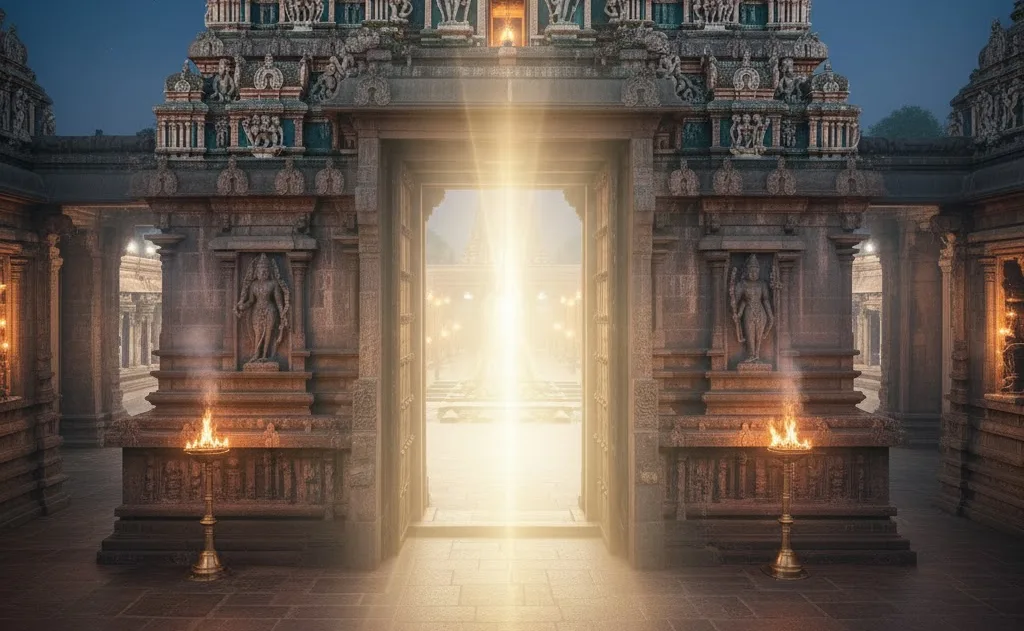
Vaikuntha Dwaram is not just a gate — it's a spiritual doorway of consciousness.
Update (October 2026): Vaikuntha Ekadashi 2026 falls on Sunday, 20 December (Saturday, 19 December for Smarta households in the USA and Canada). This article describes an earlier observance — for current dates and guidance, see our Vaikuntha Ekadashi 2026 guide.
Vaikuntha Dwaram is not just a gate — it's a spiritual doorway of consciousness.
For centuries, Hindu temples across India have maintained a sacred architectural feature known as Vaikuntha Dwaram, a northern gate opened only once a year during specific auspicious occasions. For diaspora Hindus in the USA and around the world, understanding the deeper meaning behind this ritual transforms it from a mere temple custom into a profound spiritual practice rooted in ancient wisdom.
What is Vaikuntha Dwaram?
Vaikuntha Dwaram literally translates to "the gate to Vaikuntha" — the divine abode of Lord Vishnu in Hindu cosmology. This special entrance, typically located on the northern side of Vishnu temples, remains closed throughout the year and opens only during Vaikuntha Ekadashi (also called Mukkoti Ekadashi in South India), which falls during the Hindu month of Margashirsha (December-January).
The Vaikuntha gate holds immense spiritual significance because passing through it is believed to grant moksha (liberation) or at least progress the soul toward ultimate freedom from the cycle of birth and death.
The Spiritual Meaning of Vaikuntha Dwaram
Gateway Beyond Karma
In Hindu philosophy, the north direction (Uttara) symbolizes transcendence and liberation. The sun's northern journey during Uttarayana marks an auspicious time when spiritual practices yield enhanced results. Vaikuntha Dwaram represents the passage from the material realm (samsara) to the spiritual realm (Vaikuntha), from ignorance to enlightenment, from bondage to freedom.
When devotees pass through this gate with sincere devotion, they symbolically move beyond their karmic limitations. This isn't merely metaphorical — the act represents a conscious intention to transcend worldly attachments and align with divine consciousness.
The Consciousness Connection
Ancient seers understood temples as psycho-spiritual instruments designed to elevate human consciousness. The Vaikuntha gate ritual engages multiple dimensions of awareness. The anticipation, the devotion, the physical act of passing through, and the sacred atmosphere all combine to create a transformative experience that can shift consciousness from ordinary awareness to higher states.
The closed gate throughout the year represents the usually inaccessible nature of liberation. Most humans remain trapped in cycles of desire and attachment. The annual opening symbolizes special grace periods when divine intervention becomes more accessible, when the veil between material and spiritual worlds grows thin.
Symbolism Embedded in the Vaikuntha Gate
Architectural Symbolism
The northern positioning isn't arbitrary. In Vastu Shastra and Hindu cosmology, north represents the direction of Kubera (god of wealth, here meaning spiritual wealth) and the path of the devas (celestial beings). The gate itself often features intricate carvings depicting scenes from Vishnu's avatars, cosmic cycles, and liberation narratives.
The door's opening once yearly mirrors the Hindu concept that moksha isn't constantly available to unprepared souls. Spiritual readiness, devotion, and auspicious timing must align.
The Number Connection
Vaikuntha Ekadashi, when the gate opens, falls on the eleventh day of the waxing moon. In Hindu numerology, eleven represents transcendence beyond the ten senses (five knowledge senses, five action senses). It symbolizes moving beyond sensory experience into pure spiritual awareness.
Duality to Unity
Passing through any doorway represents transition. The Vaikuntha Dwaram specifically symbolizes the transition from dvaita (duality) to advaita (non-duality), from seeing oneself as separate from the divine to recognizing one's essential unity with Brahman.
The Spiritual Science Behind the Practice
Sankalpa: The Power of Intention
Hindu ritual science emphasizes sankalpa — sacred intention. When thousands of devotees approach the Vaikuntha gate with focused intention toward liberation, a powerful collective energy field forms. This isn't superstition but aligns with modern understanding of how focused attention and collective consciousness can create measurable energetic phenomena.
Biofield Activation
Temples are constructed using specific geometric principles (mandala patterns) and materials that create particular energetic environments. The darshan (viewing) of the deity through the Vaikuntha gate, combined with the charged atmosphere, can activate subtle energy centers (chakras) in devotees, particularly the crown chakra associated with spiritual connection.
Ritual Psychology
The entire Vaikuntha Dwaram practice employs sophisticated psychological techniques. The rarity creates value and focus. The physical act of passage creates embodied ritual. The sensory immersion (bells, chants, incense, visual splendor) engages the whole being. The collective participation creates community reinforcement. All these elements combine to create conditions where consciousness can genuinely shift.
Vaikuntha Ekadashi: When the Gate Opens
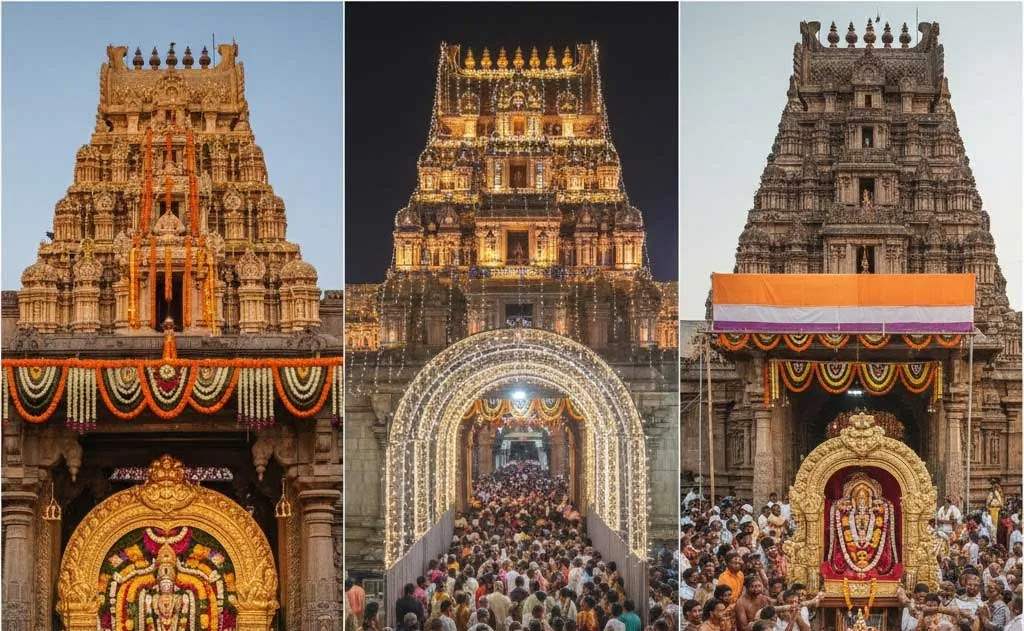
The most significant opening of Vaikuntha Dwaram occurs during Vaikuntha Ekadashi. This typically falls in late December or early January and is observed with great devotion at major Vishnu temples, particularly the famous Tirupati Venkateswara Temple, Srirangam Ranganathaswamy Temple, and countless others.
Devotees observe fasting, nightlong vigils, and special prayers. The belief holds that anyone passing through the Vaikuntha gate on this day receives the spiritual merit equivalent to visiting all holy places and performing all sacred rituals.
Practical Spiritual Lessons for Modern Life
Creating Your Inner Vaikuntha Dwaram
You don't need to physically visit a temple to engage with this wisdom. The Vaikuntha gate exists within consciousness itself. Consider these practices:
Daily Threshold Moments: Designate specific transitions in your day (waking up, starting work, evening meditation) as mini Vaikuntha gates where you consciously shift from worldly concerns to spiritual awareness.
Annual Renewal: Use Vaikuntha Ekadashi or another personally significant date as an annual reset point where you recommit to spiritual growth and consciously release old patterns.
Intention Setting: Before any spiritual practice, set a clear sankalpa acknowledging your intention to move toward higher consciousness, just as devotees do before entering the sacred gate.
Integration for Diaspora Hindus
For Hindus living in the USA and other Western countries, Vaikuntha Dwaram practices can be adapted:
- Join online livestreams from major temples during Vaikuntha Ekadashi
- Create a home altar with a symbolic doorway representing Vaikuntha
- Form community gatherings with other Hindu families to observe the occasion
- Use the symbolism in teaching children about the deeper meaning behind temple architecture
- Practice Ekadashi fasting and meditation regardless of temple access
The Universal Message
While rooted in Vaishnavite tradition, the wisdom of Vaikuntha Dwaram speaks to universal spiritual truths. Every religious tradition recognizes sacred thresholds: the gates of heaven, the narrow way, the straight path. What makes the Hindu approach unique is the sophisticated integration of philosophy, architecture, ritual, and consciousness technology.
The gate reminds us that liberation isn't found through intellectual understanding alone. It requires the integration of knowledge (jnana), devotion (bhakti), and action (karma). It requires showing up, participating, and opening oneself to grace.
Beyond Ritual to Realization
The true power of Vaikuntha Dwaram lies not in the physical gate but in what it awakens within. When approached with understanding rather than blind faith, when engaged with both heart and mind, this ancient practice becomes a living spiritual technology capable of facilitating genuine transformation.
The closed gate throughout the year serves as a constant reminder that while liberation is our ultimate destination, the path requires patience, preparation, and timing. The annual opening represents those special moments when conditions align perfectly for spiritual breakthrough — moments we must recognize and seize.
As you learn about Vaikuntha Dwaram, consider how you might apply its wisdom. Where in your life do you need to pass through a threshold? What attachments must you leave behind to enter higher consciousness? What would it mean to truly walk through the gate to Vaikuntha — not just once a year at a temple, but as a continuous practice of elevating awareness?
The gate stands ready. The question is: are you prepared to pass through?
About HinduTone: HinduTone explores the profound wisdom of Hindu philosophy, making ancient spiritual science accessible and relevant for modern seekers, especially diaspora Hindus navigating their heritage in contemporary contexts.
Frequently Asked Questions
What is Vaikuntha Dwaram?
It is the northern gate of Vishnu temples, meaning "the gate to Vaikuntha", Lord Vishnu's abode. It stays closed through the year and opens only during Vaikuntha Ekadashi.
Why is the Vaikuntha Dwaram on the north side?
North (Uttara) symbolizes transcendence and liberation, and is the direction of Kubera and the path of the devas. Passing through the gate represents moving from samsara to Vaikuntha.
What is believed to happen when you pass through the gate?
Passing through with sincere devotion is believed to grant moksha or at least advance the soul toward freedom from birth and death. The merit is said to equal visiting all holy places.
Which temples are known for Vaikuntha Dwaram?
Tirupati Venkateswara Temple and Srirangam Ranganathaswamy Temple are the famous ones, along with many other Vishnu temples. Devotees observe fasting and nightlong vigils on Vaikuntha Ekadashi.
How can diaspora Hindus in the USA observe Vaikuntha Ekadashi?
They can join online livestreams from major temples, keep an Ekadashi fast with meditation, and gather with other Hindu families. A home altar with a symbolic doorway representing Vaikuntha is another option.
Share this with family and friends
Send it on WhatsApp, post it, or copy the link.
More from Spirituality
- Chilkur Balaji 'Visa Balaji' Temple: The 11 and 108 Pradakshina Custom Explained for NRIs
- Ekagrata (One-Pointedness): Yoga Concentration and Samyama Glossary
- Complete MBBS Once in Life: The Spiritual Meaning of Mahabharata, Bhagavatam, Bhagavad Gita & Ramayana
- Sri Medha Dakshinamurthy Swami Dhyanam | Meditation Sloka for Intelligence, Eloquence & Self-Realization
- What Is True Poverty? | Dharma Is the Greatest Wealth | Sanatana Dharma
You might also like

Pan-India Vaikuntha Ekadashi Guide: State-Wise Temple Rituals, Fasting & Significance
Vaikuntha Ekadashi in Karnataka Temples: Udupi, Melkote & Belur

Vaikuntha Ekadashi Outside India: USA & Singapore
