Priest (Temporary Assignment) – Sri Venkateswara Temple, Pittsburgh
Location: Sri Venkateswara Temple, Pittsburgh, PA Job Type: Temporary (Annual Replacement Assignment) Salary/Compensation: Competitive, commensurate with…
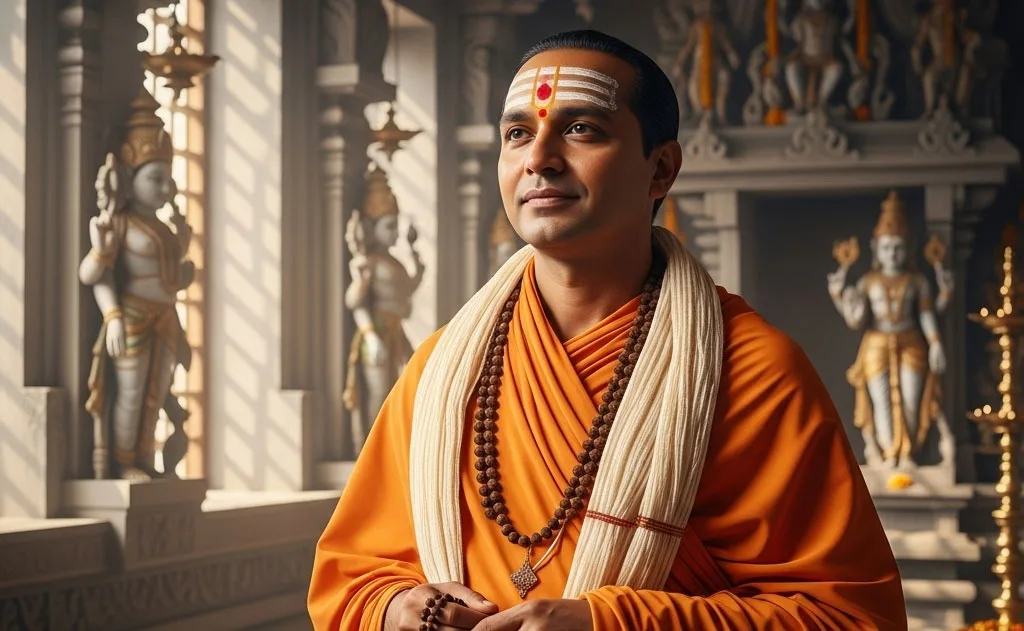
Location: Sri Venkateswara Temple, Pittsburgh, PA Job Type: Temporary (Annual Replacement Assignment) Salary/Compensation: Competitive, commensurate with experience ($35,000–$45,000 annually) Application Deadline: Open until filled
🌟 Job Overview
Sri Venkateswara Temple (S.V. Temple) in Pittsburgh, PA, seeks qualified Sri Vaishnava Priests for temporary assignments to replace priests completing their annual terms.
This sacred role offers devout individuals trained in traditional Hindu worship the opportunity to serve a vibrant community dedicated to Lord Venkateswara. As a key spiritual leader, you will perform sacred rituals, guide devotees, and contribute to our mission of promoting Hindu traditions, world peace, and spiritual harmony in the Pittsburgh metropolitan area.
Join us in fostering devotion and cultural preservation!
🔱 Key Responsibilities
- Daily & Weekly Rituals: Conduct poojas, archana, and Sri Vaishnava ceremonies per Pancharatra Agama Shastras.
- Major Festivals: Lead Brahmotsavam, Pavitrotsavam, Vasantotsavam, Teppotsavam, and special events.
- Spiritual Guidance: Provide counseling, answer religious queries with compassion and expertise.
- Temple Sanctity: Maintain purity of deities, worship areas, and sacred spaces.
- Team Collaboration: Work with management and fellow priests during peak festival periods.
- Community Outreach: Promote Hindu ideals of peace, harmony, and well-being.
📜 Key Requirements
🙏 Why Join Sri Venkateswara Temple?
- Historic Legacy: Serve Pittsburgh's premier Hindu temple in Penn Hills, PA.
- Authentic Traditions: Immerse in pure Sri Vaishnava practices.
- Supportive Community: Thrive in an environment valuing devotion, learning, and service.
- Growth Opportunity: Annual renewals/extensions based on performance.
- Cultural Impact: Contribute to educational programs and global Hindu outreach.
📋 Application Process
Submit Complete Package:
- Detailed Resume/CV (training, experience, qualifications)
- Educational Certificates (Agama training; English translations required)
- Proof of Ordination & endorsements
- Professional References
- Cover Letter (optional)
Submission Methods:
Next Steps:
- Reviewed by Priest Selection Committee
- Shortlisted candidates: Interviews + ritual demonstration
- Only complete applications considered
🛕 About Sri Venkateswara Temple
A Beacon of Sanatana Dharma in Pittsburgh, our temple is dedicated to Lord Venkateswara and authentic Sri Vaishnava traditions. Located in Penn Hills, PA, we serve as a spiritual & cultural hub with:
- Daily rituals & vibrant festivals
- Educational programs & youth initiatives
- Community events promoting harmony
📍 Contact Information Sri Venkateswara Temple 1250 S. McCully Drive, Penn Hills, PA 15235 📧 srivaru@svtemple.org 📞 (412) 373-7540 🌐 www.svtemple.org
✨ Embrace Your Calling
Serve Lord Venkateswara. Inspire Devotees. Preserve Tradition.
Apply now to lead with devotion at Sri Venkateswara Temple!
SEO Keywords: Sri Vaishnava Priest Jobs, Temporary Hindu Priest Pittsburgh, Pancharatra Agama Priest Recruitment, Sri Venkateswara Temple Careers, Hindu Temple Priest Pennsylvania, Vaishnava Rituals Jobs, Panchangam Expert Positions, Spiritual Leadership Pittsburgh
Om Namo Venkatesaya!
What Is the Pancharatra Agama and Why Does It Govern Worship at This Temple?
The Pancharatra Agama is one of the two principal Vaishnava Agamic traditions — the other being the Vaikhanasa — and it forms the liturgical backbone of worship at Sri Venkateswara Temple in Pittsburgh. Rooted in a body of Sanskrit texts called the Pancharatra Samhitas, of which the Sattvata Samhita, Paushkara Samhita, and Jayakhya Samhita are considered the most authoritative, this tradition prescribes precise procedures for deity installation (pratishtha), daily worship sequences (nityakarana), and festival observances (utsava vidhi). Priests serving at this temple are expected to have formal training in these texts, not merely a general familiarity with Vaishnava ritual.
A distinguishing feature of the Pancharatra system is its elaborate theology of the five-fold manifestation of Vishnu — Para, Vyuha, Vibhava, Antaryami, and Archa — with the Archa form, the consecrated deity image, receiving the same reverential treatment as the Supreme Being Himself. This theological grounding means that every act of the priest, from the first shuddhi (purification) before dawn to the final pavitra offering at night, carries profound doctrinal weight, making rigorous training an absolute prerequisite for the role.
The Six Daily Seva Sequences a Priest Is Expected to Perform
In Sri Vaishnava temples following the Pancharatra Agama, the day is structured around six canonical worship sessions known as shadkala puja: Thiruvanandal (pre-dawn), Thiruvanandal Vishwaksena homam, Kalasanti (mid-morning), Uchikala (noon), Sayarakshai (evening), and Ardha Jamam (night). Each session involves distinct ritual acts — awakening the deity, bathing, adorning with fresh garments and flowers, offering naivedyam (food), performing mangala arati, and finally laying the deity to rest. The Pittsburgh temple, serving a diaspora community with working-week schedules, may condense some sessions, but a candidate priest must demonstrate fluency in all six to adapt appropriately.
Specific liturgical elements such as the recitation of the Divya Prabandham — the 4,000 Tamil verses composed by the Alvars — are integral to Sri Vaishnava worship and distinguish it from generically Hindu temple practice. Verses from the Thiruppavai of Andal and the Thiruvoimozhi of Nammalvar are sung at prescribed moments during puja. Candidates who can recite and correctly intone these hymns alongside Sanskrit Vedic mantras bring exceptional value to the community and align with the temple's stated commitment to authentic Sri Vaishnava practice.
Brahmotsavam and Other Major Festivals: Scope and Priestly Demands
Brahmotsavam, the grandest annual festival at Sri Venkateswara temples worldwide, spans nine days and involves a carefully sequenced series of utsavas (processions) in which the utsava murti — the processional form of the Lord — is taken through the temple precincts on different vahanas (divine vehicles) each day, including Garuda, Hanumantha, Gaja (elephant), and the Surya Prabha chariot. The presiding priest must coordinate the Ankurarpanam (ritual sowing of seeds) that opens the festival, oversee the Dhvajaarohana (flag-hoisting), and ensure unbroken observance through the Chakra Snanam that closes it. Managing this nine-day cycle requires both stamina and meticulous ritual precision.
Pavitrotsavam, typically observed in the Shravana month, is a festival of atonement unique in its theology: it ritually repairs any inadvertent errors in worship performed throughout the year, using a pavitra — a ring of darbha grass and gold thread — that is offered to the Lord. Teppotsavam involves floating the utsava deity on a theertham (sacred tank or decorated float pool), symbolising the Lord's grace flowing outward to all creation. A priest joining Pittsburgh's temple during any of these festival windows must arrive familiar with their specific Agamic sequences to provide seamless leadership from day one.
Sri Venkateswara Temple Pittsburgh: Historical and Community Context
Established in 1976 in Penn Hills, Pennsylvania, Sri Venkateswara Temple Pittsburgh holds the distinction of being one of the earliest traditional South Indian temples constructed in North America. Its presiding deity, Lord Venkateswara (also known as Balaji or Srinivasa), is the same form venerated at Tirumala Tirupati in Andhra Pradesh, India — one of the most visited pilgrimage sites on earth. The Pittsburgh temple's main shrine was constructed according to Agamic architectural principles (Vaastu and Agama Shastra), with consecrated shikhara and mandapam, giving it a ritual sanctity that demands priests trained in temple-based, rather than merely domestic, worship.
Over the decades, the temple has grown into a cultural anchor for the South Asian Hindu community across the greater Pittsburgh metropolitan area, hosting not only religious services but also Vedic classes, Carnatic music programs, Telugu and Sanskrit language instruction, and youth spiritual camps. A priest posted here therefore functions not only as a ritual specialist but also as a visible representative of the tradition before hundreds of families, including many second-generation Indian-Americans encountering these practices for the first time in a temple setting.
Qualifications and Training Pathways That Strengthen a Candidate's Application
The most competitive candidates will typically hold formal certification from an accredited Agamic training institution such as the Rashtriya Sanskrit Vidyapeetha (Tirupati), the Sri Vaishnava institutions affiliated with the Ahobila Mutt, or equivalent gurukula programs in Tamil Nadu or Andhra Pradesh. Training should include systematic study of the relevant Samhitas, hands-on supervised temple service (seva anubhava), and demonstrable competency in Sanskrit recitation, Tamil Prabandha recitation, and the correct preparation of ritual materials such as vibhuti, chandanam, and pushpam arrangements specific to Vaishnava tradition.
Beyond formal credentials, proficiency in English is specified because the Pittsburgh community includes many devotees who seek explanations of ritual meaning during archana or pravachana sessions. A priest who can explain — even briefly and accessibly — why darbha grass is used in a particular rite, or the significance of Sudarshana Chakra in Sri Vaishnava theology, greatly enhances community engagement and spiritual education. Candidates are encouraged to document any outreach, teaching, or counselling experience alongside their purely liturgical qualifications when assembling their application package.
Practical Living Arrangements and What Prospective Priests Should Clarify Before Applying
Temporary assignment positions at diaspora temples frequently include accommodation and meal provisions on or near the temple premises, and candidates should confirm the specific terms offered by Sri Venkateswara Temple Pittsburgh at the time of application. The Penn Hills area of Pittsburgh offers reasonable access to Indian grocery stores, vegetarian dining options, and a sizable South Asian community, which eases the cultural transition for priests relocating from India or from other parts of the United States.
Visa and immigration status is a practical consideration for priests applying from outside the United States. Temples have historically sponsored priests under R-1 (Religious Worker) non-immigrant visa classifications, and in some cases have pursued EB-4 religious worker green card pathways for long-term appointments. Candidates should inquire directly with the temple administration regarding whether sponsorship is available for this temporary position, and whether the assignment carries potential for renewal — an option the listing explicitly mentions — which would affect the immigration planning timeline significantly.
Frequently Asked Questions
Where is Priest (Temporary Assignment) – Sri Venkateswara located?
Location: Sri Venkateswara Temple, Pittsburgh, PA Job Type: Temporary (Annual Replacement Assignment) Salary/Compensation: Competitive, commensurate with experience ($35,000–$45,000 annually) Application Deadline: Open until filled 🌟 Job Overview Sri Venkateswara Temple (S.V. Temple) in Pittsburgh, PA, seeks qualified Sri Vaishnava Priests for temporary ass
Who is the presiding deity of Priest (Temporary Assignment) – Sri Venkateswara?
The presiding deity is Lord Vishnu.
What are the timings and how do I reach Priest (Temporary Assignment) – Sri Venkateswara?
Temples typically open early morning and evening; confirm current darshan timings before visiting. The nearest airport, railway station and road routes are covered in the guide above.
What is the best time to visit Priest (Temporary Assignment) – Sri Venkateswara?
Major festival days and the cooler months are popular, though weekday mornings offer a calmer darshan. Plan around the temple's key festivals for the most vibrant experience.
Share this with family and friends
Send it on WhatsApp, post it, or copy the link.
More from Temple Jobs
- Thavil Musician (Religious Worker) — Liverpool Ganesh Temple (Liverpool Ganesh Trust), Merseyside 2026
- Sthapathi (temple sculptor, Religious Worker), 2 posts — Liverpool Ganesh Temple (Liverpool Ganesh Trust), Merseyside 2026
- Nathaswaram Musician (Religious Worker) — Liverpool Ganesh Temple (Liverpool Ganesh Trust), Merseyside 2026
- Madapalli Priest (temple kitchen, Religious Worker) — Liverpool Ganesh Temple (Liverpool Ganesh Trust), Merseyside 2026
- Minister of Religion – Hindu Priest — Liverpool Ganesh Temple (Liverpool Ganesh Trust), Merseyside 2026
You might also like

Priests (Temporary Assignment) Job — Sri Venkateswara Temple Pittsburgh, Penn Hills Pennsylvania 2026

Priest Services Supervisor Job — Sri Venkateswara Temple Pittsburgh, Penn Hills Pennsylvania 2026
Anant Ambani Donates 25 Electric Buses to Tirumala TTD | ₹27.5 Crore Mahā Kānuka