5-Day Diwali Guide: Daily Spiritual Practices for hindutone.com
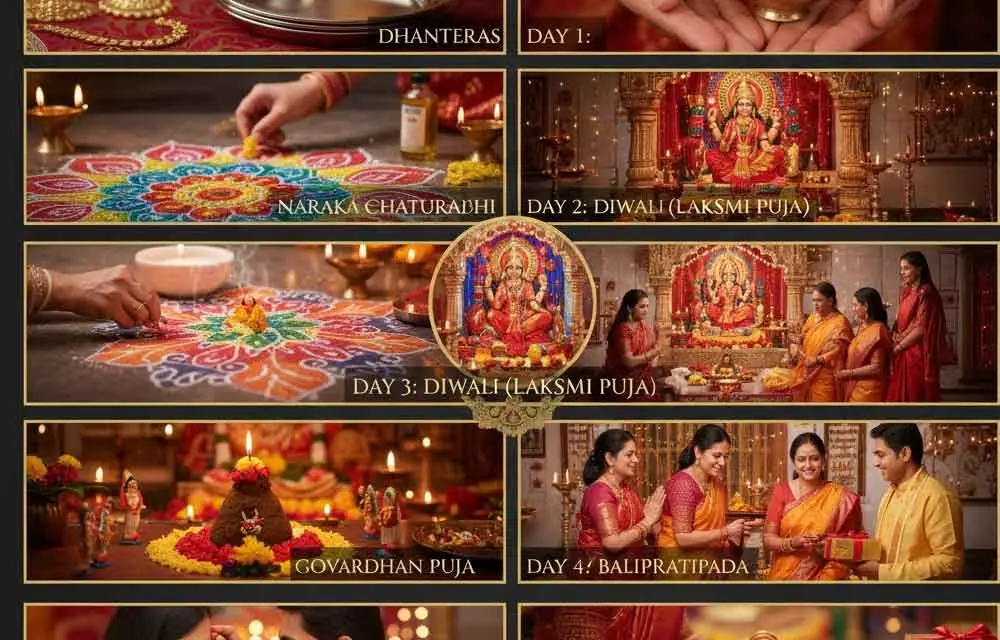
Diwali, the Hindu festival of lights, spans five days, each with unique spiritual significance and practices.
Diwali, the Hindu festival of lights, spans five days, each with unique spiritual significance and practices.
Diwali, the Hindu festival of lights, spans five days, each with unique spiritual significance and practices. This guide, crafted for www.hindutone.com, outlines daily devotional activities from Dhanteras to Bhai Dooj, encouraging daily engagement with meaningful rituals and their deeper meanings. Follow this structured journey to deepen your spiritual connection and return each day for guidance.
Day 1: Dhanteras – Welcoming Prosperity
Significance: Dhanteras marks the beginning of Diwali, celebrating wealth and health. It honors Lord Dhanvantari, the deity of Ayurveda, and Goddess Lakshmi, the goddess of prosperity. The day emphasizes cleansing the self and surroundings to invite abundance.
Spiritual Practices:
- Morning: Begin with a purifying bath at sunrise. Chant the mantra "Om Dhanvantaraye Namah" (11 times) to invoke health and vitality.
- Cleansing Ritual: Clean your home, focusing on the puja room and entrance. Sprinkle Ganga jal (holy water) to purify the space.
- Evening Puja: Set up a small altar with an idol or image of Goddess Lakshmi and Lord Dhanvantari. Offer flowers, turmeric, and rice. Light a ghee diya (lamp) and chant the Lakshmi Ashtakam (8 verses in praise of Lakshmi).
- Offering: Prepare kheer (rice pudding) as prasad and share it with family.
- Reflection: Meditate for 10 minutes, visualizing prosperity and gratitude. Journal your intentions for the festival.
- Traditional Act: Purchase a small silver or gold item (like a coin) or utensils, symbolizing wealth accumulation.
Engagement Tip: Return tomorrow for Day 2’s guide to deepen your spiritual journey. Share your Dhanteras intentions on www.hindutone.com’s community forum.
Day 2: Naraka Chaturdasi (Choti Diwali) – Triumph Over Negativity
Significance: This day celebrates Lord Krishna’s victory over the demon Narakasura, symbolizing the triumph of good over evil and the removal of internal negativity. It’s a day for renewal and purification.
Spiritual Practices:
- Morning: Take an early bath with a few drops of sesame oil mixed into the water, symbolizing cleansing of negative energies.
- Mantra Chanting: Chant "Om Krishnaya Namah" (21 times) to invoke Krishna’s protective energy.
- Home Ritual: Light 14 small oil diyas around your home at dusk to dispel darkness and negativity.
- Puja: Offer prayers to Lord Krishna and Goddess Kali. Place marigold flowers and sweets on the altar. Recite the Durga Saptashati (select verses) or simply offer gratitude for strength.
- Charity: Donate food or clothes to the needy, reflecting the spirit of overcoming selfishness.
- Reflection: Spend 15 minutes in silence, contemplating habits you wish to release. Write them down and burn the paper safely as a symbolic act of letting go.
Engagement Tip: Share your reflections on www.hindutone.com’s forum and check back tomorrow for the main Diwali celebration guide.
Day 3: Diwali (Deepavali) – Festival of Lights
Significance: The core day of Diwali celebrates the return of Lord Rama to Ayodhya after defeating Ravana, symbolizing the victory of light over darkness and knowledge over ignorance. It’s a day to honor Goddess Lakshmi for wealth and Lord Ganesha for wisdom.
Spiritual Practices:
- Morning: Wake up during Brahma Muhurta (4–5 AM) for a bath. Chant "Om Gam Ganapataye Namah" (11 times) for Ganesha’s blessings.
- Lakshmi Puja: Create an elaborate altar with Lakshmi, Ganesha, and Saraswati idols. Offer lotus flowers, sweets (like laddoos), and coins. Perform the Lakshmi Puja with a priest or follow a guided ritual from www.hindutone.com. Chant the Sri Suktam or Lakshmi Gayatri Mantra (108 times).
- Lighting Diyas: Light oil or ghee diyas across your home, especially at the entrance, to welcome divine energies.
- Community: Share prasad (sweets like barfi) with neighbors and family, fostering unity.
- Reflection: Meditate for 20 minutes, focusing on gratitude for wisdom and abundance. Journal about your blessings.
- Festive Act: Light eco-friendly fireworks or sky lanterns to celebrate joyfully while being mindful of the environment.
Engagement Tip: Upload a photo of your Diwali diyas on www.hindutone.com and return tomorrow for Annakut’s guide.
Day 4: Annakut (Govardhan Puja) – Gratitude for Nature
Significance: This day commemorates Lord Krishna lifting the Govardhan Hill to protect villagers, symbolizing gratitude for nature’s bounty and humility before divine protection.
Spiritual Practices:
- Morning: Chant "Om Namo Bhagavate Vasudevaya" (21 times) to honor Krishna.
- Govardhan Puja: Create a small model of Govardhan Hill using rice, wheat, or clay. Decorate it with flowers and offer milk, curd, and sweets. Perform a simple puja with family, narrating the Govardhan story.
- Food Offering: Prepare a variety of vegetarian dishes (traditionally 56, called Chhapan Bhog) and offer them to Krishna. Share the food with family and the community.
- Nature Ritual: Plant a sapling or water a tree as an act of gratitude to nature.
- Reflection: Spend 10 minutes meditating on humility and interconnectedness with nature. Write a gratitude note to the earth.
Engagement Tip: Share your Annakut recipes or puja photos on www.hindutone.com’s forum and visit tomorrow for Bhai Dooj’s guide.
Day 5: Bhai Dooj – Celebrating Sibling Bonds
Significance: Bhai Dooj honors the bond between siblings, commemorating the love between Lord Yama (god of death) and his sister Yamuna. It’s a day to strengthen familial ties and pray for longevity.
Spiritual Practices:
- Morning: Chant "Om Yamaya Namah" (11 times) for protection and blessings.
- Sibling Ritual: Sisters apply a tilak (vermilion mark) on their brothers’ foreheads, pray for their long life, and offer sweets. Brothers reciprocate with gifts or blessings.
- Puja: Offer prayers to Lord Yama and Yamuna with a small diya, flowers, and rice. Recite a simple prayer for family unity.
- Family Time: Share a meal with siblings or family, reminiscing about shared memories.
- Reflection: Meditate for 10 minutes, focusing on love and gratitude for family. Write a heartfelt note to a sibling or loved one.
- Charity: Gift a small item (like clothes or food) to a sibling in need or a charitable cause, extending the spirit of love.
Engagement Tip: Share your Bhai Dooj stories or photos on www.hindutone.com and continue your spiritual journey with our ongoing festival guides.
Why Return to hindutone.com?
This 5-day guide is designed to deepen your connection to Diwali’s spiritual essence. Each day’s practices build on the previous, creating a holistic experience of purification, gratitude, and love. Join our community at www.hindutone.com to share your experiences, access guided puja videos, and explore more Hindu traditions year-round. Let’s keep the light of Diwali burning bright!
Frequently Asked Questions
When is 5?
5 is observed on its traditional tithi in the Hindu lunar calendar; refer to the year's panchang for the exact date in your region.
What is the significance of 5?
Diwali , the Hindu festival of lights, spans five days, each with unique spiritual significance and practices. This guide, crafted for www.hindutone.com , outlines daily devotional activities from Dhanteras to Bhai Dooj, encouraging daily engagement with meaningful rituals and their deeper meanings.
How is 5 celebrated?
Devotees observe it with puja, fasting or special offerings, visiting temples, chanting mantras, and gathering with family. Customs vary by region and tradition.
What should devotees do on 5?
Take a sacred bath, perform the day's puja and charity (dana), observe any prescribed fast, and chant mantras with sincere devotion.
You might also like

Gita Jayanti 2026 Prasad Recipes — Tulsi-Honoring Sweets, Krishna's Favourites & December 10 Bhog Plate
Shani Deva Temples Worldwide & Must-Performed Rituals — Complete Devotee's Guide
Maha Shivratri 2026 Vrat Recipes — Sabudana Khichdi, Singhada Halwa, Phalahara Foods Complete Fasting Guide