The Ultimate Diwali Recipe Guide: Prasad, Sweets, and Savory Snacks
Illuminate your kitchen this Festival of Lights with authentic recipes passed down through generations Diwali, the Festival of Lights, is as much a celebration…
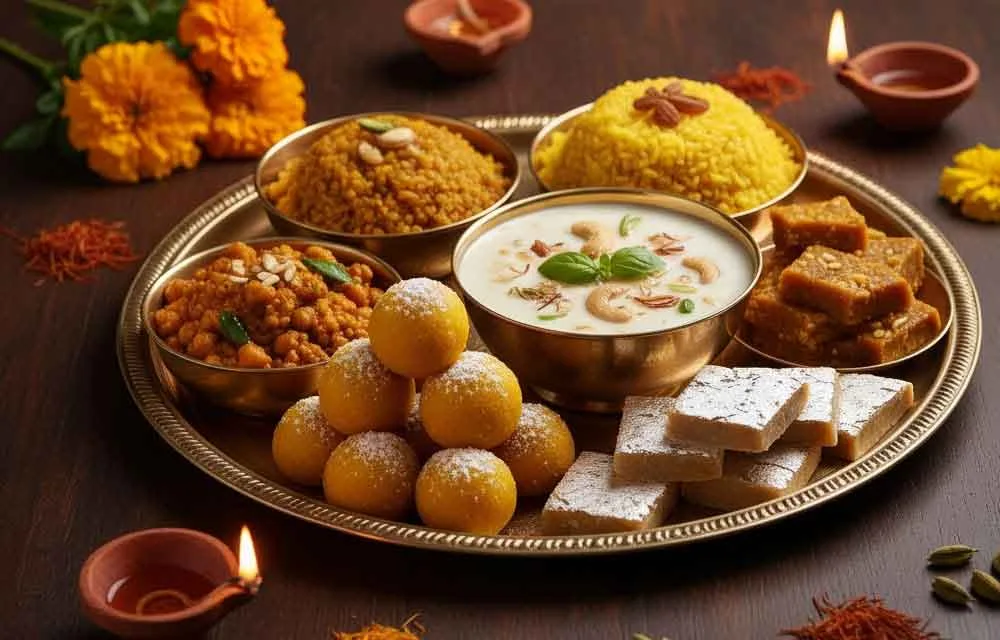
Illuminate your kitchen this Festival of Lights with authentic recipes passed down through generations Diwali, the Festival of Lights, is as much a celebration…
Illuminate your kitchen this Festival of Lights with authentic recipes passed down through generations
Diwali, the Festival of Lights, is as much a celebration of flavors as it is of illumination. Across India, kitchens transform into sacred spaces where traditional recipes come alive, filling homes with the aroma of ghee, cardamom, and devotion. Each dish prepared during Diwali carries centuries of tradition, regional wisdom, and spiritual significance.
This comprehensive guide brings you authentic recipes for prasad offerings, beloved sweets, and savory snacks that make Diwali complete. Whether you're a seasoned cook or preparing your first Diwali feast, these recipes will help you create memorable festive moments.
Understanding Diwali Food Traditions
Diwali spans five days, with each day holding special significance. The main celebration on Lakshmi Puja night calls for specific offerings to the goddess of wealth and prosperity. Foods prepared during Diwali are not merely culinary creations—they're offerings of gratitude, symbols of abundance, and vessels of blessing.
Why Sweets Dominate Diwali? Sweets symbolize the victory of good over evil, light over darkness. Offering mithai to Goddess Lakshmi invites sweetness and prosperity into our lives. The tradition also stems from the belief that sharing sweets spreads joy and strengthens community bonds.
PRASAD RECIPES: Sacred Offerings
1. Panchamrit (The Five Nectars)
The most sacred offering in Hindu rituals, combining five pure ingredients
Story: Panchamrit represents the five elements of nature. It's believed that this divine mixture purifies both the offering and the devotee, making it essential for Lakshmi Puja.
Ingredients:
- 1 cup whole milk
- 2 tablespoons yogurt (fresh, not sour)
- 2 tablespoons honey
- 2 tablespoons sugar
- 1 tablespoon ghee
- 1 tulsi leaf (holy basil)
Method:
- Mix all ingredients in a silver, copper, or steel vessel (never aluminum)
- Stir clockwise while chanting mantras if desired
- Add the tulsi leaf at the end
- Offer to the deity first, then distribute as prasad
Tip: Prepare fresh for each puja. The mixture should be consumed within hours of preparation.
2. Kesari Bhaat (Sweet Saffron Rice)
A golden offering symbolizing prosperity and auspiciousness
Story: The golden hue of this dish represents the glow of Lakshmi's blessings. In South India, this is the first prasad offered during Diwali puja.
Ingredients:
- 1 cup basmati rice
- 2 cups water
- 1 cup sugar
- ½ cup ghee
- ¼ teaspoon saffron strands
- 2 tablespoons warm milk
- 8-10 cashews
- 2 tablespoons raisins
- 4-5 cardamom pods, crushed
- Pinch of edible camphor (optional)
Method:
- Soak saffron in warm milk for 10 minutes
- Cook rice with water until tender, drain excess water
- Heat ghee in a pan, fry cashews and raisins until golden, set aside
- In the same ghee, add cooked rice and sugar
- Mix well until sugar dissolves completely
- Add saffron milk, cardamom, and camphor
- Garnish with fried cashews and raisins
- The mixture should be moist but not mushy
Serving: Offer warm to the deity. Serves 6-8 people.
3. Chana Dal Prasad (Bengali Style)
A humble yet divine offering from Bengal's Diwali traditions
Story: Associated with Kali Puja celebrations in Bengal, this prasad emphasizes simplicity and devotion over elaborate preparation. It's said that Goddess Kali prefers simple, heartfelt offerings.
Ingredients:
- 1 cup chana dal (Bengal gram)
- ¾ cup jaggery, grated
- ½ cup fresh coconut, grated
- 4 tablespoons ghee
- ½ teaspoon cardamom powder
- 2 tablespoons cashews
- 2 tablespoons raisins
Method:
- Wash and soak chana dal for 30 minutes
- Pressure cook with 2 cups water for 3-4 whistles until soft but not mushy
- Drain excess water completely
- Heat ghee, fry cashews and raisins, set aside
- In the same pan, add cooked dal and jaggery
- Cook on low heat, stirring continuously until jaggery melts and coats the dal
- Add coconut and cardamom powder
- Cook for 2-3 minutes until the mixture comes together
- Garnish with fried nuts
Tip: The prasad should have a crumbly texture, not sticky.
TRADITIONAL SWEETS (MITHAI)
4. Besan Ladoo (Gram Flour Balls)
The quintessential Indian sweet, symbolizing prosperity
Story: Ladoos represent completeness and unity. Their round shape symbolizes the cyclic nature of life and the wholeness of divine blessings. In many households, making ladoos together is a cherished family tradition.
Ingredients:
- 2 cups besan (gram flour)
- 1 cup powdered sugar
- ¾ cup ghee
- ½ teaspoon cardamom powder
- 2 tablespoons chopped almonds
- 2 tablespoons chopped cashews
- Pinch of nutmeg powder (optional)
Method:
- Heat ghee in a heavy-bottomed pan on low flame
- Add besan and roast, stirring continuously for 15-20 minutes
- The besan should turn golden brown with a nutty aroma (this is crucial—undercooked besan tastes raw)
- Turn off heat and let it cool for 5 minutes
- Add powdered sugar, cardamom, and nutmeg
- Mix thoroughly while still warm
- Add chopped nuts
- Once cool enough to handle, shape into round ladoos
- Press firmly so they don't crumble
Yield: 18-20 medium ladoos
Pro Tip: The secret to perfect ladoos is properly roasted besan. It should have a deep golden color and aromatic fragrance.
5. Kaju Katli (Cashew Diamonds)
The king of Indian sweets, served at every celebration
Story: Kaju Katli's diamond shape symbolizes wealth and prosperity. While now associated with celebrations across India, this sweet likely originated in Mughal kitchens, where cashews were prized ingredients.
Ingredients:
- 2 cups cashews (finest quality)
- 1 cup sugar
- ½ cup water
- 1 tablespoon ghee
- ¼ teaspoon cardamom powder
- Silver leaf (vark) for garnish (optional)
Method:
- Powder cashews in a blender to a fine powder (don't over-blend or it'll release oil)
- Sift to remove any large pieces
- Make sugar syrup: Heat sugar and water until you reach one-string consistency (when you touch the syrup between thumb and finger, a single thread should form)
- Add cashew powder to syrup, stirring quickly
- Add ghee and cardamom
- Mix continuously on low heat for 2-3 minutes until it forms a dough-like consistency
- Transfer to a greased plate immediately
- While still warm, roll between two parchment papers to ¼-inch thickness
- Apply silver leaf if using
- Cut into diamond shapes while still slightly warm
- Allow to cool completely before storing
Yield: 25-30 pieces
Critical Tip: The sugar syrup consistency is everything. Too thick and the katli will be hard; too thin and it won't set.
6. Coconut Barfi (Nariyal Barfi)
A simple yet elegant sweet from coastal regions
Story: Coconut, being offered whole to deities, holds sacred status. This barfi showcases the natural sweetness of coconut and represents purity.
Ingredients:
- 3 cups fresh coconut, finely grated
- 1½ cups sugar
- ½ cup milk
- 3 tablespoons ghee
- ½ teaspoon cardamom powder
- Few drops of rose water
- Pistachios for garnish
Method:
- Heat ghee in a heavy-bottomed pan
- Add grated coconut and sauté for 2-3 minutes
- Add milk and cook for 5 minutes, stirring continuously
- Add sugar and continue cooking on medium heat
- Keep stirring until the mixture thickens and starts leaving the sides of the pan (about 15-20 minutes)
- Add cardamom powder and rose water
- Transfer to a greased plate and spread evenly
- Garnish with sliced pistachios, pressing them gently
- Cut into squares while still warm
- Allow to cool and set for 2-3 hours
Yield: 20-25 pieces
7. Mysore Pak
Karnataka's beloved sweet with a melt-in-mouth texture
Story: Created in the royal kitchens of Mysore Palace in the early 1900s, this sweet was a happy accident when a cook experimented with besan, ghee, and sugar. It quickly became a royal favorite and spread across India.
Ingredients:
- 1 cup besan (gram flour)
- 1 cup sugar
- 1 cup ghee (plus extra for greasing)
- ¼ cup water
- Pinch of cardamom powder
Method:
- Sift besan twice to remove lumps
- Heat ¼ cup ghee in a pan, add besan
- Roast on low heat for 8-10 minutes until aromatic and light golden
- Make sugar syrup with sugar and water to one-string consistency
- Add roasted besan to syrup, stirring vigorously
- Add remaining ghee gradually in 3-4 batches
- Keep stirring until the mixture becomes frothy and porous (this takes about 10-15 minutes)
- The mixture should leave the sides of the pan
- Pour into a greased plate immediately
- Cool for 30 minutes, cut into squares while still slightly warm
Yield: 16-20 pieces
Expert Tip: The amount of ghee and continuous stirring creates the characteristic porous texture. Don't rush this process.
8. Gulab Jamun
Rose-scented milk balls soaked in fragrant syrup
Story: Believed to have Persian origins, Gulab Jamun has become inseparable from Indian celebrations. The name combines "gulab" (rose water) and "jamun" (a dark Indian berry), referring to its color and fragrance.
Ingredients:
For the jamuns:
- 1 cup milk powder
- ¼ cup all-purpose flour
- ¼ teaspoon baking soda
- 2 tablespoons ghee, melted
- 4-5 tablespoons warm milk (as needed)
- Ghee or oil for deep frying
For the syrup:
- 2 cups sugar
- 2 cups water
- 4-5 cardamom pods, crushed
- Few saffron strands
- 1 tablespoon rose water
- 1 teaspoon lemon juice
Method:
For syrup:
- Combine sugar and water, bring to boil
- Add cardamom and saffron
- Simmer for 8-10 minutes until slightly sticky
- Add lemon juice and rose water, turn off heat
- Keep warm
For jamuns:
- Mix milk powder, flour, and baking soda
- Add melted ghee, mix well
- Add milk gradually to form a soft dough (don't knead)
- Let rest for 5 minutes
- Divide into 15-18 small balls (size of small lime)
- Ensure there are no cracks
- Heat ghee/oil on low-medium heat
- Fry jamuns on low heat, turning continuously for even browning (takes 8-10 minutes)
- They should be dark golden brown
- Immediately transfer to warm syrup
- Soak for at least 2 hours before serving
Yield: 15-18 pieces
Serving: Best served warm with a drizzle of syrup.
9. Rava Ladoo (Semolina Balls)
Quick, easy, and utterly delicious
Story: A modern addition to the ladoo family, these are popular because they require no cooking after roasting, making them perfect for busy festive times.
Ingredients:
- 1 cup fine rava (semolina/suji)
- ¾ cup powdered sugar
- ½ cup ghee
- ¼ cup milk
- 2 tablespoons cashews, chopped
- 2 tablespoons raisins
- 1 tablespoon coconut, desiccated (optional)
- ½ teaspoon cardamom powder
Method:
- Heat ghee in a pan
- Fry cashews and raisins until golden, set aside
- In the same ghee, add rava
- Roast on low-medium heat for 10-12 minutes until aromatic and light golden
- Turn off heat, let cool for 5 minutes
- Add powdered sugar, cardamom, coconut, fried nuts
- Mix well
- Add warm milk gradually while mixing
- Once cool enough to handle, shape into ladoos
- If the mixture is too crumbly, add a tablespoon more milk
Yield: 12-15 ladoos
Tip: These ladoos taste better the next day as flavors meld together.
10. Jalebi
Crispy, syrupy spirals that define Indian celebrations
Story: With origins traced back to ancient Persia, jalebi has been mentioned in Indian literature for centuries. The pretzel-like shape is said to represent the intricate nature of karma and destiny.
Ingredients:
For batter:
- 1 cup all-purpose flour
- 1 tablespoon rice flour
- ¼ teaspoon baking soda
- ½ cup yogurt
- Water as needed
- Pinch of yellow food color (optional)
For syrup:
- 2 cups sugar
- 1 cup water
- Few saffron strands
- ½ teaspoon cardamom powder
- 1 teaspoon lemon juice
- Ghee for frying
Method:
Prepare batter (make 12-24 hours ahead):
- Mix flour, rice flour, baking soda
- Add yogurt and enough water to make a thick flowing batter
- Whisk well to remove lumps
- Cover and ferment for 12-24 hours at room temperature
- Before frying, add food color if using
Make syrup:
- Boil sugar and water until one-string consistency
- Add saffron, cardamom, and lemon juice
- Keep warm on lowest heat
Fry jalebis:
- Heat ghee in a wide pan
- Pour batter into a piping bag or bottle with thin nozzle
- Squeeze batter in spiral patterns directly into hot ghee
- Fry until crisp on both sides (about 2-3 minutes)
- Immediately transfer to warm syrup
- Soak for 30-60 seconds
- Remove and serve immediately
Yield: 15-18 pieces
Serving Tip: Jalebi is best enjoyed warm and fresh!
SAVORY SNACKS (NAMKEEN)
11. Chakli (Murukku)
Spiral-shaped crispy snacks with origins in South India
Story: Chakli's spiral shape represents the cycle of life and the goddess's energy. During Diwali, making chakli is a community activity where women gather to prepare large batches.
Ingredients:
- 2 cups rice flour
- ½ cup besan (gram flour)
- ¼ cup urad dal flour
- 2 tablespoons butter, softened
- 1 teaspoon cumin seeds
- 1 teaspoon sesame seeds (white and black mixed)
- ½ teaspoon ajwain (carom seeds)
- 1 teaspoon red chili powder
- ¼ teaspoon asafoetida (hing)
- Salt to taste
- Water as needed
- Oil for deep frying
Method:
- Mix all dry ingredients and spices
- Add butter and mix well
- Add water gradually to form a smooth, pliable dough
- The dough should be soft but not sticky
- Heat oil for deep frying (medium heat)
- Fill chakli maker with dough
- Press directly into hot oil in spiral patterns (3-4 rounds)
- Fry on medium heat until golden and crisp
- Drain on paper towels
- Cool completely before storing
Yield: 25-30 chaklis
Storage: Store in airtight containers for up to 3 weeks.
12. Namak Pare (Savory Diamond Crackers)
Crispy, flaky crackers that disappear quickly
Story: These simple crackers have been festive staples for generations, representing the importance of simplicity and tradition. Every family has their secret ingredient—some add ajwain, others prefer cumin.
Ingredients:
- 2 cups all-purpose flour
- ¼ cup semolina (optional, for crispiness)
- 4 tablespoons ghee or oil
- 1 teaspoon ajwain (carom seeds)
- ½ teaspoon black pepper, crushed
- 1 teaspoon salt
- ¼ teaspoon baking soda
- Water as needed
- Oil for deep frying
Method:
- Mix flour, semolina, salt, ajwain, pepper, and baking soda
- Add ghee/oil and rub into flour until breadcrumb-like texture
- Add water gradually to form a stiff dough
- Knead for 5 minutes until smooth
- Cover and rest for 20 minutes
- Divide into portions
- Roll each portion into ⅛-inch thick rectangle
- Cut into diamond shapes
- Prick each piece with a fork
- Heat oil for deep frying (medium heat)
- Fry in batches until light golden (they continue to crisp up after frying)
- Drain on paper towels
Yield: 40-50 pieces
Tip: Don't over-brown them; they should be light golden for maximum crispiness.
13. Aloo Bhujia (Potato Sev)
Ultra-crispy potato noodles
Story: This snack originated in Bikaner, Rajasthan, where Haldiram started selling it from a small shop. It became so popular that Bikaner bhujia is now famous worldwide.
Ingredients:
- 2 large potatoes, boiled and mashed
- 1 cup besan (gram flour)
- 2 tablespoons rice flour
- 1 teaspoon red chili powder
- ½ teaspoon turmeric powder
- 1 teaspoon black salt
- ½ teaspoon regular salt
- ¼ teaspoon asafoetida
- Oil for deep frying
Method:
- Mix mashed potatoes with all ingredients
- Knead into a smooth, crack-free dough
- If too dry, add a teaspoon of water; if too wet, add besan
- Heat oil for deep frying (medium-high heat)
- Fill sev maker or chakli maker with the dough (use thin noodle disc)
- Press directly into hot oil
- Fry until golden and crisp
- Break into desired lengths while still in oil
- Drain on paper towels
- Cool completely before storing
Yield: 4-5 cups
Storage: Store in airtight containers for up to 2 weeks.
14. Mathri (Flaky Crackers)
North Indian tea-time favorite
Story: Mathri is the North Indian answer to crackers, traditionally made during winter festivities. In many Punjabi households, no Diwali is complete without freshly made mathri.
Ingredients:
- 2 cups all-purpose flour
- ¼ cup semolina
- ½ cup ghee or oil
- 1 teaspoon ajwain (carom seeds)
- ½ teaspoon cumin seeds
- ½ teaspoon black pepper, crushed
- ½ teaspoon kalonji (nigella seeds)
- 1 teaspoon salt
- Water as needed
- Oil for deep frying
Method:
- Mix flour, semolina, all spices, and salt
- Add ghee/oil and mix until breadcrumb texture
- Add water gradually to form a stiff dough
- Knead well for 5-7 minutes
- Cover and rest for 30 minutes
- Divide into small balls
- Roll each into ¼-inch thick circle
- Prick all over with a fork
- Heat oil on low-medium heat (this is important—low temperature ensures even cooking)
- Fry on low heat, turning frequently, until golden brown (takes 8-10 minutes per batch)
- Drain on paper towels
Yield: 20-25 pieces
Pro Tip: The secret to flaky mathri is the ghee-to-flour ratio and slow frying.
15. Mixture (South Indian Style)
Crunchy, spicy mix of various elements
Story: Every region in India has its version of mixture, but the South Indian variety with its perfect balance of sweet, spicy, and savory elements is especially popular during Diwali.
Ingredients:
For sev:
- 1 cup besan
- 2 tablespoons rice flour
- ½ teaspoon red chili powder
- Pinch of asafoetida
- Salt to taste
- Water as needed
For mixture:
- 1 cup puffed rice (murmura)
- ½ cup peanuts, roasted
- ½ cup cashews, halved
- ½ cup fried gram dal (chana dal)
- 10-12 curry leaves
- 2 teaspoons oil
- ½ teaspoon mustard seeds
- ½ teaspoon turmeric powder
- 1 teaspoon red chili powder
- 2 tablespoons powdered sugar
- Salt to taste
- Oil for frying
Method:
Make sev:
- Mix besan, rice flour, spices, salt
- Add water to form smooth dough
- Fill sev maker and press into hot oil
- Fry until crisp, drain
Prepare mixture:
- Roast puffed rice until crisp (in dry pan)
- Fry cashews and curry leaves
- Mix all fried elements
- Heat 2 teaspoons oil, add mustard seeds
- Add turmeric and chili powder
- Pour over mixture
- Add powdered sugar and salt
- Mix well and cool completely
Yield: 4-5 cups
Storage: Keeps fresh for 2-3 weeks in airtight containers.
FESTIVE BEVERAGES
16. Thandai (Spiced Milk Drink)
Cooling, aromatic beverage for festive occasions
Story: While traditionally associated with Holi, thandai has become popular during Diwali celebrations in North India. The aromatic spices and nuts make it a luxurious drink fit for celebrations.
Ingredients:
- 4 cups full-fat milk
- ½ cup sugar (adjust to taste)
- 2 tablespoons almonds
- 2 tablespoons cashews
- 1 tablespoon pistachios
- 2 tablespoons melon seeds
- 1 tablespoon poppy seeds
- 1 tablespoon fennel seeds
- 10-12 black peppercorns
- 4-5 green cardamom pods
- Few saffron strands
- 1 tablespoon rose water
- ½ teaspoon kewra water (optional)
Method:
- Soak all nuts and seeds in water for 4-6 hours
- Drain and grind with black pepper and cardamom to a smooth paste
- Strain through muslin cloth, squeezing to extract all liquid (this is thandai concentrate)
- Boil milk and cool to room temperature
- Add thandai concentrate, sugar, and saffron to milk
- Chill for 2-3 hours
- Before serving, add rose water and kewra water
- Serve chilled, garnished with slivered nuts and rose petals
Serves: 4-6 people
TIPS FOR DIWALI COOKING SUCCESS
Preparation Timeline
2 Weeks Before:
- Make shopping lists
- Check pantry staples
- Order specialty ingredients online if needed
1 Week Before:
- Shop for dry ingredients and spices
- Make and freeze dough for savory snacks
- Prepare and store dry snacks like chakli, mathri, namak pare
3-4 Days Before:
- Make shelf-stable sweets like ladoos and barfi
- Prepare more savory snacks
- Store in airtight containers
2 Days Before:
- Make coconut barfi, kaju katli
- Prepare thandai concentrate
- Final shopping for fresh ingredients
1 Day Before:
- Make gulab jamun (improves overnight)
- Prepare prasad items
- Clean and organize kitchen for Lakshmi Puja
Diwali Day:
- Make fresh jalebi
- Prepare hot snacks
- Assemble serving platters
- Make fresh prasad items
Storage Guidelines
ItemStorage MethodShelf LifeLadoosAirtight container, room temperature10-15 daysBarfiAirtight container, refrigerate7-10 daysKaju KatliAirtight container, cool dry place10-12 daysGulab JamunRefrigerate in syrup1 weekJalebiBest consumed fresh2-3 daysChakli/MathriAirtight container3-4 weeksMixtureAirtight container2-3 weeksPrasadPrepare fresh dailyConsume within 24 hours
Essential Kitchen Tools
- Heavy-bottomed pans (prevents burning)
- Kadhai for deep frying
- Chakli maker/sev maker
- Food processor
- Candy thermometer (for sugar syrup)
- Rolling pins and boards
- Airtight containers for storage
- Muslin cloth for straining
- Piping bags for jalebi
Common Mistakes to Avoid
- Sugar Syrup Consistency: This is crucial for many sweets. Too thick = hard sweets; too thin = sweets won't set
- Roasting Besan: Never rush this. Under-roasted besan tastes raw
- Oil Temperature: Too hot burns outside while inside stays raw; too cool makes items oily
- Ghee Quality: Use pure ghee for authentic taste
- Measuring: Indian cooking often uses volume, but be consistent
- Rushing: Most traditional recipes need time and patience
REGIONAL VARIATIONS ACROSS INDIA
North India (Punjab, UP, Delhi)
- Focus on milk-based sweets
- Abundant use of dry fruits
- Rich, ghee-laden preparations
- Popular: Gujiya, Balushahi, Gur ki Roti
West India (Gujarat, Maharashtra, Rajasthan)
- Balance of sweet and savory
- Use of jaggery and coconut
- Farsan (savory snacks) varieties
- Popular: Mohanthal, Shankarpali, Puran Poli
South India (Tamil Nadu, Karnataka, Andhra Pradesh)
- Rice and lentil-based items
- Coconut and jaggery prominence
- Crispy murukku varieties
- Popular: Adhirasam, Bobbatlu, Badam Halwa
East India (Bengal, Odisha)
- Milk-based sweets excel
- Chenna (cottage cheese) preparations
- Light and spongy textures
- Popular: Rasgulla, Sandesh, Chhena Poda
THE SPIRITUAL SIGNIFICANCE OF DIWALI FOOD
Colors and Their Meanings
- Yellow (Kesari/Saffron): Represents knowledge and learning
- White (Milk/Coconut): Purity and truth
- Orange (Jalebi): Courage and sacrifice
- Green (Pistachios): Growth and prosperity
- Silver (Vark): Wealth and abundance
The Five Elements in Diwali Food
Traditional recipes incorporate all five elements:
- Earth: Grains, flour, sugar
- Water: Milk, syrups
- Fire: Cooking process
- Air: Fermentation, rising agents
- Space: The offering itself creates sacred space
Offering Protocol
- Clean the puja area and cooking space
- Wear clean clothes while cooking prasad
- Maintain positive thoughts and silence (or chanting)
- Offer food to deity before family consumption
- Distribute prasad with respect
- Share with neighbors and those in need
MODERN ADAPTATIONS
Health-Conscious Options
Sugar-Free Versions:
- Use dates, figs, or stevia for sweetness
- Replace sugar in ladoos with dates paste
- Use jaggery powder for barfi
Low-Fat Options:
- Reduce ghee in ladoos
- Bake chakli instead of frying
- Use hung curd instead of full-fat milk
Vegan Adaptations:
- Replace ghee with coconut oil
- Use almond or coconut milk
- Replace milk powder with cashew powder
Fusion Ideas
- Gulab Jamun Cheesecake
- Kaju Katli Chocolate Bark
- Ladoo Energy Balls (protein-rich)
- Jalebi Pancakes
- Chakli Chex Mix
DIWALI GIFT HAMPER IDEAS
Traditional Hamper
- Assorted ladoos (3 varieties)
- Kaju katli
- Namak pare
- Chakli
- Small diya with incense
Premium Hamper
- Silver-varked barfi
- Dry fruit mix
- Saffron
- Handcrafted chocolates
- Designer diya
Health-Focused Hamper
- Roasted nuts mix
- Dates and figs
- Sugar-free sweets
- Herbal tea
- Honey
CONCLUSION: KEEPING TRADITIONS ALIVE
As you prepare these recipes, remember that Diwali cooking is more than following instructions—it's about connecting with centuries of tradition, creating memories with family, and passing down cultural heritage to the next generation.
The kitchen during Diwali becomes a sacred space where food transcends mere sustenance to become an offering, a blessing, and a bond. Whether you're making your grandmother's signature ladoos or trying a recipe for the first time, you're participating in a beautiful tradition that illuminates not just homes, but hearts.
This Diwali, may your kitchen be filled with the aroma of tradition, your home with the light of diyas, and your heart with the warmth of togetherness.
SHARE YOUR DIWALI STORIES
We'd love to hear about your Diwali cooking experiences! Share your family's unique recipes, cooking memories, or photos of your Diwali feast on social media with #HinduToneDiwali
Shubh Deepavali! May this Festival of Lights bring prosperity, joy, and sweetness to your life.
Have questions about any recipe? Need substitutions for ingredients? Leave a comment below, and our community will help you create the perfect Diwali feast!
Subscribe to HinduTone for more traditional recipes, festive guides, and stories that celebrate our rich cultural heritage.
Frequently Asked Questions
When is The Ultimate Diwali Recipe?
The Ultimate Diwali Recipe is observed on its traditional tithi in the Hindu lunar calendar; refer to the year's panchang for the exact date in your region.
What is the significance of The Ultimate Diwali Recipe?
Illuminate your kitchen this Festival of Lights with authentic recipes passed down through generations Diwali , the Festival of Lights, is as much a celebration of flavors as it is of illumination. Across India, kitchens transform into sacred spaces where traditional recipes come alive, filling homes with the aroma of ghee, cardamom, and devotion.
How is The Ultimate Diwali Recipe celebrated?
Devotees observe it with puja, fasting or special offerings, visiting temples, chanting mantras, and gathering with family. Customs vary by region and tradition.
What should devotees do on The Ultimate Diwali Recipe?
Take a sacred bath, perform the day's puja and charity (dana), observe any prescribed fast, and chant mantras with sincere devotion.
You might also like
Hindu Festival Calendar 2026 — Complete Guide for NRIs (Dates, Tithis, Puja)

June 2026 Hindu Festival Calendar — Complete Dates, Vrat & Puja Guide for NRIs

The Resolve of a Monk – A Divine Incident Showcasing Kanchi Paramacharya’s Compassion