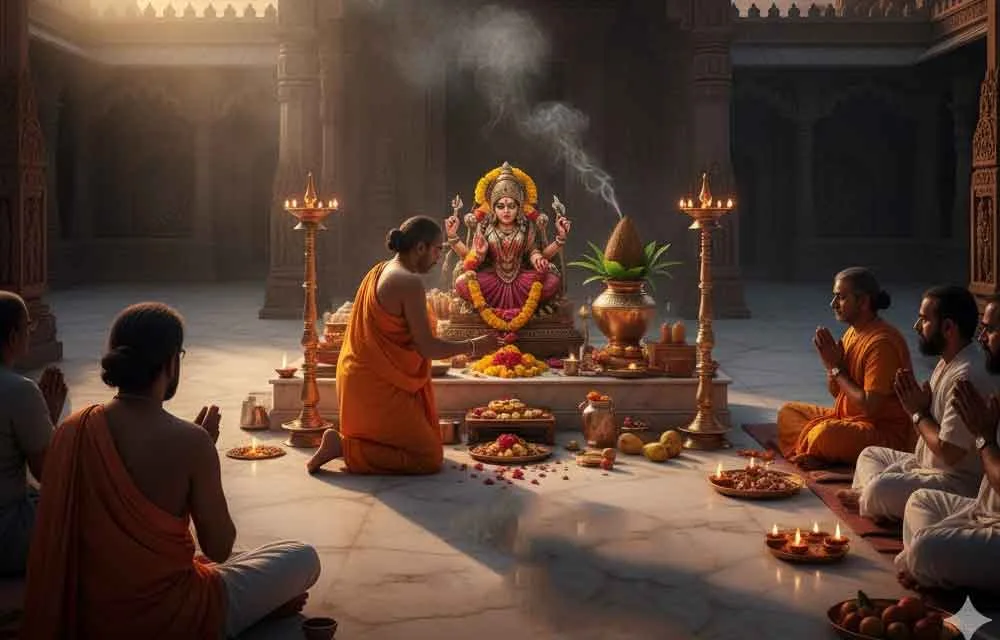
Kartika Amavasya 2026 for USA & Canada Hindus: Complete Guide to Rituals Across Time Zones
There are two "Kartika Amavasya" dates in 2026: the Diwali new moon on Sunday 8 November in the North Indian (purnimanta) calendar, and Tuesday 8 December, the last day of Karthika Masam in the Telugu and Kannada (amanta) calendar. How to observe both in North America.

There are two "Kartika Amavasya" dates in 2026: the Diwali new moon on Sunday 8 November in the North Indian (purnimanta) calendar, and Tuesday 8 December, the last day of Karthika Masam in the Telugu and Kannada (amanta) calendar. How to observe both in North America.
Quick answer: In 2026 "Kartika Amavasya" means two different days, depending on which Hindu calendar your family follows. In the North Indian (purnimanta) calendar, the new moon of Kartik is Diwali, Sunday 8 November 2026, observed with Lakshmi Puja after local sunset in the USA and Canada. In the Telugu and Kannada (amanta) calendar, Karthika Masam runs 10 November to 8 December, so Karthika Amavasya is Tuesday 8 December 2026, the last day of the holy month. Always confirm tithi timings for your own city.
Two calendars, two Kartika Amavasyas
Hindu lunar months are counted in two ways. In the amanta system (used in Andhra Pradesh, Telangana, Karnataka, Maharashtra and Gujarat), a month ends on the new moon. In the purnimanta system (used across most of North India), a month ends on the full moon. The dark fortnight before Diwali therefore belongs to Kartik for a family from Uttar Pradesh or Punjab, but to Ashvin (Ashwayuja) for a family from Hyderabad or Bengaluru.
The result is that the same new moon carries different month names, and the name "Kartika Amavasya" lands on two different days about a month apart:
| Calendar | Who follows it | Kartika Amavasya 2026 | What it marks |
|---|---|---|---|
| Purnimanta (North Indian) | Hindi-speaking states, Punjab, Bihar and many North Indian families abroad | Sunday 8 November | Diwali / Lakshmi Puja (North Indian Kartik runs roughly 26 Oct to 24 Nov) |
| Amanta (Telugu, Kannada) | Telugu, Kannada and many Marathi and Gujarati families | Tuesday 8 December | Close of Karthika Masam (10 Nov to 8 Dec) |
Neither is "wrong". If your family lights Karthika deepams through November and keeps Karthika Somavaram fasts, your Karthika Amavasya is 8 December. If Kartik for you means the month of Diwali and Kartik Snan, it is 8 November. Because 2026 contains an extra lunar month, both dates fall roughly three weeks later than last year. The Karthika Masam dates above follow the Indian Telugu panchang; in North America, where Govardhan Puja (Padyami) falls on 9 November, the local tithi can shift by a day, so check a panchang set to your city or your temple's calendar.
Timings in North America: always use local time
Amavasya tithi start and end times are calculated for your location, and they shift by an hour or more between Eastern and Pacific time. We do not reproduce India-based times here. Check Drik Panchang (or a similar app) set to your own city, or ask your temple priest, for the exact tithi window, Aparahna (afternoon) period for tarpan and Pradosh Kaal for lamps.
For Diwali night on 8 November, Lakshmi Puja is done in the Pradosh Kaal after local sunset. Local sunset times on 8 November 2026:
| City | Sunset, Sun 8 Nov 2026 |
|---|---|
| New York | 4:44 PM |
| Toronto | 4:59 PM |
| Chicago | 4:36 PM |
| Houston | 5:29 PM |
| Calgary | 4:58 PM |
| Vancouver | 4:40 PM |
| Los Angeles | 4:54 PM |
Lakshmi Puja is done in the Pradosh Kaal after local sunset; confirm the exact muhurat for your city on Drik Panchang. Note that daylight saving time ends on 1 November, so evenings arrive early. See our Lakshmi Puja 2026 guide and Diwali 2026 USA guide for the full vidhi.
Rituals for any Kartika Amavasya
Whichever date you keep, the core observances of a Kartika new moon are the same, and all of them adapt well to a North American home.
1. Early morning holy bath
Traditionally a dip in the Ganga, Yamuna or Godavari. At home, add a few drops of Ganga jal (sold at Indian grocers and temple shops) to your bath water, rise in Brahma Muhurta if you can, bathe with a prayer and put on clean clothes. If you have no Ganga jal, bathing with devotion and a mantra is enough.
2. Surya arghya
After the bath, fill a copper or brass lota with water, add a few black sesame seeds and a red flower, face east and pour the water slowly towards the rising sun while chanting "Om Suryaya Namah". An east-facing balcony or window works perfectly well, and in a cold Canadian December the garage door or a doorway is fine.
3. Pitru Tarpan
Amavasya is the traditional day to remember departed ancestors. A simplified tarpan for NRI families:
- Bathe, wear clean clothes and sit on a white cloth facing south in a quiet spot (backyard, balcony or a clean room).
- Hold kusha (darbha) grass between your fingers if available; long grass is an accepted substitute.
- Mix water with black sesame seeds (and barley if you have it), and pour it from the palm while naming each departed relative, or say "Om Sarva Pitribhyo Svadha Namah" to honour all ancestors collectively.
- If your family tradition includes pinda, offer small balls of cooked rice mixed with sesame, ghee and a little jaggery.
- Feed birds, give to a food bank or shelter, or donate in your ancestors' memory.
The afternoon (Aparahna) is the traditional window; your local panchang shows it for your city. If you are at work, a short prayer at lunch and the tarpan in the evening is a reasonable adaptation, and many temples perform tarpan on devotees' behalf.
4. Deep daan (lighting lamps)
Lighting lamps after sunset is the heart of both observances: on Diwali to welcome Lakshmi, and on 8 December to close a month of Karthika deepams. Light a ghee lamp at your altar and diyas near windows and the entrance. In apartments or where fire rules apply, LED diyas are perfectly acceptable; keep at least one real lamp at the altar if it is safe, never leave flames unattended and keep diyas away from curtains.
5. Charity (daan)
Food banks, shelters, temple annadanam and causes your family supports in India are all appropriate. Winter blankets and warm clothing are especially meaningful around the December date.
Diwali night, Sunday 8 November (purnimanta Kartik Amavasya)
For North Indian families, Kartik Amavasya is Diwali itself, and in 2026 it falls on a Sunday, which makes a relaxed family puja easy in the USA and Canada. In outline:
- Clean the home, draw a rangoli at the entrance and set up a Lakshmi-Ganesha altar with a red cloth, kalash, diyas, flowers, sweets, fruits and coins.
- After local sunset, light the lamps, invoke Ganesha first ("Om Gam Ganapataye Namah"), then Lakshmi ("Om Shreem Mahalakshmyai Namah").
- Offer flowers, kumkum, bhog and aarti; read or play the Lakshmi Stotram or Ashtottara.
- Light diyas through the house and at the door; let children help under supervision and explain the story of Lakshmi and Rama's return in simple English.
The days around it are covered in our guides to Dhanteras 2026, Naraka Chaturdashi 2026 and Govardhan Puja 2026. In the USA and Canada, Govardhan Puja is Monday 9 November and Bhai Dooj is Tuesday 10 November.
Karthika Amavasya, Tuesday 8 December (amanta)
For Telugu and Kannada families, 8 December brings Karthika Masam to a close. After a month of evening deepams, Karthika Somavaram fasts (16, 23 and 30 November and 7 December) and Karthika Pournami on Tuesday 24 November, the Amavasya is a day for:
- A final early bath and Shiva or Vishnu worship at home or at the temple.
- Pitru Tarpan and charity in memory of ancestors.
- Lighting the last Karthika deepam of the month at dusk, ideally near a Tulsi plant or at the altar.
- In many Andhra families, the next morning (Margashira Padyami) is kept as Poli Padyami, when women float small lamps on water to mark the end of the Karthika deepam observance.
Because 8 December is a weekday, a 20-minute morning routine (bath, Surya arghya, a lamp at the altar) followed by tarpan and deepam after work is a practical plan. Read more in our Karthika Masam 2026 guide and Karthika Somavaram 2026.
Fasting options for working professionals
- Nirjala (no food or water until evening): best suited to those working from home and in good health.
- Fruit and milk: the most practical choice at work; pack bananas, apples, dates, nuts, yoghurt and coconut water.
- One meal: skip breakfast and lunch, then eat one sattvic vegetarian meal after the evening puja or deepam.
Break the fast after the evening worship, starting with fruit or milk. Avoid non-vegetarian food, alcohol and tobacco on the day. Pregnant women, diabetics and anyone on medication should choose a lighter observance and speak to a doctor.
Temples in the USA and Canada
Most large temples mark Diwali and the Karthika month, and many offer tarpan or archana on Amavasya. Long-established temples include the Hindu Temple Society of North America (Flushing, New York), the Sri Venkateswara Temple in Pittsburgh, the Sri Siva Vishnu Temple (Lanham, Maryland), the Hindu Temple of Greater Chicago (Lemont), the Sri Venkateswara Temple in Cary, North Carolina, the Hindu Temple of Atlanta, the BAPS Shri Swaminarayan Mandir in Toronto, the Sri Durka Temple in Toronto and the Hindu Temple of Ottawa-Carleton. Programmes and timings change every year, so check your local temple for its 2026 schedule.
Practical tips for North American homes
- Cold weather: dress warmly for the dawn arghya; make indoor lamps the focus and use electric lights outdoors if it is windy.
- Apartments: a compact altar, LED diyas and tarpan on a balcony all work; respect building fire rules.
- Puja materials: Indian grocery stores and temple shops carry Ganga jal, sesame, kusha, diyas and camphor; order online early for the December date.
- Children: diya painting, rangoli with stencils and simple stories keep American- and Canadian-born children engaged without pressure.
- Disposal: compost flowers, pour holy water onto plants, and share food offerings as prasad rather than throwing them away.
Simple mantras
- Surya: "Om Suryaya Namah" (salutations to the Sun).
- Ganesha: "Om Gam Ganapataye Namah" (salutations to the remover of obstacles).
- Lakshmi: "Om Shreem Mahalakshmyai Namah" (salutations to Goddess Mahalakshmi).
- Ancestors: "Om Sarva Pitribhyo Svadha Namah" (offerings to all ancestors).
- Shiva: "Om Namah Shivaya", and the Mahamrityunjaya mantra for health and protection.
Quick checklist
- Decide which Kartika Amavasya your family keeps (8 November or 8 December), or observe both.
- Check your local temple's 2026 programme and your city's tithi times on a panchang app.
- Buy sesame, Ganga jal, diyas, flowers and sweets a few days ahead.
- Plan the morning bath and arghya, an afternoon or evening tarpan, and lamps after sunset.
- Set aside a donation in your ancestors' memory and call family in India.
Frequently asked questions
Is Kartika Amavasya 2026 on 8 November or 8 December?
Both, depending on your calendar. In the North Indian purnimanta calendar the new moon of Kartik is Diwali, Sunday 8 November 2026. In the Telugu and Kannada amanta calendar, Karthika Masam runs from 10 November to 8 December, so Karthika Amavasya is Tuesday 8 December 2026, the closing day of the month.
Should I follow India time or local North American time?
Always follow your local time. Tithis and muhurats are calculated for your own city, and New York, Chicago, Calgary and Vancouver each differ. Use Drik Panchang (or a similar panchang app) set to your city, or ask your temple priest.
When is Lakshmi Puja on Diwali 2026 in the USA and Canada?
Lakshmi Puja is on Sunday 8 November and is done in the Pradosh Kaal after local sunset, for example after about 4:44 PM in New York and 4:59 PM in Toronto. Confirm the exact muhurat for your city on Drik Panchang.
Can I do Pitru Tarpan myself without a priest?
Yes. A simple tarpan of water with black sesame seeds, offered facing south while remembering your ancestors by name (or collectively), is traditional and valid. Many temples also perform tarpan on behalf of devotees; check with your local temple for its 2026 arrangements.
Why are these dates so much later than last year?
2026 has an extra lunar month (Adhik Maas), so Diwali, Karthika Masam and both Kartika Amavasya dates fall roughly three weeks later in the Gregorian calendar than they did last year.
Can I observe on the weekend instead?
Try to do at least a diya and a short prayer on the actual day. Diwali on 8 November is a Sunday in 2026, which makes the main puja easy; 8 December is a Tuesday, so keep the morning short and do the main lamp lighting after work.
Editor's note (4 October 2026)
Updated for 2026. Dates follow Drik Panchang: Diwali (purnimanta Kartik Amavasya) on 8 November 2026 in the USA and Canada, and Karthika Amavasya (amanta) on 8 December 2026. Sunset times are local for 8 November. We have removed the previous edition's tithi times, temple addresses and phone numbers, priest fees and website lists, which cannot be kept accurate; please confirm timings for your city on Drik Panchang and contact your temple directly.
Related guides
You might also like

Karthika Masam Monday Rituals: Complete Guide for Hindus in USA, Canada, UK & Australia
Karthika Masam Sunday Rituals: Sacred Sun Worship Traditions and Mantras
Kartika Masam 2026 Monday Rituals in the UK: Karthika Somavaram Poojas, Temple Guide & Shiva Mantras