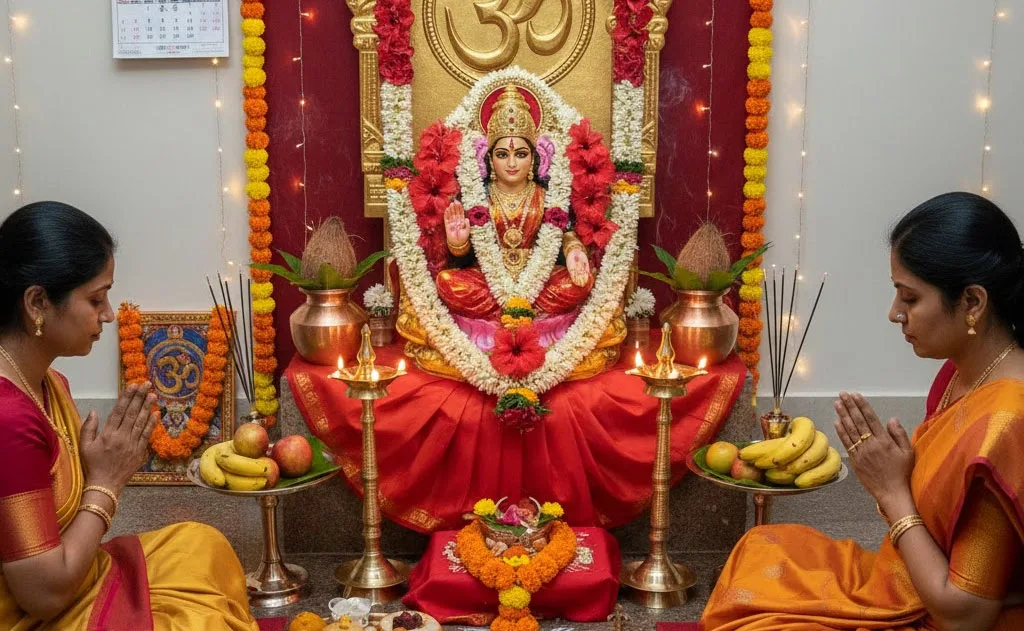
Utpanna Ekadashi 2026: Date (Friday 4 December), Tithi, Parana, Vrat Katha and Fasting Rules by Country
Utpanna Ekadashi 2026 falls on Friday 4 December. Drik Panchang gives the Ekadashi tithi from 11:03 PM IST on Thursday 3 December to 11:44 PM IST on Friday 4 December, and the fast is broken on Saturday 5 December. Our calculation gives Friday 4 December for the USA, Canada, the UK, the Gulf, Singapore and Australia too. Here is the story of Goddess Ekadashi and the demon Mura in our own words, a simple vrat vidhi, what to eat, and a health note.
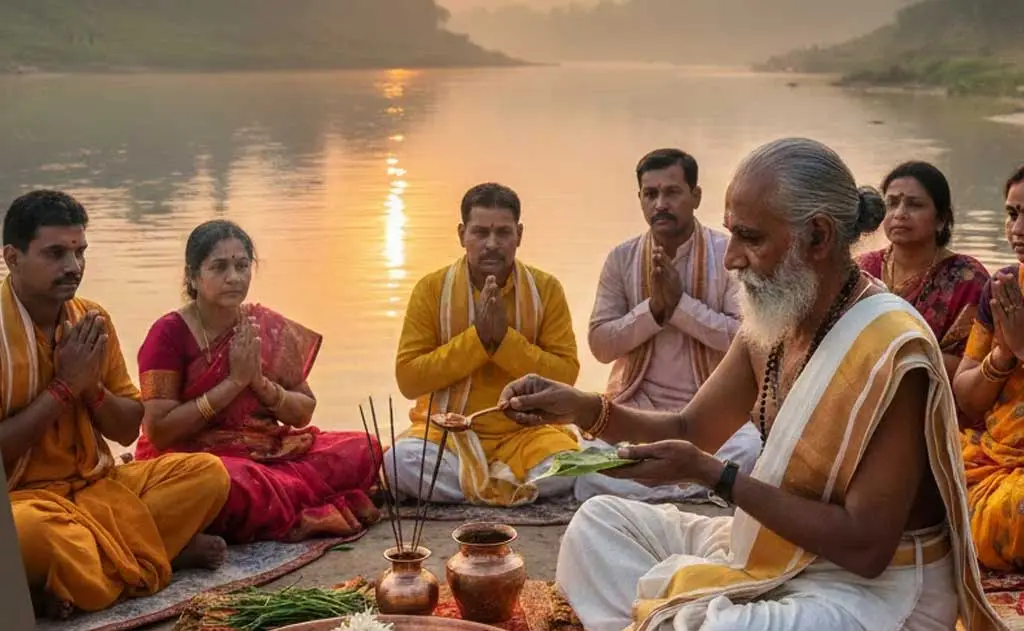
Quick answer: Utpanna Ekadashi 2026 is on Friday 4 December 2026. Drik Panchang gives the Ekadashi tithi from 11:03 PM IST on Thursday 3 December to 11:44 PM IST on Friday 4 December. The fast is broken (parana) on Saturday 5 December after sunrise. By our calculation the date is the same, Friday 4 December, in the USA, Canada, the UK, the UAE, Singapore, Malaysia and Australia.
Last updated: 21 October 2026. An earlier version of this page gave conflicting dates (4 December in one place and 26 November in another). We have corrected it throughout: the date and tithi times now come from Drik Panchang, the dates abroad come from our validated calculator, and the vrat section has been rewritten with a health note.
Utpanna Ekadashi 2026 date and tithi (Utpanna Ekadashi kab hai)
| Detail | India (Drik Panchang, IST) |
|---|---|
| Utpanna Ekadashi fast | Friday 4 December 2026 |
| Ekadashi tithi begins | 11:03 PM, Thursday 3 December |
| Ekadashi tithi ends | 11:44 PM, Friday 4 December |
| Parana (breaking the fast) | Saturday 5 December, after sunrise (Hyderabad sunrise 6:32 AM) |
| Dwadashi ends | 12:51 AM, Sunday 6 December |
| Nakshatra on 4 December | Hasta until 10:22 AM, then Chitra |
| Month | Margashirsha Krishna (purnimanta, North India); Kartika Bahula (amanta, Telugu, Kannada, Marathi, Gujarati) |
The Hari Vasara, the first quarter of Dwadashi during which parana is traditionally avoided, ends before sunrise on 5 December in India (our arithmetic from Drik's tithi times). So the parana can be done in the morning. Drik Panchang lists the exact parana window for each city; please check yours.
Also read in this season's series: Sabarimala Yatra 2026-27: season dates and deeksha rules, Kalabhairav Jayanti 2026, Margashirsha Guruvar and Margasira Lakshmivara Vratam 2026, Vivah Panchami 2026, Subrahmanya Shashti 2026, Gita Jayanti and Mokshada Ekadashi 2026, Datta Jayanti 2026.
Utpanna Ekadashi 2026 date by country
Ekadashi is kept on the day the Ekadashi tithi is current at local sunrise. Because the tithi lasts almost a full day across the world this time, the date is the same nearly everywhere. Dates abroad are calculated with our ephemeris calculator, which matches Drik to within one or two minutes; western Canada uses the 2026 clocks (BC UTC-7, Alberta UTC-6, Manitoba UTC-5).
| Country / city | Utpanna Ekadashi fast | Parana day |
|---|---|---|
| India (all major cities) | Friday 4 December | Saturday 5 December |
| USA: New York, Chicago, Houston, Los Angeles, Bay Area, Seattle | Friday 4 December | Saturday 5 December |
| Canada: Toronto, Montreal, Winnipeg, Calgary, Vancouver | Friday 4 December | Saturday 5 December |
| UK: London | Friday 4 December | Saturday 5 December |
| UAE: Dubai | Friday 4 December | Saturday 5 December |
| Singapore and Kuala Lumpur | Friday 4 December | Saturday 5 December |
| Australia: Sydney, Melbourne, Brisbane, Perth | Friday 4 December | Saturday 5 December |
Do not convert India's clock times into your own time zone. The parana window depends on your local sunrise and on when Dwadashi ends where you live, so check Drik Panchang for your city. ISKCON and some Vaishnava temples publish their own Ekadashi calendars; if your temple gives a different day, follow your temple.
The story of Utpanna Ekadashi: Goddess Ekadashi and the demon Mura
This is our own summary of the story as it is told in the Ekadashi mahatmya tradition, which is commonly attributed to the Padma Purana and the Bhavishya-Uttara Purana. Versions differ in detail.
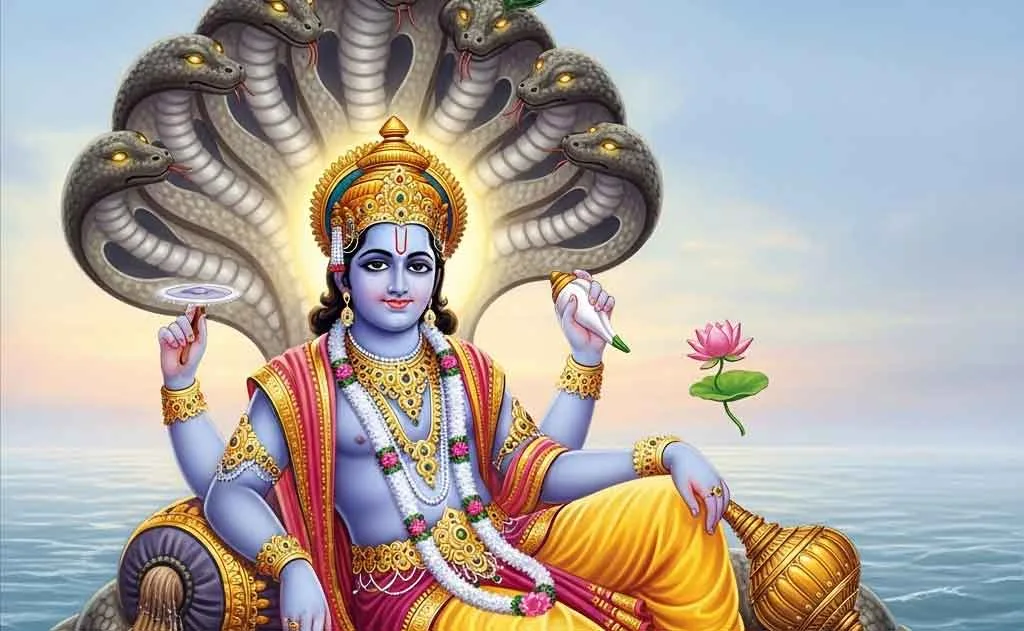
A powerful demon named Mura drove the gods from heaven. The devas went to Lord Vishnu for help. Vishnu fought Mura and his army for a very long time. Tired, he went to rest in a cave at Badarikashrama (named Himavati or Hemavati in different tellings). Mura followed him there, meaning to kill him while he slept.
As Mura raised his weapon, a radiant goddess arose from Vishnu's body, armed and full of power. She challenged Mura and destroyed him. When Vishnu woke and saw what had happened, he was pleased. Because she was born on the eleventh day of the lunar fortnight, he named her Ekadashi, and he gave her a boon: those who fast and pray on her day with devotion would be dear to him.
So this Ekadashi is called Utpanna, 'the one that arose'. Many teachers advise people who want to begin keeping Ekadashi to start with this one. In some tellings the goddess is seen as Vishnu's own energy (shakti) rising against the demon of the senses, which is why Ekadashi is linked with restraint of food and of the mind.
Regional notes: in North India the story is read on this day from the Ekadashi vrat katha booklet. In Telugu and Kannada homes the day is often called Utpatti Ekadashi and is kept within the last days of Karthika Masam. In Gujarat and Maharashtra it falls in Kartika Vad (the dark fortnight of Kartika).
Utpanna Ekadashi vrat vidhi (simple home puja)
On Dashami, Thursday 3 December
- Eat a simple, light meal during the day. Many families avoid grains and beans after sunset.
- Keep the evening calm and go to bed early.
On Ekadashi, Friday 4 December
- Bathe early, clean the puja space and light a ghee or oil lamp before a picture of Vishnu or Krishna.
- Take a short sankalpa (intention) in your own words: that you will keep the Ekadashi vrat with devotion, as far as your health allows.
- Offer tulasi leaves, yellow flowers, fruit and water. Tulasi leaves are usually picked the day before, because many families do not pluck tulasi on Ekadashi.
- Read the Utpanna Ekadashi katha, chant Vishnu Sahasranama, or chant a short name-mantra.
- Keep the fast at the level you can manage (see below). In the evening, do aarti and, if your family keeps it, a short bhajan or night vigil.
A short mantra many families use, from our verified list:
ॐ नमो भगवते वासुदेवाय॥
oṃ namo bhagavate vāsudevāya||
Meaning: Salutations to Lord Vasudeva (Krishna, Vishnu).
Parana on Dwadashi, Saturday 5 December
- Bathe, do a short puja and offer the food you have cooked to the Lord first.
- Break the fast within your local parana window, often with tulasi water or fruit, then a simple meal.
- If you can, feed someone else first or share food with someone in need.
Fasting levels and what to eat
| Level | What it means |
|---|---|
| Nirjala | No food or water from sunrise to the next day's parana. Only for healthy adults used to fasting. |
| Phalahar | Fruit, milk, curd, nuts and fasting foods; no grains or beans. The most common choice. |
| Ekabhukta | One simple meal without grains or beans, usually at midday. |
| Sattvic day | Normal vegetarian food without onion, garlic or grains like rice, with extra prayer. Suits children, elders and anyone with health conditions. |
Commonly allowed: fruit, milk, curd, paneer, nuts, makhana, potatoes, sweet potatoes, sabudana, and flours of kuttu (buckwheat), rajgira (amaranth) and singhara (water chestnut), with rock salt (sendha namak) in many homes.
Commonly avoided: rice, wheat and other grains, dals and beans, onion, garlic, meat, eggs and alcohol. Rules differ between families and sampradayas, so follow your elders or your temple.
Health note: if you are pregnant or breastfeeding, elderly, diabetic, have low blood pressure, are on regular medication or are recovering from illness, do not keep a strict fast without your doctor's advice. Drink water if you feel unwell. A sattvic meal with sincere prayer honours the day just as well. No fast should put your health at risk, and the vrat does not promise any particular result.
Utpanna Ekadashi for NRI families
- Friday at work: 4 December is a working day in most countries. A phalahar fast with a packed lunch of fruit and nuts, a morning lamp and an evening aarti fits a normal workday.
- Parana on a Saturday: Saturday 5 December makes a relaxed family parana meal easy to arrange.
- Fasting foods abroad: Indian grocery stores in most cities stock sabudana, kuttu and rajgira flour in the Ekadashi season. Sweet potatoes and makhana are widely available.
- Start a habit: if you want to keep Ekadashi regularly, the next ones are Mokshada (Vaikuntha) Ekadashi on Sunday 20 December 2026 and Saphala Ekadashi in early January 2027.
- Teach children: the story of the goddess who arose to defeat Mura is a good bedtime story about courage and self-control.
Other Ekadashis around this time
| Ekadashi | Date in India (2026) |
|---|---|
| Devutthana (Prabodhini) Ekadashi | Friday 20 November (Smarta); Saturday 21 November (Vaishnava) |
| Utpanna Ekadashi | Friday 4 December (this page) |
| Mokshada Ekadashi, Gita Jayanti and Vaikuntha Ekadashi | Sunday 20 December |
For the day panchang, see Panchangam for 4 December 2026 and 5 December 2026 (parana day).
Utpanna Ekadashi 2026: frequently asked questions
When is Utpanna Ekadashi 2026?
Utpanna Ekadashi 2026 is on Friday 4 December 2026 in India, per Drik Panchang. The Ekadashi tithi runs from 11:03 PM IST on Thursday 3 December to 11:44 PM IST on Friday 4 December. Our calculation gives Friday 4 December in the USA, Canada, the UK, the UAE, Singapore, Malaysia and Australia as well.
When is the Utpanna Ekadashi parana in 2026?
Break the fast on Saturday 5 December 2026, after sunrise, while Dwadashi is still running. In India Dwadashi lasts until 12:51 AM on 6 December, and the Hari Vasara (the first quarter of Dwadashi) ends before sunrise, so you can do parana in the morning. Abroad, check your city's parana window on Drik Panchang.
Why is it called Utpanna Ekadashi?
Utpanna means 'born' or 'arisen'. In the traditional story, a goddess arose from Lord Vishnu's body on this day and destroyed the demon Mura. Vishnu named her Ekadashi. Many devotees therefore treat this as the first Ekadashi of the year and begin a regular Ekadashi practice from it.
Is Utpanna Ekadashi in Margashirsha or Kartika?
Both names are used for the same day. In the purnimanta calendar of North India it is Margashirsha Krishna Ekadashi. In the amanta calendar of Andhra Pradesh, Telangana, Karnataka, Maharashtra and Gujarat it is Kartika Krishna (Bahula) Ekadashi. The date, 4 December 2026, is the same.
What can I eat on Utpanna Ekadashi?
Most families avoid rice, wheat, other grains and beans. Fruit, milk, curd, nuts, potatoes, sweet potatoes, sabudana and flours such as kuttu (buckwheat), rajgira (amaranth) and singhara (water chestnut) are commonly allowed. Rules differ between families and sampradayas.
Who should not fast?
People who are pregnant or breastfeeding, elderly, diabetic, unwell or on regular medication should not keep a strict fast without their doctor's advice. Children do not need to fast. A simple vegetarian meal with prayer is a fully valid way to honour the day.
Editor's note
Editor's note (21 October 2026): We have rewritten this page in place. The date, the Ekadashi and Dwadashi tithi times and the sunrise come from Drik Panchang's day panchang for Hyderabad. Dates abroad are calculated with our ephemeris calculator, which matches Drik to within one or two minutes, using the 2026 Canadian clock rules. We do not give a parana clock window, which depends on your city; please check Drik Panchang. The katha is our own summary of a traditional story, and customs vary by family, region and sampradaya. Nothing here promises any particular result.
Related guides
Share this with family and friends
Send it on WhatsApp, post it, or copy the link.
More from Recipes
- North Indian Diwali Sweets 2026: Mawa Gujiya, Mathri, Coconut Ladoo and Kaju Katli
- Maharashtrian Diwali Faral 2026: Bhajani Chakli, Shankarpali, Karanji and Besan Ladoo
- Tamil Deepavali Recipes 2026: Murukku, Adhirasam, Ribbon Pakoda and Rava Laddu
- Telugu Deepavali Recipes 2026: Ariselu, Kajjikayalu, Gavvalu and Chekkalu
- Kanya Pujan Prasad Recipe: Suji Halwa, Puri and Kale Chane for Ashtami and Navami 2026
You might also like
Yogini Ekadashi 2026: Date, Vrat Katha, Rules & Benefits (July 10)

Neti Neti — Social Media in 2026, AI, Mental Health & The Upanishadic Wisdom That Cuts Through Digital Noise
Top 5 Festivals in Jyestha Masam 2026 and Their Profound Spiritual Secrets: Nirjala Ekadashi, Vat Savitri Vrat & More