
Mangaluru Dasara 2026: Kudroli Navadurga and Sharada Utsav, Pili Vesha Tiger Dance and Vijay Muhurat
Mangaluru Dasara brings together the Navadurga and Sharada worship at the Kudroli Gokarnanatheshwara Temple, a grand Vijayadashami procession and the painted tiger dancers of Pili Vesha. Here is what to know for 2026, with the Vijay Muhurat for Mangaluru and notes on the date.
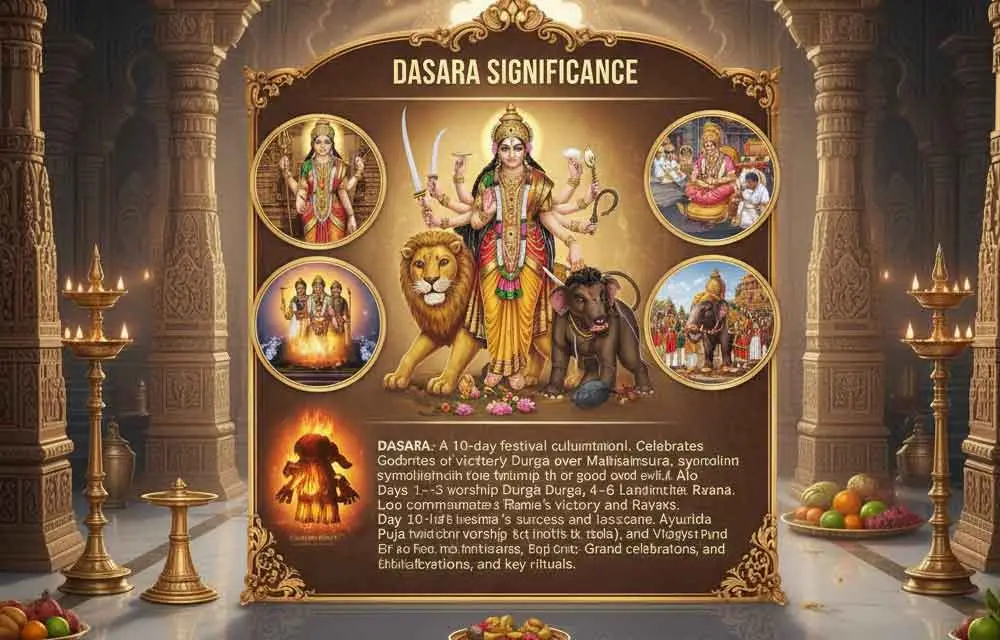
Mangaluru Dasara brings together the Navadurga and Sharada worship at the Kudroli Gokarnanatheshwara Temple, a grand Vijayadashami procession and the painted tiger dancers of Pili Vesha. Here is what to know for 2026, with the Vijay Muhurat for Mangaluru and notes on the date.
Quick answer: Mangaluru Dasara is centred on the Kudroli Gokarnanatheshwara Temple, where images of the Navadurgas and Goddess Sharada are worshipped through Navaratri (Sunday 11 to Monday 19 October 2026) and taken out in a grand procession for immersion. The streets fill with Pili Vesha tiger dancers. The all-India Vijayadashami is Tuesday 20 October 2026 (Drik Panchang), and the Vijay Muhurat for Mangaluru is 2:13 to 3:00 PM. Karnataka towns follow local almanacs, and some keep Vijayadashami on 21 October like Mysuru, so check the temple's announcement.
Mangaluru Dasara at a glance
| What | Details |
|---|---|
| Main centre | Kudroli Gokarnanatheshwara Temple, Mangaluru |
| Deities worshipped | Navadurgas, Goddess Sharada, Ganesha (as commonly described) |
| Navaratri 2026 | Sun 11 to Mon 19 Oct (India) |
| Vijayadashami 2026 | Tue 20 Oct (all-India); Mysuru on Wed 21 Oct |
| Vijay Muhurat, Mangaluru | 2:13–3:00 PM, Tue 20 Oct (local time) |
| Folk highlight | Pili Vesha (tiger dance) troupes |
The Kudroli Gokarnanatheshwara Temple
The Kudroli temple is dedicated to Lord Shiva as Gokarnanatha. It was established in the early twentieth century by the Billava community of Tulu Nadu, with the guidance of the Kerala saint and social reformer Sree Narayana Guru, who is widely credited with consecrating its linga. At a time when many communities were kept out of temples, Kudroli was founded as a place where all could worship, and that inclusive spirit is still part of its identity.
Over the decades the temple has been rebuilt and expanded, with gopurams and gold-toned decoration in a style that combines South Indian temple architecture with modern touches. During Dasara it is lit up and becomes the focus of the whole city's celebration, which is why the festival is often called simply Mangaluru Dasara or Kudroli Dasara.
Navadurga and Sharada: the nine days at Kudroli
As commonly described, at the start of Navaratri the temple installs beautifully made images of the Navadurgas, the nine forms of Durga, together with Goddess Sharada (Saraswati, the goddess of learning) and Ganesha. Each day brings special pujas, alankaras, bhajans and cultural programmes, and devotees come in large numbers to see the Goddesses.
The nine forms are Shailaputri, Brahmacharini, Chandraghanta, Kushmanda, Skandamata, Katyayani, Kalaratri, Mahagauri and Siddhidatri, one for each day of Navaratri. See the 9-day Devi worship guide for each form and its mantra.
Sharada Puja is especially important in coastal Karnataka. Many homes and schools worship books and instruments in the last days of Navaratri, and Vijayadashami is a favoured day for children to begin learning. In 2026, Ayudha Puja and Saraswati Puja fall around Mahanavami, Monday 19 October in India.
The Vijayadashami procession and immersion
The climax of Mangaluru Dasara is the procession at the end of the festival. As commonly described, the images of the Navadurgas, Sharada and Ganesha are placed on decorated vehicles and taken out from Kudroli through the main roads of the city, accompanied by illuminated tableaux, chende and other drums, folk art troupes and Pili Vesha dancers. The procession moves slowly through the night and returns to the temple, where the images are immersed in the temple tank.
Because the procession is long and the crowds are large, local authorities usually announce traffic diversions. Check the temple's and the city's announcements for the 2026 day and route; we do not list timings here.
Pili Vesha: the tiger dance of Tulu Nadu
Pili Vesha (pili means tiger in Tulu; it is also called Huli Vesha in Kannada) is one of the most striking sights of Dasara in Mangaluru and Udupi. Performers paint their whole bodies in yellow, orange and black tiger stripes, wear tiger masks or headpieces and tails, and dance in troupes to the fast beat of the tase drum, moving through streets and visiting homes and shops.
The tradition is commonly connected with devotion to the Goddess, whose mount (vahana) is the tiger or lion, and with vows taken by devotees. Over time it has also become a show of athletic skill, with acrobatics, crouching tiger moves and feats such as picking up coins or rice from the ground by bending backwards. Troupes are often formed by neighbourhood groups and youth clubs, and their performances are a big part of the festival atmosphere. Pili Vesha is also seen around Krishna Janmashtami in the Udupi region.
The body paint is applied over many hours and kept on for long periods, which is physically demanding; many performers treat it as a vow and an offering.
Other Navaratri traditions in Mangaluru
- Mangaladevi Temple: the city is traditionally said to take its name from Goddess Mangaladevi, and her temple is an important place of worship during Navaratri.
- Golu and home pujas: many families keep a Navaratri lamp and worship the Goddess daily at home.
- Ayudha Puja: vehicles, tools, machines and shops are cleaned, decorated and worshipped.
- Yakshagana: the coastal dance-drama form often stages Devi Mahatmya stories during the season.
Date note: 20 or 21 October?
Drik Panchang gives the all-India Vijayadashami as Tuesday 20 October 2026. The Dashami tithi runs from 12:50 PM IST on 20 October to 2:11 PM IST on 21 October. Because Dashami prevails at sunrise on 21 October, Mysuru keeps Vijayadashami on Wednesday 21 October. In other Karnataka towns, including Mangaluru, the local temple and almanac decide, and some follow 21 October like Mysuru. For the Kudroli procession and immersion, follow the temple's announcement.
| Karnataka city | Vijay Muhurat (Tue 20 Oct 2026, local time) |
|---|---|
| Mangaluru | 2:13–3:00 PM |
| Mysuru | 2:06–2:53 PM |
| Bengaluru | 2:02–2:49 PM |
| Hubballi | 2:11–2:58 PM |
Full details: Dasara 2026 in Karnataka and the Dussehra / Vijayadashami 2026 pillar guide.
For Tuluva and Kannadiga families abroad
Families from Mangaluru and Udupi abroad can keep the spirit alive with a Sharada Puja for children's books, Ayudha Puja for cars and laptops, and a visit to a local temple on Vijayadashami. Some community associations invite Pili Vesha style performances or show videos of the Kudroli procession. Use a panchang for your own city for any muhurat; the Mangaluru timings apply only in Mangaluru. Country guides are in the Navratri 2026 NRI guide.
Frequently asked questions
When is Mangaluru Dasara 2026?
Navaratri runs from Sunday 11 to Monday 19 October 2026 and the all-India Vijayadashami is Tuesday 20 October (Drik Panchang). Mysuru keeps Vijayadashami on Wednesday 21 October because Dashami prevails at sunrise that day, and in other Karnataka towns the local temple and almanac decide, with some following 21 October. Check the Kudroli temple's own announcement for the 2026 procession day.
What is the Vijay Muhurat in Mangaluru on Dussehra 2026?
On Tuesday 20 October 2026 the Vijay Muhurat for Mangaluru is 2:13 to 3:00 PM local time, calculated by the Drik Panchang method.
What happens at the Kudroli temple during Dasara?
As commonly described, images of the Navadurgas (the nine forms of Durga), Goddess Sharada and Ganesha are installed and worshipped through Navaratri, with daily pujas and cultural programmes. On Vijayadashami the images are taken out in a long procession through the city with tableaux and folk troupes, and then immersed in the temple tank.
What is Pili Vesha?
Pili Vesha, also called Huli Vesha, is the tiger dance of coastal Karnataka. Troupes of performers paint their bodies with tiger stripes, wear tiger masks or headgear and dance to the beat of drums through the streets, especially during Navaratri and Dasara, and also around Krishna Janmashtami in the Udupi region.
Who founded the Kudroli Gokarnanatheshwara Temple?
The temple was established in the early twentieth century at the initiative of the Billava community, with the inspiration of the social reformer and saint Sree Narayana Guru, who is widely credited with consecrating its Shiva linga. Today it is open to devotees of all backgrounds.
Is Mangaluru Dasara good for visitors from outside the city?
Yes. The illuminated temple, the procession and the tiger dancers draw visitors from across Karnataka and beyond. Expect heavy crowds and traffic on procession day, and check local announcements for road arrangements.
Editor's note (9 October 2026)
This guide was written in October 2026. Dates and Vijay Muhurat timings are from Drik Panchang calculations for India. The Kudroli Dasara rituals are described as commonly reported; the temple sets the installation, procession and immersion details each year. The Mysuru date reflects Dashami at sunrise on 21 October; other Karnataka towns follow local almanacs. We do not list schedules, routes or crowd figures.
Related guides
You might also like
Cuttack Durga Puja and Dussehra 2026: Silver Chandi Medha Pandals, Immersion and Vijay Muhurat
Patna Dussehra 2026: Ravan Vadh at Gandhi Maidan, Durga Puja Pandals and Vijay Muhurat
Delhi Ramlila 2026: Red Fort Grounds, Ramlila Maidan, Ravan Dahan and Vijay Muhurat for New Delhi