Pitru Paksha Rules: What to Do and What to Avoid
Pitru Paksha is a fortnight of remembrance for ancestors. Here is a gentle, practical guide to the customs many families keep, why they keep them, and how to observe with dignity if travel or tradition is not possible.
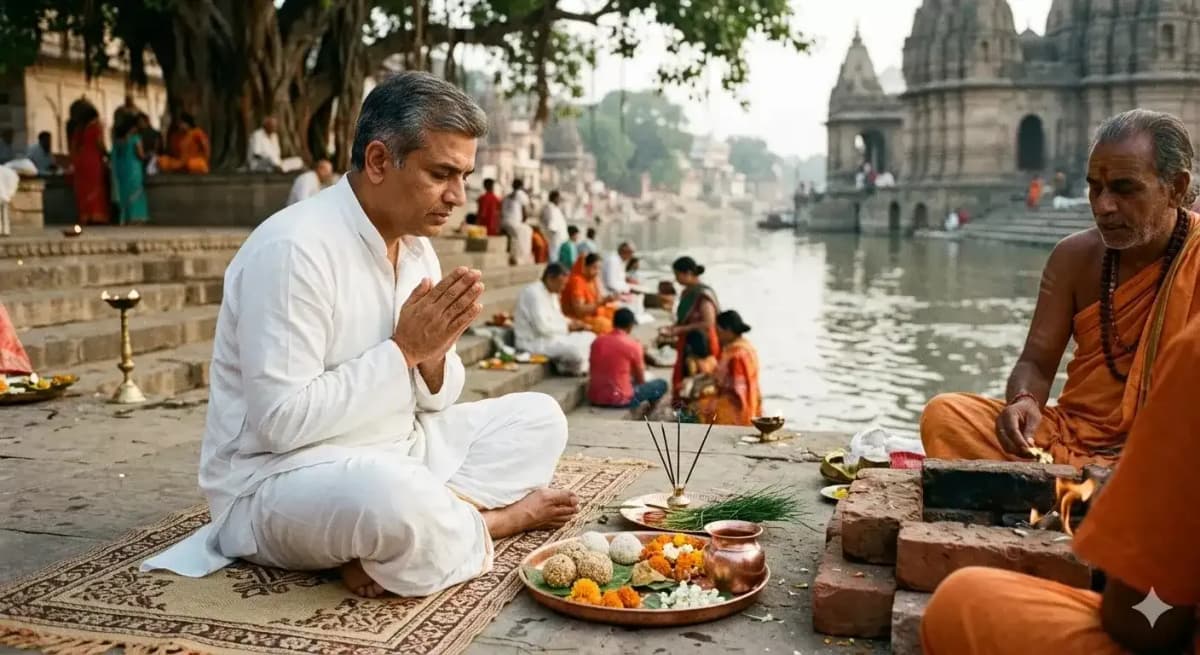
Pitru Paksha is a fortnight of remembrance for ancestors. Here is a gentle, practical guide to the customs many families keep, why they keep them, and how to observe with dignity if travel or tradition is not possible.
Quick answer: During Pitru Paksha (26/27 Sep-10 Oct 2026), many families offer daily tarpan, keep a simple sattvic diet, feed others, and remember departed elders. Traditionally new purchases, weddings and celebrations are postponed as a mark of quiet remembrance. These are customs of respect, not threats; observe them in whatever way your situation allows.
Pitru Paksha is a quiet fortnight set aside each year to remember those who came before us. In 2026 it runs from 26/27 September to Sarva Pitru (Mahalaya) Amavasya on Saturday, 10 October. Many of the practices during these days are less about rules and more about a settled, grateful attention toward parents, grandparents and ancestors. This guide describes what families commonly do and commonly set aside, and the reasoning behind each, in calm and measured terms.
It helps to hold all of this gently. The customs below are widely followed marks of respect and remembrance. They are not conditions that decide your fortune, and no ritual carries a guaranteed outcome. If you cannot travel, do not know a tithi, or have no male relative to lead the rites, there are simple, dignified ways to observe that are discussed further down.
- Fortnight: 26/27 Sep - 10 Oct 2026
- Concluding day: Sarva Pitru (Mahalaya) Amavasya, Sat 10 Oct 2026
- Core acts: Tarpan, shraddha, feeding others, remembrance
- Diet: Simple, sattvic, usually without onion and garlic
- Tone: Quiet remembrance, not celebration
- Muhurat note: Confirm kutup/local timings with your family priest or panchang
What families commonly do during Pitru Paksha
The daily rhythm is simple and repeatable. Most observances centre on water, food and memory rather than elaborate arrangements. Below are the practices households most often keep.
- Offer daily tarpan (a water offering) to ancestors, where the tradition and one's comfort allow.
- Perform shraddha on the tithi that matches the departed person's date of passing, or on Sarva Pitru Amavasya if the tithi is unknown.
- Keep a simple sattvic diet and cook a portion mindfully in remembrance.
- Feed others - guests, the needy, a Brahmin, or in many households a cow, crow or dog as symbolic sharing.
- Give daan (food, grain, clothes or a donation) according to one's means.
- Light a lamp and spend a few quiet minutes recalling the departed with gratitude.
Why these acts? In the traditional understanding, tarpan and shraddha express continued care and gratitude, while feeding others turns private grief into shared nourishment. The emphasis is on giving and remembering rather than on any transaction.
What families traditionally avoid - and why
Alongside the daily observances, many households set certain things aside for the fortnight. It is important to read these as customs of restraint and respect, not as warnings that harm follows if they are broken. The spirit is simply that a period of remembrance sits uneasily beside festivity and new beginnings.
| Commonly set aside | The reasoning, as custom |
|---|---|
| Weddings and engagements | A fortnight of remembrance is felt to be an inauspicious mood for joyous new bonds; many families schedule these before or after. |
| New purchases (vehicles, gold, home) | Big acquisitions are postponed so the mind stays with remembrance rather than celebration; this is preference, not a threat of loss. |
| Housewarming and other celebrations | Festive events are usually deferred until after Amavasya so remembrance is not overshadowed. |
| Non-vegetarian food, onion and garlic | A simple sattvic diet is kept to support a calm, restrained frame of mind. |
| Starting major new ventures | Many prefer to begin afresh after the fortnight, keeping this time for the ancestors. |
If circumstances mean you must, say, complete a purchase or an event during these days, do so without anxiety. These are customs of mood and timing, observed by preference; they do not carry any promised consequence.
How to observe simply, step by step
- Note the tithi of your departed elder's passing; if it is unknown, plan to observe on Sarva Pitru Amavasya (10 Oct 2026).
- On the chosen day, bathe and prepare a simple sattvic meal at home.
- Offer water (tarpan) and remember the person by name, with gratitude; confirm any specific timings with your family priest or local panchang.
- Set aside a portion of food to share - with a guest, the needy, or symbolically with a cow, crow or dog.
- Give daan according to your means, without strain.
- Close with a lamp and a few quiet minutes of remembrance.
If you cannot travel or do not know the tithi
Pitru Paksha is meant to include everyone, including those far from home. You do not need to travel to Gaya, Kashi or Prayagraj - those are respected options for some families, but home observance carries the same intention. Sarva Pitru Amavasya on 10 October exists precisely for anyone who does not know the exact tithi, who missed the specific day, or who wishes to remember all ancestors together.
On who may perform the rites: traditions vary, and while shraddha has customarily been led by a son, many priests and families today welcome daughters and women in offering tarpan and remembrance. This is a matter for your own family and priest to settle; there is no single ruling here. What matters most across every tradition is sincere remembrance - a lamp, a shared meal, a few grateful minutes - which anyone can offer from wherever they are.
Related reading
Frequently Asked Questions
When is Pitru Paksha in 2026?
Pitru Paksha 2026 runs from 26/27 September to 10 October, concluding with Sarva Pitru (Mahalaya) Amavasya on Saturday, 10 October. Exact daily timings such as the kutup period vary by location, so confirm them with your family priest or a local panchang.
What are the main things to do during Pitru Paksha?
Common practices are daily tarpan, shraddha on the matching tithi, keeping a simple sattvic diet, feeding others, giving daan, and spending a few quiet minutes in remembrance. The emphasis is on gratitude and sharing rather than elaborate arrangement.
Why do families avoid weddings and new purchases in this fortnight?
It is a custom of restraint: a period of remembrance is felt to sit uneasily beside festivity, so many families postpone weddings, big purchases and celebrations until after Amavasya. This is a matter of mood and preference, not a warning that harm follows.
Is it truly harmful to buy something during Pitru Paksha?
No. Postponing purchases is a widely kept custom of timing and respect, not a threat. If your circumstances require a purchase or event during these days, you may proceed without anxiety; no promised consequence attaches to it.
What diet is kept during Pitru Paksha?
Many households keep a simple sattvic diet, often without onion and garlic and without non-vegetarian food, to support a calm and restrained frame of mind. This is a supportive practice, followed to the extent that suits your health and situation.
I live abroad and cannot travel to Gaya or Kashi - can I still observe?
Yes. Travel to Gaya, Kashi or Prayagraj is a respected option for some, but home observance carries the same intention. You can offer tarpan, prepare a simple meal, share food and light a lamp wherever you are, and remember all ancestors together on Sarva Pitru Amavasya.
What if I do not know the exact tithi of my elder's passing?
Sarva Pitru Amavasya on 10 October 2026 exists for exactly this situation. On that day you can remember all ancestors together, so a forgotten or unknown tithi need not be a source of worry.
Can a daughter or a woman perform the rites?
Traditions vary. While shraddha has customarily been led by a son, many priests and families today welcome daughters and women in offering tarpan and remembrance. This is best settled within your own family and with your priest; sincere remembrance is what matters most.
You might also like

Navratri 2026: 9 Days, Colors, Goddess Names, Puja & Significance
Navratri 2026 USA: Dates, Garba, Dandiya, Durga Puja & NRI Celebration Guide

Indian Temple Flowers: Sacred Blooms & What Each Deity Loves