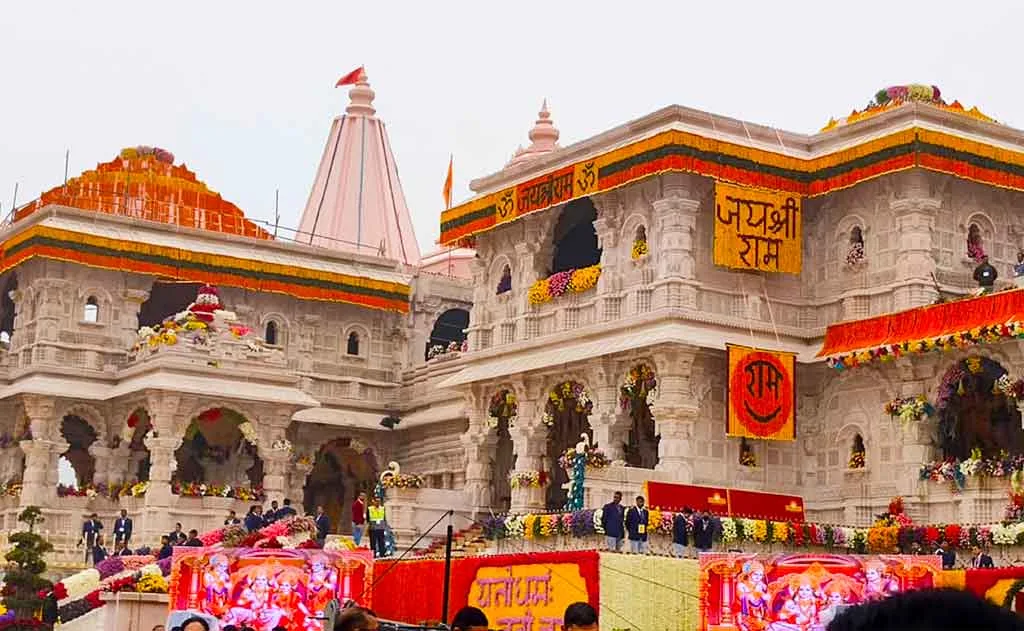
Rama Navami 2026: Celebrating Lord Rama's Birth in Chaitra Masam Parabhava Year
A Devotional Guide for Ram Bhaktas Worldwide Introduction: The Most Sacred Day Approaches In the vast and luminous tapestry of the Hindu calendar, few…
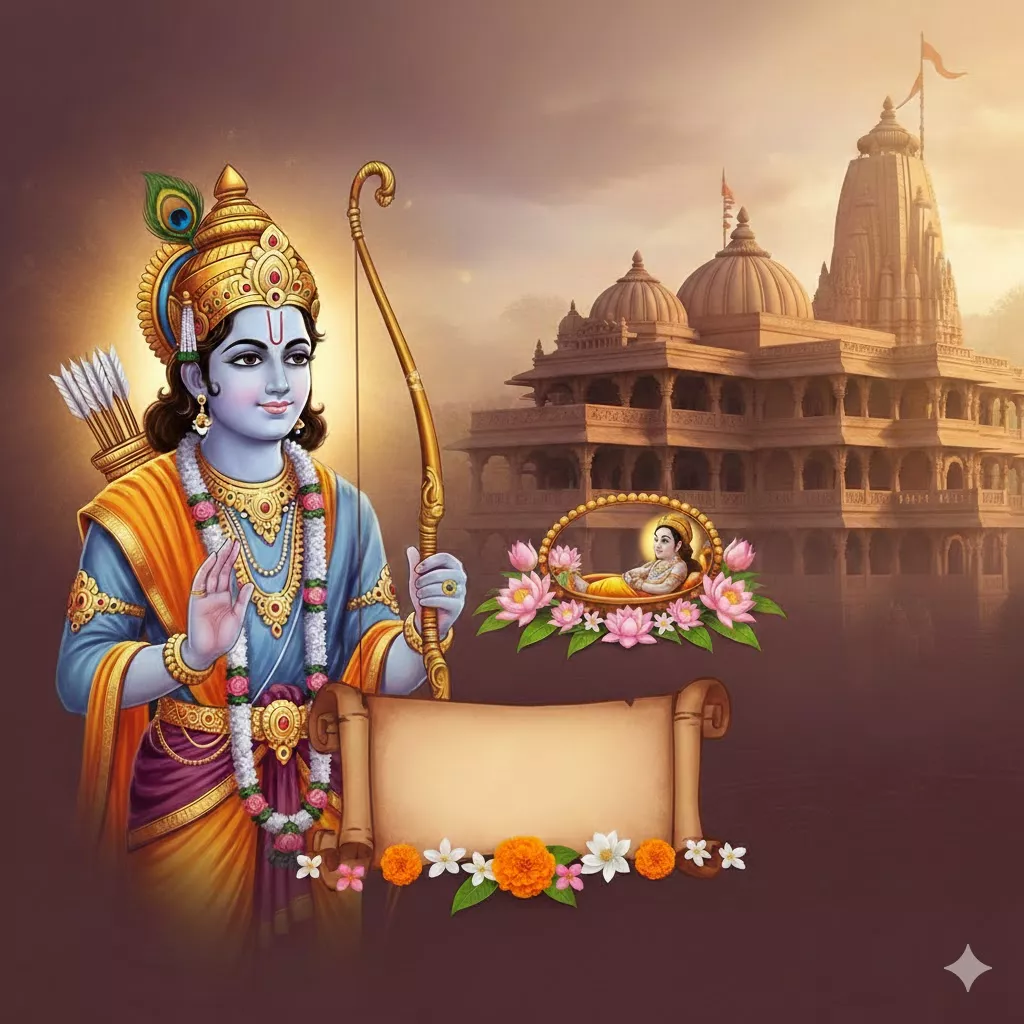
A Devotional Guide for Ram Bhaktas Worldwide Introduction: The Most Sacred Day Approaches In the vast and luminous tapestry of the Hindu calendar, few…
A Devotional Guide for Ram Bhaktas Worldwide
Introduction: The Most Sacred Day Approaches
In the vast and luminous tapestry of the Hindu calendar, few occasions shine with the brilliance of Rama Navami. As the wheel of time turns into 2026, the Parabhava year of the Hindu calendar cycle, devotees across India and around the world are already turning their hearts toward that radiant moment when the divine descended to earth in human form — when the skies over Ayodhya filled with celestial flowers, when the devas sang in jubilation, and when the universe itself paused in reverence at the birth of Lord Sri Rama, the seventh avatar of Lord Vishnu, the embodiment of dharma, truth, and eternal compassion.
Rama Navami 2026 falls on March 26 and 27, marking the glorious culmination of Chaitra Navratri, the nine sacred nights dedicated to Goddess Durga in the bright fortnight of Chaitra Masam. When Navratri ends and Rama Navami dawns, it is as though the divine feminine energy that has been invoked through nine nights of prayer now blesses the birth of her beloved son — for many traditions honor the deep connection between Devi Kausalya's devotion and the arrival of Lord Rama into this world.
This devotional guide is written for every Ram bhakta — the elderly grandmother who has recited the Ramcharitmanas for sixty years, the young professional who is discovering the path of bhakti for the first time, the family gathered together to perform puja on a quiet morning, and the solitary devotee who whispers "Jai Shri Ram" at the break of dawn. May these words serve as a humble offering at the lotus feet of Maryada Purushottam Sri Rama.
Understanding Rama Navami 2026: Date, Timing, and the Parabhava Year
The Sacred Date: March 26–27, 2026
According to the traditional Hindu Panchang, Rama Navami 2026 is observed on March 26, with celebrations extending into March 27 in some regions depending on the Navami Tithi. The Navami tithi — the ninth lunar day of the Shukla Paksha (bright fortnight) of Chaitra month — is considered the most auspicious moment for the birth anniversary of Lord Rama. According to Valmiki Ramayana, Rama was born at Madhyahna (midday), when the sun stood at its zenith, a moment considered supremely auspicious and corresponding to the "Abhijit Muhurta."
Devotees are encouraged to observe the main puja and celebrations during the midday hours on March 26, 2026, as this aligns with the traditionally held birth time of Lord Rama. The midnight before, some temples and households will have already begun Akhand Ramayana parayanam — a continuous, uninterrupted recitation of the Ramayana that flows through the night into the morning of Rama's birth.
Chaitra Masam: The Month of Beginnings
Chaitra is the first month of the Hindu calendar year, a time when nature herself is reborn — when flowers bloom after winter, when the neem tree blossoms with its bittersweet fragrance, when mango trees are heavy with new fruit. This season of renewal is the perfect backdrop for the celebration of Lord Rama's birth. The ancient rishis understood this deeply: just as Chaitra represents the beginning of the year, Lord Rama represents the beginning of dharmic life for every soul striving for liberation.
The Parabhava Year: Special Significance for Dharma
In the sixty-year cycle of the Hindu calendar — known as the Brihaspati cycle — each year carries a unique name and spiritual quality. The year 2026 corresponds largely to Parabhava, a name that carries the meaning of "defeat of the ego" or more precisely, the moment when lower forces are overcome by higher truth. Scholars and astrologers note that Parabhava years call for renewed commitment to dharma and righteous conduct. What could be more fitting, then, than celebrating Rama Navami in the Parabhava year? Lord Rama's entire life is the story of dharma's triumph over adharma, of truth's victory over deception, of selfless love's conquest of selfish desire.
The Parabhava year, say traditional pundits, is a time when sincere spiritual practice yields exceptional fruit. The grace of the divine is especially accessible for those who turn inward, who surrender their ego at the feet of the Lord, who choose the path of righteousness even when it is difficult. In this sense, Rama Navami 2026 is not simply a festival — it is a cosmic invitation for every soul to align itself with the dharmic energy of Lord Rama and begin a fresh chapter of spiritual life.
Chaitra Navratri and Rama Navami: The Sacred Connection
Nine Nights of Devi, One Dawn of Rama
Chaitra Navratri begins on the Pratipada tithi — the first day of the bright fortnight of Chaitra — and extends for nine nights honoring the nine forms of Goddess Durga. In 2026, this Navratri begins on March 18 and reaches its culmination with Rama Navami on March 26. This overlapping of Navratri and Rama Navami is not coincidental in the spiritual sense — it is a beautiful design of the divine calendar.
The nine nights of Navratri represent the nine forms of Shakti — the primal energy that sustains all creation. When this Shakti, invoked through nine nights of worship, reaches its peak on the ninth day, the universe is ready to welcome the avatar of Lord Vishnu. Devi Kausalya's deep devotion to the Goddess throughout her life is said to have been one of the spiritual causes of Lord Rama's birth. Her womb was sanctified by years of puja, tapas, and prayer, making it a worthy vessel for the divine.
Devotees who observe the full Chaitra Navratri before Rama Navami will find that their hearts have been purified through nine days of fasting, prayer, and scripture recitation. When Rama Navami arrives, this prepared heart becomes the perfect altar upon which the Lord can take birth once again — not merely in the story of history, but in the living present of the devotee's spiritual experience.
The Nine Devis and Their Connection to Rama's Virtues
Each of the nine forms of Devi corresponds symbolically to a virtue that Lord Rama embodied in his life. Shailputri's steadiness mirrors Rama's unwavering commitment to his father's word. Brahmacharini's austerity reflects Rama's fourteen years of forest exile practiced without complaint. Chandraghanta's warrior aspect corresponds to Rama's valor in battle. As devotees proceed through Navratri, meditating on these forms, they are — whether they know it consciously or not — preparing their hearts to receive and celebrate the fullness of Lord Rama's character on the final day.
The Meaning of Lord Rama's Avatar: Why the Divine Descended
The Earth's Cry for Dharma
In the Treta Yuga, when Ravana's power had grown to terrifying proportions, when the rakshasas (demons) disrupted the sacred yagnas of the sages, when the earth herself — personified as Bhumi Devi — could no longer bear the weight of adharma, the cosmos cried out for help. The gods assembled in the presence of Lord Brahma, who led them all in prayer to Lord Vishnu, the preserver of the universe.
Lord Vishnu, moved by the suffering of the earth and the sincere prayer of the celestials, made a divine promise: he would descend to earth in human form, live a completely human life with all its joys and griefs, and through that very humanness, demonstrate how dharma could be lived perfectly in the world. He would not come as an all-powerful cosmic being who simply destroys evil with a thought. He would come as a son, a student, a husband, a friend, a king — and through each of these human roles, he would teach the universe how to be righteous.
This is what makes Lord Rama's avatar unique and endlessly compelling for the devotee. He is not remote. He is not beyond our understanding. He walked on dusty forest paths, he felt the grief of separation from his beloved Sita, he wept at the death of the vulture king Jatayu, and he embraced the forest-dweller Guha as his own brother. Every emotion we experience, Rama experienced — but he moved through all of them without losing his center, his dharma, his love.
Rama as Maryada Purushottam: The Perfect Man
The title by which Lord Rama is perhaps most beloved — Maryada Purushottam — means the one who is supreme among men and the upholder of all boundaries of righteousness. Maryada in Sanskrit carries the meaning of boundary, limit, or rule — not in the sense of restriction, but in the sense of the graceful containment that gives form to life.
Lord Rama never broke a rule of dharma even when it cost him everything. When his father Dasharatha, bound by an old promise to Queen Kaikeyi, was forced to ask Rama to go into forest exile on the very day of his coronation, Rama did not protest, did not argue, did not show any bitterness. He smiled, embraced his father with compassion, and walked into the forest with his wife Sita and his devoted brother Lakshmana. This acceptance — not passive resignation but active, joyful, dharmic acceptance — is one of the most powerful spiritual teachings in all of human history.
For the devotee celebrating Ram Navami 2026 in the Parabhava year, this teaching comes with special urgency. The Parabhava year calls us to examine where we are holding onto ego, where we are resisting the flow of dharma in our lives, where we are clinging to what we want rather than surrendering to what is right. Lord Rama's example shows us that true sovereignty — true kingship of our own lives — comes not through control and insistence, but through righteous surrender.
Ram Navami Puja Vidhi 2026: A Step-by-Step Devotional Guide
Preparation: Purifying the Home and Heart
The celebration of Rama Navami begins not on the morning of March 26 but in the days preceding it. Devotees traditionally clean their homes thoroughly, understanding that the outer cleanliness reflects and supports inner purification. Fresh flowers, particularly tulsi (holy basil), marigolds, and lotus if available, should be gathered. A special puja area — ideally the household's existing altar — should be cleaned and decorated.
On the evening of March 25, devotees may begin an Akhand Deep — an uninterrupted lamp that burns through the night and into Rama Navami morning. This lamp, lit with ghee and kept burning with care, symbolizes the light of Rama consciousness that we are keeping alive in our hearts throughout the night, waiting for the dawn of the Lord's birth.
A fast is traditionally begun either at sunrise on March 26 or from the previous evening. Devotees who are physically able may observe Nirjala vrat (complete fast without water) until the midday puja. Those who need nourishment may take fruits, milk, and light sattvic foods.
Morning Abhishekam: Bathing the Lord with Love
The morning puja begins at sunrise with abhishekam — the ceremonial bathing of Lord Rama's idol or image. This is one of the most tender and intimate acts of devotion, for in abhishekam, the devotee becomes the loving parent, bathing the divine child who has just arrived in the world.
The abhishekam is traditionally performed with five sacred substances called Panchamrita: milk (symbolizing purity of heart), yogurt (symbolizing fertility of devotion), honey (symbolizing the sweetness of bhakti), sugar (symbolizing the joy of liberation), and ghee (symbolizing the light of wisdom). Each substance is poured over the idol or the sacred image while mantras are chanted.
For Rama Navami 2026 abhishekam, the following mantras may be chanted:
"Om Sri Rama Jaya Rama Jaya Jaya Rama" "Sri Rama Rama Rameti, Rame Raame Manorame, Sahasra Naama Tattulyam, Raama Naama Varaanane"
After Panchamrita abhishekam, the idol is bathed with pure water, then with rose water, then gently dried and dressed in fresh yellow or saffron-colored clothing — the colors associated with Lord Rama's divine radiance. A beautiful tilak of sandalwood and kumkum is applied to the Lord's forehead. Fresh flowers are offered, and the sacred tulsi leaves — beloved of Lord Vishnu in all his forms — are placed at the Lord's feet.
Ramayana Parayanam: Listening to the Lord's Story
No celebration of Rama Navami is complete without Ramayana parayanam — the recitation or listening of the Ramayana. For many families, this takes the form of reading from Tulsidas's Ramcharitmanas in Hindi, or from Valmiki's Ramayana in Sanskrit, or from the Kamba Ramayanam in Tamil, or any of the regional versions in which the Lord's story has been lovingly preserved across centuries.
The recitation of the Ramayana is not merely a literary event. The ancient scriptures declare that the sound of Rama's story carries purifying power. Every syllable of Rama's name, every verse describing his virtues and his deeds, enters the consciousness of the listener and begins the work of transformation. It is said that even the stones of Vrindavan wept when Radha sang of Krishna; similarly, even the apparently inert elements of creation respond to the vibration of Rama Katha.
Families may choose to read the Sundara Kanda — the section of the Ramayana describing Hanuman's journey to Lanka to find Sita — which is considered especially auspicious for Rama Navami. The Sundara Kanda is the heart of the Ramayana in many ways: it is where bhakti — in the form of Hanuman's total dedication to Lord Rama — performs what seems impossible. Hanuman crosses the mighty ocean, finds Sita in captivity, and brings her the message of hope from Rama, all through the power of Ram naam.
The Sacred Fast: Upavasa as Inner Turning
Upavasa — the Sanskrit word for fasting — literally means "to dwell near." The purpose of fasting on Rama Navami is not simply to abstain from food but to turn the attention of the senses inward, toward the divine, to dwell near the Lord. When the body is not preoccupied with digesting food, the subtle energies of consciousness become available for devotion, prayer, and meditation.
Devotees observing the fast on March 26, 2026, traditionally break their fast after the midday puja — after the moment that corresponds to Lord Rama's birth time. At this time, the prasad — the blessed food offered to the Lord — is distributed, and the devotee takes this as their first food of the day. There is deep symbolism here: the first nourishment we receive comes from the Lord himself, reminding us that all sustenance, physical and spiritual, flows from the divine.
Noonday Puja: Celebrating the Divine Birth
At midday — the most auspicious moment of Rama Navami, corresponding to the traditional birth time of Lord Rama — the main puja of the day is performed. This is the moment when temples across India erupt in joyful chanting, when conch shells are blown, when bells ring out, when the atmosphere vibrates with devotion.
At the household altar, this midday puja includes the offering of fresh fruits — bananas, coconuts, mangoes if in season — along with payasam (kheer), the traditional sweet rice pudding that is offered to Lord Rama on his birthday. The payasam is prepared in the morning with great care and love, sweetened with jaggery or sugar, flavored with cardamom and saffron, and offered to the Lord as a mother might offer a sweet gift to her beloved child.
The arati — the waving of the camphor flame — is performed while the entire household sings the Rama arati together:
"Jai Raghunandan Jai Siya Ram, Janaki Vallabh Sitaram..."
This is the moment of pure joy, the heart of the celebration. Children are encouraged to participate in offering flowers to the Lord one by one, teaching them from their earliest years that devotion is the most natural and joyful activity available to a human being.
Evening Bhajans: The Community of Devotion
As the sun begins to descend on the evening of March 26, the celebration of Rama Navami continues in the form of bhajan sandhya — an evening of devotional singing. Whether this takes place in the family home, at the neighborhood temple, or at a larger community gathering, the bhajan sandhya is one of the most beautiful expressions of Ram bhakti.
Traditional bhajans sung on Rama Navami include the immortal compositions of Tulsidas, Mirabai's songs in praise of her Lord, Sant Kabir's dohas on Ram naam, and the beloved Hanuman Chalisa — the forty-verse hymn to Hanuman that is simultaneously a meditation on Lord Rama's glory.
"Jai Shri Ram" rings out through the evening air, and with each chanting of this ancient greeting, the devotees remind themselves and each other of what is most essential: that Rama is victorious, that dharma prevails, that the divine is present and accessible in every moment.
The Story of Ravana's Defeat: Bhakti as the Supreme Weapon
The Demon King's Pride
Among all the stories contained within the vast ocean of the Ramayana, the story of Ravana's defeat through the power of Ram bhakti deserves special reflection on Rama Navami. Ravana was no ordinary adversary. He was learned in all the Vedas, a devoted worshipper of Lord Shiva, a musician of extraordinary skill, a ruler of immense power. His ten heads represented his mastery of the ten directions and of all branches of knowledge. By many measures, Ravana was one of the most accomplished beings of his age.
And yet, his fatal flaw was the very quality that the Parabhava year asks us to examine and release: ahankara — ego, pride, the intoxication of one's own greatness. Ravana had received boons that made him nearly invincible against gods and demons. He had accumulated so much power that he had begun to believe he was beyond all consequence, beyond all law, beyond all dharma. This belief — that he was the exception to the universe's moral order — was his destruction.
When Ravana abducted Sita, he did not merely commit a crime against a woman and her husband. He committed the ultimate act of adharma — the violation of another's sacred relationship, the theft of what belongs to truth and love. And in doing so, he set in motion the events that would lead to his own end.
How Bhakti Moved Mountains
The defeat of Ravana was accomplished not by divine weapons alone but by the extraordinary power of bhakti — of loving devotion to Lord Rama. It was the bhakti of Hanuman that made him capable of crossing the ocean. It was the bhakti of the squirrel who rolled in sand and carried grains of it to build the bridge to Lanka. It was the bhakti of Vibhishana — Ravana's own brother — who chose righteousness over loyalty to an adharmic king and came to the feet of Lord Rama.
The Ramayana teaches us that bhakti has no social requirements. Hanuman was a vanara — a monkey. Guha was a boatman. Shabari was an elderly tribal woman who offered Rama half-eaten berries, having tasted each one to ensure they were sweet enough for her Lord. And Rama received her offering with more joy than he might have received the finest feast, because it was offered with the purest love.
For devotees in 2026, this is perhaps the most liberating and encouraging teaching: you do not need to be learned, wealthy, or ritually accomplished to receive Lord Rama's grace. You need only love. The sincere offering of a simple heart is worth more than the elaborate puja of a distracted mind.
Mantras for Rama Navami 2026: Sacred Sounds for the Soul
The chanting of Rama's name and Rama's mantras is at the heart of Ram bhakti. The following mantras and chants are especially recommended for Rama Navami 2026:
Sri Rama Mula Mantra:
"Om Sri Raam Jai Raam Jai Jai Raam"
This is perhaps the most widely chanted Rama mantra, used by countless devotees across centuries. Its rhythm is simple enough for children and its depth is infinite enough for the most advanced practitioners.
The Taraka Mantra:
"Rama"
Shiva himself, in the Kashi tradition, is said to whisper the Rama naam into the ears of those who die in Varanasi, granting them liberation. Such is the power attributed to this single, two-syllable name. The Vishnu Sahasranama declares that chanting "Rama" three times is equivalent to reciting all thousand names of Vishnu.
The Rama Raksha Stotra: A longer text, traditionally recited for protection and blessing, the Rama Raksha Stotra covers the Lord from head to toe in divine armor made of his own names and virtues.
The Mahamantra for 2026:
"Hare Rama Hare Rama, Rama Rama Hare Hare, Hare Krishna Hare Krishna, Krishna Krishna Hare Hare"
The Kali Santarana Upanishad specifically recommends this mahamantra for the age of Kali, promising that its sincere recitation destroys all the negative effects of this difficult age.
Family Rituals for Rama Navami: Creating Sacred Memories
One of the most beautiful dimensions of Rama Navami is its potential as a family celebration — an occasion that connects generations, creates sacred memories for children, and weaves the thread of Ram bhakti into the fabric of everyday family life.
Grandparents can share stories from the Ramayana with grandchildren, bringing the characters alive through personal narration. Children can be involved in preparing the flowers for puja, in making the payasam under their parent's guidance, in drawing or painting pictures of Lord Rama and Hanuman. Teenagers can be encouraged to read a chapter of the Ramayana and share what resonated with them. Young adults can take responsibility for organizing the evening bhajan.
When Ram Navami 2026 is celebrated as a family occasion, it becomes more than a religious observance — it becomes a living transmission of spiritual values from one generation to the next. The children who make payasam for Lord Rama in 2026 will remember the fragrance of cardamom, the sweetness of the offering, the glow of the lamp, and the sound of "Jai Shri Ram" for the rest of their lives. This is how dharma propagates itself: not through argument or instruction alone, but through lived experience, through the sacred atmosphere of a home that celebrates its Lord.
A Prayer for Rama Navami 2026: At the Feet of Maryada Purushottam
The following is offered as a personal devotional prayer for all Ram bhaktas to recite on the sacred morning of March 26, 2026:
O Lord Sri Rama, Maryada Purushottam, jewel of the Raghu dynasty, beloved of Mother Janaki, master of Hanuman's heart —
On this holy Navami in the Chaitra month of the Parabhava year, I bow before you with my entire being. I bring you nothing grand — only this small heart, this wandering mind, this life that has not always chosen the path of dharma.
But you are the one who embraced Guha the boatman as a brother. You are the one who accepted Shabari's half-tasted fruit as the most precious offering. You are the one who assured Vibhishana — a refugee from adharma — that you abandon no one who comes to you in sincerity. So I come.
O Rama, in this Parabhava year, help me defeat the Ravana within — the ten-headed pride of ego that steals peace from my own heart. Help me build the bridge of Ram naam across the ocean of my own doubts and fears. Help me find Sita — the pure soul within — and bring her home.
Grant me the bhakti of Hanuman, the serenity of Sita, the dharmic courage of Lakshmana, and above all, O Rama, grant me the grace of your name — Ram naam — on my lips at every moment, in every season, until my very last breath.
Jai Shri Ram. Jai Siya Ram. Jai Jai Ram.
Ram Naam Jap in 2026: A Daily Practice for Transformation
The celebration of Rama Navami 2026 is most powerful when it becomes not just a single day's observance but the beginning of a sustained daily practice of Ram naam jap — the repetition of Lord Rama's name throughout the year.
The great saint Tulsidas, who composed the Ramcharitmanas in the sixteenth century, wrote from his own experience of transformation through Ram naam. He had known despair, rejection, and suffering, and it was through the constant repetition of Rama's name that his life became a living testament to the Lord's grace. His example — and the examples of countless other bhaktas across Indian history — invites us into the same practice.
For 2026, consider beginning a daily Ram naam jap of at least 108 repetitions — one mala — every morning before you begin your day's activities. This can be done in just ten to fifteen minutes, and the cumulative effect of 108 daily repetitions of "Om Sri Ram Jai Ram Jai Jai Ram" over weeks and months is described by those who practice it as a gentle but steady transformation of consciousness. Anxieties begin to loosen their grip. Difficult relationships begin to soften. The mind, accustomed to its constant chatter, begins to find small moments of peace. The heart, which had perhaps grown a little hard through life's disappointments, begins to open.
Families might consider establishing a daily Ram jap time together — even five minutes before the evening meal when everyone repeats the name together. This simple practice builds a field of sacred energy within the home and keeps the thread of Rama consciousness alive between festival days.
Many devotees carry a mala — prayer beads — in their pocket or bag, and whenever they have a moment of waiting or stillness, they use that time for Ram naam jap. In traffic, in waiting rooms, in the quiet before sleep — these moments of pause become opportunities for devotion. This is the wisdom of the jap practice: it does not require special conditions. It can be done anywhere, anytime, by anyone.
Conclusion: Lord Rama — The Eternal Companion of Every Soul
As Rama Navami 2026 approaches on March 26, devotees everywhere are invited to slow down, to step away from the noise and velocity of modern life, and to turn toward something ancient and inexhaustible — the love of Lord Rama.
In the Parabhava year, with its call to release ego and recommit to dharma, this Rama Navami carries an especially tender and urgent invitation. The Ramayana is not merely a story from the distant past. It is the story of every human soul's journey — from the kingdom of spiritual wholeness (Ayodhya), through the forest of worldly experience (Aranya Kanda), across the ocean of doubt and separation (Sundara Kanda), to the great battle with our own inner adharma (Yuddha Kanda), and finally home to the peace of self-realization and divine union (Uttara Kanda).
You are Rama, walking the path of dharma. You are Sita, the pure consciousness abiding steadfastly through trials. You are Hanuman, the devoted soul who knows no obstacle when love is the motivation. The Ramayana is happening within you, right now, in the choices you make every day between what is easy and what is right, between self-interest and service, between ego and surrender.
Let Rama Navami 2026 be the day you choose the path of dharma with fresh commitment. Let the abhishekam you perform for the Lord also be a washing away of the accumulated heaviness of the past. Let the fast you observe create a space of clarity in which you can hear the Lord's voice more clearly. Let the Ram naam you chant on this day become a seed that grows into a daily practice, and let that practice become the foundation of a life that — like Lord Rama's — is lived with truth, love, and unshakeable inner peace.
Jai Shri Ram. Jai Siya Ram. Jai Hanuman. Jai Jai Ram.
May Lord Rama bless all devotees on the occasion of Rama Navami 2026. May the light of Ram bhakti illuminate every home, every heart, and every nation. May dharma prevail in the Parabhava year and in all the years to come.
Frequently Asked Questions
When is Rama Navami 2026?
Rama Navami is observed on its traditional tithi in the Hindu lunar calendar; refer to the year's panchang for the exact date in your region.
What is the significance of Rama Navami?
A Devotional Guide for Ram Bhaktas Worldwide Introduction: The Most Sacred Day Approaches In the vast and luminous tapestry of the Hindu calendar, few occasions shine with the brilliance of Rama Navami . As the wheel of time turns into 2026, the Parabhava year of the Hindu calendar cycle, devotees across India and around the world are already turning their h
How is Rama Navami celebrated?
Devotees observe it with puja, fasting or special offerings, visiting temples, chanting mantras, and gathering with family. Customs vary by region and tradition.
What should devotees do on Rama Navami?
Worship Lord Rama, perform the day's puja and offerings, observe the fast where prescribed, and chant the associated mantras with devotion.
You might also like
Gita Jayanti 2026 Prasad Recipes — Tulsi-Honoring Sweets, Krishna's Favourites & December 10 Bhog Plate
Maha Shivratri 2026 Vrat Recipes — Sabudana Khichdi, Singhada Halwa, Phalahara Foods Complete Fasting Guide
Shani Deva Temples Worldwide & Must-Performed Rituals — Complete Devotee's Guide