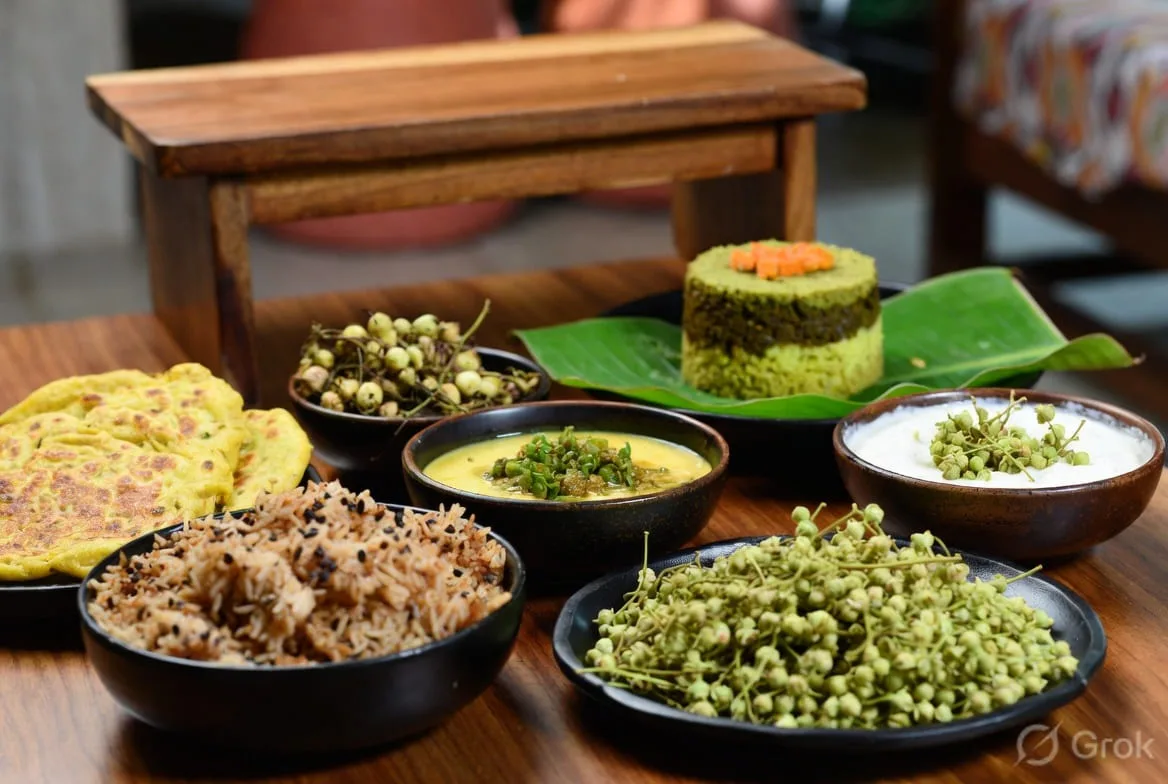
Ugadi Pachadi Recipe Its Deep Spiritual Importance
🌿 HinduTone.com · Festivals & Traditions Ugadi Pachadi Recipe &Its Deep Spiritual Importance The sacred dish that teaches us to taste all of life — joy,…
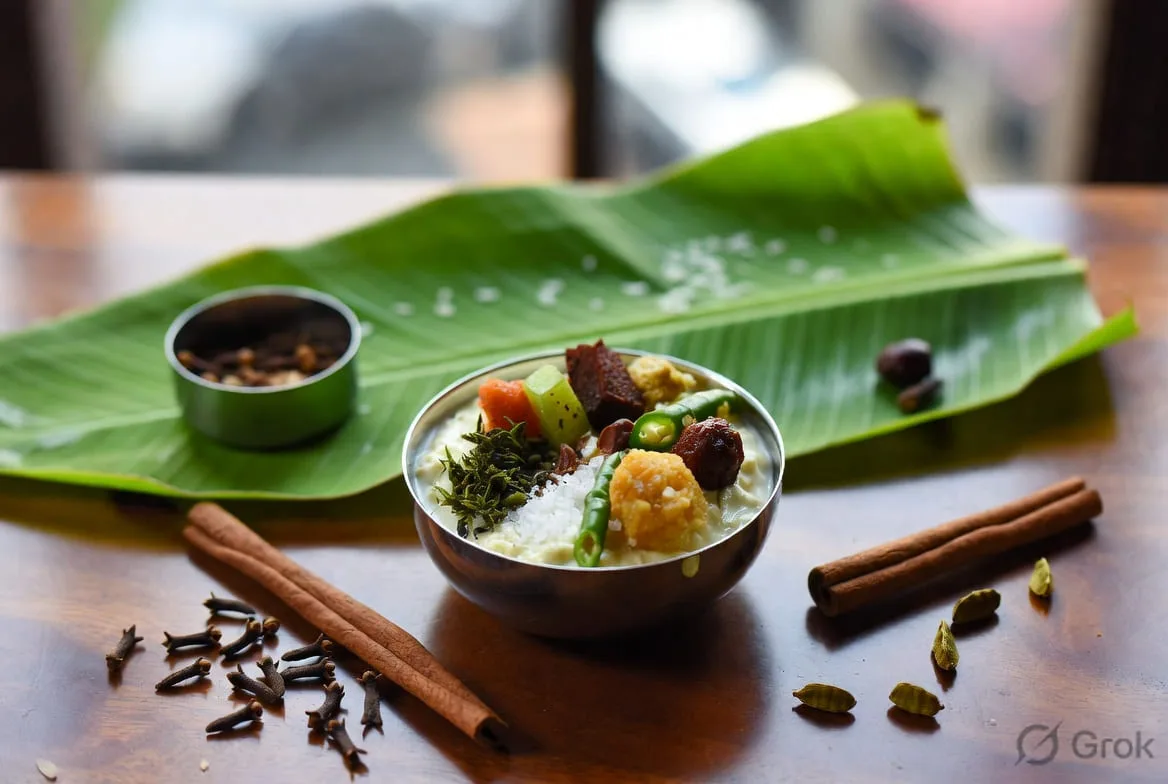
🌿 HinduTone.com · Festivals & Traditions
Ugadi Pachadi Recipe &
Its Deep Spiritual Importance
The sacred dish that teaches us to taste all of life — joy, sorrow, and everything between
🌸 Ugadi 2026 — March 30 📍 Andhra · Telangana · Karnataka ⏱ 15 Min Prep 🍃 No Cook · Vegan 📖 Full Recipe Inside
Ugadi Pachadi is not merely a recipe — it is a philosophy served in a bowl. Prepared every year on Ugadi (Telugu and Kannada New Year), this sacred six-ingredient chutney blends six distinct tastes that represent the six inevitable experiences of human life. As Ugadi 2026 falls on Sunday, March 30, millions of families across Andhra Pradesh, Telangana, Karnataka — and Hindu homes worldwide — will prepare and ritually taste Ugadi Pachadi at dawn, setting an intention to receive the entire year with equanimity, gratitude, and joy.
In this complete guide, you will discover the authentic Ugadi Pachadi recipe with exact measurements, the deep spiritual symbolism of each of its six ingredients, its history rooted in ancient Sanskrit texts, regional variations from different parts of South India, how to prepare it as a NRI celebrating Ugadi abroad, and answers to every question you may have about this beloved festival dish.
💬 WhatsApp 👍 Facebook ✕ Twitter 📌 Pinterest ✈ Telegram
🌿 What Is Ugadi Pachadi? 🌿
Ugadi Pachadi (also written as Ugadi Pacchadi or Yugadi Pachadi in Kannada) is a ritual chutney or relish prepared exclusively on the occasion of Ugadi — the Hindu New Year of Andhra Pradesh, Telangana, and Karnataka. The word pachadi comes from the Telugu/Kannada word meaning "chutney" or "relish," while Ugadi derives from the Sanskrit Yuga + Adi — meaning "the beginning of a new age."
What makes Ugadi Pachadi unique among all Indian festival foods is its deliberate combination of six contrasting tastes — sweet, sour, salty, bitter, spicy, and astringent — in a single bowl. Each taste is produced by a specific ingredient that also carries profound symbolic meaning about the nature of human experience. This is not accidental — it is a deeply intentional act of philosophical and spiritual teaching passed down through generations.
"Ugadi Pachadi does not ask you to enjoy only the sweet moments of life — it asks you to taste all of them, with a grateful and steady heart."
— Traditional Telugu wisdom on Ugadi
🍃 The 6 Ingredients & Their Spiritual Meaning 🍃
Each of the six ingredients in Ugadi Pachadi is a metaphor for one of the six fundamental experiences of human life. This is the heart of why Ugadi Pachadi is far more than a recipe — it is a living spiritual philosophy.
🌿
Neem Flowers (Vepa Puvvulu)
Taste: Bitter · Kiruka
Fresh tender neem flowers (or neem leaves when flowers are unavailable) contribute the unmistakable bitter taste to the pachadi. Their slight bitterness is the most difficult flavour in the bowl to enjoy on its own.
🔑 Life Meaning: Represents sadness, hardship, grief, and difficult periods of life. Just as we cannot avoid bitterness in the pachadi, we cannot escape life's painful experiences — but we can receive them with grace.
1–2 tbsp · Fresh or dried
🥭
Raw Mango (Mamidi Kaaya)
Taste: Sour · Pulupu
Fresh raw (unripe) mango pieces bring the tangy sour taste. The mango must be raw — never ripe — because Ugadi falls in the tender beginning of the mango season when fruits are still young on the tree.
🔑 Life Meaning: Represents surprises, challenges, and the unexpected twists that life throws at us. Sour experiences — disagreements, changes of plan — are part of life's richness.
2–3 tbsp · Finely chopped
🍯
Jaggery (Bellam)
Taste: Sweet · Teepi
Freshly grated jaggery — never refined sugar — provides the rich, warm sweetness. Jaggery is preferred because it carries the natural minerals and earthy depth that purified sugar lacks. Some families use a mix of jaggery and ripe banana.
🔑 Life Meaning: Represents happiness, celebrations, love, success, and the beautiful moments we cherish and live for. The sweetness reminds us that joy is always present — even within a bowl of mixed flavours.
3–4 tbsp · Freshly grated
🌶
Green Chilli (Pachhi Mirchi)
Taste: Spicy / Hot · Karam
Finely chopped fresh green chilli or a small pinch of red chilli powder provides the fiery hot taste. The heat is intense, sudden, and impossible to ignore — much like the experience it represents.
🔑 Life Meaning: Represents anger, intense challenges, fights, and fearful experiences. Life delivers shocks and confrontations — the pachadi teaches us to acknowledge them without being overwhelmed.
1 small chilli · Finely chopped
🧂
Salt (Uppu)
Taste: Salty · Uppu Ruchi
A measured pinch of salt — just enough to enhance all the other flavours without dominating them. Salt in Indian cooking philosophy is considered the great equaliser that brings harmony to a dish, not a flavour in its own right.
🔑 Life Meaning: Represents fear, anxiety, and the courage required to face the unknown. Salt also symbolises the steady, ordinary rhythms of daily life — without which the extraordinary moments lose their meaning.
¼ tsp · Rock salt preferred
🫙
Tamarind (Chintapandu)
Taste: Astringent / Tangy · Vayasarasa
A small amount of tamarind extract (soaked and strained) provides the sixth and final taste — the astringent, puckering quality that contracts the palate. Some traditions use raw tamarind pulp directly.
🔑 Life Meaning: Represents disgust, revulsion, and experiences that leave a lingering unpleasantness — the things in life we wish we could undo. Yet even these experiences teach us, and even this flavour enriches the whole.
1–2 tsp · Tamarind extract
🍃 Authentic Ugadi Pachadi Recipe 🍃
🥣
Ugadi Pachadi
Traditional Telugu & Kannada New Year Chutney · Six Tastes of Life
15 Min Prep
0 Min Cook
6 Servings
6 Tastes
🛒 Ingredients 👨🍳 Method 💡 Chef Tips 🗺 Variations ✈ NRI Guide
The following quantities make enough Ugadi Pachadi for 4–6 people for ritual tasting. Increase proportionally if serving a larger gathering. All ingredients should ideally be fresh and sourced on the morning of Ugadi itself.
🌿
Neem flowers (vepa puvvulu)
1–2 tablespoons, fresh or dried
🥭
Raw mango (mamidi kaaya)
3 tablespoons, finely chopped
🍯
Jaggery (bellam)
3–4 tablespoons, freshly grated
🌶
Green chilli (pachhi mirchi)
1 small, finely chopped (or ½ tsp red chilli)
🧂
Salt (uppu)
¼ teaspoon, rock or sea salt
🫙
Tamarind extract (chintapandu)
1–2 teaspoons, freshly soaked & strained
💧
Water
3–4 tablespoons, to adjust consistency
🍌
Ripe banana (optional)
½ small, mashed — for extra sweetness (Kannada style)
🌿 Neem flowers vs. neem leaves: Fresh neem flowers are traditional and preferred — they are less intensely bitter and have a delicate fragrance. If unavailable, use 1 tsp of dried neem flowers or a very small amount of tender neem leaves. Never skip the neem — it is the soul of the pachadi.
- 1 Prepare the Tamarind Extract Soak a small lemon-sized ball of tamarind in 4 tablespoons of warm water for 10–15 minutes. Using your fingers, squeeze and work the tamarind until the pulp dissolves completely into the water. Strain through a fine mesh or your fingers, discarding all seeds and fibre. You need 1–2 teaspoons of this concentrate. 💡 For convenience, use store-bought tamarind paste — ½ tsp replaces 1 tsp of fresh extract.
- 2 Prepare the Raw Mango Wash the raw mango thoroughly. Peel and cut into very small pieces — approximately 5mm dice. Do not grate the mango as it will become too juicy and unbalance the consistency. Set aside. The mango should be firm, sour, and completely unripe. 💡 Choose the sourest raw mango available. Totapuri, Neelam, or Banginapalli in their raw state all work beautifully.
- 3 Grate the Jaggery If using a hard block of jaggery, grate it finely or break it into small pieces using a knife. The jaggery should dissolve easily when mixed with the tamarind water. Avoid liquid jaggery syrup as it makes the pachadi too watery. Organic, dark jaggery provides the deepest flavour.
- 4 Combine All Ingredients In a clean bowl, combine the tamarind extract, grated jaggery, finely chopped raw mango, finely chopped green chilli, neem flowers, and salt. Add 2–3 tablespoons of water to bring everything together into a thin, pourable consistency — Ugadi Pachadi should be a liquid relish, not a thick chutney. Stir gently until the jaggery dissolves. 💡 Taste as you mix and adjust — slightly more jaggery if too sour, a drop more tamarind if too sweet. The final taste should have all six notes present simultaneously.
- 5 The Final Taste Check Take a small spoon and taste. You should be able to identify all six tastes — the sweetness of jaggery, the sourness of mango, the bitterness of neem, the heat of chilli, the saltiness of salt, and the lingering astringency of tamarind. No single taste should overpower the others. This balance is the art of Ugadi Pachadi.
- 6 Ritual Serving Transfer to a small brass or silver bowl (or a clean puja plate). Traditionally, the eldest member of the family first offers the pachadi to the home deity, then serves everyone present — beginning with the eldest and proceeding to the youngest. Each person receives a small spoon of pachadi, tastes it mindfully, and reflects silently on welcoming the full spectrum of the year ahead with an open heart. 🌿 Place fresh mango leaves, neem flowers, and flowers on the serving plate for a traditional presentation.
🌿 Traditional Chef's Tips for the Perfect Ugadi Pachadi
- Always use fresh neem flowers, not dried powder. The floral bitterness is fundamentally different from leaf bitterness. In Hyderabad and Bangalore, fresh neem flowers are sold specifically for Ugadi every year.
- Do not use sugar instead of jaggery. Jaggery's complex, unrefined sweetness carries trace minerals and a smoky depth that refined sugar cannot replicate. It also dissolves more gently, preventing the pachadi from becoming sickly-sweet.
- The consistency matters: Ugadi Pachadi should be thin enough to pour onto a spoon — a liquid relish, not a chunky chutney. If too thick, add a spoonful of water at a time.
- Prepare fresh on the morning of Ugadi — ideally after bath and puja. The pachadi should not be made the night before as the fresh ingredients, especially neem flowers and raw mango, lose their qualities overnight.
- Taste and balance as you go. The precise balance of six tastes varies by family tradition — some prefer slightly sweeter, some more sour. Find your family's balance and maintain it every year as a flavour memory.
- If making for a large group (Ugadi community event), scale proportionally but taste-test the large batch separately — the intensity of flavours can shift at scale.
- NRI tip — substitutions that work: If neem flowers are unavailable, a tiny amount of dried neem leaf powder (from Indian grocery or online) can substitute. If raw mango is unavailable, green apple + a squeeze of lime provides a passable sour-astringent substitute.
While the six core ingredients and their symbolism are universal across Telugu and Kannada traditions, each region, family, and community has its own treasured variation of Ugadi Pachadi passed down through generations.
🌿 Telugu — Andhra Style
Slightly more tart with a higher tamarind ratio. The mango pieces are kept larger for a more textural bite. Green chilli is preferred over red. Salt level is perceptibly higher than Kannada versions.
🌸 Telugu — Telangana Style
Hyderabadi tradition includes a small amount of ripe banana for a creamier sweetness alongside the jaggery. Some families also add a pinch of coconut (fresh or dry) for texture.
🍃 Kannada — Karnataka Style
Known as Yugadi Pachadi, the Karnataka version traditionally includes ripe banana as a standard ingredient (not optional) and tends to be slightly sweeter. Coconut pieces are sometimes included for the astringent note.
🌺 Belagavi / North Karnataka
Incorporates coconut milk for a distinctive creaminess that softens all the sharp flavours. The overall pachadi is more mellow and sweet, closer to a light dessert in consistency.
🍊 Coastal Andhra Style
Adds a small amount of fresh coconut shavings for an astringent note and a distinctly coastal flavour profile. Tamarind ratio is higher, producing the signature sour-forward taste of coastal Telugu cooking.
✈ NRI / Modern Adaptation
When traditional ingredients are unavailable: green apple for raw mango, dried neem leaf powder from Amazon/Indian store for neem flowers, and dark brown sugar as a partial jaggery substitute. The spirit of six tastes is preserved even with adaptations.
Celebrating Ugadi and making Pachadi abroad — a complete guide for the global Telugu and Kannada community.
Where to Find Ingredients Outside India
IngredientWhere to Find AbroadBest Substitute Neem FlowersIndian grocery stores around Ugadi, Amazon (dried), Telugu/Kannada cultural associationsDried neem leaf powder (tiny amount), or very bitter leafy herb Raw MangoIndian / Asian grocery stores (March–April), Caribbean/Latino stores (green mango)Green apple + 1 tsp fresh lime juice Jaggery (Bellam)Indian grocery stores (always available), online — Amazon, iHerb, Thrive MarketDark muscovado sugar or coconut sugar TamarindIndian / Thai / Filipino grocery stores, most Asian supermarketsKokum water or extra lime juice (less authentic) Green ChilliAny supermarket (jalapeño, serrano), Asian stores have Indian green chilliesSerrano or jalapeño in small quantity
Making Ugadi Pachadi as a Community Event Abroad
Many Telugu and Kannada organisations in the USA, UK, Canada, Australia, UAE, and Singapore hold Ugadi community celebrations where Pachadi preparation becomes a collective ritual. If you are organising such an event, prepare the pachadi in a large batch but conduct the tasting ceremony individually — each person should taste from their own small portion for the experience to carry its personal philosophical meaning.
Consider pairing the Pachadi ceremony with a reading of the Ugadi Panchanga Sravanam (new year almanac recitation) — many Telugu and Kannada temples abroad conduct this service, and online versions from Tirumala and Sringeri are available on YouTube every year.
📜 History & Vedic Significance of Ugadi Pachadi 📜
Ancient Vedic Period
Shad Rasa — The Philosophy of Six Tastes
The philosophical foundation of Ugadi Pachadi rests on the ancient Ayurvedic and Sanskrit concept of Shad Rasa — the six tastes (madhura, amla, lavana, katu, tikta, kashaya: sweet, sour, salty, pungent, bitter, astringent). Ancient texts including Charaka Samhita and Sushruta Samhita held that a complete and balanced meal must contain all six tastes for optimal physical health and mental equilibrium. Ugadi Pachadi translates this dietary philosophy into a spiritual ceremony.
Satavahana Dynasty · 1st century CE
Ugadi Established as Telugu New Year
Historical accounts attribute the formal establishment of Shalivahana Saka calendar — which governs the Telugu and Kannada Ugadi — to the Satavahana king Shalivahana, commemorating his military victory on Chaitra Shukla Pratipada. The Pachadi ritual is believed to have been formalised during this period as a way for communities to collectively contemplate the nature of time, life, and dharmic duty at the beginning of each new year.
Medieval Period · 10th–16th century CE
Vijayanagara Empire & Cultural Codification
Under the great Vijayanagara emperors — particularly during the reign of Sri Krishna Deva Raya — Telugu literature, music, and festival traditions reached their zenith. The Ugadi celebrations at Hampi were legendarily grand, and the Pachadi ritual was elevated from a household practice to a royal ceremony. Telugu poets of the Prabandha tradition wrote extensively about the symbolism of the six tastes, embedding the philosophy into the culture's literary DNA.
Colonial & Modern Period
Preservation Through Adversity
Through the colonial era, the partition of Andhra Pradesh, and the cultural disruptions of the 20th century, Ugadi Pachadi endured as one of the most tenaciously preserved festival traditions of the Telugu and Kannada people. Its survival through centuries of change is itself a testament to the philosophy it embodies — that all flavours of life, including bitter and difficult ones, are to be received and honoured.
Contemporary Global Era
Ugadi Pachadi in the Indian Diaspora
Today, Ugadi Pachadi is prepared in Telugu and Kannada homes across more than 40 countries, from Silicon Valley to Sydney, from Toronto to Tokyo. Community organisations, temples, and cultural associations hold Ugadi celebrations where the Pachadi ceremony brings together thousands. The tradition has also sparked modern culinary interest — food historians, chefs, and wellness practitioners have recognised the Shad Rasa philosophy as a remarkably sophisticated approach to balanced eating.
🪔 How to Perform the Ugadi Pachadi Ritual 🪔
Complete Ugadi Pachadi Ceremony — Step by Step
From pre-dawn preparations to the first mindful taste of the new year
- 1 Pre-dawn oil bath (Abhyanga Snanam): Wake before sunrise on Ugadi morning and take a traditional sesame oil bath before preparing or partaking of the pachadi. This is considered essential for the day's auspiciousness.
- 2 Decorate the home with mango leaf and neem garlands (Toranalu): Hang a fresh Mango leaf + Neem twig torana at the entrance of the home before preparing the pachadi. The combination of mango (prosperity) and neem (health and purification) is the traditional Ugadi welcome.
- 3 Prepare the Pachadi after bath: The Pachadi should be prepared fresh by the most senior woman of the household (or jointly by family members) after their oil bath and before breakfast. The preparation itself is considered a sacred act — approach it with a calm and grateful mindset.
- 4 First offering to the household deity: Place a small amount of Ugadi Pachadi on a fresh banana leaf or a brass plate before the home deity (typically Ganesha, Lakshmi, or the family's Kula Devata). Light a lamp and incense, offer flowers, and recite a brief prayer before distributing to family members.
- 5 Listen to Panchanga Sravanam: After the Pachadi offering, the family gathers to listen to the Panchanga Sravanam — the reading of the new year's almanac, which describes the year's name, its ruling planet (Varsha Adhipati), expected rains, harvests, planetary transits, and forecast for the year ahead.
- 6 Mindful tasting — the moment of philosophy: Each family member receives a small spoon of Ugadi Pachadi. Before tasting, the elder speaks these words (or similar): "This year, we will receive all of life's experiences — sweet and bitter, sour and hot, salty and astringent — with the same equanimity and gratitude. This is Ugadi Pachadi's teaching." Then all taste together.
- 7 Feast and celebration: The Ugadi feast follows — traditionally including Pulihora (tamarind rice), Bobbatlu/Obbattu (sweet flatbread), Pesarapappu, Payasam, Mango dal, Kosambari, and seasonal vegetables. The Pachadi is the sacred beginning; the feast is the joyful celebration.
🗺 Ugadi Across South India — Regional Comparison 🗺
Region / State Festival Name Ugadi 2026 Date Pachadi Variation Signature Dish Andhra PradeshUgadiMarch 30, 2026Tart, higher tamarind, large mango piecesPulihora, Bobbattu TelanganaUgadiMarch 30, 2026With banana, slightly milderSarva Pindi, Puran Poli KarnatakaYugadiMarch 30, 2026Sweeter, banana standard, coconut optionalObbattu, Kosambari MaharashtraGudi PadwaMarch 30, 2026Neem+jaggery paste (no mango/tamarind)Puran Poli, Shrikhand GoaSamvatsar PadvoMarch 30, 2026Similar to Konkani style, coconut-forwardKanangachi Kheer Tamil NaduPuthanduApril 14, 2026Mango rice (different tradition)Mango Pachadi, Neivedyam
❓ Ugadi Pachadi — Frequently Asked Questions ❓
What is the exact date of Ugadi 2026? +
Ugadi 2026 falls on Sunday, March 30, 2026 — Chaitra Shukla Pratipada of Vikram Samvat 2083. This is the Telugu and Kannada New Year, coinciding with Gudi Padwa in Maharashtra and Goa. Note that Tamil New Year (Puthandu) falls later on April 14, 2026.
Can I make Ugadi Pachadi the night before? +
Traditionally, no — Ugadi Pachadi should be prepared fresh on the morning of Ugadi, ideally after the oil bath and before breakfast. The freshness of the ingredients, especially neem flowers, raw mango, and the ritual intention, are all part of what makes the preparation sacred. However, for large community events, practical preparation the same morning a few hours in advance is acceptable. Do not store overnight.
What if I cannot find neem flowers? +
In India, fresh neem flowers are available at most vegetable markets and flower markets in the days leading up to Ugadi — they are sold specifically for this purpose. Outside India, check Indian grocery stores in the week before Ugadi (they often stock dried neem flowers), or order online (Amazon stocks dried neem flowers year-round). Substitute if absolutely necessary: Use a very tiny amount of dried neem leaf powder. Some families use a few fresh bitter gourd pieces as a partial substitute. Never skip the bitter taste entirely — it is philosophically essential to the meaning of Ugadi Pachadi.
Why is Ugadi Pachadi intentionally unpleasant to taste? +
This is precisely the point. Ugadi Pachadi is not designed to be delicious — it is designed to be complete. The philosophy is that a life lived fully must include bitterness alongside sweetness, struggle alongside joy, fear alongside courage. By ritually tasting all six experiences simultaneously at the beginning of a new year, we make a conscious spiritual commitment to receive the entire year — the good and the difficult — with equanimity. This is fundamentally different from all other Indian festival foods, which are celebratory sweets. Ugadi Pachadi is a meditation in edible form.
What is the difference between Ugadi Pachadi and Gudi Padwa celebrations? +
Both Ugadi (Telugu/Kannada) and Gudi Padwa (Marathi) fall on the same day — Chaitra Shukla Pratipada — and celebrate the Hindu New Year. However, their specific rituals differ. The Ugadi tradition centres on the six-taste Pachadi ceremony as its defining ritual. Gudi Padwa is identified by the Gudi — a bamboo pole decorated with silk cloth, neem leaves, mango leaves, and a copper pot raised outside homes. The Marathi Neem-Jaggery paste (also tasted on Gudi Padwa) is simpler than Ugadi Pachadi, containing just two ingredients rather than six.
How much Ugadi Pachadi should each person consume? +
The Pachadi is a ritual tasting, not a meal — typically one small spoon (approximately 1–2 teaspoons) per person is sufficient. The purpose is philosophical and ceremonial. Because of the neem flowers, consuming large amounts is not recommended, as neem in large quantities has strong properties. Children receive a very small amount, and the preparation for young children can have slightly reduced neem content.
Is Ugadi Pachadi the same as Chaitra Navratri? +
They are related but distinct. Ugadi (March 30, 2026) and Chaitra Navratri (March 30 – April 7, 2026) both begin on the same day — Chaitra Shukla Pratipada — because both observe the beginning of the Hindu new year according to the Chaitra month. Ugadi/Gudi Padwa is the cultural and civil new year celebration of South and Western India. Chaitra Navratri is the nine-day worship of Maa Durga that coincides with the same period. They are celebrated simultaneously in many households, with Ugadi Pachadi as the morning ritual and Navratri devotion continuing through the nine days.
Ugadi Pachadi is perhaps the most honest recipe ever created.
It asks us to taste all of life — not just the parts we enjoy — and to begin each new year by saying:
"I am ready. Bring it all."
— HinduTone.com · Ugadi 2026
As you prepare your Ugadi Pachadi this March 30, 2026, remember that the bowl in your hands holds a 2,000-year-old philosophical tradition. The neem flower is not there despite its bitterness — it is there because of it. The raw mango does not apologise for its sourness. The jaggery does not promise that sweetness will last forever. Together, they say something that every human being needs to hear at the beginning of every year:
Life is all of this. And it is enough. And it is beautiful.
Ugadi Subhakankshalu! Yugadi Shubhashayagalu! 🌿 — HinduTone.com
📲 Share This Article 📲
💬 WhatsApp 👍 Facebook ✕ Twitter 📌 Pinterest ✈ Telegram
HinduTone.com — This Ugadi Pachadi recipe and significance guide is prepared by the HinduTone editorial team from authentic Telugu, Kannada, and Ayurvedic sources. Ingredient quantities may vary by family tradition — trust your family's recipe as the final authority. For the Neem content: please note that neem has medicinal properties and large quantities should not be consumed. The ritual tasting amount (1–2 tsp of finished pachadi) is safe for most adults. Consult your physician if you have specific dietary restrictions. Ugadi Subhakankshalu 2026! 🌿
Share this with family and friends
Send it on WhatsApp, post it, or copy the link.
More from Ugadi
- Ugadi Celebrations Worldwide: Country-Wise Guide for Indian Diaspora & NRIs – 2026 Edition
- Ugadi Celebrations in South Africa: Province-Wise, City-Wise Guide for Indian Diaspora & NRIs – 2026 Edition
- Ugadi Celebrations in Canada: Province-Wise, City-Wise Guide for Indian Diaspora & NRIs – 2026 Edition
- Ugadi Celebrations in the UK & Ireland: City-Wise Guide for Indian Diaspora & NRIs – 2026 Edition
- Ugadi Celebrations in New Zealand: State-Wise, City-Wise Guide for Indian Diaspora & NRIs – 2026 Edition
You might also like

Ugadi 2026 Celebrations in India: Traditions, Rituals and Auspicious Beginnings

Ugadi Celebrations in the USA: State-Wise, City-Wise Guide for NRI Communities

Ugadi Celebrations in the UAE: Emirate-Wise, City-Wise Guide for Indian Diaspora & NRIs – 2026 Edition