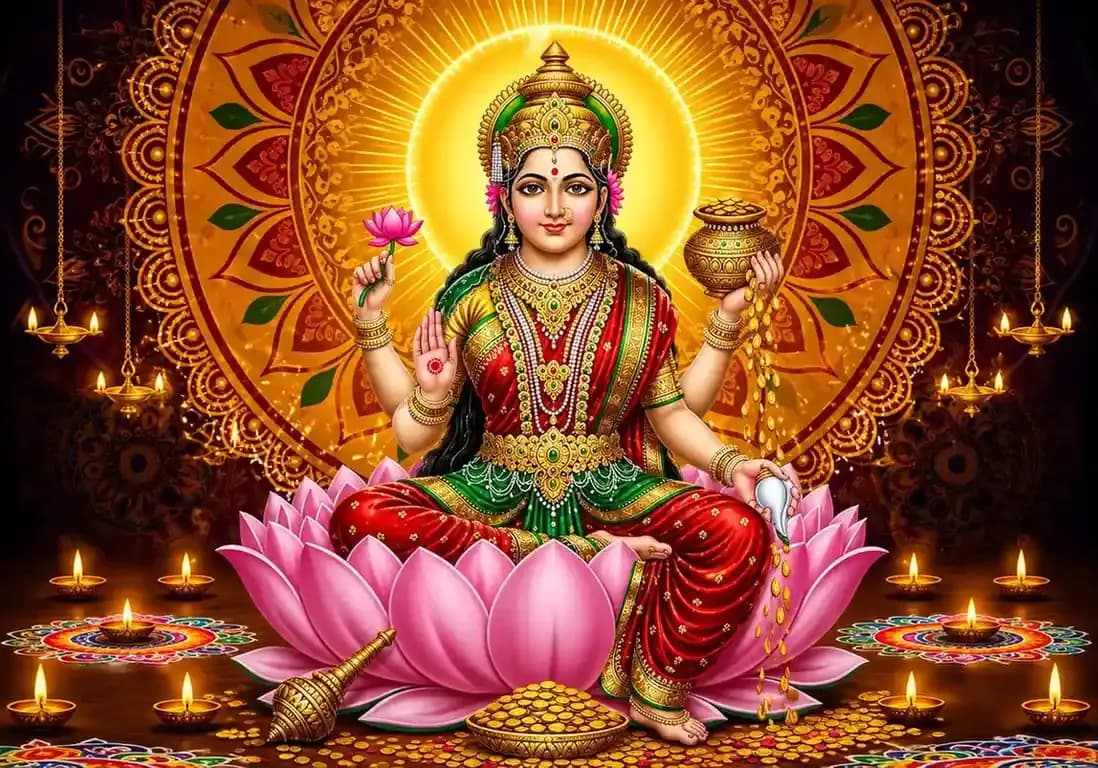
Utpanna Ekadashi 2026: The Origin of Ekadashi, Story, Date and Vidhi
Utpanna Ekadashi 2026 is observed on Friday, 4 December. This is the Ekadashi that, by tradition, marks the very birth of the Ekadashi vrat itself. Here is the story, the date and tithi, and the step-by-step vidhi.

Utpanna Ekadashi 2026 is observed on Friday, 4 December. This is the Ekadashi that, by tradition, marks the very birth of the Ekadashi vrat itself.
Quick answer: Utpanna Ekadashi 2026 is observed on Friday, 4 December 2026. It is the Krishna Paksha Ekadashi of the Margashirsha month (Kartik Krishna Paksha in the Purnimanta reckoning), traditionally honoured as the day the goddess Ekadashi was born and the origin of all Ekadashi vrats.
Among the twenty-four Ekadashis of the year, Utpanna Ekadashi holds a special place: tradition regards it as the Ekadashi from which all other Ekadashis take their origin. The word 'Utpanna' means 'born' or 'arisen', and the day commemorates the appearance of the goddess Ekadashi, personified as a divine power (shakti) of Bhagavan Vishnu. For many devotees who wish to begin observing the Ekadashi vrat as a lifelong practice, this is the traditional day to start. In 2026 it is observed on Friday, 4 December; below you will find the confirmed date and tithi window, the origin story, a clear puja vidhi, fasting guidance and regional variations.
Utpanna Ekadashi 2026: Quick Facts
- FestivalUtpanna Ekadashi (Utpatti Ekadashi)
- Date in 2026Friday, 4 December 2026
- PakshaKrishna Paksha (waning Moon)
- Lunar monthMargashirsha (Amanta) / Kartik (Purnimanta)
- Presiding deityBhagavan Vishnu; goddess Ekadashi
- Ekadashi tithi begins06:33 PM, 3 December 2026 [VERIFY]
- Ekadashi tithi ends07:14 PM, 4 December 2026 [VERIFY]
- Parana (fast-breaking)Morning of 5 December 2026 [VERIFY local]
- Nature of observanceFasting (vrat), Vishnu puja, night vigil
Amanta and Purnimanta: Why the Month Name Differs
The clock times above are drawn from widely used panchangs and are marked [VERIFY] because tithi and Parana windows shift with your city's sunrise and longitude; confirm them against your local panchang. You may also see this Ekadashi described as Margashirsha in some panchangs and Kartik in others. Both are correct within their own systems, and neither should be treated as a mistake.
- In the Amanta reckoning (common in Maharashtra, Karnataka, Andhra Pradesh, Telangana and Gujarat), the month ends on the new Moon, so this Krishna Paksha Ekadashi falls in Margashirsha.
- In the Purnimanta reckoning (common across much of North India), the month ends on the full Moon, so the same Ekadashi is counted in Kartik Krishna Paksha.
- The date on the civil calendar, Friday, 4 December 2026, is the same in both systems; only the month label changes. Follow the naming your family and temple use.
The Story: How Ekadashi Was Born (Vrat Katha)
The origin story, recounted in the Puranic tradition, tells of a fierce asura named Mura who terrorised the devas and even Bhagavan Vishnu could not easily overcome him. According to the katha, when Vishnu withdrew into a cave to rest during the long struggle, Mura pursued him there intending to strike. At that moment a radiant goddess-power arose from Vishnu's own body and destroyed the demon Mura.
Pleased with her, Bhagavan Vishnu blessed this shakti, declaring that she would be known as Ekadashi, dear to him above all vrats, and that whoever observes the Ekadashi fast with devotion would be freed of accumulated wrongdoing and drawn closer to him. Because the goddess Ekadashi thus 'arose' on this day, it is called Utpanna (Utpatti) Ekadashi, honoured as the source of the entire cycle of Ekadashi observances. The details of the katha vary between regional tellings; treat these as tradition rather than as fixed historical record.
Puja Vidhi: Step-by-Step
- On the day before (Dashami), take a sattvic meal and mentally resolve (sankalpa) to observe the vrat; many avoid grains, onion and garlic from Dashami evening.
- Rise early on Ekadashi, bathe, and wear clean clothes.
- Clean the puja space and place an image or murti of Bhagavan Vishnu (or Lakshmi-Narayana); light a lamp with pure ghee or oil.
- Offer water, flowers, tulsi leaves, sandal paste, incense and a naivedya of sattvic food; tulsi is considered especially dear to Vishnu.
- Recite Vishnu's names, the Vishnu Sahasranama or a stotra you know, and read or listen to the Utpanna Ekadashi katha.
- Perform aarti of Bhagavan Vishnu with the traditional lamp; distribute prasad after aarti.
- Observe restraint through the day, keep the mind on remembrance and, if your family practice includes it, keep a night vigil (jagran) with bhajans.
- Break the fast (Parana) the next morning, 5 December 2026, within the recommended local window, ideally after offering food to Vishnu first.
Fasting: What Devotees Traditionally Do
Ekadashi fasting ranges from a complete waterless (nirjala) fast to a lighter fast in which devotees avoid grains, beans and certain vegetables while taking fruit, milk or specific vrat foods. The strictness is a matter of personal capacity, family custom and guidance from one's temple or guru; tradition allows this range rather than prescribing a single rule for everyone.
Please treat fasting as a devotional practice, not a health regimen. Anyone who is pregnant, elderly, unwell, taking regular medication, or living with a medical condition such as diabetes should consult a doctor before undertaking any fast, and should choose a gentler observance or none at all if advised. There is no requirement to endanger your health to earn merit.
Who Observes Utpanna Ekadashi, and How to Begin
By tradition, Ekadashi is open to all who wish to observe it, and Utpanna Ekadashi is specifically regarded as the auspicious day on which to formally begin a lifelong Ekadashi vrat. Views differ across communities on questions such as whether unmarried people or women during certain days should fast; some families follow stricter customs and others are more relaxed.
- Many households have all willing members observe some form of the vrat, from a full fast to simply avoiding grains.
- Some traditions encourage those beginning the vrat to start on Utpanna Ekadashi and continue every Ekadashi thereafter.
- Where family or community customs restrict who observes, follow the guidance of your elders, family and temple rather than any single online rule.
- If you cannot fast, you can still participate through puja, katha, charity and remembrance of Vishnu.
Regional Variations
| Region / Tradition | Common practice |
|---|---|
| North India (Purnimanta) | Counted as Kartik Krishna Ekadashi; Vishnu puja, katha reading, jagran |
| Maharashtra & Karnataka (Amanta) | Margashirsha Krishna Ekadashi; Vitthal/Vishnu worship, bhajan and abhang singing |
| Andhra & Telangana | Margashira Ekadashi; Vishnu/Venkateshwara worship, temple visits and vratam |
| Vaishnava sampradayas | Emphasis on strict grain-free fast, tulsi offering and starting the lifelong vrat on this day |
Mantras, Aarti and Breaking the Fast (Parana)
Devotees commonly chant 'Om Namo Bhagavate Vasudevaya' and 'Om Namo Narayanaya', and recite the Vishnu Sahasranama where they are able. The traditional Vishnu aarti is sung at the close of the puja. Longer stotras are best learnt from an authentic printed source or your temple; here we describe rather than reproduce them in full. Use only traditional, public-domain devotional text and avoid film or modern copyrighted songs during the observance.
The Parana is done on Dwadashi, the morning of 5 December 2026, within a window defined by your local sunrise and the end of Dwadashi tithi [VERIFY]. Breaking the fast at the correct time is considered part of the vrat's completeness, so check your local panchang for the precise Parana window in your city. However you observe, let the day's spirit guide you: remembrance of Bhagavan Vishnu, restraint of the senses, and gratitude for the goddess whose birth this Ekadashi celebrates. Align the details with your own family and temple practice, and your observance will be complete.
Frequently Asked Questions
When is Utpanna Ekadashi in 2026?
Utpanna Ekadashi is observed on Friday, 4 December 2026. The Ekadashi tithi begins on the evening of 3 December and ends on the evening of 4 December; confirm exact clock times with your local panchang [VERIFY].
Why is it called Utpanna Ekadashi?
'Utpanna' means 'born' or 'arisen'. Tradition holds that on this day the goddess Ekadashi arose from Bhagavan Vishnu and destroyed the demon Mura, making it the origin of all Ekadashi vrats.
Which month does Utpanna Ekadashi fall in?
It is the Krishna Paksha Ekadashi of Margashirsha in the Amanta reckoning, and of Kartik in the Purnimanta reckoning. Both refer to the same day, 4 December 2026; only the month label differs.
Is Utpanna Ekadashi a good day to start the Ekadashi vrat?
Yes. By tradition, Utpanna Ekadashi is regarded as the auspicious day to formally begin a lifelong Ekadashi vrat and continue it on every Ekadashi thereafter, following your family and temple practice.
How is the fast observed?
Fasting ranges from a strict waterless (nirjala) fast to a lighter fast avoiding grains and beans while taking fruit or milk. The level depends on personal capacity, family custom and temple guidance.
Can anyone observe Utpanna Ekadashi?
By tradition it is open to all who wish to observe it. Communities differ on specific customs, so follow the guidance of your elders and temple. Those who cannot fast may participate through puja, katha and charity.
Is fasting safe for everyone?
Fasting is a devotional practice, not a health plan. Anyone pregnant, elderly, unwell, on medication, or with a condition such as diabetes should consult a doctor first and choose a gentler observance or none if advised.
When do we break the Utpanna Ekadashi fast?
The fast is broken (Parana) on Dwadashi, the morning of 5 December 2026, within a window set by your local sunrise and the end of Dwadashi tithi. Check your local panchang for the exact time [VERIFY].
You might also like
Rama Ekadashi 2026: Date, Vrat Katha, Puja Vidhi & Significance

Champa Shashthi 2026: Date, Khandoba Worship & Jejuri's Golden Festival

Kati Bihu 2026: Date, Rituals & Assam's Festival of Earthen Lamps