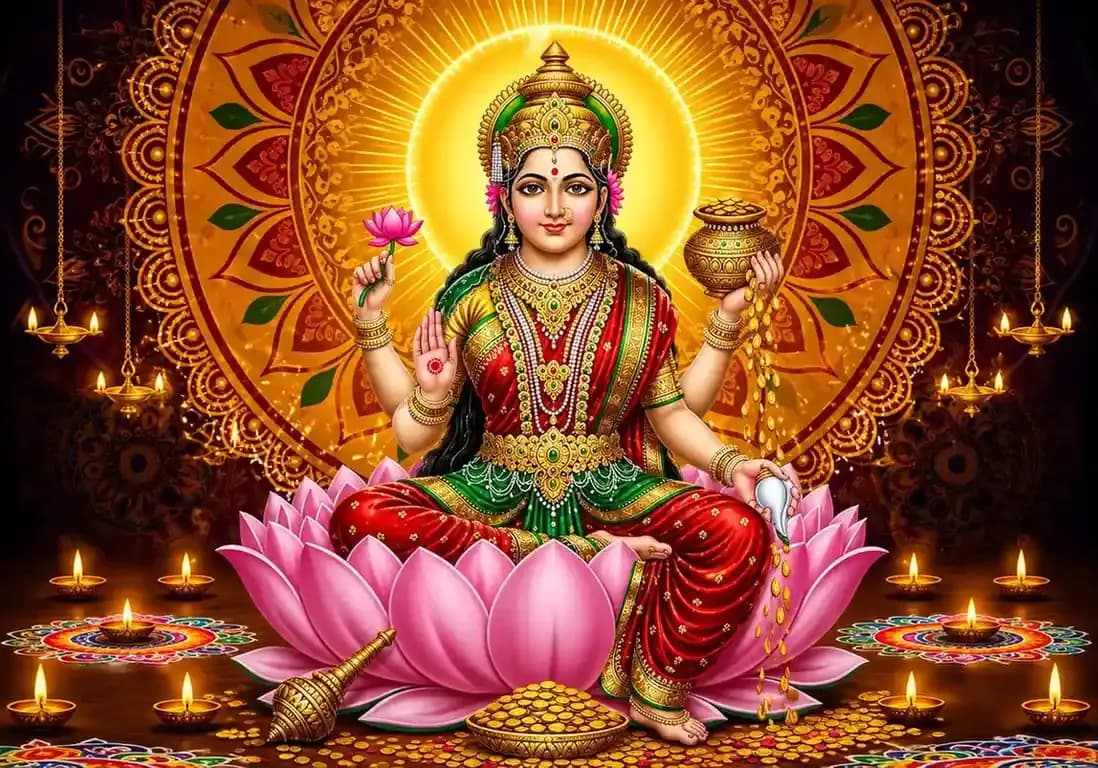
Vivah Panchami 2026: Date, Tithi and Puja Vidhi for the Rama-Sita Wedding Day
Vivah Panchami 2026 marks the sacred wedding of Bhagwan Shri Ram and Mata Sita, observed on Monday, 14 December. Here is the date, tithi window, puja vidhi and regional traditions.
Vivah Panchami 2026 marks the sacred wedding of Bhagwan Shri Ram and Mata Sita, observed on Monday, 14 December. Here is the date, tithi window, puja vidhi and regional traditions.
Quick answer: Vivah Panchami 2026 falls on Monday, 14 December 2026. It marks the divine wedding of Bhagwan Shri Ram and Mata Sita on the Shukla Panchami tithi of the Margashirsha month. The Panchami tithi runs from the afternoon of 13 December into the evening of 14 December.
Vivah Panchami celebrates the sacred marriage of Bhagwan Shri Ram and Mata Sita, one of the most cherished events in the Ramayana. Observed on the Shukla Panchami tithi of the Margashirsha (Agahan) month, it is marked with great devotion in Ayodhya, at Janakpur (the birthplace of Mata Sita, now in Nepal), and in Ram-Sita temples across India and the diaspora.
When is Vivah Panchami 2026?
Vivah Panchami 2026 falls on Monday, 14 December 2026. The festival is tied to the Shukla Panchami tithi of Margashirsha, and by common panchang reckoning the day is observed on 14 December this year.
Quick Facts: Vivah Panchami 2026
- FestivalVivah Panchami (Ram-Sita Vivah)
- DateMonday, 14 December 2026
- TithiShukla Panchami, Margashirsha (Agahan) month
- Panchami Tithi Begins04:47 PM, 13 December 2026 (New Delhi) [VERIFY]
- Panchami Tithi Ends07:15 PM, 14 December 2026 (New Delhi) [VERIFY]
- DeitiesBhagwan Shri Ram and Mata Sita
- Main centresAyodhya (India) and Janakpur (Nepal)
- Also known asRam Vivah, Vivah Panchami
Clock times above are for New Delhi and shift with your location and local sunrise; check a panchang for your own city. For observers in the USA, UK, Canada, Australia, UAE or Singapore, the local civil date may differ by a day depending on when the tithi begins and ends in your timezone.
The significance of the Rama-Sita wedding
According to the Ramayana, Bhagwan Shri Ram won the hand of Mata Sita at the swayamvar held by King Janak of Mithila by lifting and stringing the mighty bow of Bhagwan Shiv, the Shiv Dhanush. Their union is revered as the ideal of dharmic married life, and Vivah Panchami is observed as their wedding anniversary. Devotees celebrate the day as a reminder of devotion, righteousness and the sacred bond between the divine couple.
Puja Vidhi: how the Ram-Sita Vivah is observed
The following is a general outline of the traditional observance. Temples and families follow their own paddhati, so adapt these steps to your local custom and the guidance of your priest.
- Clean the puja space and bathe in the morning, then set up an altar with images or murtis of Bhagwan Shri Ram and Mata Sita.
- Invoke Shri Ganesh first, then Bhagwan Ram and Mata Sita, offering flowers, tulsi, roli, akshat (unbroken rice), incense and a lamp.
- Recite verses from the Balkand of the Ramcharitmanas or the Ramayana that narrate the vivah prasang (the wedding episode).
- Enact or recall the ceremonial marriage: many temples perform a symbolic vivah with mangalphera, and devotees offer garlands to the divine couple.
- Chant the name of Ram (Ram naam) and sing traditional bhajans and vivah geet dedicated to the occasion.
- Offer bhog such as fruits, sweets and other satvik naivedya, then conclude with aarti.
- Distribute prasad among family and devotees.
Aarti to Bhagwan Ram and the recitation of the Ramcharitmanas are central to the day. Many households read the vivah section of Tulsidas's Ramcharitmanas; longer stotras and the full text are recited at temples over the course of the day rather than in a single sitting.
Regional variations
Vivah Panchami is celebrated with distinct local flavour across the Hindu world.
| Place / Region | How it is observed |
|---|---|
| Ayodhya (Uttar Pradesh) | Grand celebrations at Ram temples with processions, jhankis and a ceremonial re-enactment of the Ram-Sita wedding. |
| Janakpur (Nepal) | As Mata Sita's birthplace, Janakpur hosts large-scale festivities at the Janaki Mandir, drawing devotees from India and Nepal. |
| Mithila region (Bihar / Nepal) | Folk vivah geet, Mithila-style rituals and community gatherings honour the region's link to Mata Sita. |
| Across India and the diaspora | Ram-Sita temples hold katha, akhand Ramayana paath, bhajan-kirtan and symbolic vivah ceremonies. |
Who observes Vivah Panchami and how
Vivah Panchami is observed widely by devotees of Bhagwan Ram, by Ram bhakts and Vaishnav communities, and by anyone drawn to the ideals of the Ramayana. Participation ranges from attending temple programmes and listening to the wedding katha, to performing a home puja and reading the Ramcharitmanas.
Some devotees keep a vrat (fast) on the day as a mark of devotion, while others observe it through worship, seva and Ram naam without fasting. Traditional views on who should fast differ from family to family; there is no single rule, so follow the practice of your household and temple. If you observe a fast and you have a medical condition, or if you are pregnant, please consult a doctor before fasting.
Traditionally, the day is honoured as an occasion of devotion and auspiciousness. Some communities regard it as a meaningful day to remember the ideals of married life; these are matters of faith and tradition and carry no guaranteed outcome for marriage, family or personal fortune.
A note on customs and celebrations
Temple programmes, timings and any public events vary each year and are set locally; confirm details with your own temple or organiser before you travel. Where celebrations include lamps, open flame or fireworks, remember that local law governs their use and safety, and these must always be checked and followed.
Vivah Panchami is, above all, a day to remember the union of Bhagwan Shri Ram and Mata Sita and the values their story embodies. However you choose to observe it, let the day be one of devotion, Ram naam and shared community joy.
Frequently Asked Questions
When is Vivah Panchami in 2026?
Vivah Panchami 2026 falls on Monday, 14 December 2026. It is observed on the Shukla Panchami tithi of the Margashirsha month, the day marking the wedding of Bhagwan Shri Ram and Mata Sita.
What is the tithi window for Vivah Panchami 2026?
By New Delhi panchang, the Shukla Panchami tithi begins around 04:47 PM on 13 December 2026 and ends around 07:15 PM on 14 December 2026 [VERIFY]. Times shift with your location, so check a local panchang.
Why do some calendars show 13 December instead of 14 December?
Because the Panchami tithi begins on the afternoon of 13 December, a few calendars list that day. Most panchangs observe Vivah Panchami on 14 December 2026, when the tithi prevails at puja time. Follow your family or temple practice.
What does Vivah Panchami celebrate?
Vivah Panchami celebrates the sacred marriage of Bhagwan Shri Ram and Mata Sita, as told in the Ramayana. It is revered as their wedding anniversary and as an ideal of dharmic married life.
Where is Vivah Panchami celebrated most grandly?
The largest celebrations are in Ayodhya, associated with Bhagwan Ram, and in Janakpur (Nepal), the birthplace of Mata Sita, where the Janaki Mandir hosts major festivities. Ram-Sita temples across India and the diaspora also mark the day.
How is the puja performed at home?
Set up an altar with Ram and Sita, invoke Shri Ganesh, then offer flowers, tulsi, incense and a lamp. Recite the vivah episode from the Ramcharitmanas or Ramayana, sing bhajans, offer bhog and conclude with aarti. Adapt to your family paddhati.
Should I keep a fast on Vivah Panchami?
Some devotees fast as a mark of devotion; others observe the day through worship and seva without fasting. Traditional views differ, so follow your household and temple practice. If you have a medical condition or are pregnant, consult a doctor before fasting.
Which scripture is read on Vivah Panchami?
Devotees commonly read the vivah prasang from the Balkand of Tulsidas's Ramcharitmanas, and many temples hold akhand Ramayana paath and katha narrating the Ram-Sita wedding.
You might also like
Rama Ekadashi 2026: Date, Vrat Katha, Puja Vidhi & Significance
Champa Shashthi 2026: Date, Khandoba Worship & Jejuri's Golden Festival
Kati Bihu 2026: Date, Rituals & Assam's Festival of Earthen Lamps