
Hindu Priest Jobs USA 2026 — Pandit Vacancies, Visa Sponsorship, Salaries, Best Temples & Complete Career Guide
Hindu priest jobs USA 2026 — pandit vacancies, R-1 religious visa sponsorship, salaries, top temples hiring, training pathway. Complete career guide for India-based priests.
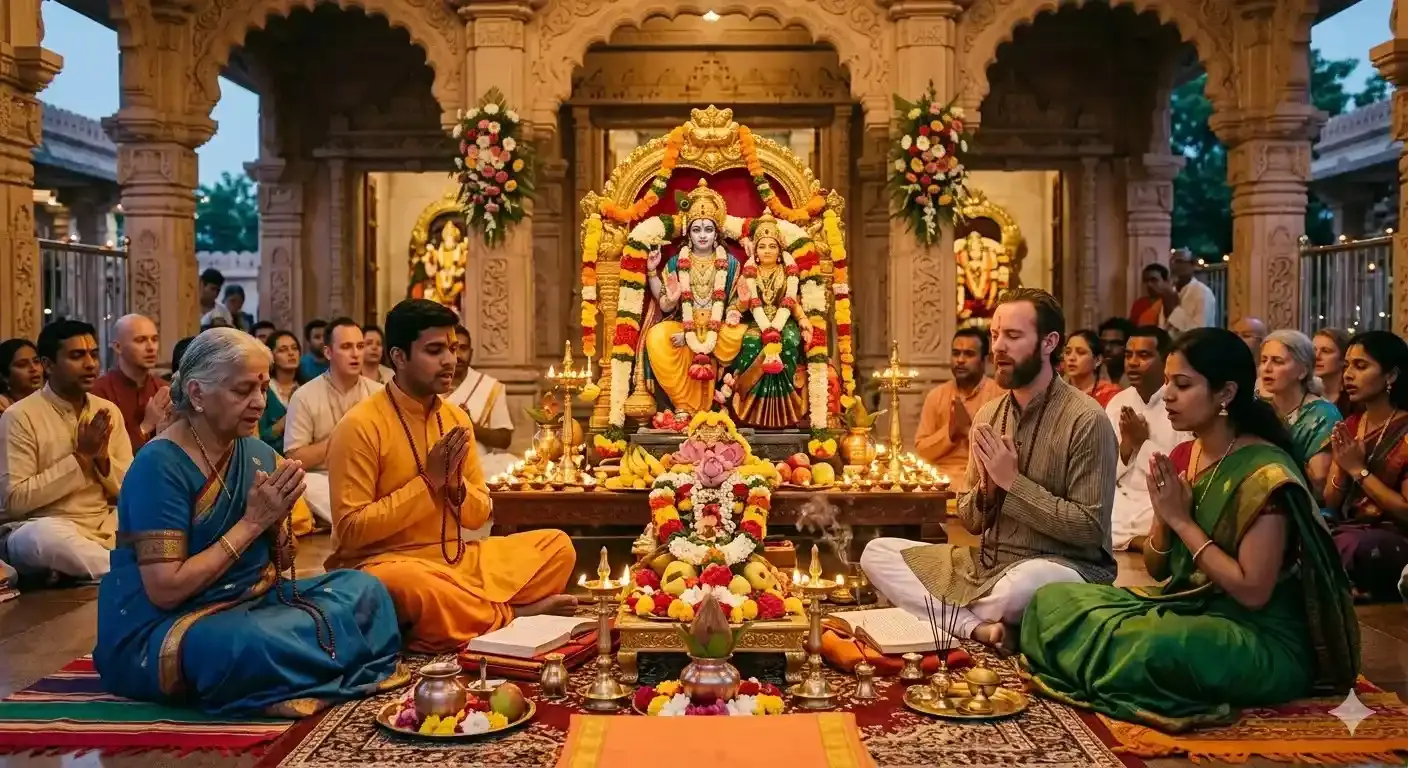
Hindu priest jobs USA 2026 — pandit vacancies, R-1 religious visa sponsorship, salaries, top temples hiring, training pathway. Complete career guide for India-based priests.
Quick Answer: As of 2026, the USA has over 1,300 Hindu temples with an estimated 2,500-3,000 active Hindu priest positions — both full-time and part-time. The demand significantly exceeds supply: American Hindu communities continually seek qualified priests from India, with R-1 religious worker visa as the primary immigration pathway. Annual salary ranges from $35,000 to $80,000 depending on temple size and priest qualifications, plus typical benefits including accommodation, transportation allowance, healthcare. Major US Hindu temple groups hiring: BAPS Swaminarayan Sanstha, ISKCON, Vedanta Society, Sri Venkateswara Pittsburgh, Hindu Temple Atlanta, BAPS Robbinsville NJ, Houston Meenakshi Temple, and hundreds of smaller community temples. Required qualifications typically include: Sanskrit fluency, Vedic ritual training (typically 5-10 years), ability to perform major Hindu pujas (Lakshmi, Ganesh, Shiva, Vishnu, Devi), basic English fluency, and willingness to live in the USA for 5+ years (R-1 visa initial period).
The US Hindu Temple Landscape
By 2026, the USA has the world's second-largest Hindu population outside India (~4.5 million Hindus). Temple infrastructure has grown rapidly:
- 1,300+ Hindu temples nationwide
- 150+ major temples with full-time priest establishments
- 800+ medium-sized community temples with part-time/visiting priest arrangements
- Hundreds of smaller community puja venues, Vedic societies, regional cultural associations
The community demand for qualified Hindu priests significantly exceeds the supply, particularly because:
- US-born Indian-American children rarely choose priesthood as career
- Traditional training in India takes 8-12 years
- Cultural-language fluency for US congregations adds complexity
- US-based priest training programmes are emerging but limited
Major US Hindu Temple Employers
Tier 1 — Major institutional employers
- BAPS Swaminarayan Sanstha — multiple temples across USA, including Robbinsville NJ, Houston, Atlanta, Chicago, San Francisco. Employs full-time swamis (monks) and sadhus for permanent positions. Lay priests for assisting roles.
- ISKCON (Hare Krishna Movement) — 50+ temples across USA including New Vrindaban, Bhaktivedanta Temples in major cities. Hires experienced ISKCON-trained brahmacharis and householder priests.
- Vedanta Society — 12+ centres across USA (San Francisco, New York, Boston, Chicago, etc.). Hires Ramakrishna Order swamis primarily.
- Chinmaya Mission USA — 25+ centres. Hires Chinmaya Mission-affiliated priests.
Tier 2 — Major South Indian temple employers
- Sri Venkateswara Temple Pittsburgh — the foundational US temple; consistent priest hiring
- Sri Lakshmi Temple Ashland MA
- Sri Lakshmi Temple Dallas
- Hindu Temple of Atlanta
- Sri Meenakshi Temple Houston
- Sri Venkateswara Bridgewater NJ
Tier 3 — Regional / North Indian temples
- Hundreds of medium-sized temples in NJ, NY, CA, TX, IL, GA, VA, FL, NC, WA, MA, MI, OH
- Many require visiting priests for major festivals + part-time daily priests
- Some employ retired/visiting priests from India seasonally
Required Qualifications
Sanskrit and ritual training
- 5-10 years formal Vedic training in India (Vedapatashala, Madhwa-Vaishnava sampradaya schools, BAPS training, etc.)
- Sanskrit fluency — ability to chant correctly, understand puja vidhi text
- Major pujas — must perform: Lakshmi Puja, Satyanarayan Puja, Ganesh Puja, Lakshmi-Narayan Puja, Wedding (Vivah), Namkaran, Antyeshti (funeral), Tirthankaras (Jain) or Vaishnav-specific pujas based on temple tradition
Language requirements
- Basic conversational English essential for US congregational work (translating mantras, instructing families)
- Native or near-native Indian-language fluency (Hindi, Tamil, Telugu, Kannada, Gujarati, etc.) for community match
Personal qualifications
- Strong character references from senior teachers, temple administrators in India
- Clean background check (US religious-worker visa requires this)
- Cultural adaptability for life in USA
- Willingness to live 5+ years initially in USA
Special pathways
- BAPS swami pathway: 10+ years monastic training within BAPS sampradaya; lifetime commitment
- ISKCON brahmachari pathway: 5-7 years ISKCON training; ability to lead devotional service
- Lay temple priest: typically Vedic gurukula or Vedapatashala graduate
The R-1 Religious Worker Visa Pathway
The R-1 visa is the primary US immigration pathway for foreign religious workers. Key features:
R-1 visa basics
- Sponsor: a recognised religious organisation must petition
- Initial period: 30 months (2.5 years)
- Extension: up to additional 30 months (total 5 years possible)
- After 5 years: must depart USA for 1 year before re-applying, OR transition to other visa categories (R-1 to EB-4 — special immigrant religious workers)
EB-4 Religious Worker pathway
- Permanent residency category specifically for religious workers
- Requires 5 years cumulative religious work in the USA
- Less common pathway (some legal complications); discuss with immigration attorney
Process for priests
- Find a US temple willing to sponsor (typically through existing networks, recommendations)
- Temple files I-129 R-1 petition with USCIS
- Priest attends US consulate interview in India (typically Hyderabad, Chennai, Mumbai)
- R-1 visa issued; priest travels to USA
- Begin work at sponsoring temple
Common challenges
- Some R-1 petitions face USCIS scrutiny, especially around tax-exempt status of sponsoring organisation
- Background checks can be slow
- Family reunification (R-2 for spouse and minor children) typically follows R-1 by a few months
Salaries and Benefits 2026
Annual salary ranges
- Entry-level priest (1-3 years US experience): $35,000-50,000
- Mid-career priest: $50,000-65,000
- Senior priest / Head priest of major temple: $65,000-80,000+
- BAPS/ISKCON senior swamis: monastic vow positions; living expenses provided
Standard benefits
- Accommodation — temple-provided housing typically included
- Transportation — vehicle or transportation allowance
- Healthcare insurance — temple-sponsored
- Visa-related legal fees — typically paid by temple
- Annual paid leave — typically 4-6 weeks, often timed to allow India visits
Performance / festival bonuses
- Major Hindu festivals (Diwali, Janmashtami, Ganesh Chaturthi) often involve elaborate paid additional work
- Wedding officiation (Vivah) typically generates substantial additional income
- Home-puja visits to congregation members' homes (typically $100-500 per visit)
Family income
- Spouse can come on R-2 (typically cannot work legally without separate sponsorship)
- Total household income with priest + spouse work + side income can reach $70,000-100,000+
How to Get a US Hindu Priest Job
Step 1: Establish credentials in India
- Complete formal Vedic training (Vedapatashala, sampradaya school, etc.)
- Build reputation through performing pujas locally
- Develop network with US-based Indian community members visiting India
Step 2: Connect with US temples
- Use family networks, sampradaya networks, US-temple websites
- Attend "International Religious Worker Recruitment" events (some held in major Indian cities)
- Get introductions from senior Indian priests with US connections
Step 3: Interview and offer
- Initial phone/video interview with US temple's hiring committee
- Demonstration puja (sometimes performed live or via video submission)
- Reference checks with Indian senior teachers
- Offer of position + R-1 sponsorship
Step 4: Visa processing
- Temple files I-129 petition
- USCIS approval (typical 3-6 months)
- US consulate interview in India
- R-1 visa issuance
- Travel to USA
Step 5: Establish life in USA
- Settle into temple-provided accommodation
- Open bank account, get SSN
- Begin work at temple
- Maintain immigration compliance
Specialty Priesthood Categories
Brahmin priest (general Hindu temples)
Standard pathway as described above.
BAPS Sadhu / Swami
Lifetime monastic commitment. Multi-decade training within BAPS sampradaya. Service in BAPS Mandirs worldwide.
ISKCON Brahmachari / Sannyasi
ISKCON-specific monastic or householder roles. Bhaktivedanta Manor (UK), New Vrindaban (USA) as major centres.
Vedanta Swami (Ramakrishna Math)
Sannyasis from the Ramakrishna Order serving Vedanta Society centres.
Tamil / Telugu / Malayali specialty priests
Some US temples seek priests specifically trained in regional ritual traditions (South Indian, Bengali, Marathi). Helpful for serving regional NRI communities.
Vedic scholars (academic positions)
Some US universities hire Sanskrit/Vedic scholars (different from temple priests). Pathway is academic — PhD in Sanskrit Studies or related field.
NRI Family Perspective — When Hiring a Priest
For NRI Hindu families looking to engage a priest for home pujas or weddings:
Local temple priest
- Most accessible
- Familiar with US community context
- Typical fee: $150-500 for home visit
- May require advance booking
Specialty / sampradaya priest
- For specific traditions (Madhva, Sri Vaishnava, BAPS)
- May require travel arrangement
- Fees vary widely
Online priest services
- Multiple platforms connect families to India-based priests for video-call pujas
- Cost typically lower than US priests
- Quality varies; check reviews
Major life events (weddings, antyeshti)
- Plan 3-6 months ahead
- Book established priests with strong reputation
- Some priests specialize in major-event officiation
FAQs
Q: Can American-born Hindu Americans become priests?
A: Yes — though traditionally rare. Several emerging US-based training programmes (Hindu Heritage Foundation, BAPS Yuva Sadhus, Chinmaya programmes) are developing US-trained priests. The pathway is longer but viable.
Q: How much do Hindu priests earn in USA?
A: $35,000-80,000 annually depending on temple size, qualifications, experience.
Q: How long is R-1 visa valid?
A: 30 months initially, extendable to 60 months total. After that, must depart or transition to EB-4 (permanent residency category for religious workers).
Q: Can priests bring families on R-1?
A: Yes — spouses and minor children come on R-2. Spouse cannot work without separate authorization.
Q: What if my English isn't great?
A: Basic English required for US congregations. Some BAPS/ISKCON roles allow native-language predominance. Mainstream community temples typically expect basic English.
Q: Are there female priest positions?
A: Limited but growing. Some temples (particularly Devi-focused, Shakta tradition) accept female priests. ISKCON has female devotees in leadership roles. BAPS swami tradition is male-only.
Q: How is the work-life balance?
A: Festival seasons (Diwali, Navratri, Janmashtami) are intense. Weekends typically heavy. Weekdays usually have early-morning pujas. Many priests work 50-60 hour weeks during major festival periods.
Final Words
For qualified Hindu priests in India looking abroad, USA in 2026 remains among the most attractive destinations — combination of demand, salary, infrastructure, R-1 visa accessibility, and the established Indian American community.
For US-based Hindu temple committees seeking priests, the talent pool requires patience and network-based recruitment; quality candidates are competitive.
For NRI Hindu families seeking priest services, the increasing US-based priest population makes most major life events accessible without flying to India.
The infrastructure of Hindu civilisation is being built in the USA, one priest, one temple, one family puja at a time.
Sarve Bhavantu Sukhinah.
Jai Sanatan Dharma! Jai American Hindu Community!
HinduTone Editorial Team · Tags: Hindu Priest Jobs USA, Pandit Career USA, R-1 Religious Visa, BAPS Priest, ISKCON USA, Sri Venkateswara Pittsburgh, Hindu Temple Hiring
You might also like
Hindu Priest Jobs Singapore 2026 — Pandit Vacancies at Sri Mariamman, Tank Road & Major Temples
Hindu Priest Jobs Germany 2026 — Frankfurt, Munich, Berlin Pandit Vacancies & Visa Guide
Hindu Priest Jobs Malaysia 2026 — Batu Caves, KL, Penang Vacancies & Tamil Hindu Career Guide